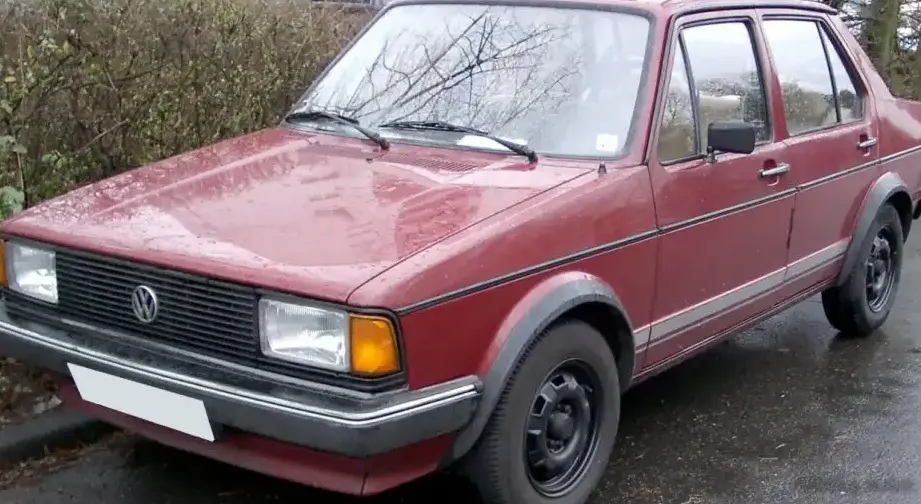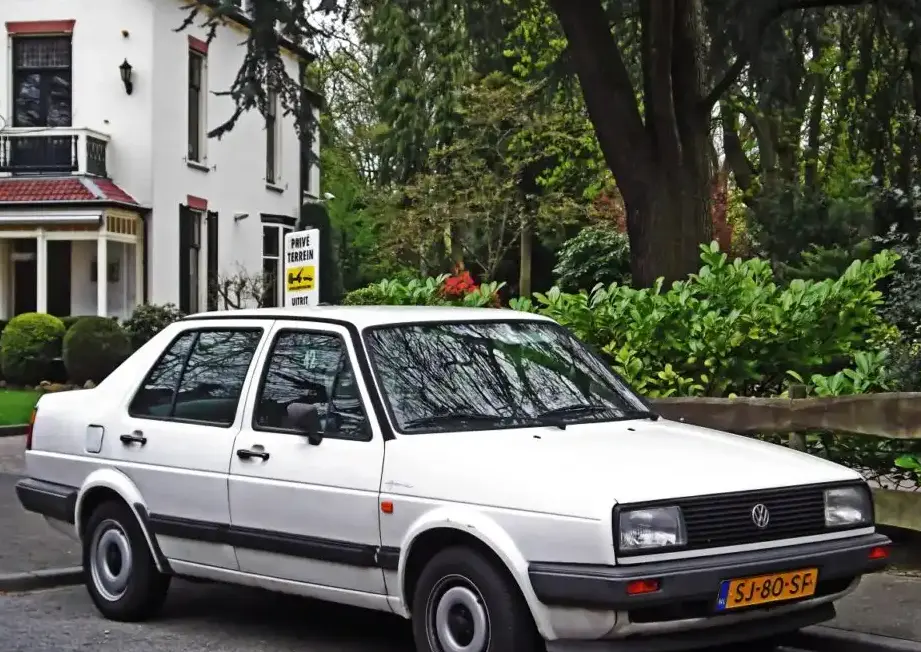
The Volkswagen Jetta II 1.8i Automatic, produced from 1986 to 1987, represented an entry-level offering within the second generation Jetta (Jetta II) lineup, which itself was based on the Volkswagen Golf Mk2 platform – internally designated 1HX0/A3. Positioned as a comfortable and economical family sedan, this variant aimed to provide accessible transportation for a broader customer base. It served as a more affordable alternative to the performance-oriented GTI and VR6 models, and a more convenient option than the diesel variants popular in Europe. The Jetta II was a significant model for Volkswagen in North America, solidifying the brand’s presence in the compact sedan segment.
Technical Specifications
| Brand | Volkswagen |
| Model | Jetta |
| Generation | Jetta II |
| Type (Engine) | 1.8i (90 Hp) Automatic |
| Start of production | 1986 |
| End of production | 1987 |
| Powertrain Architecture | Internal Combustion engine |
| Body type | Sedan |
| Seats | 5 |
| Doors | 4 |
| Fuel consumption (urban) | 11.7 l/100 km (20.1 US mpg, 24.1 UK mpg, 8.5 km/l) |
| Fuel consumption (extra urban) | 7.7 l/100 km (30.5 US mpg, 36.7 UK mpg, 13 km/l) |
| Fuel consumption (combined) | 9.8 l/100 km (24 US mpg, 28.8 UK mpg, 10.2 km/l) |
| Fuel Type | Petrol (Gasoline) |
| Acceleration 0 – 100 km/h | 14.9 sec |
| Acceleration 0 – 62 mph | 14.9 sec |
| Acceleration 0 – 60 mph | 14.2 sec |
| Maximum speed | 168 km/h (104.39 mph) |
| Weight-to-power ratio | 10.9 kg/Hp, 91.4 Hp/tonne |
| Weight-to-torque ratio | 6.8 kg/Nm, 147.2 Nm/tonne |
| Power | 90 Hp @ 5500 rpm |
| Power per litre | 50.5 Hp/l |
| Torque | 145 Nm @ 2500 rpm (106.95 lb.-ft. @ 2500 rpm) |
| Engine layout | Front, Transverse |
| Engine Model/Code | RP |
| Engine displacement | 1781 cm3 (108.68 cu. in.) |
| Number of cylinders | 4 |
| Engine configuration | Inline |
| Cylinder Bore | 81 mm (3.19 in.) |
| Piston Stroke | 86.4 mm (3.4 in.) |
| Compression ratio | 10:1 |
| Number of valves per cylinder | 2 |
| Fuel injection system | Multi-port manifold injection |
| Engine aspiration | Naturally aspirated engine |
| Valvetrain | OHC |
| Engine oil capacity | 4 l (4.23 US qt | 3.52 UK qt) |
| Coolant capacity | 6.5 l (6.87 US qt | 5.72 UK qt) |
| Kerb Weight | 985 kg (2171.55 lbs.) |
| Max. weight | 1470 kg (3240.8 lbs.) |
| Max load | 485 kg (1069.24 lbs.) |
| Trunk (boot) space – minimum | 575 l (20.31 cu. ft.) |
| Fuel tank capacity | 55 l (14.53 US gal | 12.1 UK gal) |
| Length | 4385 mm (172.64 in.) |
| Width | 1675 mm (65.94 in.) |
| Height | 1415 mm (55.71 in.) |
| Wheelbase | 2475 mm (97.44 in.) |
| Front track | 1425 mm (56.1 in.) |
| Rear (Back) track | 1420 mm (55.91 in.) |
| Drag coefficient (Cd) | 0.36 |
| Drivetrain Architecture | The Internal combustion engine (ICE) drives the front wheels of the vehicle. |
| Drive wheel | Front wheel drive |
| Number of gears and type of gearbox | 3 gears, automatic transmission |
| Front suspension | Spring-loaded rack |
| Rear suspension | Spring-loaded rack |
| Front brakes | Disc |
| Rear brakes | Drum |
| Assisting systems | ABS (Anti-lock braking system) |
| Steering type | Steering rack and pinion |
| Power steering | Hydraulic Steering |
| Tires size | 185/70 R14 |
| Wheel rims size | 14 |
Powertrain & Engine Architecture
The Jetta II 1.8i Automatic was powered by the Volkswagen RP engine, an inline four-cylinder, naturally aspirated gasoline engine displacing 1781 cc (1.8 liters). This engine was a staple in the Volkswagen lineup during the 1980s, known for its relative simplicity and durability. The RP engine featured a single overhead camshaft (OHC) valvetrain with two valves per cylinder. Fuel delivery was handled by a Bosch multi-port fuel injection system, a significant improvement over earlier carbureted designs, contributing to better fuel efficiency and smoother operation. The 90 horsepower output was achieved at 5500 rpm, with a torque peak of 145 Nm (106.95 lb-ft) at 2500 rpm. The engine’s automatic transmission was a three-speed unit, designed for comfortable cruising rather than sporty performance. This transmission was a common choice for buyers prioritizing ease of use over driver engagement.
Driving Characteristics
The 1.8i Automatic Jetta offered a comfortable, albeit unhurried, driving experience. Acceleration from 0 to 60 mph took approximately 14.2 seconds, and top speed was around 104 mph. The three-speed automatic transmission, while providing smooth shifts, resulted in noticeable gear changes and a lack of the responsiveness found in manual transmission models or higher-output variants. The gear ratios were optimized for fuel economy and relaxed cruising, rather than spirited driving. Compared to the GTI or VR6 Jettas, the 1.8i Automatic felt significantly less powerful, particularly during overtaking maneuvers or when climbing hills. However, it provided a more refined and less demanding driving experience for everyday commuting.
Equipment & Trim Levels
The 1.8i Automatic Jetta typically came with a fairly basic level of standard equipment. Interior features generally included cloth upholstery, a basic AM/FM radio, and manual windows and door locks. Air conditioning was often an optional extra, as were power windows and upgraded audio systems. The dashboard layout was functional and straightforward, typical of German automotive design of the era. Trim levels were relatively limited, with the focus being on providing a value-oriented package. Optional extras could include a sunroof, upgraded wheels, and a rear window defroster.
Chassis & Braking
The Jetta II utilized a front-wheel-drive layout with a MacPherson strut front suspension and a torsion beam rear suspension. This setup provided a reasonable balance between ride comfort and handling. The 1.8i Automatic models typically featured disc brakes on the front wheels and drum brakes on the rear. Power steering was standard, making maneuvering at low speeds easier. ABS (Anti-lock Braking System) was available as an option, enhancing braking performance and safety. The suspension was tuned for comfort, resulting in a softer ride compared to the sportier GTI models. Stabilizer bars were present, but were generally smaller in diameter than those found on higher-performance trims.
Market Reception & Comparison
The Jetta II 1.8i Automatic was generally well-received as an affordable and practical family sedan. Critics praised its comfortable ride, decent fuel economy (around 24 mpg combined), and relatively spacious interior. However, the engine’s lack of power and the automatic transmission’s sluggishness were common criticisms. Compared to the manual transmission 1.8i models, the automatic version offered less engaging driving dynamics. Against the GTI, it lacked the performance appeal, while the diesel models provided superior fuel economy. Despite these drawbacks, the 1.8i Automatic remained a popular choice for buyers seeking a reliable and economical sedan.
Legacy
The Volkswagen Jetta II 1.8i Automatic, while not a performance icon, has proven to be a relatively durable and reliable vehicle. The RP engine, when properly maintained, can withstand high mileage. Today, these cars are increasingly sought after by enthusiasts and collectors, particularly those looking for a classic Volkswagen experience. Parts availability is generally good, although some specific trim pieces may be difficult to find. The 1.8i Automatic represents a significant chapter in Volkswagen’s history, demonstrating the brand’s commitment to providing accessible and well-engineered transportation to a wide range of customers. Its simplicity and relative ease of maintenance make it a popular choice for restoration projects and classic car enthusiasts.