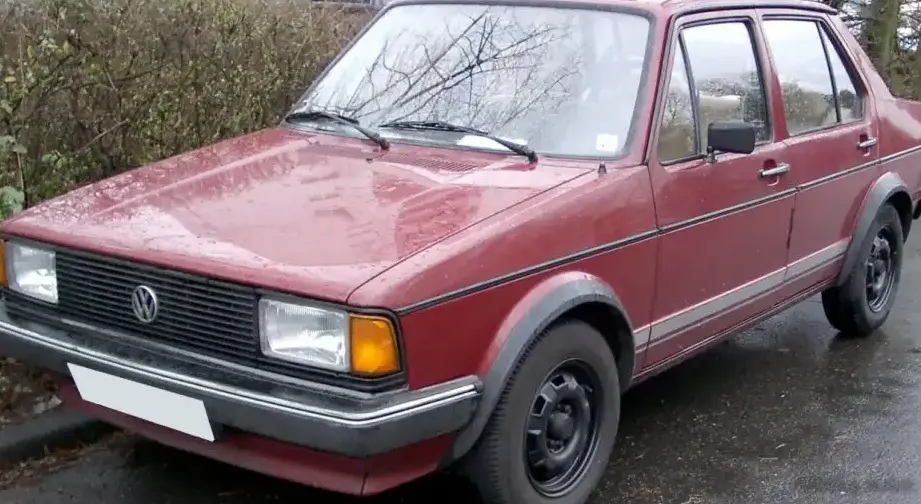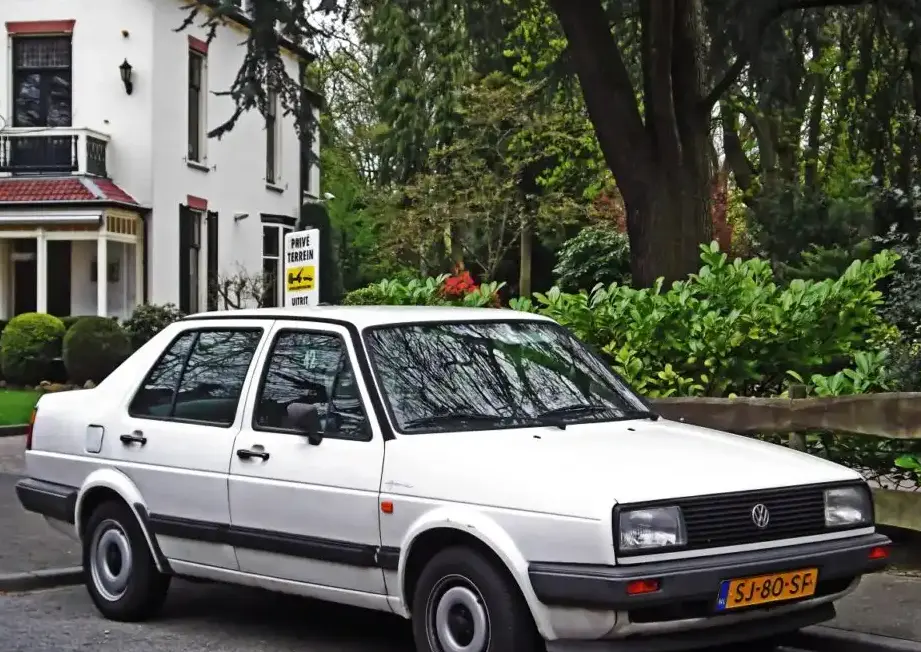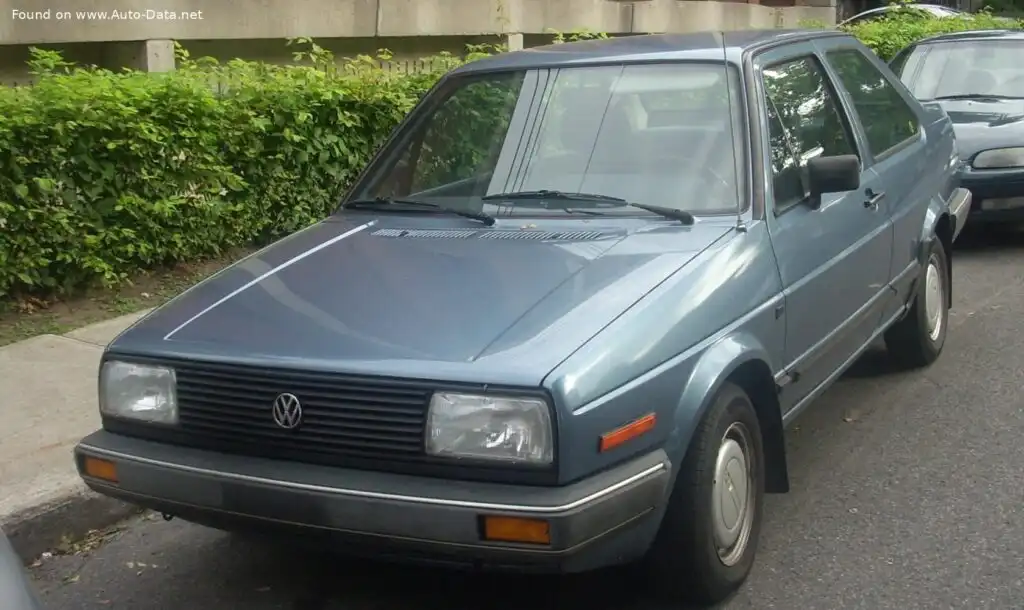
The Volkswagen Jetta II, specifically the 2-door 1.6 TD variant producing 70 horsepower, was a key model in Volkswagen’s lineup from 1983 to 1987. Positioned as an economy-focused option within the Jetta II range, it offered diesel efficiency and practicality in a compact package. This generation Jetta, built on the A2 platform (internally designated as the 1HX0 for the 2-door), represented a significant step forward in Volkswagen’s design and engineering, offering a more refined and spacious interior compared to its predecessor, the Jetta I (based on the Golf Mk1). The 1.6 TD model aimed to appeal to buyers prioritizing fuel economy and reliability over outright performance.
Technical Specifications
| Brand | Volkswagen |
| Model | Jetta |
| Generation | Jetta II (2-doors) |
| Type (Engine) | 1.6 TD (70 Hp) |
| Start of production | 1983 |
| End of production | 1987 |
| Powertrain Architecture | Internal Combustion engine |
| Body type | Sedan |
| Seats | 5 |
| Doors | 2 |
| Fuel Type | Diesel |
| Acceleration 0 – 100 km/h | 15 sec |
| Acceleration 0 – 62 mph | 15 sec |
| Acceleration 0 – 60 mph | 14.3 sec |
| Maximum speed | 158 km/h (98.18 mph) |
| Weight-to-power ratio | 13.6 kg/Hp, 73.3 Hp/tonne |
| Weight-to-torque ratio | 7.2 kg/Nm, 139.3 Nm/tonne |
| Power | 70 Hp @ 4500 rpm |
| Power per litre | 44.1 Hp/l |
| Torque | 133 Nm @ 2600 rpm (98.1 lb.-ft. @ 2600 rpm) |
| Engine layout | Front, Transverse |
| Engine Model/Code | JR, MF |
| Engine displacement | 1588 cm3 (96.91 cu. in.) |
| Number of cylinders | 4 |
| Engine configuration | Inline |
| Cylinder Bore | 76.5 mm (3.01 in.) |
| Piston Stroke | 86.4 mm (3.4 in.) |
| Compression ratio | 23:1 |
| Number of valves per cylinder | 2 |
| Fuel injection system | Precombustion chamber injection |
| Engine aspiration | Turbocharger, Intercooler |
| Valvetrain | SOHC |
| Engine oil capacity | 4.5 l (4.76 US qt | 3.96 UK qt) |
| Coolant | 6.3 l (6.66 US qt | 5.54 UK qt) |
| Kerb Weight | 955 kg (2105.41 lbs.) |
| Max. weight | 1470 kg (3240.8 lbs.) |
| Max load | 515 kg (1135.38 lbs.) |
| Trunk (boot) space – minimum | 575 l (20.31 cu. ft.) |
| Fuel tank capacity | 55 l (14.53 US gal | 12.1 UK gal) |
| Length | 4385 mm (172.64 in.) |
| Width | 1675 mm (65.94 in.) |
| Height | 1415 mm (55.71 in.) |
| Wheelbase | 2475 mm (97.44 in.) |
| Front track | 1427 mm (56.18 in.) |
| Rear (Back) track | 1422 mm (55.98 in.) |
| Drag coefficient (Cd) | 0.36 |
| Drivetrain Architecture | The Internal combustion engine (ICE) drives the front wheels of the vehicle. |
| Drive wheel | Front wheel drive |
| Number of gears and type of gearbox | 5 gears, manual transmission |
| Front suspension | Independent type McPherson |
| Rear suspension | Coil spring |
| Front brakes | Ventilated discs |
| Rear brakes | Disc |
| Steering type | Steering rack and pinion |
| Power steering | Hydraulic Steering |
| Tires size | 175/70 R13 |
| Wheel rims size | 13 |
Powertrain & Engine Architecture
The heart of the Jetta II 1.6 TD was the JR or MF engine code, a 1.6-liter inline-four cylinder diesel engine. This engine utilized precombustion chamber injection, a common diesel technology of the era. This system involved injecting fuel into a pre-chamber connected to the main combustion chamber, promoting more complete combustion and reducing engine noise. A turbocharger with an intercooler was employed to boost power output to 70 horsepower, a respectable figure for a diesel engine of this displacement in the 1980s. The single overhead camshaft (SOHC) valvetrain operated two valves per cylinder. The engine’s robust construction and relatively simple design contributed to its reputation for durability. The 5-speed manual transmission was the only gearbox option available with this engine, providing a good balance between fuel efficiency and drivability.
Driving Characteristics
The 1.6 TD Jetta II offered a distinctly different driving experience compared to its gasoline-powered siblings. While lacking the brisk acceleration of the 1.8-liter or GTI models, it provided ample torque for everyday driving. The turbocharger helped to mitigate turbo lag, delivering a usable powerband from around 2000 rpm. The 5-speed manual transmission allowed drivers to keep the engine in its optimal power range. However, the engine was noticeably louder and more agricultural in its operation than the gasoline engines. The Jetta’s front-wheel-drive configuration provided predictable handling, but the relatively narrow tires (175/70 R13) limited grip in cornering. Overall, the driving experience was focused on efficiency and practicality rather than sporty performance.
Equipment & Trim Levels
The 1.6 TD Jetta II was typically positioned as a base or mid-range trim level. Standard equipment generally included cloth upholstery, a basic instrument cluster, and manual windows and door locks. Air conditioning and a sunroof were often available as optional extras. Interior trim was functional and durable, prioritizing practicality over luxury. The 2-door configuration offered easier access to the rear seats compared to the 4-door model, but at the expense of rear passenger space. The Jetta II offered a relatively spacious trunk for its class, with a capacity of 575 liters.
Chassis & Braking
The Jetta II utilized an independent McPherson strut front suspension and a coil spring rear suspension. This setup provided a comfortable ride quality, although it wasn’t particularly sporty. The front brakes were ventilated discs, offering good stopping power, while the rear brakes were solid discs. Hydraulic power steering was standard, making the car easy to maneuver at low speeds. The chassis was relatively lightweight, contributing to the car’s fuel efficiency. Stabilizer bars were fitted to both the front and rear axles to reduce body roll during cornering.
Market Reception & Comparison
The Jetta II 1.6 TD was well-received in Europe, where diesel engines were already popular due to high fuel prices and government incentives. It was seen as a practical and economical choice for commuters and families. Compared to the gasoline-powered Jetta models, the 1.6 TD offered significantly better fuel economy, but at the cost of performance. The 1.8-liter gasoline engine provided more power and a smoother driving experience, while the GTI models offered even higher performance. The 1.6 TD was also often compared to other diesel-powered compact cars of the era, such as the Ford Escort Diesel and the Opel Kadett Diesel.
Legacy
The Volkswagen Jetta II 1.6 TD has proven to be a remarkably durable and reliable car. Many examples are still on the road today, a testament to the quality of its engineering and construction. The JR and MF diesel engines are known for their longevity, although they can require occasional maintenance to address issues such as injector wear and turbocharger problems. In the used car market, the 1.6 TD Jetta II is often sought after by enthusiasts looking for a simple, economical, and reliable classic car. Its fuel efficiency and relatively low maintenance costs make it an attractive option for those seeking a practical and affordable vehicle.