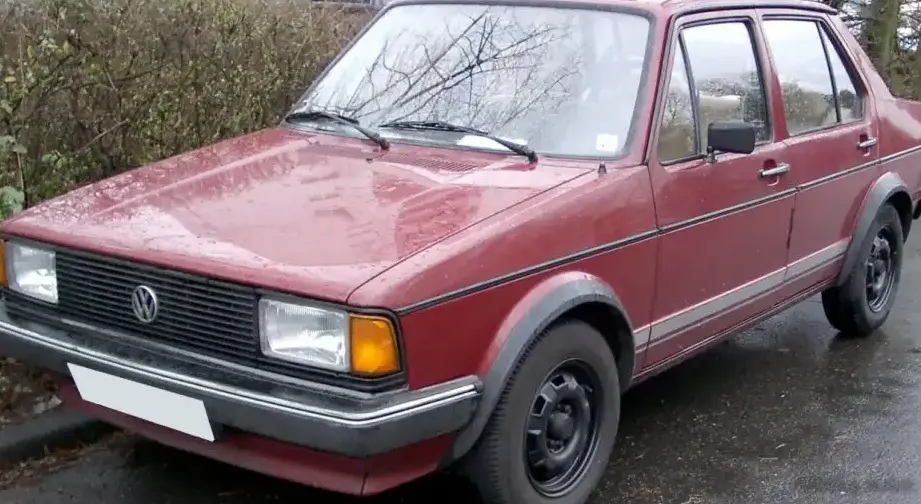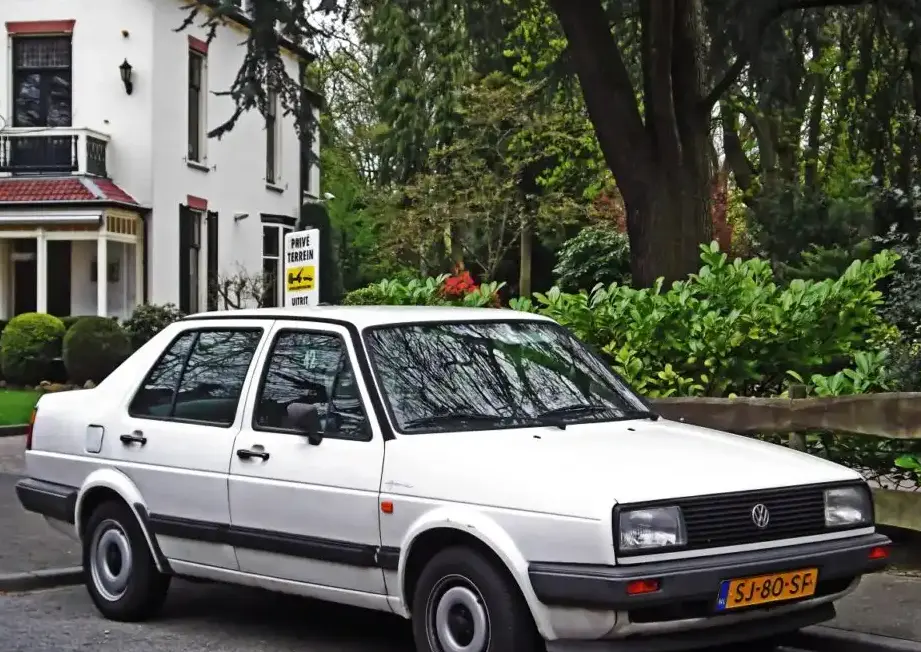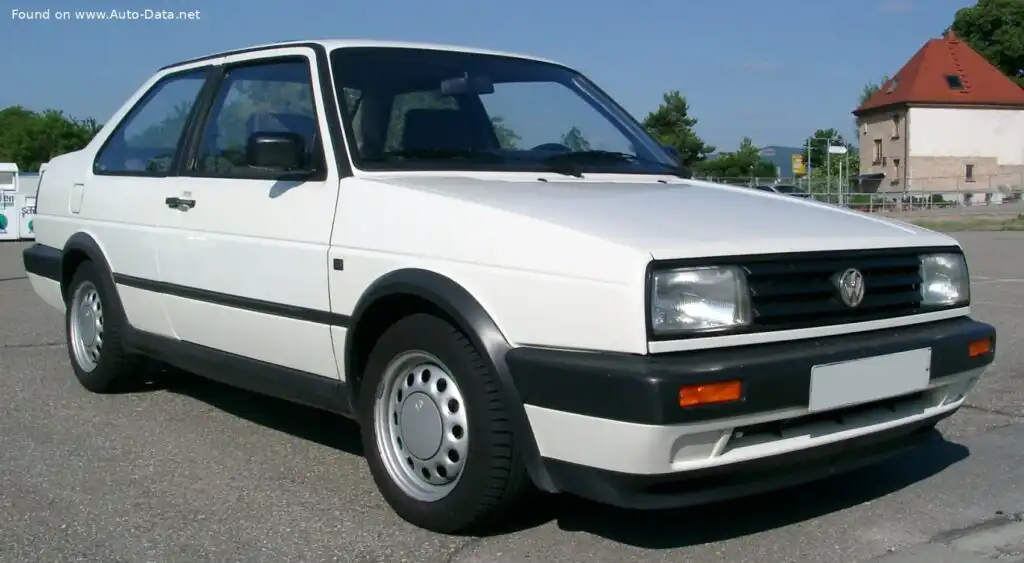
The Volkswagen Jetta II, specifically the 2-door facelift model produced from 1987 to 1991 with the 1.8-liter engine producing 112 horsepower, represents a significant evolution of Volkswagen’s compact sedan. Positioned as a slightly more upscale offering within the Jetta II range, this variant aimed to provide a balance between performance, fuel economy, and affordability. It was a key player in Volkswagen’s North American strategy during a period of increasing import competition, offering European engineering in a package tailored to American tastes. This generation Jetta, built on the A2 platform (internally designated 1HX0), was a direct successor to the original Jetta (A1 platform) and served as a bridge to the more modern Jetta III.
Technical Specifications
| Brand | Volkswagen |
| Model | Jetta |
| Generation | Jetta II (2-doors, facelift 1987) |
| Type (Engine) | 1.8 (112 Hp) |
| Start of production | 1987 |
| End of production | 1991 |
| Powertrain Architecture | Internal Combustion engine |
| Body type | Sedan |
| Seats | 5 |
| Doors | 2 |
| Fuel Type | Petrol (Gasoline) |
| Acceleration 0 – 100 km/h | 10 sec |
| Acceleration 0 – 62 mph | 10 sec |
| Acceleration 0 – 60 mph | 9.5 sec |
| Maximum speed | 189 km/h (117.44 mph) |
| Weight-to-power ratio | 8.6 kg/Hp, 116.1 Hp/tonne |
| Weight-to-torque ratio | 6.1 kg/Nm, 164.8 Nm/tonne |
| Power | 112 Hp @ 5400 rpm |
| Power per litre | 62.9 Hp/l |
| Torque | 159 Nm @ 4000 rpm (117.27 lb.-ft. @ 4000 rpm) |
| Engine layout | Front, Transverse |
| Engine Model/Code | EV |
| Engine displacement | 1781 cm3 (108.68 cu. in.) |
| Number of cylinders | 4 |
| Engine configuration | Inline |
| Cylinder Bore | 81 mm (3.19 in.) |
| Piston Stroke | 86.4 mm (3.4 in.) |
| Compression ratio | 10:1 |
| Number of valves per cylinder | 2 |
| Fuel injection system | Multi-port manifold injection |
| Engine aspiration | Naturally aspirated engine |
| Valvetrain | SOHC |
| Engine oil capacity | 4 l (4.23 US qt | 3.52 UK qt) |
| Coolant | 6.5 l (6.87 US qt | 5.72 UK qt) |
| Kerb Weight | 965 kg (2127.46 lbs) |
| Max. weight | 1470 kg (3240.8 lbs) |
| Max load | 505 kg (1113.33 lbs) |
| Trunk (boot) space – minimum | 575 l (20.31 cu. ft.) |
| Fuel tank capacity | 55 l (14.53 US gal | 12.1 UK gal) |
| Length | 4385 mm (172.64 in.) |
| Width | 1675 mm (65.94 in.) |
| Height | 1415 mm (55.71 in.) |
| Wheelbase | 2475 mm (97.44 in.) |
| Front track | 1427 mm (56.18 in.) |
| Rear (Back) track | 1422 mm (55.98 in.) |
| Drivetrain Architecture | The Internal combustion engine (ICE) drives the front wheels of the vehicle. |
| Drive wheel | Front wheel drive |
| Number of gears and type of gearbox | 5 gears, manual transmission |
| Front suspension | Independent type McPherson |
| Rear suspension | Coil spring |
| Front brakes | Ventilated discs |
| Rear brakes | Disc |
| Steering type | Steering rack and pinion |
| Power steering | Hydraulic Steering |
| Tires size | 175/70 R13 |
| Wheel rims size | 13 |
INTRODUCTION
The 1987-1991 Volkswagen Jetta II 1.8 (112 hp) represented a refinement of the second-generation Jetta, which debuted in 1984. The facelift introduced in 1987 brought subtle styling changes, including a revised front grille, updated headlights, and a more modern interior. This particular variant, powered by the 1.8-liter EV engine, was positioned as a mainstream offering, appealing to buyers seeking a practical and reliable compact sedan. It occupied the middle ground in the Jetta II lineup, offering more power than the base 1.6-liter models but remaining more affordable than the performance-oriented GTI or the diesel options.
Powertrain & Engine Architecture
The heart of this Jetta variant is the Volkswagen EV engine, a 1.8-liter inline-four cylinder gasoline engine. This engine, part of the EA827 family, featured a single overhead camshaft (SOHC) valvetrain operating two valves per cylinder. The EV engine utilized Bosch multi-port fuel injection, a significant advancement over earlier carbureted systems, contributing to improved fuel efficiency and smoother operation. The engine’s 81mm bore and 86.4mm stroke resulted in a displacement of 1781cc. The 10:1 compression ratio helped extract a respectable 112 horsepower at 5400 rpm and 159 Nm (117.27 lb-ft) of torque at 4000 rpm. The engine was transversely mounted, driving the front wheels. The standard transmission was a 5-speed manual, although a 3-speed automatic transmission was also available, albeit impacting performance.
Driving Characteristics
The Jetta II 1.8 with the 5-speed manual transmission offered a reasonably engaging driving experience. Acceleration to 60 mph took around 9.5 seconds, and top speed was approximately 117 mph. The engine provided adequate power for everyday driving, with a usable torque curve that made it easy to navigate city streets and maintain highway speeds. The automatic transmission version, while offering convenience, noticeably dulled performance, extending the 0-60 mph time to around 10 seconds. Gear ratios were tuned for fuel economy and drivability rather than outright performance. The steering, utilizing a hydraulic rack and pinion system, was light and precise, contributing to a comfortable and predictable feel. Compared to the more powerful GTI, the 1.8 felt less eager to rev, but it offered a more refined and less aggressive driving experience.
Equipment & Trim Levels
The Jetta II 1.8 typically came standard with features such as cloth upholstery, a basic AM/FM radio, and manual windows and locks. Higher trim levels, often denoted by names like “GL,” added features like power windows, power locks, upgraded interior trim, and a more sophisticated audio system. Optional extras included a sunroof, air conditioning, and alloy wheels. The interior design was functional and straightforward, prioritizing practicality over luxury. The 2-door configuration offered easier access to the rear seats than the 4-door model, but at the expense of rear passenger space.
Chassis & Braking
The Jetta II utilized an independent McPherson strut front suspension and a coil spring rear suspension. This setup provided a good balance between ride comfort and handling. The front brakes were ventilated discs, offering good stopping power, while the rear brakes were discs. The chassis was relatively lightweight, contributing to the car’s nimble handling. Stabilizer bars were fitted to both the front and rear axles, further enhancing stability. The 175/70 R13 tires provided adequate grip for most driving conditions.
Market Reception & Comparison
The Jetta II 1.8 was generally well-received by automotive critics as a practical and reliable compact sedan. It was praised for its fuel efficiency, comfortable ride, and European-inspired handling. However, some critics noted that the engine lacked the punch of its competitors, particularly those from Japanese manufacturers. Compared to the Jetta II GTI, the 1.8 offered a more affordable and less sporty alternative. The diesel-powered Jetta models were favored by those prioritizing fuel economy, while the GTI appealed to enthusiasts seeking a more engaging driving experience. The 1.8 automatic was often criticized for its sluggish performance, with many buyers opting for the manual transmission.
Legacy
The Volkswagen Jetta II 1.8, while not a performance icon, has proven to be a durable and reliable vehicle. Many examples are still on the road today, a testament to Volkswagen’s engineering quality. The EV engine, while not without its quirks, is generally considered to be a robust and relatively easy-to-maintain powerplant. In the used car market, these Jettas are often sought after by enthusiasts and those looking for an affordable and practical classic car. Parts availability remains good, and a strong aftermarket support network exists. The Jetta II 1.8 represents a significant chapter in Volkswagen’s history, bridging the gap between the first-generation Jetta and the more modern models that followed.