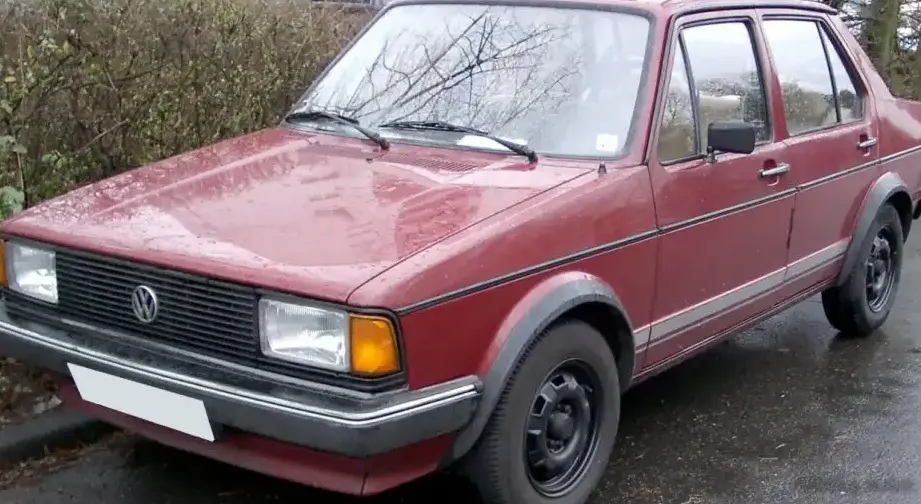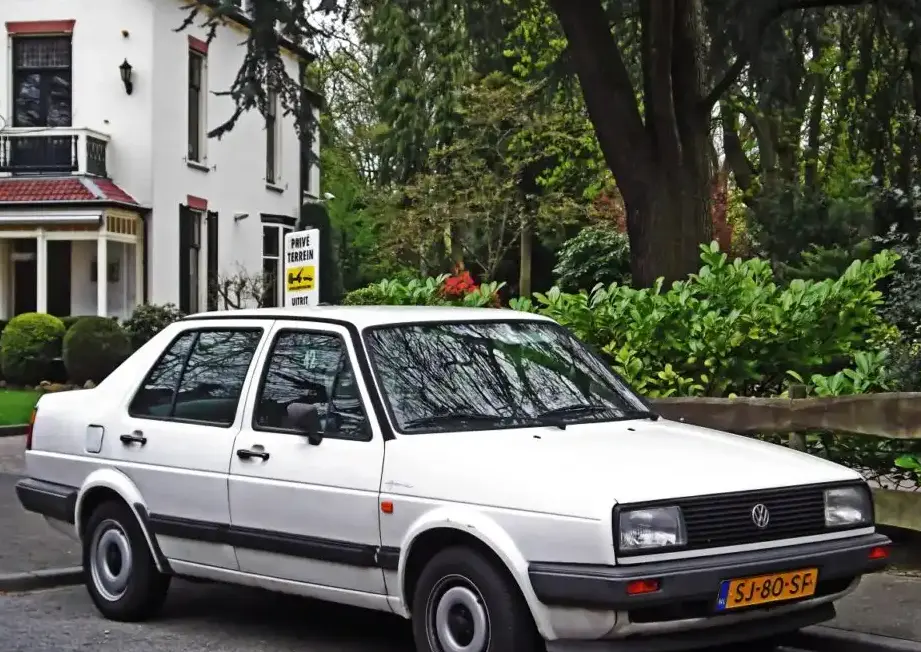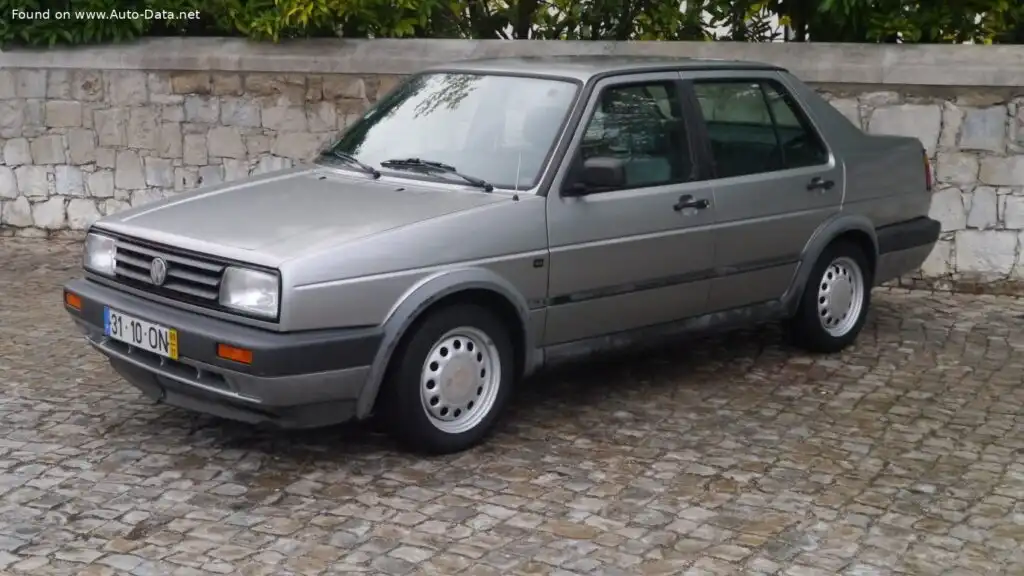
The Volkswagen Jetta II, specifically the facelifted version produced from 1987 to 1991, represented a significant evolution of Volkswagen’s popular compact sedan. Within the Jetta II range, the 1.8-liter (112 horsepower) variant occupied a middle ground, offering a balance between affordability, fuel economy, and acceptable performance. This model was a key component of Volkswagen’s strategy to appeal to a broader customer base in both European and North American markets, providing a more accessible entry point compared to the higher-performance GTI or diesel options. The Jetta II was built on the A2 platform, shared with the Golf Mk2, and the 1987 facelift brought subtle styling updates and mechanical refinements.
Technical Specifications
| Brand | Volkswagen |
| Model | Jetta |
| Generation | Jetta II (facelift 1987) |
| Type (Engine) | 1.8 (112 Hp) |
| Start of production | 1987 |
| End of production | 1991 |
| Powertrain Architecture | Internal Combustion engine |
| Body type | Sedan |
| Seats | 5 |
| Doors | 4 |
| Fuel Type | Petrol (Gasoline) |
| Acceleration 0 – 100 km/h | 10 sec |
| Acceleration 0 – 62 mph | 10 sec |
| Acceleration 0 – 60 mph | 9.5 sec |
| Maximum speed | 189 km/h (117.44 mph) |
| Weight-to-power ratio | 8.8 kg/Hp, 113.1 Hp/tonne |
| Weight-to-torque ratio | 6.2 kg/Nm, 160.6 Nm/tonne |
| Power | 112 Hp @ 5400 rpm |
| Power per litre | 62.9 Hp/l |
| Torque | 159 Nm @ 4000 rpm (117.27 lb.-ft. @ 4000 rpm) |
| Engine layout | Front, Transverse |
| Engine Model/Code | EV |
| Engine displacement | 1781 cm3 (108.68 cu. in.) |
| Number of cylinders | 4 |
| Cylinder Bore | 81 mm (3.19 in.) |
| Piston Stroke | 86.4 mm (3.4 in.) |
| Compression ratio | 10:1 |
| Number of valves per cylinder | 2 |
| Fuel injection system | Multi-port manifold injection |
| Engine aspiration | Naturally aspirated engine |
| Valvetrain | SOHC |
| Engine oil capacity | 4 l (4.23 US qt | 3.52 UK qt) |
| Coolant | 6.5 l (6.87 US qt | 5.72 UK qt) |
| Kerb Weight | 990 kg (2182.58 lbs.) |
| Max. weight | 1470 kg (3240.8 lbs.) |
| Max load | 480 kg (1058.22 lbs.) |
| Trunk (boot) space – minimum | 575 l (20.31 cu. ft.) |
| Fuel tank capacity | 55 l (14.53 US gal | 12.1 UK gal) |
| Length | 4385 mm (172.64 in.) |
| Width | 1675 mm (65.94 in.) |
| Height | 1415 mm (55.71 in.) |
| Wheelbase | 2475 mm (97.44 in.) |
| Front track | 1427 mm (56.18 in.) |
| Rear (Back) track | 1422 mm (55.98 in.) |
| Drag coefficient (Cd) | 0.36 |
| Drivetrain Architecture | The Internal combustion engine (ICE) drives the front wheels of the vehicle. |
| Drive wheel | Front wheel drive |
| Number of gears and type of gearbox | 5 gears, manual transmission |
| Front suspension | Independent type McPherson |
| Rear suspension | Coil spring |
| Front brakes | Disc |
| Rear brakes | Drum |
| Steering type | Steering rack and pinion |
| Power steering | Hydraulic Steering |
| Tires size | 175/70 R13 |
| Wheel rims size | 13 |
Powertrain & Engine Architecture
The heart of the Jetta II 1.8 was the Volkswagen EV engine, a 1.8-liter inline-four cylinder gasoline engine. This engine belonged to the EA827 family, known for its relatively simple and robust design. The EV engine featured a single overhead camshaft (SOHC) valvetrain operating two valves per cylinder. Fuel delivery was handled by Bosch multi-port fuel injection, a significant upgrade over earlier carbureted Volkswagen engines, improving efficiency and reducing emissions. The engine produced 112 horsepower at 5400 rpm and 117.27 lb-ft of torque at 4000 rpm. The engine’s transverse mounting and front-wheel drive configuration were typical for Volkswagen’s compact offerings of the era. The five-speed manual transmission was the standard offering, providing a reasonable balance of performance and fuel economy.
Driving Characteristics
The 1.8-liter Jetta II offered a comfortable and predictable driving experience. Acceleration from 0-60 mph took around 9.5 seconds, which was adequate for everyday driving but not particularly sporty. Compared to the more powerful GTI models, the 1.8 felt noticeably less responsive, especially at higher speeds. However, the 1.8’s power delivery was smooth and linear, making it easy to drive in urban environments. The five-speed manual transmission was well-matched to the engine’s characteristics, allowing drivers to keep the engine in its optimal power band. The gear ratios were spaced to prioritize fuel efficiency, but still provided enough flexibility for passing maneuvers. The suspension, while comfortable, wasn’t particularly sporty, resulting in some body roll during cornering.
Equipment & Trim Levels
The 1.8-liter Jetta II typically came with a fairly basic level of equipment, positioning it as an entry-level or mid-range offering. Standard features generally included cloth upholstery, a basic AM/FM radio, and manual windows and locks. Optional extras included power windows, power locks, a sunroof, and upgraded audio systems. Interior trim levels varied depending on the market, but generally featured durable plastics and a functional, if somewhat spartan, design. The dashboard layout was straightforward and easy to use, with clearly marked gauges and controls.
Chassis & Braking
The Jetta II utilized a McPherson strut front suspension and a coil spring rear suspension. This setup provided a comfortable ride, but wasn’t designed for aggressive handling. The front brakes were ventilated discs, while the rear brakes were drums. This configuration was typical for cars in this price range during the late 1980s. Steering was via a rack-and-pinion system with hydraulic power assistance, providing light and precise steering feel. The standard tire size was 175/70 R13, mounted on 13-inch steel wheels.
Market Reception & Comparison
The Jetta II 1.8 was generally well-received by automotive critics as a practical and affordable compact sedan. It was praised for its fuel efficiency, comfortable ride, and reliable engine. However, it was often criticized for its lack of performance compared to the GTI models and its somewhat basic interior. Compared to other cars in its class, such as the Toyota Corolla and Honda Civic, the Jetta II offered a more European driving experience, with a focus on comfort and refinement. Fuel economy was competitive, typically ranging from 28-32 mpg in mixed driving conditions. Reliability was generally good, although some owners reported issues with the fuel injection system and electrical components.
Legacy
The Volkswagen Jetta II 1.8, while not the most exciting version of the Jetta, proved to be a durable and reliable car. The EV engine, while not particularly powerful, was known for its longevity and relatively low maintenance costs. Today, well-maintained examples of the Jetta II 1.8 are becoming increasingly sought after by classic car enthusiasts and collectors. The car’s simple design and readily available parts make it relatively easy to maintain and repair. The Jetta II 1.8 represents a significant chapter in Volkswagen’s history, demonstrating the company’s commitment to producing affordable and practical cars for a global audience.