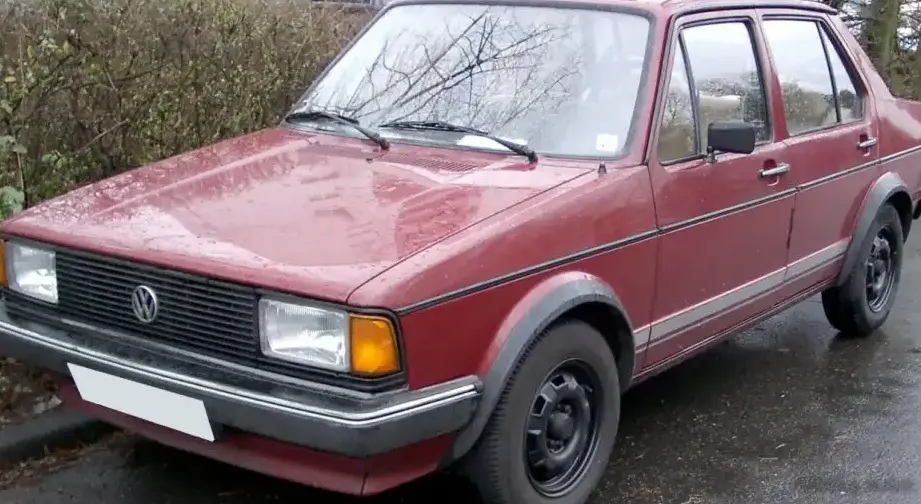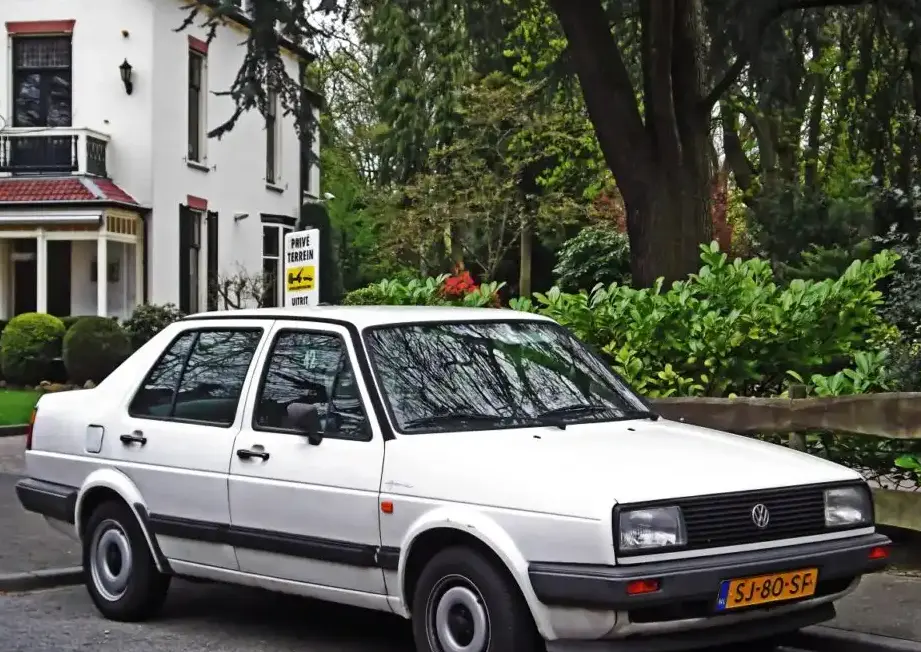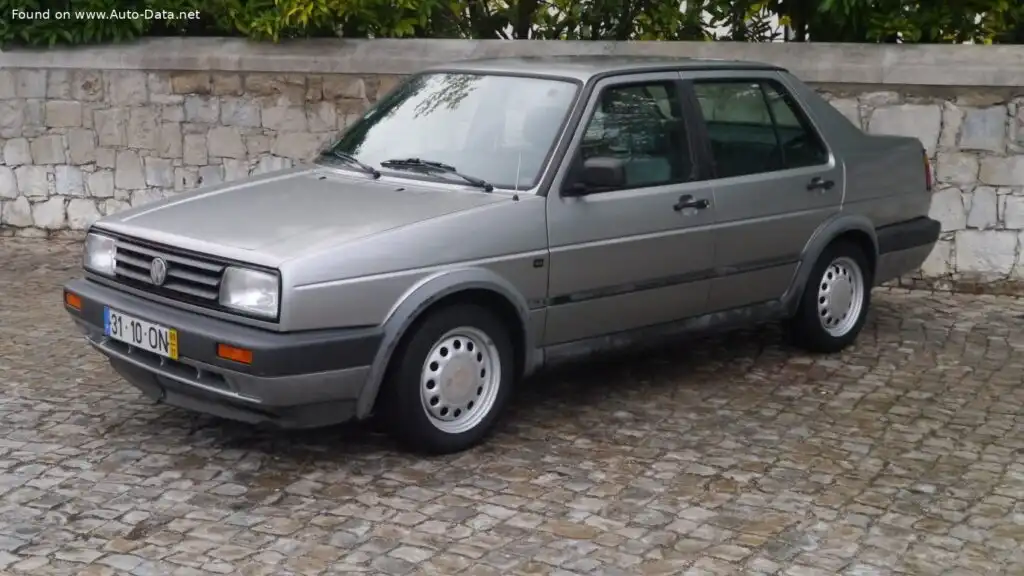
The Volkswagen Jetta II, specifically the 1.8 16V variant produced from 1987 to 1991, represents a significant evolution of Volkswagen’s popular compact sedan. This facelifted version of the second-generation Jetta (internally designated the 1HX0/A3 platform) aimed to refine the original’s design and offer a more sophisticated driving experience. The 1.8 16V trim occupied a middle ground in the Jetta II lineup, positioned above the base models and below the performance-oriented GTI and VR6 versions. It was targeted towards buyers seeking a balance of fuel efficiency, respectable performance, and a more premium feel than the entry-level options.
Technical Specifications
| Brand | Volkswagen |
| Model | Jetta |
| Generation | Jetta II (facelift 1987) |
| Type (Engine) | 1.8 16V (129 Hp) |
| Start of production | 1987 |
| End of production | 1991 |
| Powertrain Architecture | Internal Combustion engine |
| Body type | Sedan |
| Seats | 5 |
| Doors | 4 |
| Fuel consumption (urban) | 11.3 l/100 km (20.8 US mpg) |
| Fuel consumption (extra urban) | 7.1 l/100 km (33.1 US mpg) |
| Fuel consumption (combined) | 9.1 l/100 km (25.8 US mpg) |
| Fuel Type | Petrol (Gasoline) |
| Acceleration 0 – 100 km/h | 9.3 sec |
| Acceleration 0 – 62 mph | 9.3 sec |
| Acceleration 0 – 60 mph | 8.8 sec |
| Maximum speed | 196 km/h (121.79 mph) |
| Weight-to-power ratio | 8 kg/Hp |
| Weight-to-torque ratio | 6.2 kg/Nm |
| Power | 129 Hp @ 5800 rpm |
| Torque | 168 Nm @ 4250 rpm (123.91 lb.-ft. @ 4250 rpm) |
| Engine layout | Front, Transverse |
| Engine Model/Code | PL |
| Engine displacement | 1781 cm3 (108.68 cu. in.) |
| Number of cylinders | 4 |
| Engine configuration | Inline |
| Cylinder Bore | 81 mm (3.19 in.) |
| Piston Stroke | 86.4 mm (3.4 in.) |
| Compression ratio | 10:1 |
| Number of valves per cylinder | 4 |
| Fuel injection system | Multi-port manifold injection |
| Engine aspiration | Naturally aspirated engine |
| Valvetrain | DOHC |
| Engine oil capacity | 4 l (4.23 US qt | 3.52 UK qt) |
| Coolant | 6.5 l (6.87 US qt | 5.72 UK qt) |
| Kerb Weight | 1035 kg (2281.78 lbs.) |
| Max. weight | 1495 kg (3295.91 lbs.) |
| Max load | 460 kg (1014.13 lbs.) |
| Trunk (boot) space – minimum | 575 l (20.31 cu. ft.) |
| Fuel tank capacity | 55 l (14.53 US gal | 12.1 UK gal) |
| Length | 4385 mm (172.64 in.) |
| Width | 1675 mm (65.94 in.) |
| Height | 1415 mm (55.71 in.) |
| Wheelbase | 2475 mm (97.44 in.) |
| Front track | 1427 mm (56.18 in.) |
| Rear (Back) track | 1422 mm (55.98 in.) |
| Drag coefficient (Cd) | 0.36 |
| Drivetrain Architecture | The Internal combustion engine (ICE) drives the front wheels of the vehicle. |
| Drive wheel | Front wheel drive |
| Number of gears and type of gearbox | 5 gears, manual transmission |
| Front suspension | Independent type McPherson |
| Rear suspension | Coil spring |
| Front brakes | Ventilated discs |
| Rear brakes | Disc |
| Steering type | Steering rack and pinion |
| Power steering | Hydraulic Steering |
| Tires size | 185/70 R14 |
| Wheel rims size | 14 |
Powertrain & Engine Architecture
The heart of the Jetta II 1.8 16V is the PL-code engine, a 1.8-liter inline-four cylinder gasoline engine. This engine featured a dual overhead camshaft (DOHC) valvetrain with four valves per cylinder, a significant upgrade over the earlier single overhead cam designs. This 16-valve configuration allowed for improved breathing and higher engine speeds, contributing to the engine’s 129 horsepower output at 5800 rpm and 168 Nm (124 lb-ft) of torque at 4250 rpm. Fuel delivery was handled by a Bosch multi-port fuel injection system, providing precise fuel metering for optimal combustion. The engine’s relatively high compression ratio of 10:1 further enhanced its efficiency and performance. The engine was transversely mounted in the front of the vehicle, driving the front wheels.
Driving Characteristics
The 1.8 16V Jetta offered a noticeable step up in performance compared to the base 1.6-liter models. While not as quick as the GTI or VR6, it provided adequate acceleration for everyday driving, with a 0-60 mph time of around 8.8 seconds. The five-speed manual transmission, standard on this trim, allowed drivers to effectively utilize the engine’s powerband. The gear ratios were well-chosen for a balance of acceleration and fuel economy. The power delivery was linear and predictable, making it easy to modulate throttle response. Compared to the more powerful VR6, the 1.8 16V felt less strained at higher speeds, and its lighter weight contributed to more nimble handling.
Equipment & Trim Levels
The 1.8 16V Jetta typically came equipped with features such as power steering, a basic stereo system, and cloth upholstery. Optional extras included air conditioning, power windows, and a sunroof. Interior trim levels varied, but generally offered a more refined appearance than the base models, with upgraded door panels and seat fabrics. The dashboard layout was functional and straightforward, with clearly marked gauges and controls.
Chassis & Braking
The Jetta II utilized an independent McPherson strut front suspension and a coil spring rear suspension. This setup provided a comfortable ride while maintaining reasonable handling characteristics. The front brakes were ventilated discs, offering good stopping power, while the rear brakes were solid discs. The steering was rack-and-pinion with hydraulic power assistance, providing precise and responsive steering feel. The standard tire size was 185/70 R14, mounted on 14-inch steel wheels.
Market Reception & Comparison
The Jetta II 1.8 16V was generally well-received by automotive critics as a practical and well-rounded compact sedan. It offered a good balance of performance, fuel economy, and features at a competitive price point. Compared to the base models, the 1.8 16V provided a significant improvement in driving enjoyment. However, it wasn’t as sporty as the GTI or as luxurious as the VR6. Fuel economy was respectable for its time, averaging around 25.8 US mpg in combined driving. Reliability was generally good, although routine maintenance was essential to keep the 16-valve engine running smoothly.
Legacy
The Jetta II 1.8 16V remains a popular choice among classic Volkswagen enthusiasts. The PL engine, while requiring regular maintenance, is known for its durability and potential for modification. Parts availability is generally good, although some specific components may be becoming increasingly difficult to find. Today, well-maintained examples of the Jetta II 1.8 16V are sought after for their classic styling, engaging driving experience, and relative affordability. It represents a sweet spot in the Jetta II lineup, offering a blend of practicality and performance that continues to appeal to a dedicated following.