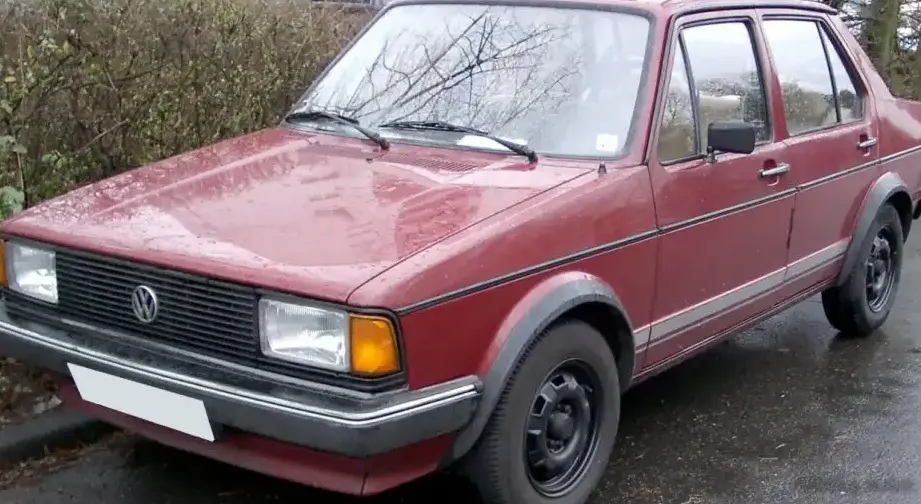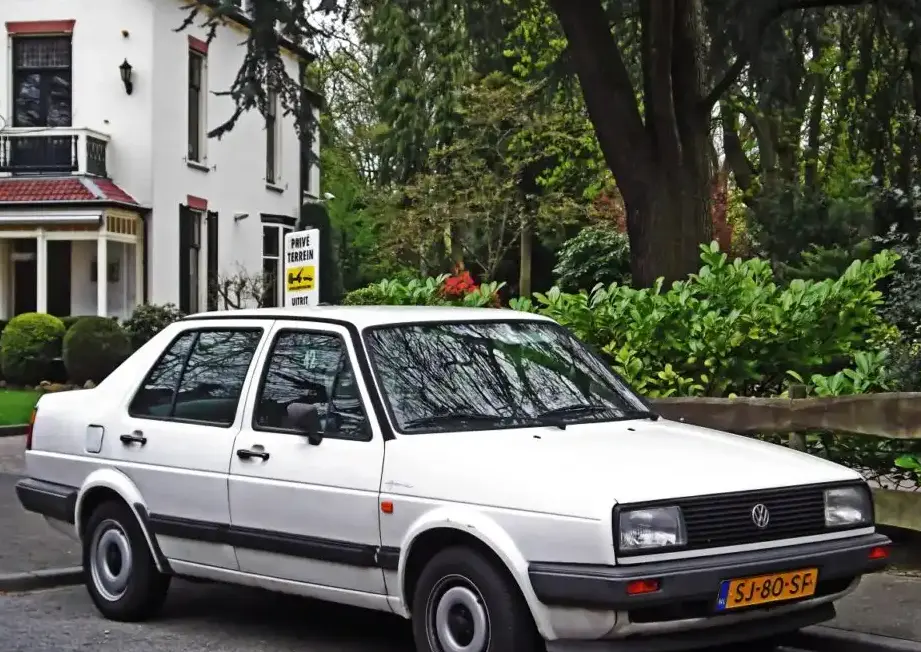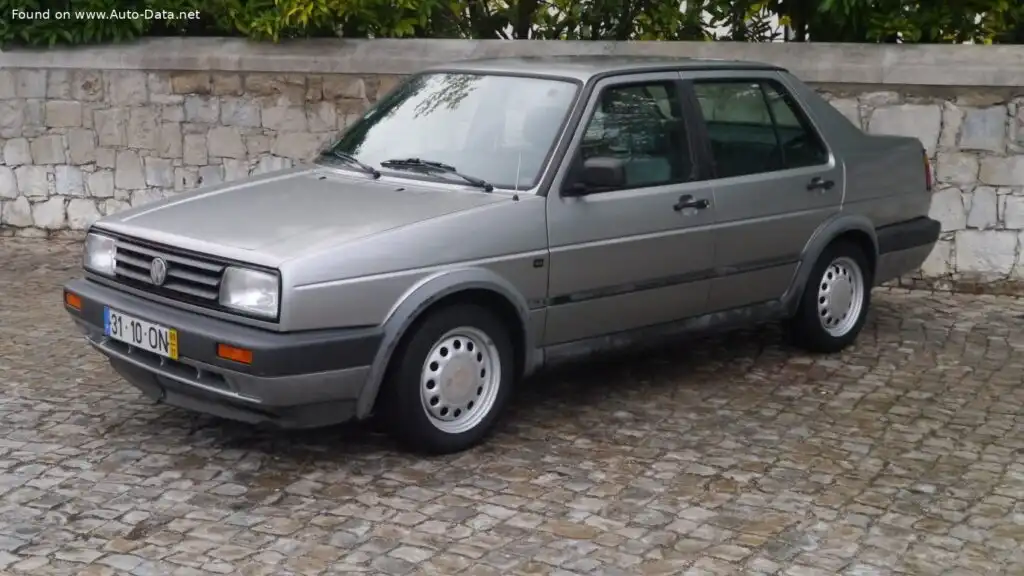
The Volkswagen Jetta II, specifically the 1.8 16V variant produced from 1987 to 1991, represented a significant evolution of Volkswagen’s popular compact sedan. This facelifted version of the second-generation Jetta (internally designated the 1HX0/A3 platform) aimed to blend practicality, performance, and a touch of sophistication for the North American and European markets. Positioned as a step up from the base models, the 1.8 16V offered a noticeable increase in horsepower and a more refined driving experience, appealing to buyers seeking a sportier alternative without sacrificing everyday usability. It served as a bridge between the more economical base engines and the higher-performance GTI models.
Technical Specifications
| Brand | Volkswagen |
| Model | Jetta |
| Generation | Jetta II (facelift 1987) |
| Type (Engine) | 1.8 16V (139 Hp) |
| Start of production | 1987 |
| End of production | 1991 |
| Powertrain Architecture | Internal Combustion engine |
| Body type | Sedan |
| Seats | 5 |
| Doors | 4 |
| Fuel Type | Petrol (Gasoline) |
| Acceleration 0 – 100 km/h | 8.8 sec |
| Acceleration 0 – 62 mph | 8.8 sec |
| Acceleration 0 – 60 mph | 8.4 sec |
| Maximum speed | 204 km/h (126.76 mph) |
| Weight-to-power ratio | 7.3 kg/Hp, 137.6 Hp/tonne |
| Weight-to-torque ratio | 6 kg/Nm, 166.3 Nm/tonne |
| Power | 139 Hp @ 6100 rpm |
| Power per litre | 78 Hp/l |
| Torque | 168 Nm @ 4600 rpm (123.91 lb.-ft. @ 4600 rpm) |
| Engine layout | Front, Transverse |
| Engine Model/Code | KR |
| Engine displacement | 1781 cm3 (108.68 cu. in.) |
| Number of cylinders | 4 |
| Engine configuration | Inline |
| Cylinder Bore | 81 mm (3.19 in.) |
| Piston Stroke | 86.4 mm (3.4 in.) |
| Compression ratio | 10:1 |
| Number of valves per cylinder | 4 |
| Fuel injection system | Multi-port manifold injection |
| Engine aspiration | Naturally aspirated engine |
| Valvetrain | DOHC |
| Engine oil capacity | 4 l (4.23 US qt | 3.52 UK qt) |
| Coolant | 6.5 l (6.87 US qt | 5.72 UK qt) |
| Kerb Weight | 1010 kg (2226.67 lbs) |
| Max. weight | 1470 kg (3240.8 lbs) |
| Max load | 460 kg (1014.13 lbs) |
| Trunk (boot) space – minimum | 575 l (20.31 cu. ft.) |
| Fuel tank capacity | 55 l (14.53 US gal | 12.1 UK gal) |
| Length | 4385 mm (172.64 in.) |
| Width | 1675 mm (65.94 in.) |
| Height | 1415 mm (55.71 in.) |
| Wheelbase | 2475 mm (97.44 in.) |
| Front track | 1427 mm (56.18 in.) |
| Rear (Back) track | 1422 mm (55.98 in.) |
| Drag coefficient (Cd) | 0.36 |
| Drivetrain Architecture | The Internal combustion engine (ICE) drives the front wheels of the vehicle. |
| Drive wheel | Front wheel drive |
| Number of gears and type of gearbox | 5 gears, manual transmission |
| Front suspension | Independent type McPherson |
| Rear suspension | Coil spring |
| Front brakes | Ventilated discs |
| Rear brakes | Disc |
| Steering type | Steering rack and pinion |
| Power steering | Hydraulic Steering |
| Tires size | 185/60 R14 |
| Wheel rims size | 14 |
Powertrain & Engine Architecture
The heart of the Jetta II 1.8 16V was the KR engine code, a 1.8-liter inline-four cylinder powerplant. This engine featured a dual overhead camshaft (DOHC) valvetrain operating four valves per cylinder, a significant upgrade over the simpler two-valve designs found in earlier Jettas. This configuration allowed for improved breathing and higher engine speeds, contributing to the increased horsepower output. Fuel delivery was managed by a multi-port fuel injection system, providing precise fuel metering for optimal combustion. The engine’s 10:1 compression ratio further enhanced performance. The standard transmission was a five-speed manual, although a three-speed automatic transmission was also available, albeit at the cost of some performance. The automatic transmission, while offering convenience, was known for its relatively conservative gearing and could feel somewhat sluggish compared to the manual.
Driving Characteristics
The 1.8 16V Jetta offered a noticeable step up in driving enjoyment compared to the base models. With 139 horsepower, acceleration to 60 mph took approximately 8.4 seconds, making it reasonably quick for its time. The engine felt responsive throughout the rev range, and the DOHC valvetrain allowed it to rev freely. The five-speed manual transmission provided precise gear changes and allowed drivers to fully exploit the engine’s power. The automatic transmission, while smooth, resulted in slightly slower acceleration and a less engaging driving experience. Handling was typical for a front-wheel-drive sedan of the era – safe and predictable, but not particularly sporty. The suspension provided a comfortable ride, but body roll was noticeable during cornering.
Equipment & Trim Levels
The 1.8 16V Jetta typically came with a reasonable level of standard equipment. This included power steering, a basic stereo system, and cloth upholstery. Optional extras included power windows and locks, a sunroof, and upgraded audio systems. Interior trim was generally functional and durable, reflecting the Jetta’s focus on practicality. The dashboard layout was straightforward and easy to use. The 16V trim often featured slightly more upscale interior detailing compared to the base models, such as upgraded seat fabrics and door panel trim.
Chassis & Braking
The Jetta II utilized an independent McPherson strut front suspension and a coil spring rear suspension. This setup provided a good balance between ride comfort and handling. Front brakes were ventilated discs, offering good stopping power, while rear brakes were typically solid discs. The steering was a rack-and-pinion system with hydraulic power assistance, providing light and precise steering feel. The 1.8 16V models often featured slightly thicker stabilizer bars compared to the base models, further improving handling stability.
Market Reception & Comparison
The Jetta II 1.8 16V was generally well-received by automotive critics. It was praised for its responsive engine, comfortable ride, and practical interior. However, some critics noted that the automatic transmission felt somewhat underpowered and that the handling wasn’t as sharp as some of its competitors. Compared to the base 1.8 models, the 16V offered a significant performance boost. Compared to the GTI models, it offered a more refined and comfortable driving experience, albeit with less outright performance. Fuel economy was respectable for the time, averaging around 25-30 mpg in mixed driving.
Legacy
The KR engine, while generally reliable, is now showing its age. Common issues include oil leaks, particularly from the valve cover gasket and rear main seal. The automatic transmission, if not properly maintained, can experience issues with slipping or harsh shifting. However, with regular maintenance and careful driving, these engines can still provide years of reliable service. Today, the Jetta II 1.8 16V is gaining popularity among classic car enthusiasts, particularly those seeking a practical and affordable entry into the world of vintage Volkswagen ownership. Parts availability is generally good, and the car’s relatively simple mechanical design makes it a good candidate for DIY maintenance and repairs.