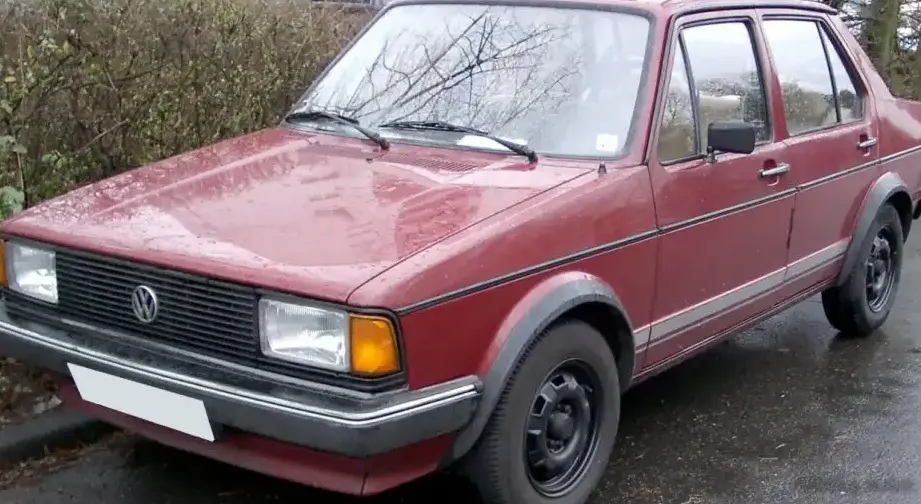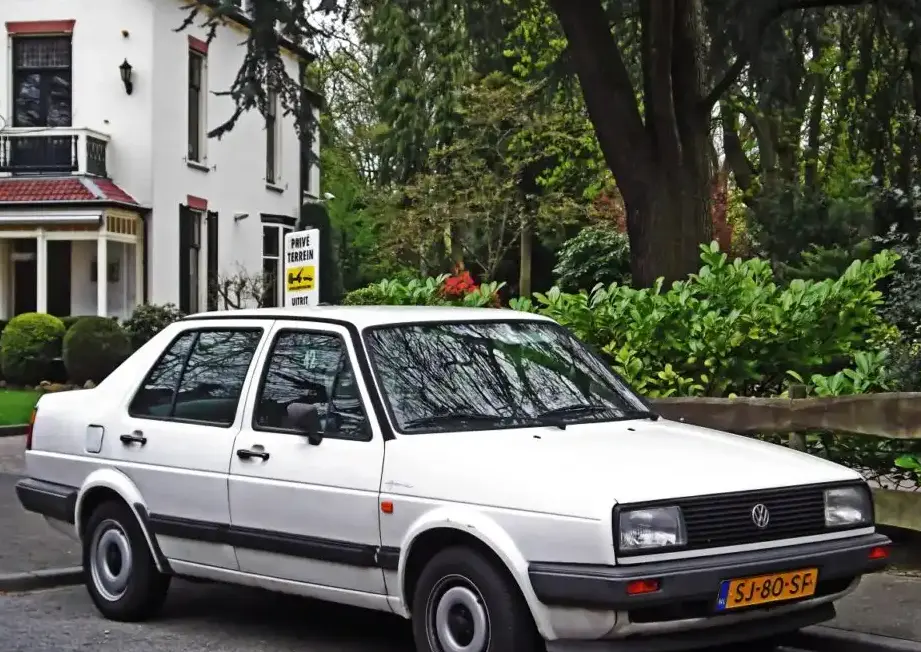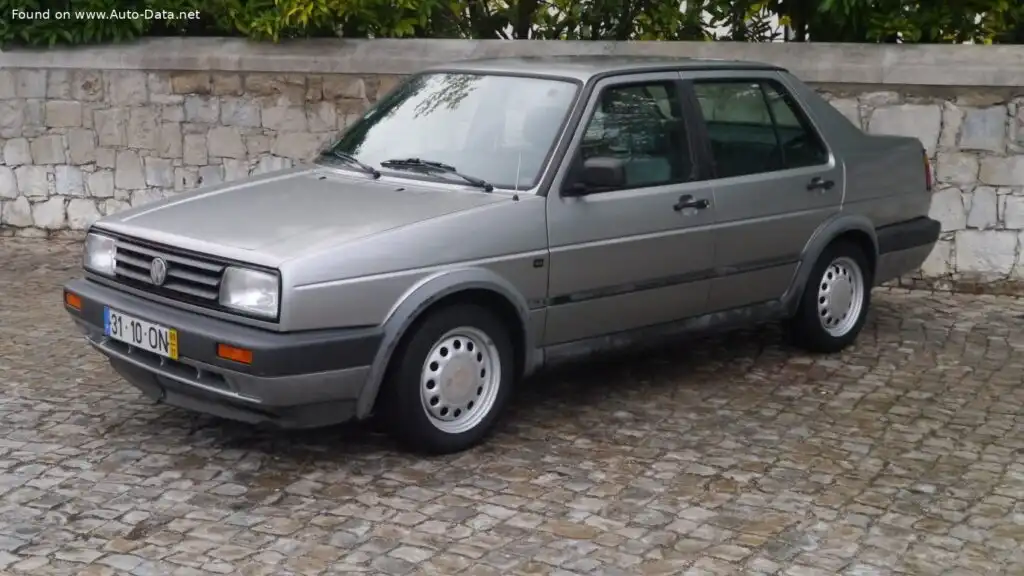
The Volkswagen Jetta II, specifically the 1.8 i variant produced from 1987 to 1991, represented a significant evolution of Volkswagen’s popular compact sedan. This facelifted version of the second-generation Jetta (internally designated the 1HX0/A3 platform) aimed to refine the original’s design and offer a more compelling package to buyers in both European and North American markets. The 1.8 i model occupied a middle ground in the Jetta II lineup, positioned as a balance between affordability and performance, offering a step up from the base models while remaining more accessible than the higher-specification VR6 or diesel options.
Technical Specifications
| Brand | Volkswagen |
| Model | Jetta |
| Generation | Jetta II (facelift 1987) |
| Type (Engine) | 1.8 i (107 Hp) |
| Start of production | 1987 |
| End of production | 1991 |
| Powertrain Architecture | Internal Combustion engine |
| Body type | Sedan |
| Seats | 5 |
| Doors | 4 |
| Fuel consumption (urban) | 10.7 l/100 km (22 US mpg, 26.4 UK mpg, 9.3 km/l) |
| Fuel consumption (extra urban) | 6.6 l/100 km (35.6 US mpg, 42.8 UK mpg, 15.2 km/l) |
| Fuel consumption (combined) | 8.7 l/100 km (27 US mpg, 32.5 UK mpg, 11.5 km/l) |
| Fuel Type | Petrol (Gasoline) |
| Acceleration 0 – 100 km/h | 10.6 sec |
| Acceleration 0 – 62 mph | 10.6 sec |
| Acceleration 0 – 60 mph | 10.1 sec |
| Maximum speed | 184 km/h (114.33 mph) |
| Weight-to-power ratio | 9.3 kg/Hp, 107 Hp/tonne |
| Weight-to-torque ratio | 6.4 kg/Nm, 157 Nm/tonne |
| Power | 107 Hp @ 5400 rpm |
| Power per litre | 60.1 Hp/l |
| Torque | 157 Nm @ 3800 rpm (115.8 lb.-ft. @ 3800 rpm) |
| Engine layout | Front, Transverse |
| Engine Model/Code | PF |
| Engine displacement | 1781 cm3 (108.68 cu. in.) |
| Number of cylinders | 4 |
| Engine configuration | Inline |
| Cylinder Bore | 81 mm (3.19 in.) |
| Piston Stroke | 86.4 mm (3.4 in.) |
| Compression ratio | 10:1 |
| Number of valves per cylinder | 2 |
| Fuel injection system | Multi-port manifold injection |
| Engine aspiration | Naturally aspirated engine |
| Engine oil capacity | 4 l (4.23 US qt | 3.52 UK qt) |
| Coolant capacity | 6.5 l (6.87 US qt | 5.72 UK qt) |
| Kerb Weight | 1000 kg (2204.62 lbs.) |
| Max. weight | 1495 kg (3295.91 lbs.) |
| Max load | 495 kg (1091.29 lbs.) |
| Trunk (boot) space – minimum | 575 l (20.31 cu. ft.) |
| Fuel tank capacity | 55 l (14.53 US gal | 12.1 UK gal) |
| Length | 4385 mm (172.64 in.) |
| Width | 1675 mm (65.94 in.) |
| Height | 1415 mm (55.71 in.) |
| Wheelbase | 2475 mm (97.44 in.) |
| Front track | 1425 mm (56.1 in.) |
| Rear (Back) track | 1420 mm (55.91 in.) |
| Drag coefficient (Cd) | 0.36 |
| Drivetrain Architecture | The Internal combustion engine (ICE) drives the front wheels of the vehicle. |
| Drive wheel | Front wheel drive |
| Number of gears and type of gearbox | 5 gears, manual transmission |
| Front suspension | Spring-loaded rack |
| Rear suspension | Spring-loaded rack |
| Front brakes | Disc |
| Rear brakes | Drum |
| Assisting systems | ABS (Anti-lock braking system) |
| Steering type | Steering rack and pinion |
| Power steering | Hydraulic Steering |
| Tires size | 185/70 R14 |
| Wheel rims size | 14 |
Powertrain & Engine Architecture
The heart of the Jetta II 1.8 i was the PF engine, a 1.8-liter inline-four cylinder gasoline engine. This engine belonged to Volkswagen’s EA827 series, known for its relatively simple and robust design. The PF engine featured a cast iron block and an aluminum cylinder head, employing a single overhead camshaft (SOHC) operating two valves per cylinder. Fuel delivery was managed by Bosch multi-port fuel injection, a significant upgrade over earlier carbureted systems, contributing to improved fuel efficiency and smoother operation. The engine produced 107 horsepower at 5400 rpm and 157 Nm (115.8 lb-ft) of torque at 3800 rpm. The engine was transversely mounted, driving the front wheels. The transmission was a 5-speed manual, offering a balance between fuel economy and driver engagement. While an automatic transmission was available, it was less common and often perceived as detracting from the engine’s performance.
Driving Characteristics
The Jetta II 1.8 i with the 5-speed manual transmission offered a reasonably engaging driving experience for its time. Acceleration from 0 to 60 mph took around 10.1 seconds, and top speed was approximately 114 mph. The engine felt responsive enough for everyday driving, with adequate torque for passing maneuvers. The gear ratios were well-chosen, providing a good balance between acceleration and cruising comfort. Compared to the more powerful VR6 version, the 1.8 i felt noticeably less potent, but it also offered better fuel economy and a lighter front end, which some drivers preferred for handling. The automatic transmission version, while offering convenience, resulted in a noticeable decrease in performance and fuel economy. The automatic’s torque converter sapped power, making the car feel sluggish, especially during acceleration.
Equipment & Trim Levels
The Jetta II 1.8 i typically came equipped with a reasonable level of standard features. These included power steering, front disc brakes, and a basic stereo system. Interior upholstery was typically cloth, with a relatively simple dashboard layout. Optional extras included air conditioning, power windows, a sunroof, and upgraded stereo systems. The trim level could vary depending on the market, but generally, the 1.8 i was positioned as a mid-range offering, bridging the gap between the base models and the more luxurious trims.
Chassis & Braking
The Jetta II utilized a MacPherson strut front suspension and a torsion beam rear suspension. This setup provided a comfortable ride, although it wasn’t particularly sporty. The front brakes were discs, while the rear brakes were drums, a common configuration for vehicles in this class at the time. ABS (Anti-lock Braking System) was available as an option, enhancing safety. The chassis was relatively lightweight, contributing to the car’s nimble handling. Stabilizer bars were fitted to both the front and rear axles, helping to reduce body roll during cornering.
Market Reception & Comparison
The Jetta II 1.8 i was generally well-received by automotive critics. It was praised for its practicality, fuel efficiency, and comfortable ride. However, some critics noted that the engine lacked the punch of the VR6 and that the interior was somewhat basic. Compared to competitors like the Ford Escort and Honda Civic, the Jetta II offered a more refined driving experience and a more spacious interior. The 1.8 i’s fuel economy was competitive, averaging around 27 mpg in combined driving. Reliability was generally good, although some owners reported issues with the fuel injection system and the cooling system.
Legacy
The Volkswagen Jetta II 1.8 i remains a popular choice among classic car enthusiasts and budget-minded drivers. The PF engine is known for its durability, and parts are generally readily available. While not a performance icon, the 1.8 i offers a reliable and affordable way to experience the classic Jetta II. The car’s simple design and relatively easy maintenance make it a good option for those looking for a project car or a daily driver. Today, well-maintained examples command a modest but growing following in the used car market, appreciated for their blend of practicality, reliability, and classic Volkswagen charm.