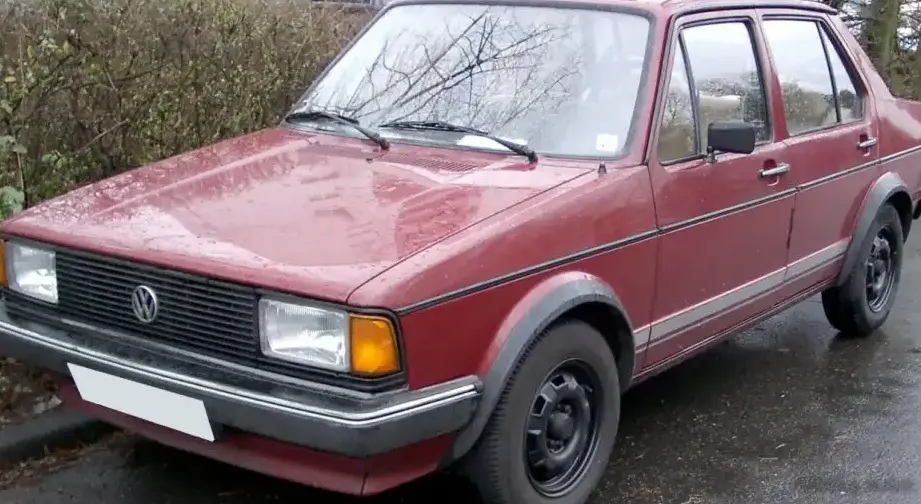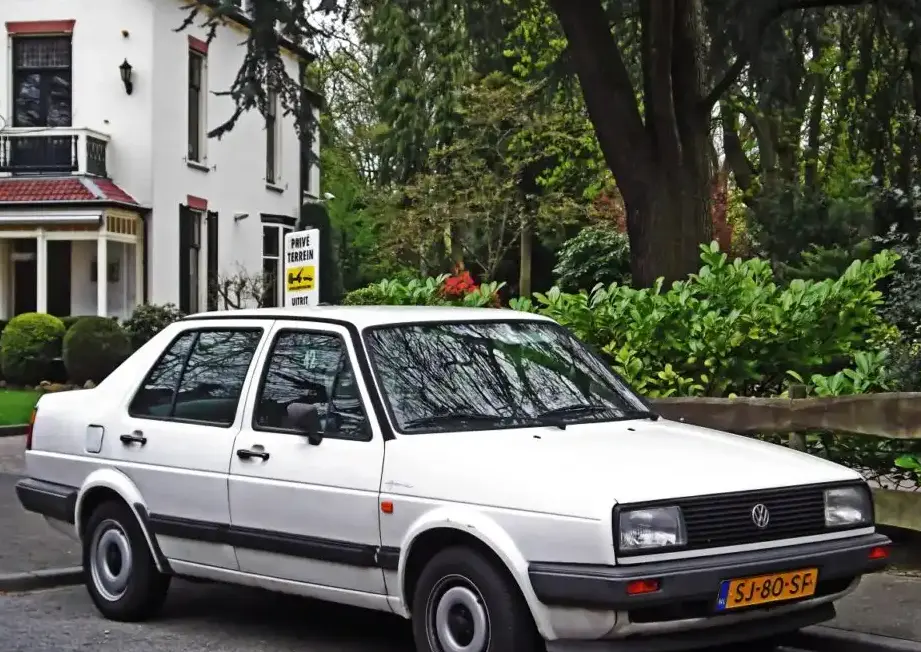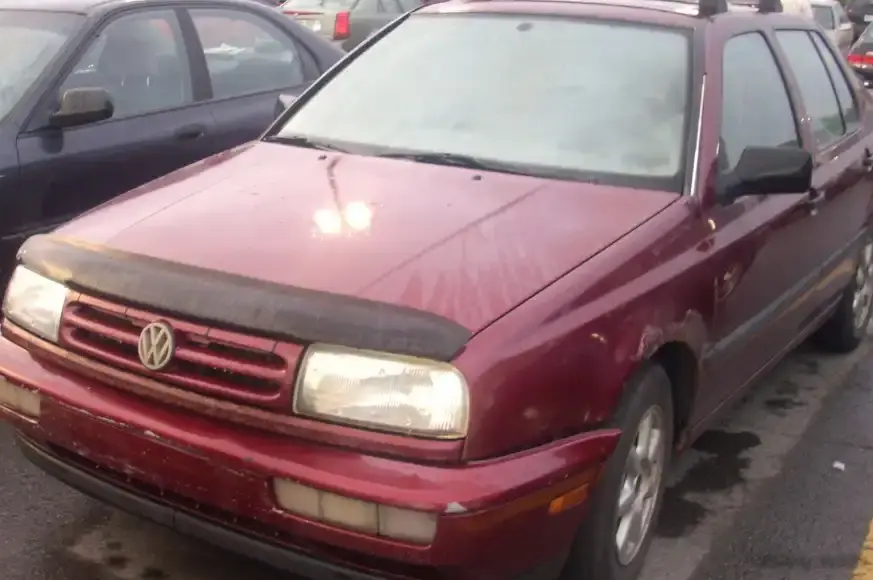
The Volkswagen Jetta III 1.6, producing 100 horsepower, was a mainstay of the Jetta lineup during its 1994-1995 production run. Positioned as an entry-level offering within the broader Jetta III (1993-1999) range – which itself was based on the Volkswagen Golf Mk3 platform (1HX0/A3) – this variant aimed to provide affordable and practical transportation. It served as the gateway to the Jetta range, appealing to buyers prioritizing economy and reliability over outright performance. While the Jetta III was sold globally, its primary market was North America and Europe, where it competed with rivals like the Honda Civic, Toyota Corolla, and Ford Escort.
Technical Specifications
| Brand | Volkswagen |
| Model | Jetta |
| Generation | Jetta III |
| Type (Engine) | 1.6 (100 Hp) |
| Start of production | 1994 |
| End of production | 1995 |
| Powertrain Architecture | Internal Combustion engine |
| Body type | Sedan |
| Seats | 5 |
| Doors | 4 |
| Fuel consumption (combined) | 7.6 l/100 km |
| Fuel consumption (US mpg) | 30.9 US mpg |
| Fuel consumption (UK mpg) | 37.2 UK mpg |
| Fuel consumption (km/l) | 13.2 km/l |
| Fuel Type | Petrol (Gasoline) |
| Acceleration 0 – 100 km/h | 11.7 sec |
| Acceleration 0 – 62 mph | 11.7 sec |
| Acceleration 0 – 60 mph | 11.1 sec |
| Maximum speed | 188 km/h (116.82 mph) |
| Weight-to-power ratio | 11.8 kg/Hp |
| Weight-to-torque ratio | 8.7 kg/Nm |
| Power | 100 Hp @ 5600 rpm |
| Power per litre | 62.7 Hp/l |
| Torque | 135 Nm @ 3800 rpm (99.57 lb.-ft. @ 3800 rpm) |
| Engine layout | Front, Transverse |
| Engine Model/Code | AEK |
| Engine displacement | 1595 cm3 (97.33 cu. in.) |
| Number of cylinders | 4 |
| Engine configuration | Inline |
| Cylinder Bore | 81 mm (3.19 in.) |
| Piston Stroke | 77.4 mm (3.05 in.) |
| Compression ratio | 10.3:1 |
| Number of valves per cylinder | 2 |
| Fuel injection system | Multi-port manifold injection |
| Engine aspiration | Naturally aspirated engine |
| Valvetrain | OHC |
| Engine oil capacity | 4 l (4.23 US qt | 3.52 UK qt) |
| Kerb Weight | 1180 kg (2601.45 lbs.) |
| Max. weight | 1590 kg (3505.35 lbs.) |
| Max load | 410 kg (903.9 lbs.) |
| Trunk (boot) space – minimum | 425 l (15.01 cu. ft.) |
| Trunk (boot) space – maximum | 885 l (31.25 cu. ft.) |
| Fuel tank capacity | 55 l (14.53 US gal | 12.1 UK gal) |
| Length | 4380 mm (172.44 in.) |
| Width | 1695 mm (66.73 in.) |
| Height | 1415 mm (55.71 in.) |
| Wheelbase | 2475 mm (97.44 in.) |
| Front track | 1465 mm (57.68 in.) |
| Rear (Back) track | 1448 mm (57.01 in.) |
| Drivetrain Architecture | The Internal combustion engine (ICE) drives the front wheels of the vehicle. |
| Drive wheel | Front wheel drive |
| Number of gears and type of gearbox | 5 gears, manual transmission |
| Front suspension | Wishbone |
| Rear suspension | Suspension with traction connecting levers |
| Front brakes | Ventilated discs |
| Rear brakes | Drum |
| Assisting systems | ABS (Anti-lock braking system) |
| Steering type | Steering rack and pinion |
| Power steering | Hydraulic Steering |
| Tires size | 185/60 R14 |
| Wheel rims size | 6J x 14 |
Powertrain & Engine Architecture
The heart of the Jetta III 1.6 was the AEK engine, a 1.6-liter inline-four cylinder gasoline engine. This engine was a relatively simple design, utilizing a single overhead camshaft (OHC) and two valves per cylinder. The AEK was a continuation of Volkswagen’s EA827 engine family, known for its durability and ease of maintenance. Fuel delivery was handled by a multi-port fuel injection system, providing a balance between efficiency and performance. The 100 horsepower output was achieved at 5600 rpm, with peak torque of 135 Nm (99.57 lb-ft) arriving at 3800 rpm. The engine’s relatively low compression ratio of 10.3:1 allowed it to run reliably on regular unleaded gasoline. The standard transmission was a five-speed manual, although a four-speed automatic transmission was also available, albeit at a slight performance penalty.
Driving Characteristics
The Jetta III 1.6 with the manual transmission offered adequate, if not exhilarating, performance. Acceleration from 0-60 mph took around 11.1 seconds, and top speed was approximately 116.82 mph. The 1.6-liter engine felt somewhat strained at higher speeds or when carrying a full load. The automatic transmission further diminished acceleration times. The gear ratios in the five-speed manual were well-spaced, allowing for reasonable fuel economy during highway cruising. However, the engine lacked the low-end torque of larger displacement engines, requiring frequent downshifts when navigating hills or overtaking. Compared to the more powerful 2.0-liter and VR6 versions of the Jetta III, the 1.6 was noticeably slower, but it provided a more economical and refined driving experience.
Equipment & Trim Levels
The Jetta III 1.6 typically came with a fairly basic level of equipment. Standard features generally included power steering, front disc brakes, and a basic stereo system. Interior upholstery was typically cloth, and the dashboard featured a simple, functional design. Optional extras included air conditioning, power windows, central locking, and an upgraded stereo system. Trim levels varied slightly depending on the market, but the 1.6 generally represented the entry point to the Jetta range. Higher trim levels, such as the GL, offered more luxurious features and upgraded interior appointments.
Chassis & Braking
The Jetta III utilized a MacPherson strut front suspension and a torsion beam rear suspension. This setup provided a comfortable ride, although it wasn’t particularly sporty. The front brakes were ventilated discs, offering good stopping power, while the rear brakes were drums, which were adequate for the vehicle’s weight and performance. ABS (Anti-lock Braking System) was available as an option, enhancing safety in emergency braking situations. The chassis was relatively lightweight, contributing to the car’s fuel efficiency. Stabilizer bars were fitted to both the front and rear axles, helping to reduce body roll during cornering.
Market Reception & Comparison
The Jetta III 1.6 was generally well-received as an affordable and reliable family sedan. Critics praised its fuel economy and practicality, but noted its lack of outright performance. Compared to the more powerful Jetta variants, the 1.6 offered significantly better fuel economy – around 30.9 US mpg combined – but at the cost of acceleration and overall driving enjoyment. The 1.6 was often seen as a sensible choice for buyers prioritizing value and efficiency over performance. The automatic transmission version, while offering convenience, further reduced performance and fuel economy.
Legacy
The AEK engine, found in the Jetta III 1.6, proved to be a durable and reliable powerplant. Many examples are still on the road today, testament to its robust design. However, age-related issues such as oil leaks and corrosion can be common. The Jetta III 1.6 remains a popular choice for budget-conscious buyers looking for a practical and affordable used car. Its simplicity and ease of maintenance make it an attractive option for those comfortable with basic automotive repairs. While not a performance icon, the Jetta III 1.6 played a significant role in providing affordable transportation to a wide range of drivers.