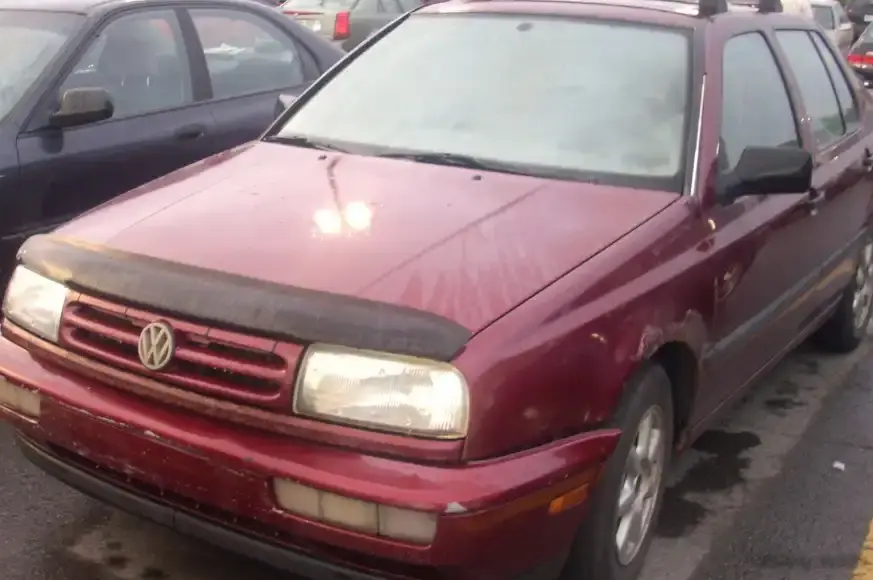
The Volkswagen Jetta III, produced between 1992 and 1998, marked a significant step forward in Volkswagen’s compact sedan lineup. Built on the A3 platform – shared with models like the Golf, Vento, and New Beetle – the Jetta III aimed for a more sophisticated and refined driving experience than its predecessor. Within the Jetta III range, the 1.8-liter, 75 horsepower variant paired with an automatic transmission occupied an entry-level position, appealing to buyers who valued affordability and ease of operation over outright performance. This model found particular popularity in markets, such as the United States, where automatic transmissions were preferred by a larger segment of the population.
Technical Specifications
| Brand | Volkswagen |
| Model | Jetta |
| Generation | Jetta III |
| Engine Type | 1.8 (75 Hp) |
| Start of production | 1992 |
| End of production | 1998 |
| Powertrain Architecture | Internal Combustion engine |
| Body type | Sedan |
| Seats | 5 |
| Doors | 4 |
| Fuel consumption (urban) | 9.1 l/100 km (25.8 US mpg) |
| Fuel consumption (extra urban) | 5.8 l/100 km (40.6 US mpg) |
| Fuel consumption (combined) | 7.6 l/100 km (30.9 US mpg) |
| Fuel Type | Petrol (Gasoline) |
| Acceleration 0 – 100 km/h | 14.4 sec |
| Acceleration 0 – 62 mph | 14.4 sec |
| Acceleration 0 – 60 mph | 13.7 sec |
| Maximum speed | 168 km/h (104.39 mph) |
| Weight-to-power ratio | 15.7 kg/Hp |
| Weight-to-torque ratio | 8.4 kg/Nm |
| Power | 75 Hp @ 5000 rpm |
| Power per litre | 42.1 Hp/l |
| Torque | 140 Nm @ 2500 rpm (103.26 lb.-ft. @ 2500 rpm) |
| Engine layout | Front, Transverse |
| Engine Model/Code | AAM |
| Engine displacement | 1781 cm3 (108.68 cu. in.) |
| Number of cylinders | 4 |
| Engine configuration | Inline |
| Cylinder Bore | 81 mm (3.19 in.) |
| Piston Stroke | 86.4 mm (3.4 in.) |
| Compression ratio | 9:1 |
| Number of valves per cylinder | 2 |
| Fuel injection system | Single-point injection |
| Engine aspiration | Naturally aspirated engine |
| Valvetrain | OHC |
| Engine oil capacity | 3.8 l (4.02 US qt | 3.34 UK qt) |
| Kerb Weight | 1180 kg (2601.45 lbs.) |
| Max. weight | 1590 kg (3505.35 lbs.) |
| Max load | 410 kg (903.9 lbs.) |
| Trunk (boot) space – minimum | 425 l (15.01 cu. ft.) |
| Trunk (boot) space – maximum | 885 l (31.25 cu. ft.) |
| Fuel tank capacity | 55 l (14.53 US gal | 12.1 UK gal) |
| Length | 4380 mm (172.44 in.) |
| Width | 1695 mm (66.73 in.) |
| Height | 1425 mm (56.1 in.) |
| Wheelbase | 2475 mm (97.44 in.) |
| Front track | 1464 mm (57.64 in.) |
| Rear (Back) track | 1448 mm (57.01 in.) |
| Drivetrain Architecture | The Internal combustion engine (ICE) drives the front wheels of the vehicle. |
| Drive wheel | Front wheel drive |
| Number of gears and type of gearbox | 5 gears, automatic transmission |
| Front suspension | Wishbone |
| Rear suspension | Suspension with traction connecting levers |
| Front brakes | Disc |
| Rear brakes | Drum |
| Assisting systems | ABS (Anti-lock braking system) |
| Steering type | Steering rack and pinion |
| Power steering | Hydraulic Steering |
| Tires size | 185/60 R14 |
| Wheel rims size | 6J x 14 |
Powertrain & Engine Architecture
The 1.8-liter Jetta III Automatic was powered by the Volkswagen AAM engine, an inline-four cylinder gasoline engine. This engine featured a relatively simple design, employing a single overhead camshaft (OHC) and two valves per cylinder. The AAM engine utilized multi-point fuel injection, an improvement over earlier single-point systems, enhancing fuel atomization and combustion efficiency. However, it lacked more advanced technologies such as variable valve timing. The engine’s 9:1 compression ratio was typical for the period, striking a balance between performance and fuel economy. A four-speed automatic transmission was paired with the engine, offering drivers convenience. While smooth in operation, this transmission wasn’t particularly sporty or fuel-efficient when compared to the available manual options.
Driving Characteristics
The 1.8-liter, 75 horsepower Jetta III Automatic delivered modest performance. Acceleration was unhurried, taking approximately 13.7 seconds to reach 60 mph. The automatic transmission, while user-friendly, contributed to a noticeable lack of responsiveness. Gear ratios were tuned for fuel economy rather than spirited driving. Compared to the five-speed manual version of the same engine, the automatic experienced a slight performance decrease. Jetta III models equipped with the 2.0-liter or VR6 engines offered considerably more power and a more engaging driving experience. The 1.8 Automatic was best suited for city driving and highway cruising where rapid acceleration wasn’t a primary concern.
Equipment & Trim Levels
The 1.8-liter automatic Jetta typically came with a base level of standard equipment. This generally included power steering, front disc brakes, rear drum brakes, and basic interior trim. Air conditioning was frequently an optional extra, as were power windows and central locking. Interior upholstery was typically cloth, and the dashboard featured a straightforward design with analog gauges. Higher trim levels, available with the more powerful engines, offered features like alloy wheels, upgraded audio systems, and more luxurious interior appointments. The base model aimed to provide essential transportation at an affordable price.
Chassis & Braking
The Jetta III utilized a MacPherson strut front suspension and a torsion beam rear suspension. This configuration provided a comfortable ride, but handling wasn’t particularly sharp. The front brakes were discs, providing adequate stopping power, while the rear brakes were drums, a cost-saving measure common in this vehicle class. Anti-lock braking system (ABS) was available, but not standard on all models. The chassis was designed to balance comfort and stability, prioritizing ride quality over sporty handling characteristics.
Market Reception & Comparison
The 1.8-liter automatic Jetta III received mixed reviews. Critics generally acknowledged its affordability and ease of use, but noted its limited performance. Compared to the manual transmission version, the automatic experienced a slight reduction in fuel economy. The 1.9 TDI diesel variant, also available in the Jetta III lineup, offered significantly improved fuel economy and greater torque, making it a popular choice for drivers who frequently traveled long distances. The higher-output gasoline engines provided more exciting performance but came at a higher cost. The 1.8 Automatic appealed to buyers who prioritized convenience and affordability over dynamic driving characteristics.
Legacy
The AAM engine, while not known for its high power output, proved to be relatively reliable. With consistent maintenance, these engines can operate for many years. The automatic transmission, however, can be prone to issues as it ages. Today, Jetta III models equipped with the 1.8-liter engine and automatic transmission are relatively affordable on the used car market. They represent a simple and dependable form of transportation, ideal for those seeking a basic, no-frills sedan. Parts availability is generally good, making maintenance relatively straightforward. While not a collector’s item, the Jetta III 1.8 Automatic remains a viable option for budget-conscious buyers.