Technical Specifications
| Brand | Volkswagen |
| Model | Jetta |
| Generation | Jetta III |
| Type (Engine) | 1.8 (75 Hp) Automatic |
| Start of production | 1992 |
| End of production | 1998 |
| Powertrain Architecture | Internal Combustion engine |
| Body type | Sedan |
| Seats | 5 |
| Doors | 4 |
| Fuel consumption (urban) | 11.4 l/100 km (20.6 US mpg) |
| Fuel consumption (extra urban) | 7.1 l/100 km (33.1 US mpg) |
| Fuel consumption (combined) | 8.6 l/100 km (27.4 US mpg) |
| Fuel Type | Petrol (Gasoline) |
| Acceleration 0 – 100 km/h | 16.8 sec |
| Acceleration 0 – 62 mph | 16.8 sec |
| Acceleration 0 – 60 mph | 16 sec |
| Maximum speed | 164 km/h (101.9 mph) |
| Weight-to-power ratio | 15.7 kg/Hp |
| Weight-to-torque ratio | 8.4 kg/Nm |
| Power | 75 Hp @ 5000 rpm |
| Torque | 140 Nm @ 2500 rpm (103.26 lb.-ft. @ 2500 rpm) |
| Engine layout | Front, Transverse |
| Engine Model/Code | AAM |
| Engine displacement | 1781 cm3 (108.68 cu. in.) |
| Number of cylinders | 4 |
| Engine configuration | Inline |
| Cylinder Bore | 81 mm (3.19 in.) |
| Piston Stroke | 86.4 mm (3.4 in.) |
| Compression ratio | 9:1 |
| Number of valves per cylinder | 2 |
| Fuel injection system | Single-point injection |
| Engine aspiration | Naturally aspirated |
| Valvetrain | OHC |
| Engine oil capacity | 3.8 l (4.02 US qt | 3.34 UK qt) |
| Kerb Weight | 1180 kg (2601.45 lbs.) |
| Max. weight | 1590 kg (3505.35 lbs.) |
| Max load | 410 kg (903.9 lbs.) |
| Trunk (boot) space – minimum | 425 l (15.01 cu. ft.) |
| Trunk (boot) space – maximum | 885 l (31.25 cu. ft.) |
| Fuel tank capacity | 55 l (14.53 US gal | 12.1 UK gal) |
| Length | 4380 mm (172.44 in.) |
| Width | 1695 mm (66.73 in.) |
| Height | 1425 mm (56.1 in.) |
| Wheelbase | 2475 mm (97.44 in.) |
| Front track | 1464 mm (57.64 in.) |
| Rear (Back) track | 1448 mm (57.01 in.) |
| Drivetrain Architecture | Front wheel drive |
| Number of gears and type of gearbox | 4 gears, automatic transmission |
| Front suspension | Wishbone |
| Rear suspension | Suspension with traction connecting levers |
| Front brakes | Disc |
| Rear brakes | Drum |
| Assisting systems | ABS (Anti-lock braking system) |
| Steering type | Steering rack and pinion |
| Power steering | Hydraulic |
| Tires size | 185/60 R14 |
| Wheel rims size | 6J x 14 |
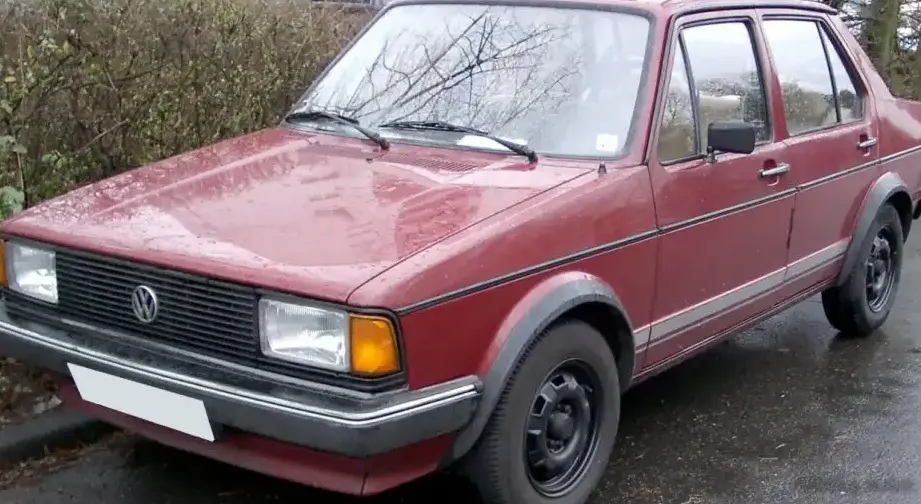
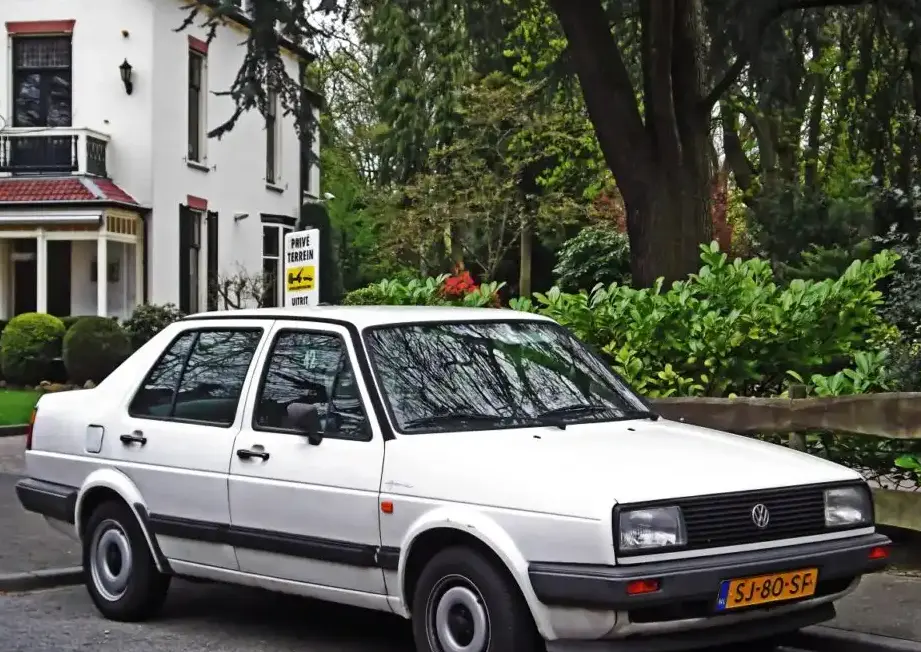
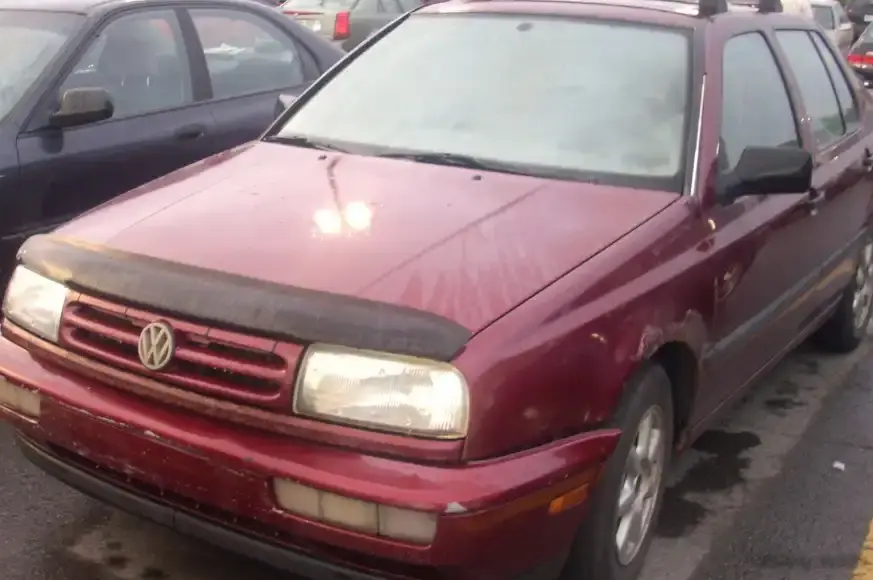
The Volkswagen Jetta III 1.8 (75 hp) Automatic, produced between 1992 and 1998, represented an entry-level offering within the third generation of Volkswagen’s popular Jetta sedan. Positioned as a more affordable and fuel-efficient option, this variant utilized the AAM engine code and a four-speed automatic transmission. It was a key model for attracting buyers seeking a practical and reliable family car, particularly in European and North American markets where the Jetta was increasingly seen as a mainstream competitor to Japanese and American sedans. This specific configuration aimed to provide comfortable transportation without the performance focus of higher-trim Jettas.
Powertrain & Engine Architecture
The heart of the Jetta III 1.8 Automatic was the Volkswagen AAM engine, a 1.8-liter inline-four cylinder powerplant. This engine featured a single-point fuel injection system (also known as throttle body injection), a relatively simple and cost-effective technology for the time. The AAM engine utilized an overhead camshaft (OHC) valvetrain with two valves per cylinder. Its 9:1 compression ratio was typical for naturally aspirated gasoline engines of the era. The four-speed automatic transmission, while providing convenience, was not known for its sportiness or efficiency. It was a traditional hydraulic automatic, lacking the electronic controls found in more modern transmissions. The transmission’s gear ratios were geared towards fuel economy and smooth cruising rather than rapid acceleration.
Driving Characteristics
The 75 hp output and the four-speed automatic transmission resulted in leisurely acceleration. Zero to 60 mph took approximately 16 seconds, and top speed was around 102 mph. In real-world driving, the Jetta III 1.8 Automatic felt adequate for everyday commuting and highway cruising, but struggled with quick overtaking maneuvers or uphill climbs. Compared to the more powerful 1.9 TDI diesel or the 2.0-liter gasoline versions, the 1.8 Automatic offered significantly less performance. The automatic transmission, while smooth, contributed to a noticeable power loss compared to the available five-speed manual transmission. The gear ratios were spaced to prioritize fuel efficiency, meaning the engine often felt strained when needing to accelerate quickly.
Equipment & Trim Levels
The 1.8 Automatic trim typically included basic features such as power steering, central locking, and a basic stereo system. Interior upholstery was usually cloth, and the dashboard featured a simple, functional design. Optional extras included air conditioning, power windows, and an upgraded stereo. The trim level was generally considered entry-level, appealing to buyers prioritizing affordability and practicality over luxury or performance. Higher trim levels, such as the GL, offered more features and a more refined interior.
Chassis & Braking
The Jetta III utilized a front independent suspension with wishbones and a rear suspension with traction connecting levers. The braking system featured disc brakes on the front wheels and drum brakes on the rear. ABS (Anti-lock Braking System) was often included as standard equipment, enhancing safety. The suspension was tuned for comfort, providing a relatively smooth ride, but it wasn’t particularly sporty. The rear drum brakes, common on base models, offered less stopping power than the disc brakes found on higher-spec Jettas.
Market Reception & Comparison
The Jetta III 1.8 Automatic was generally well-received as a practical and affordable family car. Critics praised its comfortable ride and reasonable fuel economy (around 27 mpg combined). However, the lack of power and the somewhat dated automatic transmission were common criticisms. Compared to the 1.9 TDI, the 1.8 Automatic offered less torque and lower fuel economy. The 2.0-liter gasoline version provided significantly more performance, but at a higher price point. The 1.8 Automatic appealed to buyers who prioritized affordability and ease of use over driving excitement.
Legacy
The AAM engine, while not known for being particularly high-performance, proved to be relatively reliable. With proper maintenance, these engines could accumulate high mileage. The four-speed automatic transmission, however, was sometimes prone to issues as it aged. Today, the Jetta III 1.8 Automatic is a relatively affordable classic car. Parts availability is generally good, and the simple mechanical design makes it relatively easy to maintain for DIY mechanics. While not a collector’s item, it remains a popular choice for those seeking a reliable and inexpensive used car, particularly as a first car or a daily commuter.