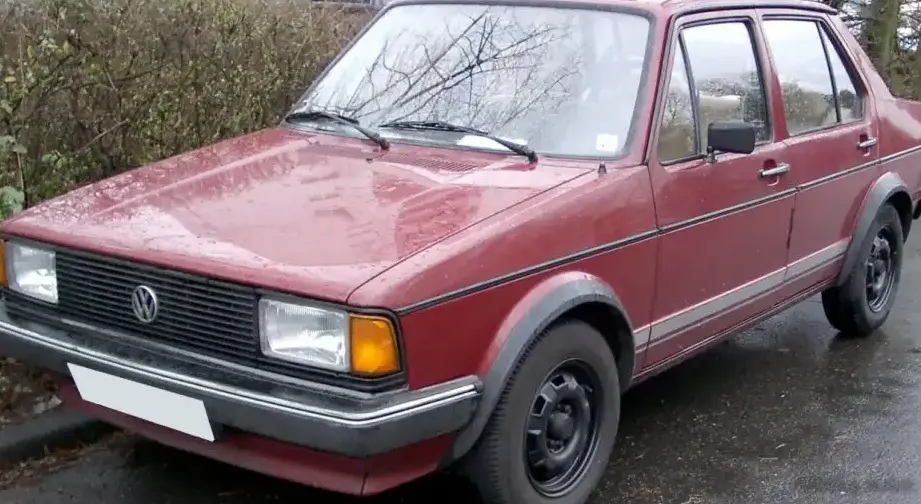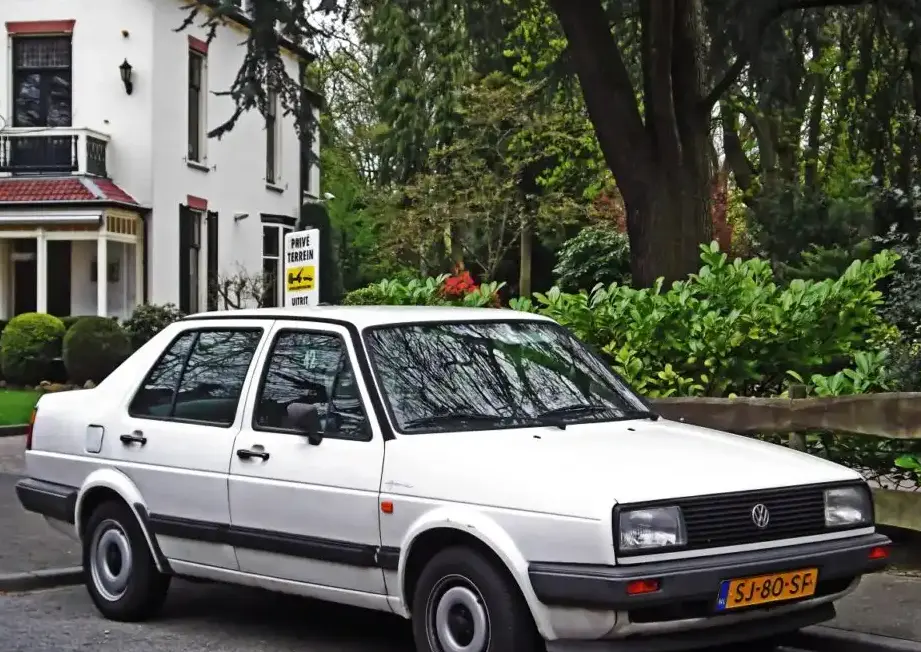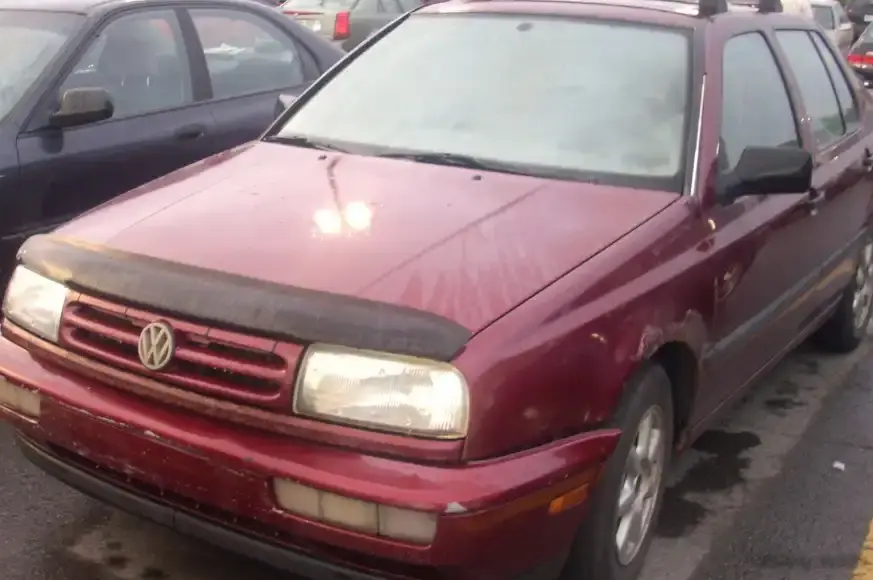
The Volkswagen Jetta III 1.9 TD (75 hp) was a diesel-powered variant of the third-generation Jetta, produced between 1992 and 1998. This model occupied a significant position in the European market, where diesel engines were – and continue to be – highly popular due to their fuel efficiency and durability. In the United States, diesel Jettas were less common, but offered a fuel-efficient alternative to gasoline-powered compacts. The 1.9 TD represented an entry-level diesel option within the Jetta III range, positioned below the more powerful TDI (Turbocharged Direct Injection) models. It was built on the Volkswagen Group’s A3 platform, shared with models like the Golf, Bora, and SEAT Toledo.
Technical Specifications
| Brand | Volkswagen |
| Model | Jetta |
| Generation | Jetta III |
| Type (Engine) | 1.9 TD (75 Hp) |
| Start of production | 1992 |
| End of production | 1998 |
| Powertrain Architecture | Internal Combustion engine |
| Body type | Sedan |
| Seats | 5 |
| Doors | 4 |
| Fuel consumption (urban) | 8.9 l/100 km (26.4 US mpg) |
| Fuel consumption (extra urban) | 6.2 l/100 km (37.9 US mpg) |
| Fuel consumption (combined) | 7.5 l/100 km (31.4 US mpg) |
| Fuel Type | Diesel |
| Acceleration 0 – 100 km/h | 15.7 sec |
| Acceleration 0 – 62 mph | 15.7 sec |
| Acceleration 0 – 60 mph | 14.9 sec |
| Maximum speed | 165 km/h (102.53 mph) |
| Weight-to-power ratio | 16.5 kg/Hp |
| Weight-to-torque ratio | 8.8 kg/Nm |
| Power | 75 Hp @ 4400 rpm |
| Power per litre | 39.6 Hp/l |
| Torque | 140 Nm @ 2400 rpm (103.26 lb.-ft. @ 2400 rpm) |
| Engine layout | Front, Transverse |
| Engine Model/Code | AAZ |
| Engine displacement | 1896 cm3 (115.7 cu. in.) |
| Number of cylinders | 4 |
| Engine configuration | Inline |
| Cylinder Bore | 79.5 mm (3.13 in.) |
| Piston Stroke | 95.5 mm (3.76 in.) |
| Compression ratio | 22.5:1 |
| Number of valves per cylinder | 2 |
| Fuel injection system | Precombustion chamber injection |
| Engine aspiration | Turbocharger |
| Valvetrain | OHC |
| Engine oil capacity | 4.5 l (4.76 US qt | 3.96 UK qt) |
| Coolant capacity | 6.6 l (6.97 US qt | 5.81 UK qt) |
| Kerb Weight | 1235 kg (2722.71 lbs.) |
| Max. weight | 1640 kg (3615.58 lbs.) |
| Max load | 405 kg (892.87 lbs.) |
| Trunk (boot) space – minimum | 425 l (15.01 cu. ft.) |
| Trunk (boot) space – maximum | 885 l (31.25 cu. ft.) |
| Fuel tank capacity | 55 l (14.53 US gal | 12.1 UK gal) |
| Length | 4380 mm (172.44 in.) |
| Width | 1695 mm (66.73 in.) |
| Height | 1424 mm (56.06 in.) |
| Wheelbase | 2475 mm (97.44 in.) |
| Front track | 1464 mm (57.64 in.) |
| Rear track | 1448 mm (57.01 in.) |
| Drivetrain Architecture | Front wheel drive |
| Number of gears | 5 |
| Gearbox type | Manual transmission |
| Front suspension | Wishbone |
| Rear suspension | Suspension with traction connecting levers |
| Front brakes | Disc |
| Rear brakes | Drum |
| Assisting systems | ABS (Anti-lock braking system) |
| Steering type | Steering rack and pinion |
| Power steering | Hydraulic |
| Tires size | 185/60 R14 |
| Wheel rims size | 6J x 14 |
INTRODUCTION
The Volkswagen Jetta III 1.9 TD, produced from 1992 to 1998, was a key component of Volkswagen’s strategy to offer fuel-efficient transportation in Europe. It represented a more affordable entry point into the Jetta III lineup, appealing to buyers prioritizing economy over outright performance. The “TD” designation signified a turbocharged diesel engine, offering a balance between power and fuel consumption. This variant was particularly popular in countries with high fuel taxes and a preference for diesel power, such as Germany, France, and the United Kingdom. The Jetta III itself was a significant evolution of the Jetta II, offering improved styling, safety features, and a more refined driving experience.
Powertrain & Engine Architecture
The heart of the Jetta III 1.9 TD was the 1.9-liter, inline-four cylinder diesel engine, typically identified by the engine code AAZ. This engine utilized a precombustion chamber injection system, a common technology for diesel engines of that era. Unlike direct injection, precombustion chambers housed a glow plug and a small auxiliary combustion chamber, promoting more complete combustion, especially during cold starts. The engine was turbocharged, boosting power output to 75 horsepower and 140 Nm (103 lb-ft) of torque. The turbocharger, though relatively small by modern standards, significantly improved low-end torque, making the car reasonably drivable even when fully loaded. The engine featured a single overhead camshaft (OHC) valvetrain, operating two valves per cylinder. The engine was transversely mounted, driving the front wheels. The transmission was a five-speed manual, chosen for its simplicity and efficiency. While an automatic transmission was available on other Jetta III models, it was not typically paired with the 1.9 TD engine due to the engine’s relatively low power output and the automatic’s impact on fuel economy.
Driving Characteristics
The Jetta III 1.9 TD with the five-speed manual transmission offered a practical, if not exhilarating, driving experience. Acceleration was modest, taking around 15.7 seconds to reach 62 mph (100 km/h). However, the engine’s strong low-end torque made it well-suited for everyday driving and overtaking maneuvers on the highway. The gear ratios were relatively long, prioritizing fuel economy over rapid acceleration. Compared to the more powerful Jetta III variants, such as the VR6 or the TDI models, the 1.9 TD felt noticeably slower. However, it offered a significant advantage in fuel economy, achieving around 31.4 US mpg (37.7 UK mpg) in combined driving. The steering was light and precise, and the suspension provided a comfortable ride, although it wasn’t particularly sporty. The car felt stable and predictable in corners, but body roll was noticeable.
Equipment & Trim Levels
The Jetta III 1.9 TD typically came with a fairly basic level of equipment, reflecting its position as an entry-level model. Standard features generally included power steering, central locking, and a basic stereo system. Interior upholstery was typically cloth, and the dashboard featured a simple, functional design. Optional extras included air conditioning, power windows, and alloy wheels. Higher trim levels, such as the GL, offered more luxurious features, such as upgraded upholstery, a sunroof, and more sophisticated audio systems. However, these options were rarely paired with the 1.9 TD engine.
Chassis & Braking
The Jetta III 1.9 TD utilized a relatively simple chassis design. The front suspension featured independent wishbones, while the rear suspension employed a torsion beam setup. This configuration provided a good balance between ride comfort and handling. The braking system consisted of disc brakes on the front wheels and drum brakes on the rear wheels. Anti-lock braking system (ABS) was often included as standard equipment, enhancing safety. The car’s relatively light weight (around 2723 lbs) helped to compensate for the modest braking performance.
Market Reception & Comparison
The Jetta III 1.9 TD was generally well-received by critics as a practical and fuel-efficient family car. It was praised for its durability, reliability, and low running costs. However, it was also criticized for its lack of performance and its relatively basic interior. Compared to the more powerful Jetta III variants, the 1.9 TD offered a significantly lower price point, making it an attractive option for budget-conscious buyers. The TDI models, while more expensive, offered superior performance and fuel economy. The 1.9 TD’s main competitors included other compact diesel sedans, such as the Ford Escort Diesel and the Opel Astra Diesel.
Legacy
The Volkswagen Jetta III 1.9 TD has proven to be a remarkably durable and reliable car. Many examples are still on the road today, testament to the quality of its engineering and construction. The AAZ engine is known for its longevity and relatively simple maintenance requirements. However, age-related issues, such as corrosion and wear and tear on rubber components, are common. In the used car market, the Jetta III 1.9 TD remains an affordable and practical option for those seeking a fuel-efficient and reliable vehicle. Its simplicity and durability make it a popular choice for DIY mechanics and those looking for a car that can withstand years of use.