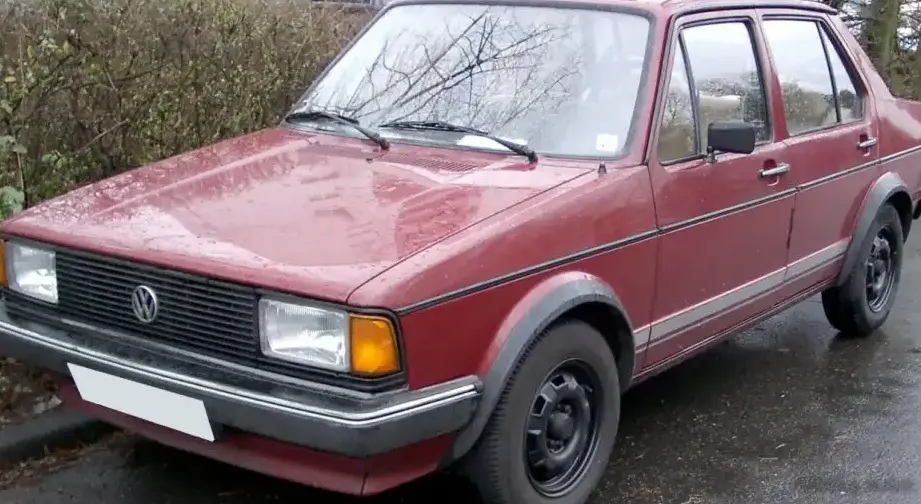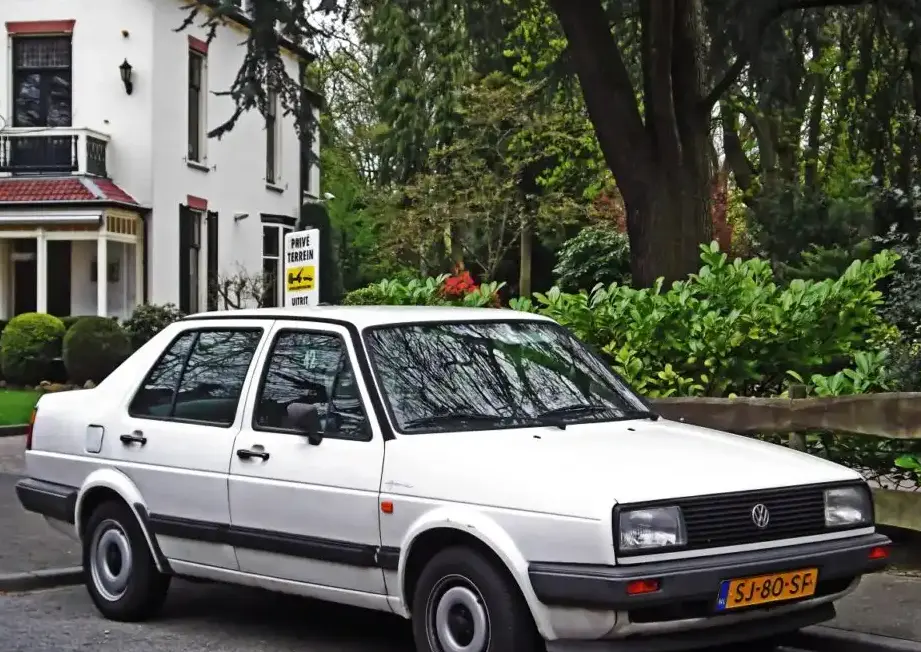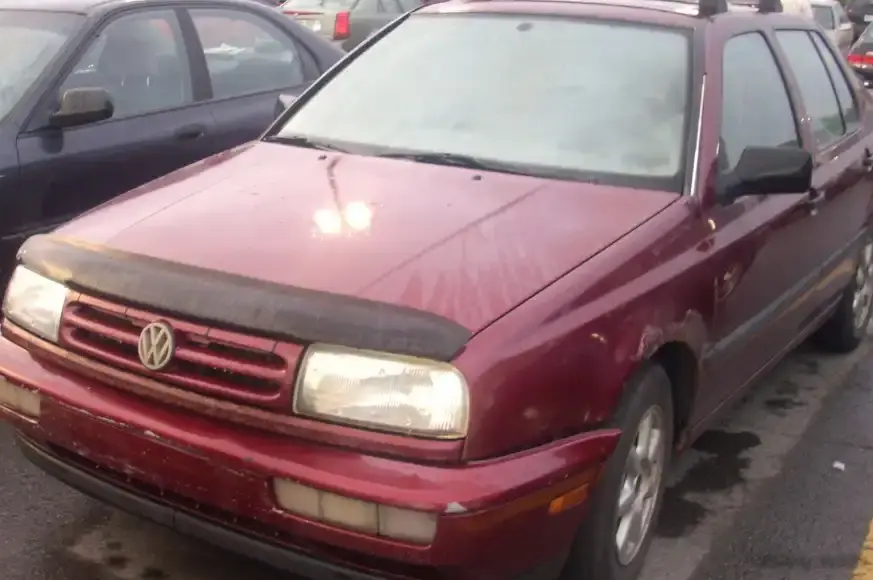
The Volkswagen Jetta III 1.9 TDI (90 hp) represented a significant step forward in diesel technology and fuel efficiency for the American market when it was introduced between 1993 and 1996. Part of the Mk3 Jetta range (Typ 1HX0/A3), this variant offered a compelling blend of practicality, economy, and surprisingly capable performance for its time. While the Jetta III was sold globally, the 1.9 TDI model was primarily aimed at European markets where diesel engines were far more prevalent. Its arrival in the US signaled a growing interest in diesel passenger cars, though it remained a niche offering compared to gasoline-powered counterparts. This specific configuration, with its 90 horsepower output and typically paired with a five-speed manual transmission, occupied a mid-range position in the Jetta III lineup, offering a balance between affordability and features.
Technical Specifications
| Brand | Volkswagen |
| Model | Jetta |
| Generation | Jetta III |
| Type (Engine) | 1.9 TDI (90 Hp) |
| Start of production | 1993 |
| End of production | 1996 |
| Powertrain Architecture | Internal Combustion engine |
| Body type | Sedan |
| Seats | 5 |
| Doors | 4 |
| Fuel consumption (urban) | 6.9 l/100 km (34.1 US mpg) |
| Fuel consumption (extra urban) | 5.1 l/100 km (46.1 US mpg) |
| Fuel consumption (combined) | 5.8 l/100 km (40.6 US mpg) |
| Fuel Type | Diesel |
| Acceleration 0 – 100 km/h | 13.2 sec |
| Acceleration 0 – 62 mph | 13.2 sec |
| Acceleration 0 – 60 mph | 12.5 sec |
| Maximum speed | 178 km/h (110.6 mph) |
| Weight-to-power ratio | 14 kg/Hp |
| Weight-to-torque ratio | 6.2 kg/Nm |
| Power | 90 Hp @ 4000 rpm |
| Torque | 202 Nm @ 1900 rpm (148.99 lb.-ft. @ 1900 rpm) |
| Engine layout | Front, Longitudinal |
| Engine Model/Code | 1Z, AHU, ALH |
| Engine displacement | 1896 cm3 (115.7 cu. in.) |
| Number of cylinders | 4 |
| Engine configuration | Inline |
| Cylinder Bore | 79.5 mm (3.13 in.) |
| Piston Stroke | 95.5 mm (3.76 in.) |
| Compression ratio | 19.5:1 |
| Number of valves per cylinder | 2 |
| Fuel injection system | Direct injection |
| Engine aspiration | Turbocharger, Intercooler |
| Valvetrain | OHC |
| Engine oil capacity | 4.5 l (4.76 US qt | 3.96 UK qt) |
| Coolant | 6.6 l (6.97 US qt | 5.81 UK qt) |
| Kerb Weight | 1260 kg (2777.82 lbs.) |
| Max. weight | 1665 kg (3670.7 lbs.) |
| Max load | 405 kg (892.87 lbs.) |
| Trunk (boot) space – minimum | 425 l (15.01 cu. ft.) |
| Trunk (boot) space – maximum | 885 l (31.25 cu. ft.) |
| Fuel tank capacity | 55 l (14.53 US gal | 12.1 UK gal) |
| Length | 4380 mm (172.44 in.) |
| Width | 1695 mm (66.73 in.) |
| Height | 1425 mm (56.1 in.) |
| Wheelbase | 2475 mm (97.44 in.) |
| Front track | 1464 mm (57.64 in.) |
| Rear (Back) track | 1448 mm (57.01 in.) |
| Drivetrain Architecture | The Internal combustion engine (ICE) drives the front wheels of the vehicle. |
| Drive wheel | Front wheel drive |
| Number of gears and type of gearbox | 5 gears, manual transmission |
| Front suspension | Wishbone |
| Rear suspension | Suspension with traction connecting levers |
| Front brakes | Ventilated discs |
| Rear brakes | Disc |
| Assisting systems | ABS (Anti-lock braking system) |
| Steering type | Steering rack and pinion |
| Power steering | Hydraulic Steering |
| Tires size | 185/60 R14 |
| Wheel rims size | 6J x 14 |
Powertrain & Engine Architecture
The heart of the Jetta III 1.9 TDI was the 1Z, AHU, or ALH engine code, all variations of Volkswagen’s robust 1.9-liter inline-four diesel. This engine utilized direct fuel injection, a relatively new technology at the time, which significantly improved fuel efficiency and reduced emissions compared to older indirect injection diesels. The engine featured an overhead camshaft (OHC) valvetrain operating two valves per cylinder. A turbocharger with an intercooler was employed to boost power output, bringing it to 90 horsepower. The turbocharger provided a noticeable increase in torque, making the car surprisingly responsive for everyday driving. The engine’s robust construction and relatively simple design contributed to its longevity and reliability. The five-speed manual transmission was the most common pairing, offering precise shifts and allowing the driver to fully utilize the engine’s torque band.
Driving Characteristics
The Jetta III 1.9 TDI, with its 90 hp and manual transmission, offered a driving experience focused on efficiency and practicality. Acceleration was adequate, with a 0-60 mph time of around 12.5 seconds, but it wasn’t designed for outright speed. The engine’s strong low-end torque made it well-suited for navigating city streets and highway cruising. The gear ratios were well-chosen to maximize fuel economy while still providing enough power for passing maneuvers. Compared to the gasoline-powered Jetta variants, the TDI offered significantly better fuel economy, making it an attractive option for drivers who prioritized cost savings. It also felt more substantial and refined than the base gasoline models, thanks to the engine’s inherent smoothness and the added weight of the turbocharger and intercooler.
Equipment & Trim Levels
The 1.9 TDI typically came with a reasonable level of standard equipment. This included power steering, central locking, and a basic stereo system. Interior upholstery was typically cloth, with a durable and functional design. Optional extras included air conditioning, power windows, and an upgraded stereo system. The trim level varied depending on the market, but generally, the TDI occupied a mid-range position, offering more features than the base models but falling short of the more luxurious trims. The dashboard layout was typical of the Mk3 Jetta, with a straightforward and ergonomic design.
Chassis & Braking
The Jetta III utilized a front-wheel-drive layout with a relatively simple suspension setup. The front suspension featured independent wishbones, while the rear suspension employed a torsion beam axle. This setup provided a comfortable ride quality, although it wasn’t particularly sporty. The braking system consisted of ventilated discs on the front wheels and solid discs on the rear. Anti-lock braking system (ABS) was standard, enhancing safety and control. The chassis was designed to provide a good balance between handling and ride comfort, making it suitable for a wide range of driving conditions.
Market Reception & Comparison
The Jetta III 1.9 TDI received generally positive reviews from automotive critics. It was praised for its fuel efficiency, reliability, and surprisingly strong performance. However, some critics noted that the engine could be somewhat noisy and that the car’s handling wasn’t as sharp as some of its competitors. Compared to the gasoline-powered Jetta variants, the TDI offered significantly better fuel economy but came with a higher initial price tag. It also required different maintenance procedures, such as more frequent oil changes and the use of specific diesel fuel filters. Against other diesel offerings of the time, the Jetta TDI stood out for its refinement and build quality.
Legacy
The Volkswagen Jetta III 1.9 TDI has proven to be a remarkably durable and reliable vehicle. Many examples are still on the road today, a testament to the engine’s robust construction and the overall quality of the car. The 1Z, AHU, and ALH engine codes are well-regarded by diesel enthusiasts for their simplicity and longevity. In the used car market, these models are often sought after by drivers who prioritize fuel economy and reliability. While maintenance costs can be higher than for gasoline-powered cars, the Jetta III 1.9 TDI remains a practical and economical choice for those seeking a dependable and fuel-efficient vehicle.