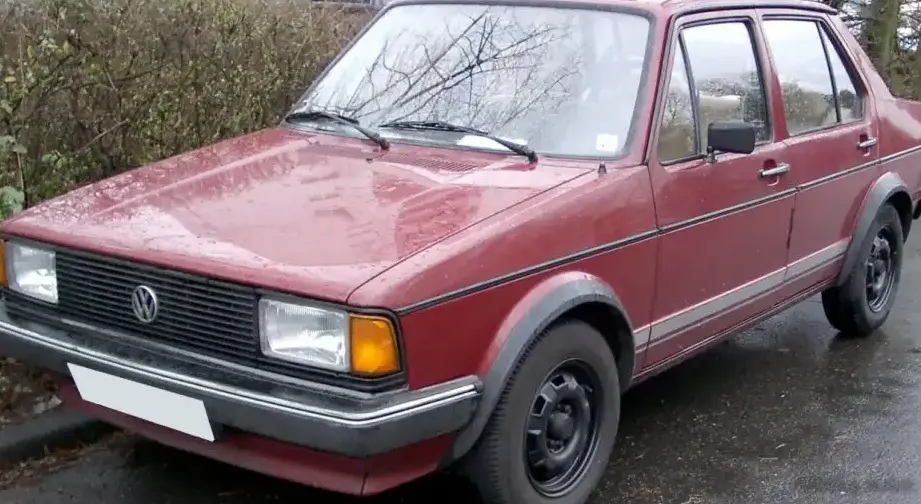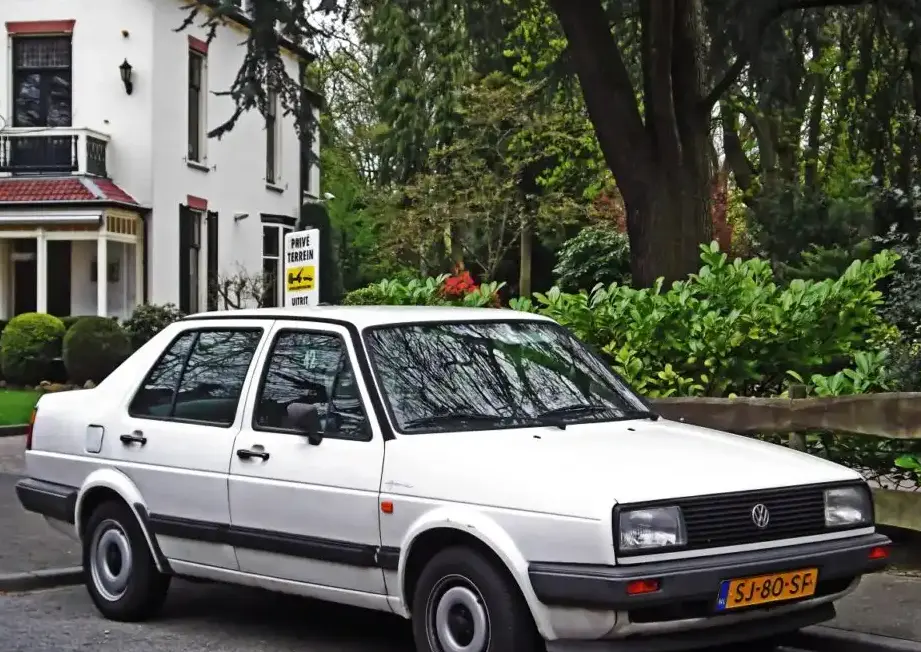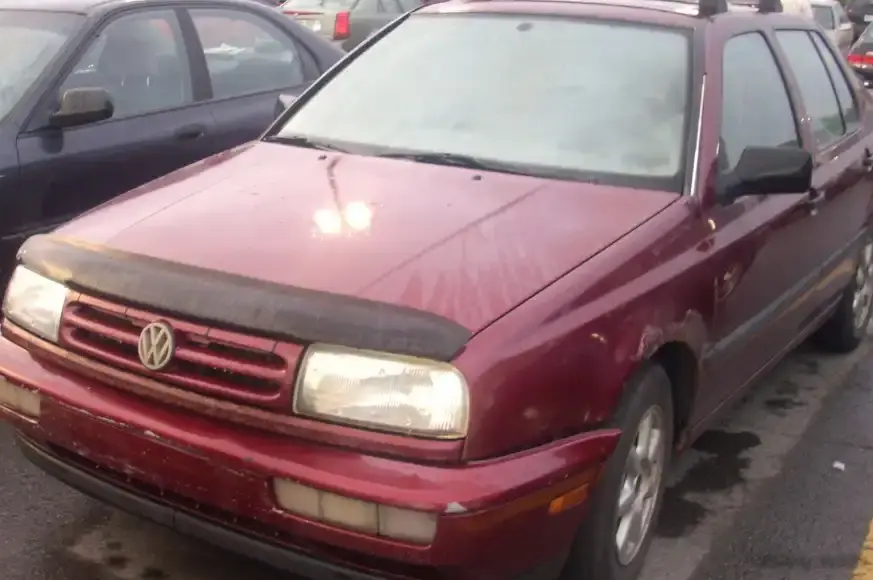
The Volkswagen Jetta III 2.0 (115 hp) was a mainstay of the Jetta lineup produced between 1994 and 1995. Positioned as a mid-range offering, it slotted between the base 1.8L models and the more performance-oriented VR6 variants. Built on the Volkswagen Group’s A3 platform (also known as the 1HX0 chassis code), the Jetta III represented a significant step forward in refinement and features compared to its predecessor. This generation Jetta was primarily aimed at the North American and European markets, offering a practical and relatively affordable family sedan. The 2.0L engine provided a balance of fuel economy and usable power, making it a popular choice for daily commuting and longer journeys.
Technical Specifications
| Brand | Volkswagen |
| Model | Jetta |
| Generation | Jetta III |
| Type (Engine) | 2.0 (115 Hp) |
| Start of production | 1994 |
| End of production | 1995 |
| Powertrain Architecture | Internal Combustion engine |
| Body type | Sedan |
| Seats | 4 |
| Doors | 4 |
| Fuel consumption (urban) | 10.5 l/100 km (22.4 US mpg, 26.9 UK mpg, 9.5 km/l) |
| Fuel consumption (extra urban) | 6 l/100 km (39.2 US mpg, 47.1 UK mpg, 16.7 km/l) |
| Fuel consumption (combined) | 7.5 l/100 km (31.4 US mpg, 37.7 UK mpg, 13.3 km/l) |
| Fuel Type | Petrol (Gasoline) |
| Acceleration 0 – 100 km/h | 10.4 sec |
| Acceleration 0 – 62 mph | 10.4 sec |
| Acceleration 0 – 60 mph | 9.9 sec |
| Maximum speed | 198 km/h (123.03 mph) |
| Weight-to-power ratio | 10.7 kg/Hp, 93.1 Hp/tonne |
| Weight-to-torque ratio | 7.3 kg/Nm, 137.7 Nm/tonne |
| Power | 115 Hp @ 5200 rpm |
| Power per litre | 58 Hp/l |
| Torque | 170 Nm @ 2400 rpm (125.39 lb.-ft. @ 2400 rpm) |
| Engine layout | Front, Transverse |
| Engine Model/Code | ABA |
| Engine displacement | 1984 cm3 (121.07 cu. in.) |
| Number of cylinders | 4 |
| Engine configuration | Inline |
| Cylinder Bore | 82.5 mm (3.25 in.) |
| Piston Stroke | 92.8 mm (3.65 in.) |
| Compression ratio | 10:1 |
| Number of valves per cylinder | 2 |
| Fuel injection system | Multi-port manifold injection |
| Engine aspiration | Naturally aspirated engine |
| Valvetrain | OHC |
| Engine oil capacity | 4 l (4.23 US qt | 3.52 UK qt) |
| Coolant capacity | 5 l (5.28 US qt | 4.4 UK qt) |
| Kerb Weight | 1235 kg (2722.71 lbs.) |
| Max. weight | 1630 kg (3593.53 lbs.) |
| Max load | 395 kg (870.83 lbs.) |
| Trunk (boot) space – minimum | 425 l (15.01 cu. ft.) |
| Trunk (boot) space – maximum | 885 l (31.25 cu. ft.) |
| Fuel tank capacity | 55 l (14.53 US gal | 12.1 UK gal) |
| Length | 4380 mm (172.44 in.) |
| Width | 1695 mm (66.73 in.) |
| Height | 1415 mm (55.71 in.) |
| Wheelbase | 2475 mm (97.44 in.) |
| Front track | 1464 mm (57.64 in.) |
| Rear (Back) track | 1448 mm (57.01 in.) |
| Drivetrain Architecture | The Internal combustion engine (ICE) drives the front wheels of the vehicle. |
| Drive wheel | Front wheel drive |
| Number of gears and type of gearbox | 5 gears, manual transmission |
| Front suspension | Wishbone |
| Rear suspension | Suspension with traction connecting levers |
| Front brakes | Ventilated discs |
| Rear brakes | Disc |
| Assisting systems | ABS (Anti-lock braking system) |
| Steering type | Steering rack and pinion |
| Power steering | Hydraulic Steering |
| Tires size | 205/50 R15 |
| Wheel rims size | 15 |
Powertrain & Engine Architecture
The Jetta III 2.0 utilized the Volkswagen ABA engine code, a 1.984-liter (121.07 cubic inches) inline four-cylinder gasoline engine. This engine was a naturally aspirated unit featuring a single overhead camshaft (SOHC) valvetrain with two valves per cylinder. Fuel delivery was handled by a Bosch Motronic multi-port fuel injection system, providing precise control over the air-fuel mixture. The ABA engine was known for its relative simplicity and durability. The 5-speed manual transmission was the standard offering, providing a direct connection between the engine and the front wheels. The transmission featured typical gear ratios for the era, prioritizing fuel efficiency and comfortable cruising over outright acceleration.
Driving Characteristics
The 115 horsepower and 125 lb-ft of torque produced by the 2.0L engine provided adequate, but not exhilarating, performance. Acceleration from 0-60 mph took approximately 9.9 seconds, and top speed was around 123 mph. The engine felt most comfortable in the mid-range, offering sufficient power for highway passing and everyday driving. Compared to the more powerful VR6 version, the 2.0L felt noticeably slower, particularly at higher speeds. However, it offered a smoother and more fuel-efficient driving experience. The manual transmission allowed for good driver control, but the gear ratios were spaced to favor economy over sporty driving.
Equipment & Trim Levels
The Jetta III 2.0 typically came standard with features such as power steering, air conditioning, and a basic audio system. Interior upholstery was typically cloth, with options for upgraded materials available. The dashboard layout was functional and straightforward, with easy-to-read gauges. Optional extras included power windows and locks, a sunroof, and upgraded audio systems. The 2.0L trim generally represented a good value proposition, offering a reasonable level of equipment without the higher price tag of the VR6 model.
Chassis & Braking
The Jetta III featured an independent front suspension with wishbones and a semi-independent rear suspension utilizing traction-connecting levers. This suspension setup provided a comfortable ride quality, although it wasn’t particularly sporty. Braking duties were handled by ventilated discs at the front and solid discs at the rear. An Anti-lock Braking System (ABS) was standard, enhancing safety and control during hard braking. The steering was rack and pinion, providing precise and responsive handling.
Market Reception & Comparison
The Jetta III 2.0 was generally well-received by automotive critics as a practical and reliable family sedan. It offered a good balance of fuel economy, comfort, and features. Compared to the VR6, the 2.0L was seen as a more sensible choice for buyers who prioritized affordability and efficiency over performance. Fuel economy was a strong point, averaging around 31.4 mpg in combined driving. Reliability was also generally good, although routine maintenance was essential to keep the engine running smoothly.
Legacy
The ABA engine found in the Jetta III 2.0 is known for its durability and relatively simple design, making it a favorite among DIY mechanics. While not a high-performance engine, it proved to be a reliable workhorse for many years. Today, well-maintained Jetta III 2.0 models are becoming increasingly sought after by enthusiasts and collectors. Parts availability is generally good, and the relatively simple mechanicals make them relatively easy to repair. The Jetta III 2.0 remains a testament to Volkswagen’s commitment to building practical and reliable automobiles.