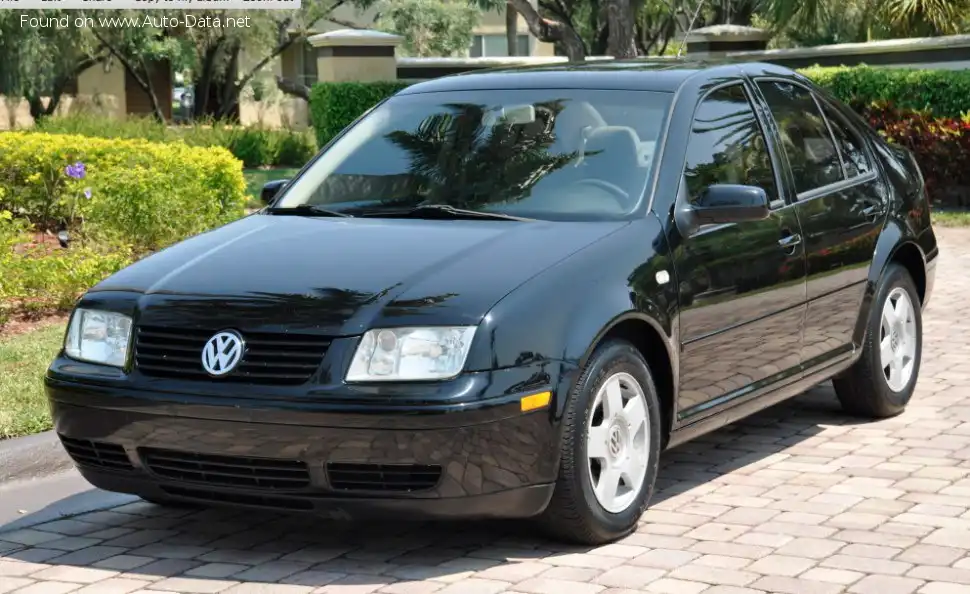
The Volkswagen Jetta IV 1.8T 20V, produced from 1998 to 2005, represented a significant evolution in Volkswagen’s compact sedan offerings. Positioned as a mid-range trim within the fourth-generation Jetta (Mk4) lineup – which spanned from base models with smaller engines to the performance-oriented VR6 – the 1.8T offered a compelling blend of performance, fuel efficiency, and features. Built on the Volkswagen Group’s A4 (or 1HX0) platform, shared with models like the Audi A3, Golf, and New Beetle, the Jetta IV aimed to appeal to a broader audience than its predecessors, offering a more refined and modern driving experience. This variant was particularly popular in North America and Europe, where the turbocharged engine provided a noticeable upgrade over naturally aspirated options.
Technical Specifications
| Brand | Volkswagen |
| Model | Jetta |
| Generation | Jetta IV |
| Type (Engine) | 1.8T 20V (150 Hp) |
| Start of production | 1998 |
| End of production | 2005 |
| Powertrain Architecture | Internal Combustion engine |
| Body type | Sedan |
| Seats | 5 |
| Doors | 4 |
| Fuel consumption (urban) | 10.7 l/100 km (22 US mpg, 26.4 UK mpg, 9.3 km/l) |
| Fuel consumption (extra urban) | 6.2 l/100 km (37.9 US mpg, 45.6 UK mpg, 16.1 km/l) |
| Fuel Type | Petrol (Gasoline) |
| Acceleration 0 – 100 km/h | 8.9 sec |
| Acceleration 0 – 62 mph | 8.9 sec |
| Acceleration 0 – 60 mph | 8.5 sec |
| Maximum speed | 216 km/h (134.22 mph) |
| Weight-to-power ratio | 8.7 kg/Hp, 115.6 Hp/tonne |
| Weight-to-torque ratio | 6.2 kg/Nm, 161.8 Nm/tonne |
| Power | 150 Hp @ 5700 rpm |
| Power per litre | 84.2 Hp/l |
| Torque | 210 Nm @ 1750 rpm (154.89 lb.-ft. @ 1750 rpm) |
| Engine layout | Front, Longitudinal |
| Engine Model/Code | AWD |
| Engine displacement | 1781 cm3 (108.68 cu. in.) |
| Number of cylinders | 4 |
| Engine configuration | Inline |
| Cylinder Bore | 81 mm (3.19 in.) |
| Piston Stroke | 86.4 mm (3.4 in.) |
| Compression ratio | 9.5:1 |
| Number of valves per cylinder | 5 |
| Fuel injection system | Multi-port manifold injection |
| Engine aspiration | Turbocharger |
| Valvetrain | DOHC |
| Engine oil capacity | 4.35 l (4.6 US qt | 3.83 UK qt) |
| Coolant | 5 l (5.28 US qt | 4.4 UK qt) |
| Kerb Weight | 1298 kg (2861.6 lbs.) |
| Max. weight | 1820 kg (4012.41 lbs.) |
| Max load | 522 kg (1150.81 lbs.) |
| Trunk (boot) space – minimum | 455 l (16.07 cu. ft.) |
| Trunk (boot) space – maximum | 785 l (27.72 cu. ft.) |
| Fuel tank capacity | 55 l (14.53 US gal | 12.1 UK gal) |
| Length | 4374 mm (172.2 in.) |
| Width | 1735 mm (68.31 in.) |
| Height | 1446 mm (56.93 in.) |
| Wheelbase | 2513 mm (98.94 in.) |
| Front track | 1513 mm (59.57 in.) |
| Rear (Back) track | 1494 mm (58.82 in.) |
| Drivetrain Architecture | The Internal combustion engine (ICE) drives the front wheels of the vehicle. |
| Drive wheel | Front wheel drive |
| Number of gears and type of gearbox | 5 gears, manual transmission |
| Front suspension | Coil spring |
| Rear suspension | Coil spring |
| Front brakes | Ventilated discs |
| Rear brakes | Disc |
| Assisting systems | ABS (Anti-lock braking system) |
| Steering type | Steering rack and pinion |
| Power steering | Hydraulic Steering |
| Tires size | 195/65 R15 |
| Wheel rims size | 6J x 15 |
Powertrain & Engine Architecture
The heart of the Jetta IV 1.8T 20V is the 1.8-liter, turbocharged inline-four cylinder engine. Typically identified by engine codes such as AUG, AWW, or AVH depending on the specific market and year, this engine represented a significant leap forward in Volkswagen’s engine technology. The “20V” designation refers to the five valves per cylinder (three intake, two exhaust) configuration, contributing to improved volumetric efficiency and broader torque curve. The engine utilizes a Bosch Motronic engine control unit (ECU) managing a multi-port fuel injection system. The turbocharger, typically a K04 unit, provides boost pressure to increase power output. The 5-speed manual transmission was the most common pairing, offering precise shifts and a direct connection to the engine. While a 4-speed automatic transmission was available, it was often criticized for its slower response and reduced fuel economy compared to the manual.
Driving Characteristics
The Jetta IV 1.8T 20V delivered a noticeably more spirited driving experience than its naturally aspirated counterparts. The 150 horsepower and 155 lb-ft of torque, readily available from 1750 rpm, provided ample power for everyday driving and confident highway passing. The manual transmission allowed drivers to fully exploit the engine’s powerband, while the automatic, though less engaging, offered convenience. The suspension, tuned for comfort, provided a reasonably compliant ride, although it wasn’t as sporty as the GTI or R32 models. The steering was precise and well-weighted, contributing to a confident feel behind the wheel. Compared to the base 1.8L engine, the 1.8T offered a substantial performance increase, reducing the 0-60 mph time to around 8.5 seconds. It also provided a more relaxed cruising experience at highway speeds.
Equipment & Trim Levels
The 1.8T trim typically included features such as air conditioning, power windows and locks, and an upgraded audio system. Higher trim levels, such as the GLX, added features like alloy wheels, a sunroof, and upgraded interior trim. Optional extras included leather upholstery, heated front seats, and a premium sound system. The interior design was functional and modern for its time, with a focus on ergonomics and ease of use. The dashboard layout was clean and straightforward, with clearly labeled controls.
Chassis & Braking
The Jetta IV utilized a MacPherson strut front suspension and a multi-link rear suspension, providing a good balance of ride comfort and handling. The front brakes were ventilated discs, while the rear brakes were typically solid discs on higher trims, with some base models equipped with drum brakes. ABS (Anti-lock Braking System) was standard equipment. The chassis was relatively lightweight, contributing to the car’s nimble handling characteristics. Stabilizer bars were fitted to both the front and rear axles to reduce body roll during cornering.
Market Reception & Comparison
The Jetta IV 1.8T 20V was generally well-received by automotive critics. It was praised for its strong engine, comfortable ride, and spacious interior. However, some critics noted the automatic transmission’s sluggishness and the relatively basic interior materials on lower trim levels. Compared to the naturally aspirated Jetta models, the 1.8T offered a significant performance upgrade for a relatively modest price increase. Compared to the VR6, it offered a more fuel-efficient alternative, albeit with less overall power. The 1.8T also proved to be more reliable than some of the diesel options available at the time.
Legacy
The Jetta IV 1.8T 20V remains a popular choice among enthusiasts and used car buyers. The 1.8T engine is known for its durability and tunability, making it a favorite among those looking for a reliable and affordable performance upgrade. While maintenance costs can increase with age, the availability of aftermarket parts and a strong online community ensure that these cars can be kept on the road for many years to come. The Jetta IV 1.8T represents a sweet spot in the fourth-generation Jetta lineup, offering a compelling combination of performance, practicality, and affordability.