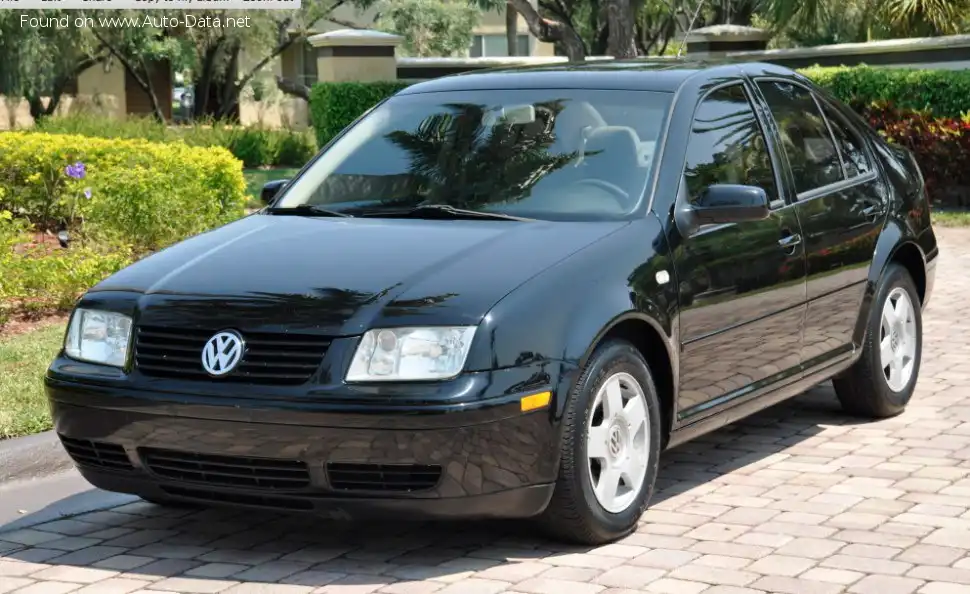
The Volkswagen Jetta IV 1.9 TDI, produced between 2000 and 2005, was a significant offering in the compact sedan segment, particularly in European markets. Built on the Volkswagen Group’s A4 (1HX0) platform – shared with the Audi A3, SEAT Leon, and Škoda Octavia – the Jetta IV aimed to provide a practical, fuel-efficient, and relatively affordable vehicle. The 1.9 TDI variant, equipped with a 101 horsepower diesel engine, was a popular choice for drivers prioritizing economy and long-distance comfort. While the Jetta IV was offered with gasoline engines in the US market, the TDI model was primarily a European offering, catering to regions with higher diesel fuel acceptance and taxation favoring efficient engines. This specific configuration, the 1.9 TDI, occupied a mid-range position in the Jetta IV lineup, offering a balance between cost and efficiency, sitting below the more powerful gasoline options like the 2.0L and VR6, but above the base 1.6L gasoline engine.
Technical Specifications
| Brand | Volkswagen |
| Model | Jetta |
| Generation | Jetta IV |
| Type (Engine) | 1.9 TDI (101 Hp) |
| Start of production | 2000 |
| End of production | 2005 |
| Powertrain Architecture | Internal Combustion engine |
| Body type | Sedan |
| Seats | 5 |
| Doors | 4 |
| Fuel consumption (urban) | 6.6 l/100 km (35.6 US mpg, 42.8 UK mpg, 15.2 km/l) |
| Fuel consumption (extra urban) | 4.3 l/100 km (54.7 US mpg, 65.7 UK mpg, 23.3 km/l) |
| Fuel consumption (combined) | 5.1 l/100 km (46.1 US mpg, 55.4 UK mpg, 19.6 km/l) |
| Fuel Type | Diesel |
| Acceleration 0 – 100 km/h | 12.1 sec |
| Acceleration 0 – 62 mph | 12.1 sec |
| Acceleration 0 – 60 mph | 11.5 sec |
| Maximum speed | 188 km/h (116.82 mph) |
| Weight-to-power ratio | 12.7 kg/Hp, 78.9 Hp/tonne |
| Weight-to-torque ratio | 5.3 kg/Nm, 187.5 Nm/tonne |
| Power | 101 Hp @ 4000 rpm |
| Power per litre | 53.3 Hp/l |
| Torque | 240 Nm @ 1800 rpm (177.01 lb.-ft. @ 1800 rpm) |
| Engine layout | Front, Longitudinal |
| Engine Model/Code | BEW |
| Engine displacement | 1896 cm3 (115.7 cu. in.) |
| Number of cylinders | 4 |
| Engine configuration | Inline |
| Cylinder Bore | 79.5 mm (3.13 in.) |
| Piston Stroke | 95.5 mm (3.76 in.) |
| Compression ratio | 19:1 |
| Number of valves per cylinder | 2 |
| Fuel injection system | Pump-nozzle (Unit Injector) |
| Engine aspiration | Turbocharger, Intercooler |
| Valvetrain | OHC |
| Engine oil capacity | 4.5 l (4.76 US qt | 3.96 UK qt) |
| Coolant | 6 l (6.34 US qt | 5.28 UK qt) |
| Kerb Weight | 1280 kg (2821.92 lbs.) |
| Max. weight | 1820 kg (4012.41 lbs.) |
| Max load | 540 kg (1190.5 lbs.) |
| Trunk (boot) space – minimum | 455 l (16.07 cu. ft.) |
| Fuel tank capacity | 55 l (14.53 US gal | 12.1 UK gal) |
| Length | 4376 mm (172.28 in.) |
| Width | 1735 mm (68.31 in.) |
| Height | 1446 mm (56.93 in.) |
| Wheelbase | 2513 mm (98.94 in.) |
| Front track | 1513 mm (59.57 in.) |
| Rear (Back) track | 1494 mm (58.82 in.) |
| Drivetrain Architecture | The Internal combustion engine (ICE) drives the front wheels of the vehicle. |
| Drive wheel | Front wheel drive |
| Number of gears and type of gearbox | 5 gears, manual transmission |
| Front suspension | Coil spring |
| Rear suspension | Coil spring |
| Front brakes | Ventilated discs |
| Rear brakes | Disc |
| Assisting systems | ABS (Anti-lock braking system) |
| Steering type | Steering rack and pinion |
| Power steering | Hydraulic Steering |
| Tires size | 195/65 R15 |
| Wheel rims size | 6J x 15 |
Powertrain & Engine Architecture
The heart of the Jetta IV 1.9 TDI is the BEW engine code, a 1.9-liter inline-four cylinder diesel. This engine is a direct-injection diesel, utilizing Volkswagen’s pump-nozzle (Unit Injector) technology. This system, developed by Bosch, injects fuel directly into the combustion chamber at extremely high pressure, improving combustion efficiency and reducing emissions compared to older indirect injection systems. The engine features an overhead camshaft (OHC) valvetrain with two valves per cylinder. A turbocharger with an intercooler is employed to increase power output and improve throttle response. The 101 horsepower and 240 Nm (177 lb-ft) of torque were respectable figures for its time, providing a good balance between performance and fuel economy. The engine is longitudinally mounted in the engine bay, driving the front wheels. The five-speed manual transmission was the most common pairing, although a four-speed automatic transmission was also available, albeit less frequently chosen due to its impact on fuel economy and performance.
Driving Characteristics
The 1.9 TDI Jetta IV offered a distinctly different driving experience compared to its gasoline-powered counterparts. While not a performance car, the engine’s torque delivery provided strong acceleration from low RPMs, making it well-suited for everyday driving and overtaking maneuvers. The five-speed manual transmission was the most common pairing, offering precise shifts and allowing drivers to maximize the engine’s efficiency. The gear ratios were tuned for fuel economy, meaning the engine didn’t rev as high as gasoline engines. This resulted in a more relaxed driving experience, particularly on highways. The automatic transmission, while offering convenience, noticeably dulled acceleration and increased fuel consumption. Compared to the more powerful gasoline engines available in the Jetta IV range, the 1.9 TDI prioritized fuel efficiency and low-end torque over outright speed. The steering was light and precise, making it easy to maneuver in urban environments.
Equipment & Trim Levels
The Jetta IV 1.9 TDI typically came with a reasonable level of standard equipment. Base models included power windows, central locking, and an AM/FM radio. Higher trim levels, often denoted by designations like “Trendline” or “Comfortline,” added features such as alloy wheels, air conditioning, a multi-function display, and upgraded interior upholstery. Optional extras included a sunroof, leather seats, and a more advanced audio system. Interior materials were generally durable and functional, reflecting the car’s practical focus. The dashboard layout was typical of Volkswagen designs of the era, with a clear and straightforward instrument cluster. The 1.9 TDI trims often featured slightly more basic interior appointments compared to the higher-spec gasoline models, focusing on durability rather than luxury.
Chassis & Braking
The Jetta IV utilized a MacPherson strut front suspension and a multi-link rear suspension, providing a comfortable and controlled ride. Stabilizer bars were fitted to both the front and rear axles to reduce body roll during cornering. Braking duties were handled by ventilated discs on the front wheels and solid discs on the rear. Anti-lock Braking System (ABS) was standard, enhancing safety. The suspension setup was tuned to prioritize comfort and stability, rather than sporty handling. The chassis was robust and well-engineered, contributing to the Jetta IV’s reputation for reliability. The weight distribution, influenced by the engine’s longitudinal placement, contributed to balanced handling characteristics.
Market Reception & Comparison
The Jetta IV 1.9 TDI was well-received in European markets, where diesel engines were popular due to their fuel efficiency and lower running costs. Critics praised the engine’s torque, fuel economy, and overall refinement. However, some noted that the car’s styling was conservative and that the interior, while functional, lacked the visual flair of some competitors. Compared to other Jetta IV trims, the 1.9 TDI offered significantly better fuel economy than the gasoline engines, but it lacked the higher performance of the VR6 models. The 1.9 TDI was often seen as a sensible and practical choice for drivers who prioritized economy and reliability. It directly competed with other European compact diesels like the Ford Focus TDCi and Peugeot 307 HDi.
Legacy
The 1.9 TDI engine, in various iterations, became renowned for its durability and longevity. The BEW code engine found in the Jetta IV is generally considered a reliable unit, capable of high mileage with proper maintenance. Today, well-maintained examples of the Jetta IV 1.9 TDI are sought after by enthusiasts and those looking for an affordable and fuel-efficient used car. While age and mileage can present challenges, the engine’s inherent robustness and the availability of spare parts make it a viable option for those willing to invest in its upkeep. Common issues include wear on the turbocharger and potential problems with the fuel injection pump, but these are often addressable with preventative maintenance. The Jetta IV 1.9 TDI remains a testament to Volkswagen’s engineering prowess and its commitment to producing practical and reliable vehicles, and continues to be a popular choice in the used car market.