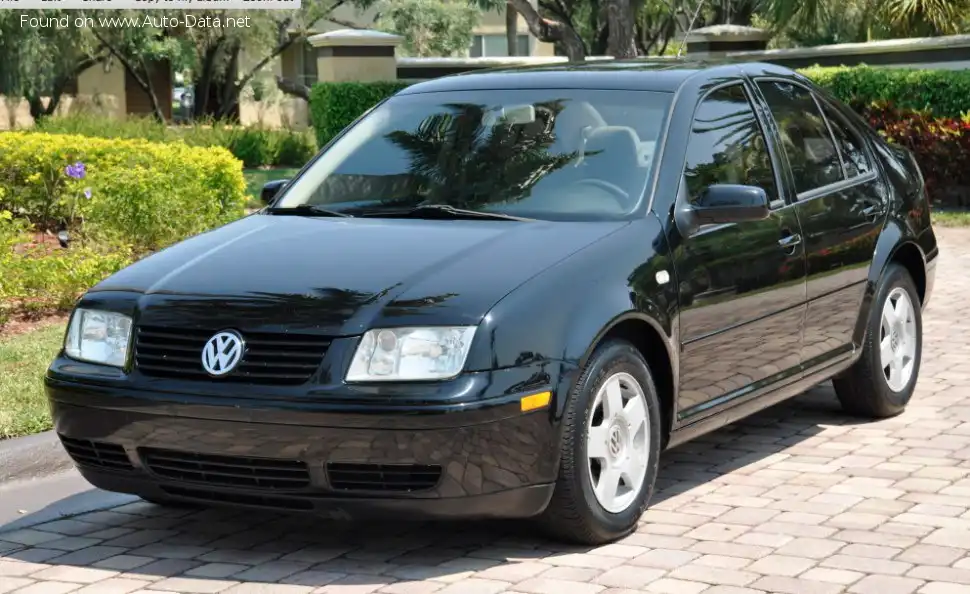
The Volkswagen Jetta IV 1.9 TDI, produced between 2001 and 2005, represents a significant iteration of Volkswagen’s popular compact sedan. Built on the A4 (1HX0) platform shared with the Golf, Bora, and New Beetle, the Jetta IV aimed to offer a more traditionally styled sedan option compared to the hatchback-focused Golf. The 1.9 TDI variant, equipped with a 130 horsepower turbocharged diesel engine, was a mainstay in European markets, prized for its fuel efficiency and torque. In the US market, diesel Jettas were less common, but gained a following among those seeking economical and long-lasting transportation. This specific engine and transmission combination occupied a middle ground in the Jetta IV lineup, offering a balance between performance and running costs.
Technical Specifications
| Brand | Volkswagen |
| Model | Jetta |
| Generation | Jetta IV |
| Type (Engine) | 1.9 TDI (130 Hp) |
| Start of production | 2001 |
| End of production | 2005 |
| Powertrain Architecture | Internal Combustion engine |
| Body type | Sedan |
| Seats | 5 |
| Doors | 4 |
| Fuel consumption (urban) | 7 l/100 km (33.6 US mpg, 40.4 UK mpg, 14.3 km/l) |
| Fuel consumption (extra urban) | 4.3 l/100 km (54.7 US mpg, 65.7 UK mpg, 23.3 km/l) |
| Fuel consumption (combined) | 5.2 l/100 km (45.2 US mpg, 54.3 UK mpg, 19.2 km/l) |
| Fuel Type | Diesel |
| Acceleration 0 – 100 km/h | 10.1 sec |
| Acceleration 0 – 62 mph | 10.1 sec |
| Acceleration 0 – 60 mph | 9.6 sec |
| Maximum speed | 205 km/h (127.38 mph) |
| Weight-to-power ratio | 10 kg/Hp, 99.6 Hp/tonne |
| Weight-to-torque ratio | 4.2 kg/Nm, 237.5 Nm/tonne |
| Power | 130 Hp @ 4000 rpm |
| Power per litre | 68.6 Hp/l |
| Torque | 310 Nm @ 1900 rpm (228.64 lb.-ft. @ 1900 rpm) |
| Engine layout | Front, Transverse |
| Engine Model/Code | ASZ |
| Engine displacement | 1896 cm3 (115.7 cu. in.) |
| Number of cylinders | 4 |
| Engine configuration | Inline |
| Cylinder Bore | 79.5 mm (3.13 in.) |
| Piston Stroke | 95.5 mm (3.76 in.) |
| Compression ratio | 19:1 |
| Number of valves per cylinder | 2 |
| Fuel injection system | Pump-nozzle (Unit Injector) |
| Engine aspiration | Turbocharger, Intercooler |
| Valvetrain | OHC |
| Engine oil capacity | 4.5 l (4.76 US qt | 3.96 UK qt) |
| Coolant | 6 l (6.34 US qt | 5.28 UK qt) |
| Kerb Weight | 1305 kg (2877.03 lbs.) |
| Max. weight | 1850 kg (4078.55 lbs.) |
| Max load | 545 kg (1201.52 lbs.) |
| Trunk (boot) space – minimum | 455 l (16.07 cu. ft.) |
| Fuel tank capacity | 55 l (14.53 US gal | 12.1 UK gal) |
| Length | 4376 mm (172.28 in.) |
| Width | 1735 mm (68.31 in.) |
| Height | 1446 mm (56.93 in.) |
| Wheelbase | 2513 mm (98.94 in.) |
| Front track | 1513 mm (59.57 in.) |
| Rear (Back) track | 1494 mm (58.82 in.) |
| Drivetrain Architecture | The Internal combustion engine (ICE) drives the front wheels of the vehicle. |
| Drive wheel | Front wheel drive |
| Number of gears and type of gearbox | 6 gears, manual transmission |
| Front suspension | Coil spring |
| Rear suspension | Coil spring |
| Front brakes | Ventilated discs |
| Rear brakes | Disc |
| Assisting systems | ABS (Anti-lock braking system) |
| Steering type | Steering rack and pinion |
| Power steering | Hydraulic Steering |
| Tires size | 195/65 R15 V |
| Wheel rims size | 6J x 15 |
Powertrain & Engine Architecture
The heart of the Jetta IV 1.9 TDI is the ASZ engine, a 1.9-liter inline-four cylinder diesel. This engine is a direct descendant of the earlier ALH engine, but with refinements to improve power and reduce emissions. The ASZ utilizes a pump-nozzle (unit injector) fuel injection system, a technology that delivers highly precise fuel delivery directly into the combustion chamber at extremely high pressures. This system, developed by Bosch, contributes to the engine’s efficiency and responsiveness. The engine also features a turbocharger with an intercooler, boosting power output to 130 horsepower and 310 Nm (228.64 lb-ft) of torque. The six-speed manual transmission paired with this engine was designed to handle the torque output and provide a wide range of gear ratios for both fuel efficiency and performance. The engine’s overhead camshaft (OHC) configuration simplifies the valvetrain, contributing to its reliability.
Driving Characteristics
The Jetta IV 1.9 TDI with the six-speed manual transmission offered a surprisingly engaging driving experience. While not a sports car, the engine’s ample torque – available from as low as 1900 rpm – provided strong acceleration in everyday driving situations. The six-speed gearbox allowed for comfortable highway cruising with relatively low engine speeds, contributing to fuel economy. Compared to the 1.8L gasoline versions, the TDI offered significantly more torque and better fuel economy, but with slightly slower acceleration. The manual transmission provided more control than the available four-speed automatic, which could feel sluggish and less responsive. The gear ratios were well-chosen, allowing the engine to stay within its optimal power band during most driving scenarios.
Equipment & Trim Levels
The 1.9 TDI variant of the Jetta IV typically came with a reasonable level of standard equipment. This included power windows and locks, central locking, air conditioning, and an AM/FM radio. Higher trim levels, such as the GL, added features like alloy wheels, upgraded interior trim, and a sunroof. Optional extras included a CD changer, upgraded sound system, and leather upholstery. The interior generally featured a functional, if somewhat understated, design. Dashboard layout was typical for a Volkswagen of the era, with clearly marked gauges and intuitive controls.
Chassis & Braking
The Jetta IV utilized a MacPherson strut front suspension and a multi-link rear suspension, providing a comfortable ride and decent handling. The front brakes were ventilated discs, while the rear brakes were solid discs. Anti-lock Braking System (ABS) was standard. The suspension was tuned for comfort rather than outright sportiness, but it provided adequate control in most driving situations. Stabilizer bars were fitted to both the front and rear axles to reduce body roll during cornering. The chassis was relatively lightweight, contributing to the car’s agility.
Market Reception & Comparison
The Jetta IV 1.9 TDI was generally well-received by automotive critics, particularly in Europe. It was praised for its fuel efficiency, strong torque, and comfortable ride. However, some critics noted that the engine could be somewhat noisy compared to gasoline engines. Compared to other Jetta IV trims, the TDI offered a compelling value proposition for drivers prioritizing fuel economy and low running costs. The gasoline-powered versions offered more refinement and potentially quicker acceleration, but at the expense of fuel efficiency. The TDI was often seen as a more practical choice for long-distance driving.
Legacy
The Volkswagen Jetta IV 1.9 TDI has proven to be a remarkably durable and reliable vehicle. The ASZ engine is known for its longevity, and many examples have exceeded 200,000 miles with proper maintenance. In the used car market, these models are still sought after by those looking for an economical and dependable sedan. While maintenance costs can be higher than for some other vehicles due to the complexity of the diesel engine and fuel injection system, the long-term reliability and fuel efficiency often offset these costs. The Jetta IV 1.9 TDI remains a testament to Volkswagen’s engineering prowess and a popular choice for budget-conscious drivers.