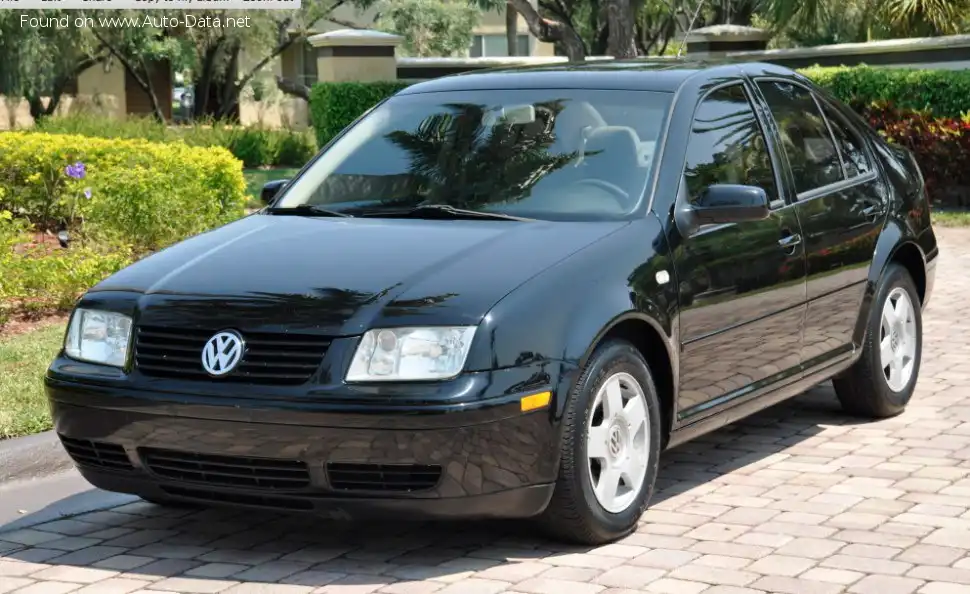
The Volkswagen Jetta IV 1.9 TDI, produced between 2000 and 2005, represented a significant offering in the compact sedan segment, particularly in European markets. Built on the Volkswagen Group’s A4 (1HX0/A3) platform – shared with models like the Golf, Bora, and Audi A3 – the Jetta IV aimed to provide a practical, fuel-efficient, and relatively affordable vehicle. The 1.9 TDI variant, boasting 150 horsepower, was positioned as a mid-range option, appealing to drivers seeking a balance between performance and economy. It served as a popular alternative to the base gasoline engines and the more expensive, performance-oriented trims.
Technical Specifications
| Brand | Volkswagen |
| Model | Jetta |
| Generation | Jetta IV |
| Type (Engine) | 1.9 TDI (150 Hp) |
| Start of production | 2000 |
| End of production | 2005 |
| Powertrain Architecture | Internal Combustion engine |
| Body type | Sedan |
| Seats | 5 |
| Doors | 4 |
| Fuel consumption (urban) | 7.2 l/100 km (32.7 US mpg) |
| Fuel consumption (extra urban) | 4.4 l/100 km (53.5 US mpg) |
| Fuel consumption (combined) | 5.4 l/100 km (43.6 US mpg) |
| Fuel Type | Diesel |
| Acceleration 0 – 100 km/h | 9 sec |
| Acceleration 0 – 62 mph | 9 sec |
| Acceleration 0 – 60 mph | 8.6 sec |
| Maximum speed | 216 km/h (134.22 mph) |
| Weight-to-power ratio | 8.9 kg/Hp |
| Weight-to-torque ratio | 4.2 kg/Nm |
| Power | 150 Hp @ 4000 rpm |
| Torque | 320 Nm @ 1900 rpm (236.02 lb.-ft. @ 1900 rpm) |
| Engine layout | Front, Transverse |
| Engine Model/Code | ARL |
| Engine displacement | 1896 cm3 (115.7 cu. in.) |
| Number of cylinders | 4 |
| Engine configuration | Inline |
| Cylinder Bore | 79.5 mm (3.13 in.) |
| Piston Stroke | 95.5 mm (3.76 in.) |
| Compression ratio | 18.5:1 |
| Number of valves per cylinder | 2 |
| Fuel injection system | Pump-nozzle (Unit Injector) |
| Engine aspiration | Turbocharger, Intercooler |
| Valvetrain | OHC |
| Engine oil capacity | 4.5 l (4.76 US qt | 3.96 UK qt) |
| Coolant | 6 l (6.34 US qt | 5.28 UK qt) |
| Kerb Weight | 1330 kg (2932.15 lbs.) |
| Max. weight | 1870 kg (4122.64 lbs.) |
| Max load | 540 kg (1190.5 lbs.) |
| Trunk (boot) space – minimum | 455 l (16.07 cu. ft.) |
| Fuel tank capacity | 55 l (14.53 US gal | 12.1 UK gal) |
| Length | 4376 mm (172.28 in.) |
| Width | 1735 mm (68.31 in.) |
| Height | 1446 mm (56.93 in.) |
| Wheelbase | 2513 mm (98.94 in.) |
| Front track | 1513 mm (59.57 in.) |
| Rear (Back) track | 1494 mm (58.82 in.) |
| Drivetrain Architecture | Front wheel drive |
| Number of gears | 6 gears, manual transmission |
| Front suspension | Coil spring |
| Rear suspension | Coil spring |
| Front brakes | Ventilated discs |
| Rear brakes | Disc |
| Assisting systems | ABS (Anti-lock braking system) |
| Steering type | Steering rack and pinion |
| Power steering | Hydraulic Steering |
| Tires size | 205/55 R16 V |
| Wheel rims size | 15 |
Powertrain & Engine Architecture
The heart of the Jetta IV 1.9 TDI was the ARL engine code, a 1.9-liter inline-four cylinder diesel engine. This engine utilized a pump-nozzle (unit injector) fuel injection system, a technology that allowed for precise fuel delivery and contributed to the engine’s efficiency and power output. The engine featured an overhead camshaft (OHC) valvetrain operating two valves per cylinder. A turbocharger with an intercooler was employed to boost power and torque, providing a noticeable increase in performance over naturally aspirated diesel engines. The 18.5:1 compression ratio was typical for direct injection diesels of the era. The six-speed manual transmission was the standard offering, providing well-spaced gear ratios to maximize the engine’s torque and fuel efficiency.
Driving Characteristics
The 150 hp 1.9 TDI offered a compelling driving experience. While not a sports car, it provided ample power for everyday driving and highway cruising. Acceleration from 0-60 mph took approximately 8.6 seconds, and top speed was rated at 134 mph. The turbocharger provided a noticeable surge of power in the mid-range, making overtaking maneuvers relatively effortless. The six-speed manual transmission allowed drivers to keep the engine in its optimal power band. Compared to the base gasoline engines, the TDI offered significantly more torque, resulting in better responsiveness and reduced need for frequent downshifting. Compared to the higher-output TDI variants (like the 180 hp versions), the 150 hp model offered a more balanced driving experience, prioritizing fuel economy and refinement over outright performance.
Equipment & Trim Levels
The Jetta IV 1.9 TDI typically came with a reasonable level of standard equipment. This included power windows and locks, air conditioning, and an AM/FM radio. Higher trim levels offered options such as alloy wheels, a sunroof, upgraded audio systems, and leather upholstery. Interior upholstery was typically cloth, with a functional and durable design. The dashboard layout was straightforward and user-friendly, with clearly labeled controls. Optional extras included heated front seats, automatic climate control, and a trip computer.
Chassis & Braking
The Jetta IV featured a MacPherson strut front suspension and a multi-link rear suspension, providing a comfortable and controlled ride. The front brakes were ventilated discs, while the rear brakes were solid discs. Anti-lock Braking System (ABS) was standard, enhancing safety and stability during braking. The steering was rack and pinion with hydraulic power assistance, offering precise and responsive handling. Stabilizer bars were fitted to both the front and rear axles to reduce body roll during cornering.
Market Reception & Comparison
The Jetta IV 1.9 TDI was generally well-received by automotive critics. It was praised for its fuel efficiency, strong torque, and comfortable ride. However, some critics noted that the engine could be somewhat noisy compared to gasoline engines. In terms of fuel economy, the 1.9 TDI significantly outperformed the gasoline-powered Jettas, achieving around 43.6 US mpg in combined driving. Reliability was generally good, although the pump-nozzle fuel injection system could be prone to issues if not properly maintained. Compared to other trims, the 1.9 TDI offered a compelling value proposition for drivers prioritizing fuel economy and torque.
Legacy
The Volkswagen Jetta IV 1.9 TDI remains a popular choice in the used car market, particularly among those seeking a fuel-efficient and reliable vehicle. The ARL engine, while requiring diligent maintenance (especially regarding fuel quality and oil changes), is known for its durability. The 1.9 TDI powertrain has earned a reputation for longevity, and well-maintained examples can still provide years of reliable service. The Jetta IV 1.9 TDI represents a significant chapter in Volkswagen’s history, showcasing the brand’s commitment to diesel technology and fuel efficiency.