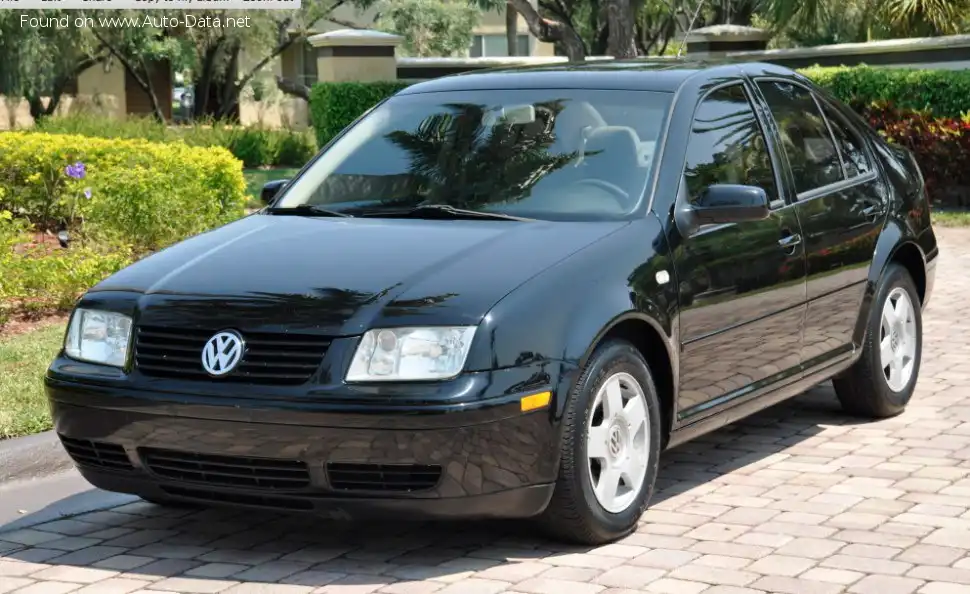
The Volkswagen Jetta IV 2.3 VR5 20V, produced between 2000 and 2005, represents a unique offering within the fourth generation (Mk4) Jetta lineup, internally designated the 1HX0/A3 platform. Positioned as a mid-range to premium trim, it aimed to bridge the gap between the more economical 1.8L four-cylinder models and the performance-oriented GTI. This variant distinguished itself with its unusual five-cylinder engine, offering a blend of refinement and respectable power output for the time. The Jetta IV, in general, was a significant model for Volkswagen in North America, offering a more mature and spacious alternative to the Golf while maintaining the brand’s reputation for build quality and engineering.
Technical Specifications
| Brand | Volkswagen |
| Model | Jetta |
| Generation | Jetta IV |
| Type (Engine) | 2.3 VR5 20V (170 Hp) |
| Start of production | 2000 year |
| End of production | 2005 year |
| Powertrain Architecture | Internal Combustion engine |
| Body type | Sedan |
| Seats | 5 |
| Doors | 4 |
| Fuel consumption (urban) | 12.4 l/100 km (19 US mpg, 22.8 UK mpg, 8.1 km/l) |
| Fuel consumption (extra urban) | 6.6 l/100 km (35.6 US mpg, 42.8 UK mpg, 15.2 km/l) |
| Fuel consumption (combined) | 8.7 l/100 km (27 US mpg, 32.5 UK mpg, 11.5 km/l) |
| Fuel Type | Petrol (Gasoline) |
| Acceleration 0 – 100 km/h | 8.5 sec |
| Acceleration 0 – 62 mph | 8.5 sec |
| Acceleration 0 – 60 mph | 8.1 sec |
| Maximum speed | 224 km/h (139.19 mph) |
| Weight-to-power ratio | 7.7 kg/Hp, 130.6 Hp/tonne |
| Weight-to-torque ratio | 5.9 kg/Nm, 169 Nm/tonne |
| Power | 170 Hp @ 6200 rpm |
| Power per litre | 73.1 Hp/l |
| Torque | 220 Nm @ 3300 rpm (162.26 lb.-ft. @ 3300 rpm) |
| Engine layout | Front, Transverse |
| Engine Model/Code | AQN |
| Engine displacement | 2324 cm3 (141.82 cu. in.) |
| Number of cylinders | 5 |
| Engine configuration | VR-engine |
| Cylinder Bore | 81 mm (3.19 in.) |
| Piston Stroke | 90.2 mm (3.55 in.) |
| Compression ratio | 10.8:1 |
| Number of valves per cylinder | 4 |
| Fuel injection system | Multi-port manifold injection |
| Engine aspiration | Naturally aspirated engine |
| Valvetrain | DOHC |
| Engine oil capacity | 3.9 l (4.12 US qt | 3.43 UK qt) |
| Coolant capacity | 9 l (9.51 US qt | 7.92 UK qt) |
| Kerb Weight | 1302 kg (2870.42 lbs.) |
| Max. weight | 1830 kg (4034.46 lbs.) |
| Max load | 528 kg (1164.04 lbs.) |
| Trunk (boot) space – minimum | 455 l (16.07 cu. ft.) |
| Fuel tank capacity | 55 l (14.53 US gal | 12.1 UK gal) |
| Length | 4376 mm (172.28 in.) |
| Width | 1735 mm (68.31 in.) |
| Height | 1446 mm (56.93 in.) |
| Wheelbase | 2513 mm (98.94 in.) |
| Front track | 1513 mm (59.57 in.) |
| Rear (Back) track | 1494 mm (58.82 in.) |
| Drivetrain Architecture | The Internal combustion engine (ICE) drives the front wheels of the vehicle. |
| Drive wheel | Front wheel drive |
| Number of gears and type of gearbox | 5 gears, manual transmission |
| Front suspension | Coil spring |
| Rear suspension | Coil spring |
| Front brakes | Ventilated discs |
| Rear brakes | Disc |
| Assisting systems | ABS (Anti-lock braking system) |
| Steering type | Steering rack and pinion |
| Power steering | Hydraulic Steering |
| Tires size | 205/55 R16 W |
| Wheel rims size | 16 |
Powertrain & Engine Architecture
The heart of the Jetta IV 2.3 VR5 is the AQN engine code, a 2.3-liter naturally aspirated VR5 engine. This engine is notable for its unique configuration – a narrow-angle V5, essentially half of a V10. This design allowed for a shorter engine block compared to a traditional inline-five, facilitating its fitment into the Jetta’s engine bay. The engine utilizes a multi-port fuel injection system, delivering fuel directly into the intake ports. The double overhead camshaft (DOHC) valvetrain, with four valves per cylinder, contributes to its relatively high specific output. The 10.8:1 compression ratio further enhances performance. The five-cylinder configuration provides a distinctive exhaust note, setting it apart from the more common four-cylinder engines. The engine was paired with a five-speed manual transmission as standard, offering precise control and a more engaging driving experience.
Driving Characteristics
The 170 horsepower and 162 lb-ft of torque produced by the 2.3 VR5 engine provided a noticeable step up in performance compared to the base 1.8L Jetta models. Acceleration from 0-60 mph took approximately 8.1 seconds, making it a reasonably quick car for its time. The power delivery was smooth and linear, thanks to the VR5 configuration and the five-speed manual transmission. While not a sports car, the VR5 Jetta offered a comfortable and capable driving experience, suitable for both daily commuting and longer road trips. Compared to the higher-output GTI, the VR5 lacked the ultimate punch, but it offered a more refined and less aggressive driving experience. The manual transmission provided good control, but the gear ratios were tuned more for fuel efficiency and cruising comfort than outright acceleration.
Equipment & Trim Levels
The Jetta IV 2.3 VR5 typically came equipped with a respectable level of standard features. This included air conditioning, power windows and locks, a CD player, and alloy wheels. Interior upholstery was typically cloth, although leather options were available. The dashboard layout was typical of the Mk4 Jetta, with a functional and straightforward design. Optional extras included a sunroof, upgraded audio systems, and heated front seats. The VR5 trim often included unique interior trim pieces and badging to distinguish it from other Jetta models. Safety features included dual front airbags and ABS brakes.
Chassis & Braking
The Jetta IV 2.3 VR5 utilized a MacPherson strut front suspension and a multi-link rear suspension, providing a comfortable and controlled ride. The suspension was tuned to balance handling and comfort, making it suitable for a variety of road conditions. Braking duties were handled by ventilated discs at the front and solid discs at the rear, equipped with ABS. The braking system was adequate for the car’s weight and performance, providing reliable stopping power. The steering was a hydraulic power-assisted rack and pinion system, offering precise and responsive steering feel.
Market Reception & Comparison
The Jetta IV 2.3 VR5 received generally positive reviews from automotive critics. It was praised for its unique engine, smooth power delivery, and comfortable ride. However, some critics noted that the engine lacked the outright performance of the GTI and that the fuel economy was not particularly impressive. Compared to the 1.8T models, the VR5 offered a different character – less about turbo boost and more about smooth, linear power. The VR5 was also generally considered more reliable than the early 1.8T engines, which were prone to oil consumption issues. Fuel economy averaged around 27 mpg combined, which was typical for a car of its size and engine displacement at the time.
Legacy
The Volkswagen Jetta IV 2.3 VR5 20V has developed a cult following among enthusiasts. The unique VR5 engine is highly regarded for its distinctive sound and smooth power delivery. While not as common as other Jetta variants, the VR5 models are sought after by those looking for a unique and refined driving experience. The engine is generally considered reliable, although regular maintenance is essential. Parts availability can be a challenge, as some VR5-specific components are becoming increasingly rare. Today, well-maintained examples of the Jetta IV 2.3 VR5 command a premium in the used car market, appealing to collectors and enthusiasts alike.