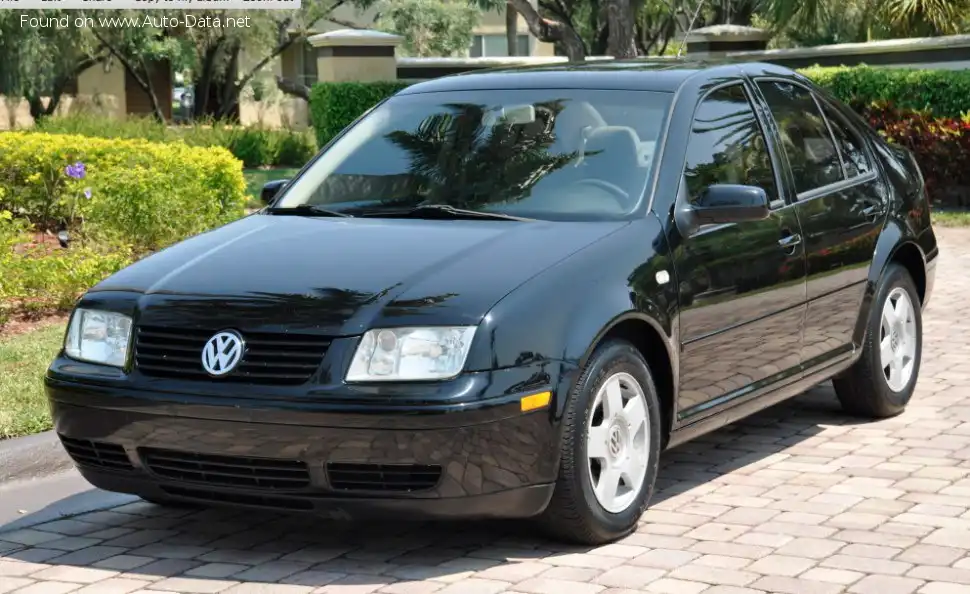
The Volkswagen Jetta IV 2.8 VR6, produced between 1999 and 2005, represented the performance-oriented pinnacle of the fourth-generation Jetta (Mk4) lineup. Built on the Volkswagen Group’s A4 (1HX0/A3) platform, shared with models like the Golf, Bora, and Audi A3, the VR6 variant aimed to deliver a more engaging driving experience than the base models. Positioned as the premium trim, it offered a significant power upgrade and a more sophisticated driving experience, appealing to enthusiasts seeking a sporty yet practical sedan. This model was primarily sold in North America and Europe, offering a blend of German engineering and accessible performance.
Technical Specifications
| Brand | Volkswagen |
| Model | Jetta |
| Generation | Jetta IV |
| Type (Engine) | 2.8 VR6 (174 Hp) |
| Start of production | 1999 |
| End of production | 2005 |
| Powertrain Architecture | Internal Combustion engine |
| Body type | Sedan |
| Seats | 5 |
| Doors | 4 |
| Fuel Type | Petrol (Gasoline) |
| Weight-to-power ratio | 8.4 kg/Hp, 119.6 Hp/tonne |
| Weight-to-torque ratio | 6.2 kg/Nm, 161.5 Nm/tonne |
| Power | 174 Hp @ 5800 rpm |
| Power per litre | 62.3 Hp/l |
| Torque | 235 Nm @ 4200 rpm (173.33 lb.-ft. @ 4200 rpm) |
| Engine layout | Front, Transverse |
| Engine Model/Code | AFP |
| Engine displacement | 2792 cm3 (170.38 cu. in.) |
| Number of cylinders | 6 |
| Engine configuration | VR-engine |
| Cylinder Bore | 81 mm (3.19 in.) |
| Piston Stroke | 90.3 mm (3.56 in.) |
| Compression ratio | 10:1 |
| Number of valves per cylinder | 2 |
| Fuel injection system | Multi-port manifold injection |
| Engine aspiration | Naturally aspirated engine |
| Valvetrain | OHC |
| Engine oil capacity | 5.8 l (6.13 US qt | 5.1 UK qt) |
| Coolant | 9 l (9.51 US qt | 7.92 UK qt) |
| Kerb Weight | 1455 kg (3207.73 lbs) |
| Max. weight | 1965 kg (4332.08 lbs) |
| Max load | 510 kg (1124.36 lbs) |
| Trunk (boot) space – minimum | 460 l (16.24 cu. ft.) |
| Trunk (boot) space – maximum | 1470 l (51.91 cu. ft.) |
| Fuel tank capacity | 62 l (16.38 US gal | 13.64 UK gal) |
| Length | 4376 mm (172.28 in.) |
| Width | 1730 mm (68.11 in.) |
| Height | 1480 mm (58.27 in.) |
| Wheelbase | 2519 mm (99.17 in.) |
| Front track | 1513 mm (59.57 in.) |
| Rear (Back) track | 1487 mm (58.54 in.) |
| Drive wheel | All wheel drive (4×4) |
| Front suspension | Coil spring |
| Rear suspension | Coil spring |
| Front brakes | Disc |
| Rear brakes | Disc |
| Assisting systems | ABS (Anti-lock braking system) |
| Steering type | Steering rack and pinion |
| Power steering | Hydraulic Steering |
| Tires size | 205/55 R16 |
| Wheel rims size | 6.5J x 16 |
Powertrain & Engine Architecture
The heart of the Jetta IV VR6 is the AFP engine, a 2.8-liter naturally aspirated VR6. This engine is characterized by its narrow-angle V6 configuration (15 degrees between cylinder banks), which allows it to be relatively compact and smooth-running. The AFP engine utilizes a multi-port fuel injection system, delivering fuel directly into the intake ports. The engine features a single overhead camshaft (OHC) per cylinder bank, operating two valves per cylinder (intake and exhaust). The VR6’s unique firing order contributes to its distinctive exhaust note. The engine was typically paired with a 5-speed automatic transmission, although a 6-speed manual was also available. The automatic transmission was designed to handle the engine’s torque output, offering smooth shifts but not necessarily prioritizing aggressive performance.
Driving Characteristics
The 2.8 VR6 automatic Jetta offered a noticeable step up in performance compared to the base 1.8L four-cylinder models. With 174 horsepower and 173 lb-ft of torque, it provided brisk acceleration and confident highway cruising. However, the automatic transmission, while comfortable, did slightly diminish the engine’s potential. Gear ratios were tuned for fuel efficiency and smooth operation rather than outright speed. Compared to the manual transmission VR6, the automatic version felt less responsive, particularly during quick overtaking maneuvers. The all-wheel-drive system (4Motion in Volkswagen terminology) provided excellent traction in various weather conditions, enhancing stability and handling. The weight distribution, while improved by the AWD system, still resulted in a slightly heavier feel compared to front-wheel-drive Jettas.
Equipment & Trim Levels
The VR6 trim typically included a higher level of standard equipment than lower Jetta models. Features commonly included air conditioning, power windows and locks, a premium sound system, and alloy wheels. Interior upholstery was often upgraded to include cloth or leather seating surfaces. Optional extras included a sunroof, heated front seats, and a navigation system. The dashboard layout was consistent with other Jetta IV models, featuring a straightforward design with easy-to-read gauges. The VR6 trim often featured unique interior trim pieces and badging to distinguish it from other models.
Chassis & Braking
The Jetta IV VR6 utilized an independent suspension system, with coil springs and shock absorbers at all four corners. The front suspension employed MacPherson struts, while the rear suspension featured a multi-link design. This setup provided a comfortable ride while maintaining good handling characteristics. Braking duties were handled by disc brakes on all four wheels, providing ample stopping power. An Anti-lock Braking System (ABS) was standard equipment, enhancing safety and control during emergency braking situations. Stabilizer bars were fitted to both the front and rear axles to reduce body roll during cornering.
Market Reception & Comparison
The Jetta IV VR6 was generally well-received by automotive critics, who praised its powerful engine, comfortable ride, and all-wheel-drive system. However, some reviewers noted that the automatic transmission could feel sluggish at times. Compared to the base 1.8L models, the VR6 offered a significant performance advantage, but at a higher price point. The VR6 also differed from the 1.9 TDI diesel variant, which prioritized fuel economy over outright power. The TDI was favored by drivers seeking a more economical option, while the VR6 appealed to those who valued performance and driving enjoyment. Fuel economy for the VR6 was rated at around 19 mpg city and 26 mpg highway, which was typical for a V6 engine of that era.
Legacy
The Jetta IV VR6, particularly the 2.8-liter AFP engine, has developed a reputation for relative reliability, although preventative maintenance is crucial. The VR6 engine is known for its durability, but issues such as oil leaks and timing chain wear can occur with age. The automatic transmission, while generally reliable, may require servicing or rebuilding after high mileage. Today, the Jetta IV VR6 remains a popular choice among enthusiasts seeking a classic German sedan with a sporty character. Well-maintained examples command a premium in the used car market, and the VR6 engine continues to be appreciated for its unique sound and performance.