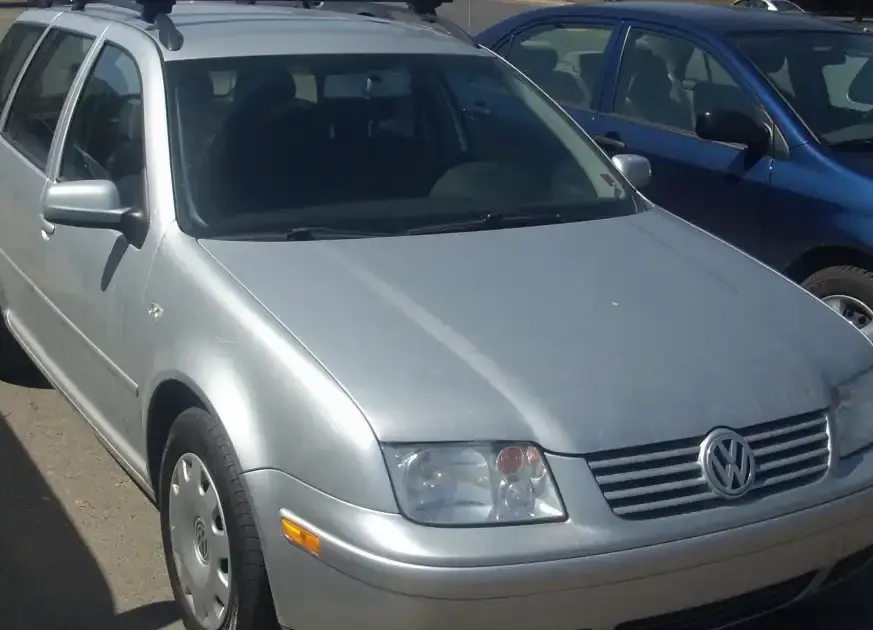
The Volkswagen Jetta IV Wagon 2.0, equipped with a 115 horsepower engine and automatic transmission, was a popular variant of the fourth-generation Jetta Wagon (1999-2005). Positioned as a mid-range offering, it provided a balance between affordability, practicality, and ease of use for North American families. This model occupied a space between the base 1.8L engine options and the more performance-oriented trims, appealing to buyers prioritizing comfort and convenience over outright speed. It was part of the larger A4 platform family, shared with models like the Golf, Bora, and New Beetle.
Technical Specifications
| Brand | Volkswagen |
| Model | Jetta |
| Generation | Jetta IV Wagon |
| Type (Engine) | 2.0 (115 Hp) Automatic |
| Start of production | 1999 |
| End of production | 2005 |
| Powertrain Architecture | Internal Combustion engine |
| Body type | Station wagon (estate) |
| Seats | 5 |
| Doors | 5 |
| Fuel consumption (urban) | 13 l/100 km (18.1 US mpg, 21.7 UK mpg, 7.7 km/l) |
| Fuel consumption (extra urban) | 6.9 l/100 km (34.1 US mpg, 40.9 UK mpg, 14.5 km/l) |
| Fuel consumption (combined) | 9.1 l/100 km (25.8 US mpg, 31 UK mpg, 11 km/l) |
| Fuel Type | Petrol (Gasoline) |
| Acceleration 0 – 100 km/h | 12.4 sec |
| Acceleration 0 – 62 mph | 12.4 sec |
| Acceleration 0 – 60 mph | 11.8 sec |
| Maximum speed | 192 km/h (119.3 mph) |
| Weight-to-power ratio | 11.2 kg/Hp, 89 Hp/tonne |
| Weight-to-torque ratio | 7.6 kg/Nm, 131.6 Nm/tonne |
| Power | 115 Hp @ 5200 rpm |
| Power per litre | 58 Hp/l |
| Torque | 170 Nm @ 2400 rpm (125.39 lb.-ft. @ 2400 rpm) |
| Engine layout | Front, Transverse |
| Engine Model/Code | AVH, BBW, BEV |
| Engine displacement | 1984 cm3 (121.07 cu. in.) |
| Number of cylinders | 4 |
| Engine configuration | Inline |
| Cylinder Bore | 82.5 mm (3.25 in.) |
| Piston Stroke | 92.8 mm (3.65 in.) |
| Compression ratio | 10:1 |
| Number of valves per cylinder | 2 |
| Fuel injection system | Multi-port manifold injection |
| Engine aspiration | Naturally aspirated engine |
| Valvetrain | OHC |
| Engine oil capacity | 4.2 l (4.44 US qt | 3.7 UK qt) |
| Coolant | 5 l (5.28 US qt | 4.4 UK qt) |
| Kerb Weight | 1292 kg (2848.37 lbs.) |
| Max. weight | 1800 kg (3968.32 lbs.) |
| Max load | 508 kg (1119.95 lbs.) |
| Trunk (boot) space – minimum | 1470 l (51.91 cu. ft.) |
| Trunk (boot) space – maximum | 1470 l (51.91 cu. ft.) |
| Fuel tank capacity | 55 l (14.53 US gal | 12.1 UK gal) |
| Length | 4409 mm (173.58 in.) |
| Width | 1735 mm (68.31 in.) |
| Height | 1473 mm (57.99 in.) |
| Wheelbase | 2515 mm (99.02 in.) |
| Front track | 1513 mm (59.57 in.) |
| Rear (Back) track | 1494 mm (58.82 in.) |
| Drivetrain Architecture | The Internal combustion engine (ICE) drives the front wheels of the vehicle. |
| Drive wheel | Front wheel drive |
| Number of gears and type of gearbox | 4 gears, automatic transmission |
| Front suspension | Coil spring |
| Rear suspension | Coil spring |
| Front brakes | Ventilated discs |
| Rear brakes | Disc |
| Assisting systems | ABS (Anti-lock braking system) |
| Steering type | Steering rack and pinion |
| Power steering | Hydraulic Steering |
| Tires size | 195/65 R15 |
| Wheel rims size | 6J x 15 |
INTRODUCTION
The Volkswagen Jetta IV Wagon 2.0 Automatic, produced between 1999 and 2005, represented a practical and versatile option within the fourth-generation Jetta Wagon lineup. Built on the 1HX0/A3 platform, it offered the spaciousness of a station wagon combined with the convenience of an automatic transmission and a reasonably efficient 2.0-liter gasoline engine. In the North American market, the Jetta Wagon aimed to provide European driving dynamics and build quality in a package appealing to families and those needing cargo capacity. This variant was particularly popular with buyers who preferred the simplicity and ease of use of an automatic gearbox over a manual transmission.
Powertrain & Engine Architecture
The heart of the Jetta IV Wagon 2.0 Automatic is the 1.8L inline-four cylinder engine, identified by engine codes AVH, BBW, or BEV depending on the specific year and market. This engine utilizes a multi-port fuel injection system, delivering fuel directly into the intake ports. The engine features a single overhead camshaft (OHC) valvetrain, operating two valves per cylinder. The 2.0-liter engine produced 115 horsepower at 5200 rpm and 170 Nm (125 lb-ft) of torque at 2400 rpm. Paired with this engine was a four-speed automatic transmission, designed for smooth and comfortable shifting. This transmission wasn’t known for its sportiness, prioritizing fuel efficiency and ease of driving. The automatic transmission featured typical torque converter technology, providing smooth launches and reducing driveline shock.
Driving Characteristics
The driving experience in the Jetta IV Wagon 2.0 Automatic was characterized by its comfort and practicality rather than outright performance. Acceleration from 0-60 mph took around 11.8 seconds, and top speed was limited to 119.3 mph. The four-speed automatic transmission, while smooth, resulted in noticeable gear changes and didn’t offer the responsiveness of a manual gearbox or a more modern automatic with more gears. The gear ratios were tuned for fuel economy and everyday drivability, meaning the engine often felt strained during aggressive acceleration. Compared to the manual transmission versions of the 2.0L, the automatic suffered a slight performance penalty. It also lacked the sporty feel of higher-performance Jetta Wagon trims equipped with the 1.8T turbocharged engine.
Equipment & Trim Levels
The Jetta IV Wagon 2.0 Automatic typically came with a reasonable level of standard equipment. This included power windows and locks, air conditioning, and an AM/FM radio with a CD player. Interior upholstery was typically cloth, with options for upgraded materials available. Common optional extras included a sunroof, alloy wheels, and a premium sound system. Trim levels varied slightly depending on the market, but generally, this 2.0L Automatic variant represented a mid-range offering, bridging the gap between the base models and the more luxurious trims. Safety features included dual front airbags and ABS (Anti-lock Braking System).
Chassis & Braking
The Jetta IV Wagon 2.0 Automatic featured a relatively simple suspension setup, consisting of coil springs and shock absorbers at all four corners. The front suspension utilized independent coil springs, while the rear suspension employed a twist beam setup. Braking duties were handled by ventilated discs at the front and solid discs at the rear. The ABS system helped to maintain steering control during hard braking. The suspension was tuned for comfort, providing a relatively smooth ride over most road surfaces. Stabilizer bars were included to reduce body roll during cornering, but the Jetta Wagon wasn’t designed for aggressive handling.
Market Reception & Comparison
The Jetta IV Wagon 2.0 Automatic received generally positive reviews for its practicality, spaciousness, and comfortable ride. Critics noted that the automatic transmission detracted slightly from performance, but appreciated its ease of use. Fuel economy was considered adequate for its class, averaging around 25.8 US mpg in combined driving. Compared to the 1.8L manual versions, the 2.0L automatic offered less engaging driving experience but greater convenience. The more powerful 1.8T turbocharged models provided significantly more performance but came at a higher price point. Reliability was generally good, although some owners reported issues with the automatic transmission over the long term.
Legacy
The Jetta IV Wagon 2.0 Automatic remains a relatively affordable and practical option in the used car market. The 2.0-liter engine and four-speed automatic transmission are known for their durability, although regular maintenance is essential. Parts availability is generally good, and the Jetta Wagon’s simple design makes it relatively easy to repair. While not a performance icon, the Jetta IV Wagon 2.0 Automatic holds a place as a dependable and versatile family vehicle, offering a blend of European engineering and American practicality.