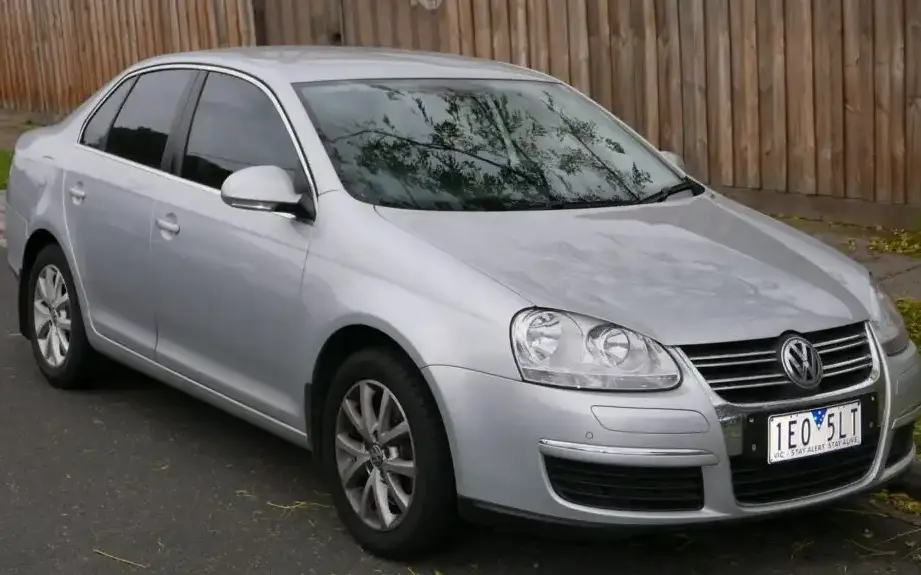
The Volkswagen Jetta V 2.0 TDI CR (170 Hp) DSG represents a significant iteration within the fifth generation (Jetta V, internally designated the 1K chassis) of Volkswagen’s popular compact sedan. Produced between 2008 and 2010, this variant was primarily aimed at the European market, offering a blend of fuel efficiency, respectable performance, and the convenience of a dual-clutch transmission. It occupied a mid-to-upper position within the Jetta V lineup, positioned above the lower-powered diesel and gasoline options, but below the performance-oriented trims. This model aimed to appeal to drivers seeking a refined and economical daily driver with a touch of sportiness.
Technical Specifications
| Brand | Volkswagen |
| Model | Jetta |
| Generation | Jetta V |
| Type (Engine) | 2.0 TDI CR (170 Hp) DSG |
| Start of production | 2008 |
| End of production | 2010 |
| Powertrain Architecture | Internal Combustion engine |
| Body type | Sedan |
| Seats | 5 |
| Doors | 4 |
| Fuel consumption (economy) – urban (NEDC) | 7.3 l/100 km (32.2 US mpg, 38.7 UK mpg, 13.7 km/l) |
| Fuel consumption (economy) – extra urban (NEDC) | 4.8 l/100 km (49 US mpg, 58.9 UK mpg, 20.8 km/l) |
| Fuel consumption (economy) – combined (NEDC) | 5.7 l/100 km (41.3 US mpg, 49.6 UK mpg, 17.5 km/l) |
| CO2 emissions (NEDC) | 154 g/km |
| Fuel Type | Diesel |
| Acceleration 0 – 100 km/h | 8.5 sec |
| Acceleration 0 – 62 mph | 8.5 sec |
| Acceleration 0 – 60 mph | 8.1 sec |
| Maximum speed | 220 km/h (136.7 mph) |
| Emission standard | Euro 4 |
| Weight-to-power ratio | 8.5 kg/Hp, 118.1 Hp/tonne |
| Weight-to-torque ratio | 4.1 kg/Nm, 243.1 Nm/tonne |
| Power | 170 Hp @ 4200 rpm |
| Torque | 350 Nm @ 1750-2500 rpm (258.15 lb.-ft. @ 1750-2500 rpm) |
| Engine layout | Front, Transverse |
| Engine Model/Code | CEGA |
| Engine displacement | 1968 cm3 (120.09 cu. in.) |
| Number of cylinders | 4 |
| Engine configuration | Inline |
| Cylinder Bore | 81 mm (3.19 in.) |
| Piston Stroke | 95.5 mm (3.76 in.) |
| Compression ratio | 16.5:1 |
| Number of valves per cylinder | 4 |
| Fuel injection system | Diesel Commonrail |
| Engine aspiration | Turbocharger, Intercooler |
| Valvetrain | DOHC |
| Engine oil capacity | 4.3 l (4.54 US qt | 3.78 UK qt) |
| Kerb Weight | 1440 kg (3174.66 lbs.) |
| Max. weight | 2030 kg (4475.38 lbs.) |
| Max load | 590 kg (1300.73 lbs.) |
| Trunk (boot) space – minimum | 527 l (18.61 cu. ft.) |
| Fuel tank capacity | 55 l (14.53 US gal | 12.1 UK gal) |
| Max. roof load | 75 kg (165.35 lbs.) |
| Permitted trailer load with brakes (8%) | 1700 kg (3747.86 lbs.) |
| Permitted trailer load with brakes (12%) | 1500 kg (3306.93 lbs.) |
| Permitted trailer load without brakes | 740 kg (1631.42 lbs.) |
| Permitted towbar download | 75 kg (165.35 lbs.) |
| Length | 4554 mm (179.29 in.) |
| Width | 1781 mm (70.12 in.) |
| Width including mirrors | 2010 mm (79.13 in.) |
| Height | 1459 mm (57.44 in.) |
| Wheelbase | 2578 mm (101.5 in.) |
| Front track | 1534 mm (60.39 in.) |
| Rear (Back) track | 1512 mm (59.53 in.) |
| Minimum turning circle | 10.9 m (35.76 ft.) |
| Drivetrain Architecture | Front wheel drive |
| Number of gears and type of gearbox | 6 gears, automatic transmission DSG |
| Front suspension | Coil spring, Wishbone, Transverse stabilizer |
| Rear suspension | Independent multi-link suspension, Transverse stabilizer |
| Front brakes | Ventilated discs |
| Rear brakes | Disc |
| Assisting systems | ABS (Anti-lock braking system) |
| Steering type | Steering rack and pinion |
| Power steering | Electric Steering |
| Tires size | 205/55 R16 |
| Wheel rims size | 6.5J x 16 |
Powertrain & Engine Architecture
The heart of the Jetta V 2.0 TDI CR DSG is the CEGA engine code, a 1968cc inline-four cylinder diesel engine. “CR” denotes Common Rail direct injection, a technology that significantly improved fuel atomization and combustion efficiency compared to older diesel injection systems. This engine featured a turbocharger with an intercooler, boosting power output to 170 horsepower at 4200 rpm and a substantial 350 Nm (258 lb-ft) of torque available from 1750 to 2500 rpm. The engine utilized a double overhead camshaft (DOHC) valvetrain with four valves per cylinder, optimizing gas flow for increased performance. The engine’s high compression ratio of 16.5:1 is typical for diesel engines, contributing to their thermal efficiency. Paired with the engine was the Volkswagen’s renowned DSG (Direct-Shift Gearbox), a six-speed dual-clutch transmission. This transmission offered quicker, smoother shifts than a traditional automatic, and contributed to improved fuel economy.
Driving Characteristics
The 2.0 TDI CR DSG offered a compelling driving experience. The readily available torque meant strong acceleration in everyday driving situations, with the 0-60 mph sprint taking approximately 8.1 seconds. The DSG transmission provided responsive shifts, and allowed for manual control via the gear selector or steering wheel-mounted paddles. Compared to the base 1.6L gasoline engine, the TDI offered significantly more power and torque, resulting in a more relaxed and confident driving experience, especially when fully loaded or on inclines. While not as sporty as the Jetta GLI with its gasoline engine, the TDI provided a good balance of performance and economy. The gear ratios in the DSG were tuned for both fuel efficiency and acceleration, providing a good compromise for daily commuting and longer journeys.
Equipment & Trim Levels
The Jetta V 2.0 TDI CR DSG typically came equipped with a reasonable level of standard features. This included air conditioning, power windows and locks, a CD stereo system, and alloy wheels. Higher trim levels added features such as a sunroof, upgraded upholstery, and a more sophisticated audio system. Optional extras included navigation systems, leather seats, and parking sensors. Interior upholstery was typically cloth, with leather available as an upgrade. The dashboard layout was functional and straightforward, typical of Volkswagen’s design philosophy at the time.
Chassis & Braking
The Jetta V featured a MacPherson strut front suspension and an independent multi-link rear suspension, providing a comfortable and controlled ride. Stabilizer bars were fitted to both the front and rear axles to reduce body roll during cornering. Braking duties were handled by ventilated discs at the front and solid discs at the rear, with ABS (Anti-lock Braking System) as standard. The suspension was tuned to provide a balance between comfort and handling, making it suitable for a variety of road conditions.
Market Reception & Comparison
The Jetta V 2.0 TDI CR DSG was generally well-received by automotive critics. It was praised for its fuel efficiency, strong performance, and refined driving experience. Compared to the lower-powered gasoline engines, the TDI offered a significant improvement in both power and economy. However, some critics noted that the diesel engine could be somewhat noisy compared to its gasoline counterparts. In terms of reliability, the TDI engines were generally considered robust, but the DSG transmission could be prone to issues if not properly maintained. Fuel economy was a major selling point, with combined figures around 41.3 US mpg.
Legacy
The Volkswagen Jetta V 2.0 TDI CR DSG remains a popular choice in the used car market, particularly in Europe. The CEGA engine is known for its durability, and with proper maintenance, can provide many years of reliable service. The DSG transmission, while potentially requiring more frequent servicing than a traditional automatic, offers a superior driving experience. Today, these vehicles represent a good value proposition for buyers seeking a fuel-efficient and well-equipped compact sedan. However, potential buyers should be aware of the potential maintenance costs associated with the DSG transmission and the diesel particulate filter, which may require periodic cleaning or replacement.