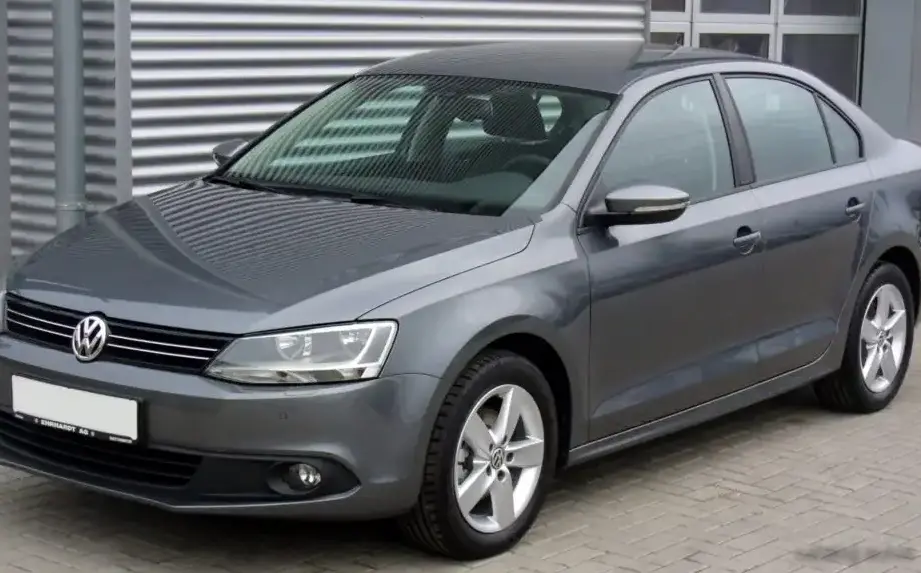
The Volkswagen Jetta VI 1.4 TSI (122 hp) represents a significant iteration in the Jetta lineage, produced between 2011 and 2014. Positioned as a mainstream offering within the sixth-generation Jetta (model code 162), this variant aimed to balance fuel efficiency with acceptable performance for the North American and European markets. It served as a key entry point into the Jetta range, appealing to buyers seeking a modern, comfortable sedan with a reputation for German engineering. The Jetta VI itself was a substantial redesign from the previous generation, adopting a more conservative and mature aesthetic, and focusing on increased interior space and refinement.
| Brand | Volkswagen |
| Model | Jetta |
| Generation | Jetta VI |
| Type (Engine) | 1.4 TSI (122 Hp) |
| Start of production | 2011 |
| End of production | 2014 |
| Powertrain Architecture | Internal Combustion engine |
| Body type | Sedan |
| Seats | 5 |
| Doors | 4 |
| Fuel consumption (economy) – urban (NEDC) | 8.2 l/100 km (28.7 US mpg, 34.4 UK mpg, 12.2 km/l) |
| Fuel consumption (economy) – extra urban (NEDC) | 5.1 l/100 km (46.1 US mpg, 55.4 UK mpg, 19.6 km/l) |
| Fuel consumption (economy) – combined (NEDC) | 6.2 l/100 km (37.9 US mpg, 45.6 UK mpg, 16.1 km/l) |
| CO2 emissions (NEDC) | 144 g/km |
| Fuel Type | Petrol (Gasoline) |
| Acceleration 0 – 100 km/h | 9.8 sec |
| Acceleration 0 – 62 mph | 9.8 sec |
| Acceleration 0 – 60 mph | 9.3 sec |
| Maximum speed | 202 km/h (125.52 mph) |
| Emission standard | Euro 5 |
| Weight-to-power ratio | 10.4 kg/Hp, 96.1 Hp/tonne |
| Weight-to-torque ratio | 6.4 kg/Nm, 157.5 Nm/tonne |
| Power | 122 Hp @ 5000 rpm |
| Power per litre | 87.8 Hp/l |
| Torque | 200 Nm @ 1500-4000 rpm (147.51 lb.-ft. @ 1500-4000 rpm) |
| Engine layout | Front, Transverse |
| Engine Model/Code | CAXA |
| Engine displacement | 1390 cm3 (84.82 cu. in.) |
| Number of cylinders | 4 |
| Engine configuration | Inline |
| Cylinder Bore | 76.5 mm (3.01 in.) |
| Piston Stroke | 75.6 mm (2.98 in.) |
| Compression ratio | 10:1 |
| Number of valves per cylinder | 4 |
| Fuel injection system | Direct injection |
| Engine aspiration | Turbocharger, Intercooler |
| Valvetrain | DOHC |
| Engine oil capacity | 3.6 l (3.8 US qt | 3.17 UK qt) |
| Kerb Weight | 1270 kg (2799.87 lbs.) |
| Max. weight | 1850 kg (4078.55 lbs.) |
| Max load | 580 kg (1278.68 lbs.) |
| Trunk (boot) space – minimum | 510 l (18.01 cu. ft.) |
| Fuel tank capacity | 55 l (14.53 US gal | 12.1 UK gal) |
| Max. roof load | 75 kg (165.35 lbs.) |
| Permitted trailer load with brakes (8%) | 1600 kg (3527.4 lbs.) |
| Permitted trailer load with brakes (12%) | 1300 kg (2866.01 lbs.) |
| Permitted trailer load without brakes | 670 kg (1477.1 lbs.) |
| Permitted towbar download | 75 kg (165.35 lbs.) |
| Length | 4644 mm (182.83 in.) |
| Width | 1778 mm (70 in.) |
| Width including mirrors | 2020 mm (79.53 in.) |
| Height | 1482 mm (58.35 in.) |
| Wheelbase | 2651 mm (104.37 in.) |
| Front track | 1535 mm (60.43 in.) |
| Rear (Back) track | 1538 mm (60.55 in.) |
| Ride height (ground clearance) | 139 mm (5.47 in.) |
| Minimum turning circle (turning diameter) | 11.1 m (36.42 ft.) |
| Front suspension | Coil spring, Wishbone, Transverse stabilizer |
| Rear suspension | Independent multi-link suspension, Transverse stabilizer |
| Front brakes | Ventilated discs |
| Rear brakes | Disc |
| Assisting systems | ABS (Anti-lock braking system) |
| Steering type | Steering rack and pinion |
| Power steering | Electric Steering |
| Tires size | 205/55 R16 |
| Wheel rims size | 6.5J x 16 |
Powertrain & Engine Architecture
The heart of the Jetta VI 1.4 TSI is the CAXA engine code, a 1.4-liter turbocharged inline-four cylinder gasoline engine. This engine is a member of Volkswagen’s EA111 family, known for its compact size and efficiency. The CAXA utilizes direct fuel injection (FSI – Fuel Stratified Injection) and a turbocharger with an intercooler to deliver a balance of power and economy. The direct injection system allows for precise fuel delivery, improving combustion efficiency and reducing emissions. The engine features a double overhead camshaft (DOHC) valvetrain with four valves per cylinder, optimizing airflow for increased power output. The turbocharger provides a boost in power, compensating for the relatively small displacement. This particular variant was typically paired with a six-speed automatic transmission, offering smooth shifts and convenience, though a six-speed manual was also available. The automatic transmission was designed to work in harmony with the engine’s torque curve, providing adequate acceleration without excessive engine strain.
Driving Characteristics
The 122 hp 1.4 TSI automatic Jetta VI offered a comfortable and predictable driving experience. Acceleration from 0-60 mph took approximately 9.3 seconds, which was adequate for everyday driving but not particularly sporty. The automatic transmission, while smooth, could sometimes feel hesitant during quick acceleration or overtaking maneuvers. The engine’s peak torque of 200 Nm (147.51 lb-ft) was available from 1500-4000 rpm, providing decent responsiveness in typical driving situations. Compared to the more powerful 1.8 TSI or 2.0 TSI variants, the 1.4 TSI felt noticeably less energetic. However, it offered significantly better fuel economy, making it a more practical choice for drivers prioritizing efficiency. The gear ratios in the automatic transmission were tuned for fuel economy, resulting in a slightly less engaging driving experience than the manual transmission option.
Equipment & Trim Levels
The Jetta VI 1.4 TSI typically came standard with a reasonable level of equipment. Base models included air conditioning, power windows and locks, a basic audio system, and steel wheels with wheel covers. Higher trim levels, such as Trendline and Comfortline, added features like alloy wheels, a more advanced audio system with Bluetooth connectivity, cruise control, and upgraded interior trim. Optional extras included a sunroof, leather upholstery, a navigation system, and a premium sound system. Interior upholstery was typically cloth, with higher trims offering the option of leatherette or full leather. The dashboard layout was functional and straightforward, with a focus on ergonomics and ease of use.
Chassis & Braking
The Jetta VI utilized a MacPherson strut front suspension and a multi-link independent rear suspension. This setup provided a comfortable ride quality and decent handling characteristics. The front suspension incorporated a transverse stabilizer bar to reduce body roll during cornering. Braking duties were handled by ventilated discs at the front and solid discs at the rear, equipped with ABS (Anti-lock Braking System) as standard. The braking system provided adequate stopping power for everyday driving conditions. The chassis was designed to balance comfort and handling, offering a stable and predictable driving experience.
Market Reception & Comparison
The Jetta VI 1.4 TSI was generally well-received by automotive critics as a practical and fuel-efficient sedan. However, some reviewers noted that the engine lacked the punch of its larger counterparts. Compared to the 1.8 TSI, the 1.4 TSI offered better fuel economy but significantly less performance. The 1.4 TSI also provided a more affordable entry point into the Jetta range. In terms of reliability, the CAXA engine proved to be generally dependable, although some owners reported issues with the turbocharger and fuel injectors over the long term. Fuel economy figures consistently hovered around 37.9 US mpg combined, making it a competitive option in its class.
Legacy
The Volkswagen Jetta VI 1.4 TSI remains a relatively common sight on the used car market. The CAXA engine, while not without its potential issues, has proven to be reasonably durable with proper maintenance. The Jetta VI’s reputation for build quality and refinement continues to attract buyers seeking a reliable and comfortable sedan. However, prospective buyers should be aware of potential issues with the turbocharger and fuel injectors, and ensure that the vehicle has been properly maintained. The 1.4 TSI variant represents a good value proposition for those seeking a fuel-efficient and practical Jetta, but those prioritizing performance may want to consider the more powerful engine options.