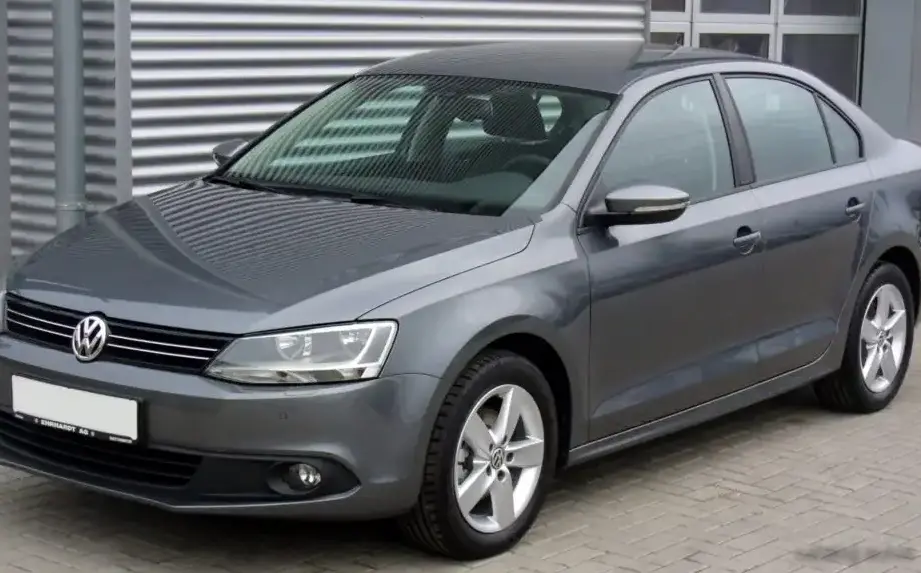
The Volkswagen Jetta VI 2.0 (115 hp) represents a significant iteration in the Jetta lineage, produced between 2010 and 2014. Positioned as a mainstream offering within the sixth-generation Jetta (model code 162), this variant aimed to provide a balance of fuel efficiency, practicality, and affordability for the North American market. It served as a step up from the base 2.0L engine, offering a modest increase in power while remaining accessible to a broad range of buyers. The Jetta VI itself was a crucial model for Volkswagen in the United States, designed to appeal to a wider audience than its European counterpart, with a larger interior and a focus on value.
Technical Specifications
| Brand | Volkswagen |
| Model | Jetta |
| Generation | Jetta VI |
| Type (Engine) | 2.0 (115 Hp) |
| Start of production | 2010 |
| End of production | 2014 |
| Powertrain Architecture | Internal Combustion engine |
| Body type | Sedan |
| Seats | 5 |
| Doors | 4 |
| Fuel consumption (economy) – urban (EPA) | 9.8 l/100 km (24 US mpg) |
| Fuel consumption (economy) – extra urban (EPA) | 6.9 l/100 km (34.1 US mpg) |
| Fuel Type | Petrol (Gasoline) |
| Weight-to-power ratio | 11.1 kg/Hp |
| Weight-to-torque ratio | 7.5 kg/Nm |
| Power | 115 Hp @ 5200 rpm |
| Power per litre | 58 Hp/l |
| Torque | 170 Nm @ 4000 rpm (125.39 lb.-ft. @ 4000 rpm) |
| Engine layout | Front, Transverse |
| Engine Model/Code | CBPA |
| Engine displacement | 1984 cm3 (121.07 cu. in.) |
| Number of cylinders | 4 |
| Engine configuration | Inline |
| Cylinder Bore | 82.5 mm (3.25 in.) |
| Piston Stroke | 92.8 mm (3.65 in.) |
| Compression ratio | 10.3:1 |
| Number of valves per cylinder | 2 |
| Fuel injection system | Multi-port manifold injection |
| Engine aspiration | Naturally aspirated engine |
| Valvetrain | SOHC |
| Engine oil capacity | 3.6 l (3.8 US qt | 3.17 UK qt) |
| Coolant | 5 l (5.28 US qt | 4.4 UK qt) |
| Kerb Weight | 1272-1289 kg (2804.28 – 2841.76 lbs.) |
| Max. weight | 1820 kg (4012.41 lbs.) |
| Max load | 531-548 kg (1170.65 – 1208.13 lbs.) |
| Trunk (boot) space – minimum | 440 l (15.54 cu. ft.) |
| Fuel tank capacity | 55 l (14.53 US gal | 12.1 UK gal) |
| Length | 4628 mm (182.2 in.) |
| Width | 1778 mm (70 in.) |
| Height | 1453 mm (57.2 in.) |
| Wheelbase | 2651 mm (104.37 in.) |
| Front track | 1541 mm (60.67 in.) |
| Rear (Back) track | 1538 mm (60.55 in.) |
| Ride height (ground clearance) | 139 mm (5.47 in.) |
| Drag coefficient (Cd) | 0.30 |
| Minimum turning circle (turning diameter) | 11.1 m (36.42 ft.) |
| Drivetrain Architecture | The Internal combustion engine (ICE) drives the front wheels of the vehicle. |
| Drive wheel | Front wheel drive |
| Number of gears and type of gearbox | 5 gears, manual transmission |
| Front suspension | Independent, type McPherson with coil spring and anti-roll bar |
| Rear suspension | Coil spring, Torsion |
| Front brakes | Ventilated discs, 287×25 mm |
| Rear brakes | Disc, 272×10 mm |
| Assisting systems | ABS (Anti-lock braking system) |
| Steering type | Steering rack and pinion |
| Power steering | Hydraulic Steering |
| Tires size | 195/65 R15 |
| Wheel rims size | 6J x 15 |
INTRODUCTION
The Jetta VI 2.0 (115 hp) was introduced as part of Volkswagen’s strategy to broaden the appeal of the Jetta in the North American market. Unlike its European counterpart, which often featured diesel engines and a more compact design, the American Jetta was larger and offered gasoline engine options. The 2.0-liter engine, designated with the CBPA engine code, was a key component of this strategy, providing a balance between affordability and acceptable performance. This trim level occupied a middle ground in the Jetta VI lineup, offering more power than the base engine but remaining more accessible than the higher-performance options like the 2.5L five-cylinder.
Powertrain & Engine Architecture
The heart of the Jetta VI 2.0 (115 hp) is the CBPA engine, a 1.984-liter inline-four cylinder gasoline engine. This engine utilizes a single overhead camshaft (SOHC) valvetrain with two valves per cylinder. Fuel delivery is managed by a multi-port fuel injection system, a relatively conventional setup for the time. The CBPA engine is known for its relative simplicity and durability. The engine’s 115 horsepower peak is achieved at 5200 rpm, while its 170 Nm (125.39 lb-ft) of torque is delivered at 4000 rpm. The engine’s compression ratio is 10.3:1. The standard transmission for this variant was a five-speed manual, though a six-speed automatic transmission was also available, impacting the overall driving experience and fuel economy. The automatic transmission was a conventional torque converter type, prioritizing smooth shifts over outright performance.
Driving Characteristics
The Jetta VI 2.0 (115 hp) with the manual transmission offered a reasonably engaging driving experience, though it wasn’t particularly sporty. Acceleration was adequate for everyday driving, but overtaking maneuvers required planning. The five-speed manual transmission provided a decent spread of gears, allowing the engine to operate efficiently at highway speeds. The automatic transmission, while offering convenience, noticeably dulled the car’s responsiveness. Gear ratios were optimized for fuel economy rather than performance. Compared to the 2.5L Jetta, the 2.0L felt less powerful, especially at higher speeds. However, the 2.0L was lighter, which helped to mitigate some of the power deficit. The steering was light and precise, making it easy to maneuver in urban environments.
Equipment & Trim Levels
The Jetta VI 2.0 (115 hp) typically came standard with features such as air conditioning, power windows and locks, a basic audio system, and steel wheels with wheel covers. Higher trim levels, such as the Trendline and Comfortline, added features like alloy wheels, upgraded audio systems, cruise control, and heated front seats. Optional extras included a sunroof, leather upholstery, and a navigation system. Interior upholstery was typically cloth, with a relatively simple and functional dashboard layout. The Jetta VI aimed for a clean, modern aesthetic, though the interior materials were generally considered to be of average quality for the segment.
Chassis & Braking
The Jetta VI utilized an independent McPherson strut front suspension and a torsion beam rear suspension. This setup provided a comfortable ride, though it wasn’t particularly sporty. The front brakes were ventilated discs, while the rear brakes were solid discs. Anti-lock braking system (ABS) was standard. The suspension was tuned for comfort and ride quality, prioritizing a smooth ride over sharp handling. Stabilizer bars were included at both the front and rear to reduce body roll during cornering. The Jetta VI’s chassis was designed to provide a stable and predictable driving experience.
Market Reception & Comparison
Critics generally viewed the Jetta VI 2.0 (115 hp) as a competent and practical sedan. It was praised for its spacious interior, comfortable ride, and reasonable fuel economy. However, it was also criticized for its somewhat bland styling and lack of excitement. Compared to the 2.5L Jetta, the 2.0L offered better fuel economy but less power. The 2.0L was also more affordable than the 2.5L. In terms of reliability, the CBPA engine proved to be relatively robust, with few major issues reported. Fuel economy figures averaged around 24 mpg in the city and 34 mpg on the highway, making it a competitive offering in its class.
Legacy
The Jetta VI 2.0 (115 hp) remains a relatively common sight on used car lots today. The CBPA engine is known for its durability and relatively low maintenance costs. However, like any older vehicle, it’s important to inspect potential purchases carefully for signs of wear and tear. Common issues include oil leaks and worn suspension components. The Jetta VI 2.0 (115 hp) represents a solid, dependable choice for buyers seeking an affordable and practical compact sedan. Its simplicity and relatively robust engineering have contributed to its continued presence on the road.