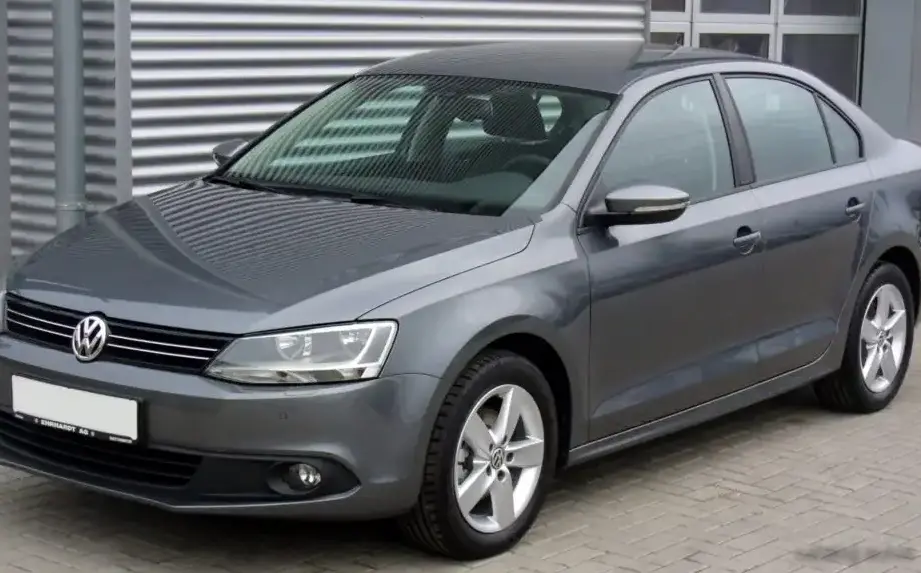
The Volkswagen Jetta VI 2.0 TSI, produced from 2011 to 2013, represented a significant step up in performance and technology for the Jetta lineup. Positioned as a mid-to-upper trim level within the sixth generation (Mk6) Jetta, which spanned from 2011-2018, this variant aimed to attract buyers seeking a sporty and refined driving experience. Built on the Volkswagen Group’s A5 (PQ35) platform, the Jetta VI sought to bridge the gap between affordability and a more premium feel, competing with rivals like the Honda Civic, Toyota Corolla, and Mazda3. The 2.0 TSI model specifically targeted enthusiasts who desired more power than the base engine options offered.
Technical Specifications
| Brand | Volkswagen |
| Model | Jetta |
| Generation | Jetta VI |
| Type (Engine) | 2.0 TSI (200 Hp) |
| Start of production | 2011 |
| End of production | 2013 |
| Powertrain Architecture | Internal Combustion engine |
| Body type | Sedan |
| Seats | 5 |
| Doors | 4 |
| Fuel consumption (economy) – urban (NEDC) | 10 l/100 km (23.5 US mpg, 28.2 UK mpg, 10 km/l) |
| Fuel consumption (economy) – extra urban (NEDC) | 5.6 l/100 km (42 US mpg, 50.4 UK mpg, 17.9 km/l) |
| Fuel consumption (economy) – combined (NEDC) | 7.2 l/100 km (32.7 US mpg, 39.2 UK mpg, 13.9 km/l) |
| CO2 emissions (NEDC) | 167 g/km |
| Fuel Type | Petrol (Gasoline) |
| Acceleration 0 – 100 km/h | 7.5 sec |
| Acceleration 0 – 62 mph | 7.5 sec |
| Acceleration 0 – 60 mph | 7.1 sec |
| Maximum speed | 238 km/h (147.89 mph) |
| Emission standard | Euro 5 |
| Weight-to-power ratio | 6.8 kg/Hp, 147.6 Hp/tonne |
| Weight-to-torque ratio | 4.8 kg/Nm, 206.6 Nm/tonne |
| Power | 200 Hp @ 5100-6000 rpm |
| Power per litre | 100.8 Hp/l |
| Torque | 280 Nm @ 1700-5000 rpm (206.52 lb.-ft. @ 1700-5000 rpm) |
| Engine layout | Front, Transverse |
| Engine Model/Code | CCZA |
| Engine displacement | 1984 cm3 (121.07 cu. in.) |
| Number of cylinders | 4 |
| Engine configuration | Inline |
| Cylinder Bore | 82.5 mm (3.25 in.) |
| Piston Stroke | 92.8 mm (3.65 in.) |
| Compression ratio | 9.6:1 |
| Number of valves per cylinder | 4 |
| Fuel injection system | Direct injection |
| Engine aspiration | Turbocharger, Intercooler |
| Valvetrain | DOHC |
| Engine oil capacity | 4.7 l (4.97 US qt | 4.14 UK qt) |
| Kerb Weight | 1355 kg (2987.26 lbs.) |
| Max. weight | 1920 kg (4232.88 lbs.) |
| Max load | 565 kg (1245.61 lbs.) |
| Trunk (boot) space – minimum | 510 l (18.01 cu. ft.) |
| Fuel tank capacity | 55 l (14.53 US gal | 12.1 UK gal) |
| Max. roof load | 75 kg (165.35 lbs.) |
| Permitted trailer load with brakes (8%) | 1700 kg (3747.86 lbs.) |
| Permitted trailer load with brakes (12%) | 1400 kg (3086.47 lbs.) |
| Permitted trailer load without brakes | 710 kg (1565.28 lbs.) |
| Permitted towbar download | 75 kg (165.35 lbs.) |
| Length | 4644 mm (182.83 in.) |
| Width | 1778 mm (70 in.) |
| Width including mirrors | 2020 mm (79.53 in.) |
| Height | 1482 mm (58.35 in.) |
| Wheelbase | 2651 mm (104.37 in.) |
| Front track | 1535 mm (60.43 in.) |
| Rear (Back) track | 1538 mm (60.55 in.) |
| Ride height (ground clearance) | 139 mm (5.47 in.) |
| Minimum turning circle (turning diameter) | 11.1 m (36.42 ft.) |
| Front suspension | Coil spring, Wishbone, Transverse stabilizer |
| Rear suspension | Independent multi-link suspension, Transverse stabilizer |
| Front brakes | Ventilated discs |
| Rear brakes | Disc |
| Assisting systems | ABS (Anti-lock braking system) |
| Steering type | Steering rack and pinion |
| Power steering | Electric Steering |
| Tires size | 225/45 R17 |
| Wheel rims size | 7J x 17 |
Powertrain & Engine Architecture
The heart of the Jetta VI 2.0 TSI is the CCZA engine, a 1.984-liter inline-four cylinder gasoline engine. This engine is a member of Volkswagen’s EA888 family, known for its robust design and tuning potential. The CCZA utilizes direct fuel injection (FSI) and a single turbocharger with an intercooler to deliver 200 horsepower and 206.52 lb-ft of torque. The direct injection system allows for precise fuel delivery, improving efficiency and reducing emissions. The engine features a double overhead camshaft (DOHC) valvetrain with four valves per cylinder, optimizing airflow for increased power output. While a six-speed manual transmission was standard, the automatic option was a six-speed torque converter automatic, offering smooth shifts but sacrificing some of the responsiveness of the manual.
Driving Characteristics
The 2.0 TSI automatic Jetta VI offered a comfortable and capable driving experience. Acceleration from 0-60 mph took approximately 7.1 seconds, making it noticeably quicker than the base engine options. The automatic transmission, while smooth, wasn’t particularly sporty. Gear changes were geared towards fuel efficiency, and the transmission could sometimes feel hesitant during quick acceleration. The turbocharger provided a noticeable boost in power, but turbo lag was present, especially at lower RPMs. Compared to the manual transmission version, the automatic offered less driver engagement but greater convenience, appealing to a broader range of buyers.
Equipment & Trim Levels
The 2.0 TSI trim typically included features such as alloy wheels, a leather-wrapped steering wheel, automatic climate control, and a premium audio system. Optional extras included a sunroof, navigation system, and upgraded interior trim. Interior upholstery was typically cloth, with leather available as an upgrade. The dashboard layout was functional and well-designed, with a focus on ergonomics. The Jetta VI offered a good balance of features for its price point, making it a competitive option in the compact sedan segment.
Chassis & Braking
The Jetta VI 2.0 TSI featured a MacPherson strut front suspension and a multi-link rear suspension, providing a comfortable ride and decent handling. The suspension was tuned for everyday driving, prioritizing comfort over outright sportiness. Brakes consisted of ventilated discs at the front and solid discs at the rear. Anti-lock braking system (ABS) was standard. The chassis was relatively lightweight, contributing to the car’s agility. Stabilizer bars were fitted to both the front and rear axles to reduce body roll during cornering.
Market Reception & Comparison
The Jetta VI 2.0 TSI was generally well-received by automotive critics. It was praised for its powerful engine, comfortable ride, and spacious interior. However, some critics noted the automatic transmission’s lack of responsiveness and the somewhat bland interior styling. Compared to the base Jetta models, the 2.0 TSI offered a significant performance upgrade, but it came at a higher price. Fuel economy was respectable, averaging around 32.7 US mpg in combined driving. Reliability was generally good, although some owners reported issues with the turbocharger and fuel injectors.
Legacy
The Jetta VI 2.0 TSI remains a popular choice in the used car market. The CCZA engine, while not without its potential issues, is generally considered reliable when properly maintained. The car’s relatively simple design and readily available parts make it relatively easy and affordable to repair. The Jetta VI 2.0 TSI represents a sweet spot in the Jetta lineage, offering a good balance of performance, comfort, and value. It continues to be appreciated by enthusiasts who seek a practical and enjoyable driving experience.