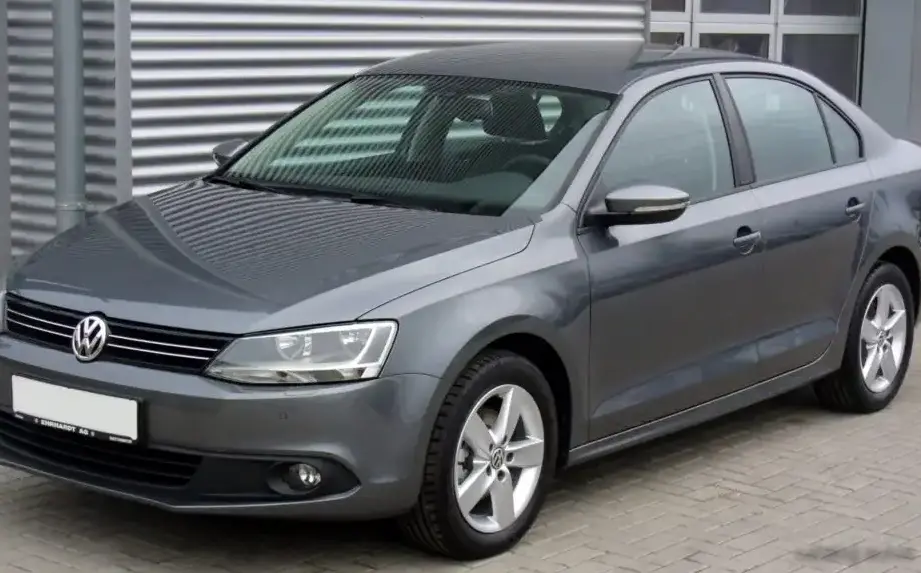
The Volkswagen Jetta VI 2.5, produced from 2010 to 2014, represented a significant iteration of Volkswagen’s popular compact sedan. Positioned as a mainstream offering within the Jetta VI range (the sixth generation of the Jetta, internally designated the 16A), the 2.5-liter model aimed to provide a balance of affordability, practicality, and acceptable performance for the North American market. It served as a step up from the base 2.0-liter engine option, offering more power and a slightly more refined driving experience. This variant was primarily sold in the United States and Canada, where larger displacement engines were favored by consumers.
Technical Specifications
| Brand | Volkswagen |
| Model | Jetta |
| Generation | Jetta VI |
| Type (Engine) | 2.5 (170 Hp) |
| Start of production | 2010 |
| End of production | 2014 |
| Powertrain Architecture | Internal Combustion engine |
| Body type | Sedan |
| Seats | 5 |
| Doors | 4 |
| Fuel consumption (economy) – urban (EPA) | 10.2 l/100 km (23.1 US mpg) |
| Fuel consumption (economy) – extra urban (EPA) | 7.1 l/100 km (33.1 US mpg) |
| Fuel Type | Petrol (Gasoline) |
| Weight-to-power ratio | 8.1 kg/Hp, 124.2 Hp/tonne |
| Weight-to-torque ratio | 5.7 kg/Nm, 175.3 Nm/tonne |
| Power | 170 Hp @ 5700 rpm |
| Power per litre | 68.5 Hp/l |
| Torque | 240 Nm @ 4250 rpm (177.01 lb.-ft. @ 4250 rpm) |
| Engine layout | Front, Transverse |
| Engine Model/Code | CBTA, CBUA |
| Engine displacement | 2480 cm3 (151.34 cu. in.) |
| Number of cylinders | 5 |
| Engine configuration | Inline |
| Cylinder Bore | 82.5 mm (3.25 in.) |
| Piston Stroke | 92.8 mm (3.65 in.) |
| Compression ratio | 9.5:1 |
| Number of valves per cylinder | 4 |
| Fuel injection system | Multi-port manifold injection |
| Engine aspiration | Naturally aspirated engine |
| Valvetrain | DOHC |
| Engine oil capacity | 6 l (6.34 US qt | 5.28 UK qt) |
| Coolant | 9 l (9.51 US qt | 7.92 UK qt) |
| Kerb Weight | 1369 kg (3018.13 lbs.) |
| Max. weight | 1880 kg (4144.69 lbs.) |
| Max load | 511 kg (1126.56 lbs.) |
| Trunk (boot) space – minimum | 440 l (15.54 cu. ft.) |
| Fuel tank capacity | 55 l (14.53 US gal | 12.1 UK gal) |
| Length | 4628 mm (182.2 in.) |
| Width | 1778 mm (70 in.) |
| Height | 1453 mm (57.2 in.) |
| Wheelbase | 2651 mm (104.37 in.) |
| Front track | 1535 mm (60.43 in.) |
| Rear (Back) track | 1532 mm (60.31 in.) |
| Ride height (ground clearance) | 139 mm (5.47 in.) |
| Drag coefficient (Cd) | 0.30 |
| Minimum turning circle (turning diameter) | 11.1 m (36.42 ft.) |
| Drivetrain Architecture | The Internal combustion engine (ICE) drives the front wheels of the vehicle. |
| Drive wheel | Front wheel drive |
| Number of gears and type of gearbox | 5 gears, manual transmission |
| Front suspension | Independent, type McPherson with coil spring and anti-roll bar |
| Rear suspension | Coil spring, Torsion |
| Front brakes | Ventilated discs, 287×25 mm |
| Rear brakes | Disc, 272×10 mm |
| Assisting systems | ABS (Anti-lock braking system) |
| Steering type | Steering rack and pinion |
| Power steering | Hydraulic Steering |
| Tires size | 205/55 R16; 225/45 R17 |
| Wheel rims size | 6.5J x 16; 7J x 17 |
INTRODUCTION
The Jetta VI 2.5, launched in 2010, represented a significant step forward in terms of refinement and features compared to its predecessor. Built on the Volkswagen A5 platform (also known as the PQ35), it shared its underpinnings with models like the Golf Mk5 and Mk6, as well as the Audi A3. The 2.5-liter engine, a naturally aspirated inline-five, was specifically targeted at the North American market, offering a balance between fuel efficiency and usable power. It was available in several trim levels, including Trendline, Comfortline, and Highline, each offering increasing levels of standard equipment. The Jetta VI aimed to appeal to a broader audience than previous generations, with a focus on comfort, technology, and a more mature driving experience.
Powertrain & Engine Architecture
The heart of the Jetta VI 2.5 is the 2.5-liter inline-five cylinder engine, designated as the CBTA or CBUA engine code depending on specific production year and market. This engine is a naturally aspirated design, utilizing multi-port fuel injection to deliver fuel to the cylinders. The engine features a double overhead camshaft (DOHC) valvetrain with four valves per cylinder, contributing to its relatively good breathing and power output. The engine’s 9.5:1 compression ratio strikes a balance between efficiency and performance. The 2.5-liter engine produced 170 horsepower at 5700 rpm and 177 lb-ft of torque at 4250 rpm. The engine was typically paired with a five-speed manual transmission, but a six-speed automatic transmission was also available, and was a popular choice for buyers prioritizing convenience. The automatic transmission featured Tiptronic manual shift control, allowing drivers to select gears manually when desired.
Driving Characteristics
The Jetta VI 2.5 with the manual transmission offered a reasonably engaging driving experience, although it wasn’t particularly sporty. The 170 horsepower was adequate for everyday driving and highway cruising, but acceleration wasn’t brisk. The automatic transmission, while smooth, did slightly diminish performance due to its torque converter and gear ratios. Compared to the more powerful Jetta GLI (with its turbocharged engine) or even the Jetta TDI (diesel), the 2.5-liter model felt less responsive. However, it offered a more linear power delivery, making it easier to modulate in traffic. The suspension, tuned for comfort, provided a relatively smooth ride, absorbing bumps and imperfections in the road well. Steering feel was light and precise, making the car easy to maneuver.
Equipment & Trim Levels
The Jetta VI 2.5 came standard with a respectable array of features, even in the base Trendline trim. These included air conditioning, power windows and locks, a basic audio system, and steel wheels with wheel covers. The Comfortline trim added features such as alloy wheels, a more advanced audio system, cruise control, and heated front seats. The top-of-the-line Highline trim included leather upholstery, a sunroof, and upgraded interior trim. Optional extras included a navigation system, a premium audio system, and a rear parking sensor system. Interior upholstery was typically cloth in the lower trims, with leather available as an upgrade. The dashboard layout was functional and straightforward, with easy-to-read gauges and controls.
Chassis & Braking
The Jetta VI 2.5 utilized an independent McPherson strut suspension in the front, providing good handling and ride comfort. The rear suspension employed a torsion beam setup, which was a cost-effective solution that offered a reasonable balance of ride quality and handling. Braking duties were handled by ventilated discs in the front and solid discs in the rear. Anti-lock braking system (ABS) was standard equipment. The Jetta VI 2.5’s chassis was designed to provide a stable and predictable driving experience. The steering system was a hydraulic rack-and-pinion setup, offering precise and responsive steering feel.
Market Reception & Comparison
The Jetta VI 2.5 received generally positive reviews from automotive critics. It was praised for its comfortable ride, spacious interior, and good fuel economy. However, some critics noted that the engine lacked the punch of its turbocharged counterparts. Compared to the Jetta TDI, the 2.5-liter model offered lower fuel economy but a lower initial purchase price. The Jetta GLI, with its turbocharged engine, provided significantly more performance but came at a higher cost. The 2.5-liter engine was considered a good all-around choice for buyers who prioritized affordability and practicality over outright performance.
Legacy
The Jetta VI 2.5 has proven to be a relatively reliable vehicle in the used car market. The 2.5-liter engine is known for its durability, although regular maintenance is essential. Common issues include oil leaks and occasional sensor failures. The automatic transmission, while generally reliable, can experience issues with the torque converter over time. Overall, the Jetta VI 2.5 remains a popular choice for budget-conscious buyers looking for a comfortable and practical compact sedan. Its relatively simple mechanical design and readily available parts make it a relatively easy vehicle to maintain and repair, contributing to its continued presence on the road today.