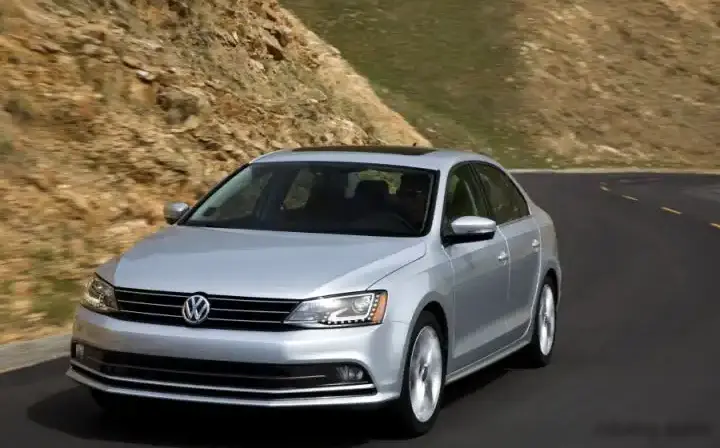
The Volkswagen Jetta VI, specifically the facelifted model produced from 2014 to 2018, represented a significant evolution of Volkswagen’s popular compact sedan. Within the Jetta VI range, the 1.4 TSI (150 hp) variant occupied a middle ground, offering a balance between fuel efficiency and performance. This model was primarily aimed at buyers seeking a modern, comfortable, and relatively economical daily driver. It was a key offering in the North American market, where sedans remained highly favored, and in Europe, where it competed with rivals like the Ford Focus and Opel Astra.
Technical Specifications
| Brand | Volkswagen |
| Model | Jetta |
| Generation | Jetta VI (facelift 2014) |
| Type (Engine) | 1.4 TSI (150 Hp) |
| Start of production | 2014 |
| End of production | 2018 |
| Powertrain Architecture | Internal Combustion engine |
| Body type | Sedan |
| Seats | 5 |
| Doors | 4 |
| Fuel consumption (urban) | 6.8 l/100 km (34.6 US mpg, 41.5 UK mpg, 14.7 km/l) |
| Fuel consumption (extra urban) | 4.4 l/100 km (53.5 US mpg, 64.2 UK mpg, 22.7 km/l) |
| Fuel consumption (combined) | 5.3 l/100 km (44.4 US mpg, 53.3 UK mpg, 18.9 km/l) |
| CO2 emissions | 123 g/km |
| Fuel Type | Petrol (Gasoline) |
| Acceleration 0 – 100 km/h | 8.6 sec |
| Acceleration 0 – 62 mph | 8.6 sec |
| Acceleration 0 – 60 mph | 8.2 sec |
| Maximum speed | 220 km/h (136.7 mph) |
| Emission standard | Euro 6 |
| Weight-to-power ratio | 9 kg/Hp, 111.4 Hp/tonne |
| Weight-to-torque ratio | 5.4 kg/Nm, 185.6 Nm/tonne |
| Power | 150 Hp @ 5000-6000 rpm |
| Power per litre | 107.5 Hp/l |
| Torque | 250 Nm @ 1500-3500 rpm (184.39 lb.-ft. @ 1500-3500 rpm) |
| Engine layout | Front, Transverse |
| Engine Model/Code | CTHA |
| Engine displacement | 1395 cm3 (85.13 cu. in.) |
| Number of cylinders | 4 |
| Engine configuration | Inline |
| Number of valves per cylinder | 4 |
| Fuel injection system | Direct injection |
| Engine aspiration | Turbocharger, Intercooler |
| Engine oil capacity | 3.6 l (3.8 US qt | 3.17 UK qt) |
| Kerb Weight | 1347 kg (2969.63 lbs.) |
| Max. weight | 1850 kg (4078.55 lbs.) |
| Max load | 503 kg (1108.93 lbs.) |
| Trunk (boot) space – minimum | 510 l (18.01 cu. ft.) |
| Fuel tank capacity | 55 l (14.53 US gal | 12.1 UK gal) |
| Max. roof load | 75 kg (165.35 lbs.) |
| Permitted trailer load with brakes (12%) | 1400 kg (3086.47 lbs.) |
| Permitted trailer load without brakes | 670 kg (1477.1 lbs.) |
| Permitted towbar download | 80 kg (176.37 lbs.) |
| Length | 4659 mm (183.43 in.) |
| Width | 1778 mm (70 in.) |
| Height | 1482 mm (58.35 in.) |
| Wheelbase | 2651 mm (104.37 in.) |
| Front track | 1535 mm (60.43 in.) |
| Rear (Back) track | 1538 mm (60.55 in.) |
| Minimum turning circle (turning diameter) | 11.1 m (36.42 ft.) |
| Drivetrain Architecture | The Internal combustion engine (ICE) drives the front wheels of the vehicle. |
| Drive wheel | Front wheel drive |
| Number of gears and type of gearbox | 6 gears, manual transmission |
| Front brakes | Ventilated discs |
| Rear brakes | Disc |
| Assisting systems | ABS (Anti-lock braking system) |
| Steering type | Steering rack and pinion |
| Tires size | 205/55 R16 |
| Wheel rims size | 6.5J x 16 |
INTRODUCTION
The Jetta VI facelift, launched in 2014, brought refreshed styling, updated technology, and refined powertrains to Volkswagen’s popular compact sedan. The 1.4 TSI 150 hp variant was a key part of this update, positioned as a sweet spot in the lineup for buyers prioritizing fuel economy and reasonable performance. It sat above the base 1.2 TSI engine and below the more powerful 1.8 TSI and diesel options. Built on the Volkswagen Group’s A5 platform (a derivative of the older A4/PQ35 platform), the Jetta VI aimed to provide a more mature and comfortable driving experience than its Golf hatchback sibling, catering specifically to the preferences of sedan buyers.
Powertrain & Engine Architecture
The heart of the Jetta VI 1.4 TSI was the CTHA engine code, a 1.4-liter turbocharged inline-four cylinder gasoline engine. This engine utilized direct fuel injection (FSI) and a turbocharger with an intercooler to deliver a respectable 150 horsepower and 250 Nm (184 lb-ft) of torque. The turbocharger provided a broad torque curve, peaking from 1500 to 3500 rpm, making it relatively flexible in everyday driving. The engine featured four valves per cylinder and a timing chain, contributing to its durability. The 6-speed manual transmission was standard, offering precise shifts and a good balance between fuel efficiency and driver engagement. While a 7-speed DSG dual-clutch automatic transmission was also available, this article focuses on the manual variant. The engine management system was designed to optimize fuel efficiency and reduce emissions, meeting Euro 6 standards.
Driving Characteristics
The 1.4 TSI 150 hp Jetta VI offered a comfortable and composed driving experience. Acceleration from 0-60 mph took around 8.2 seconds, which was adequate for most daily driving situations. The turbocharger provided a noticeable boost in power, but it wasn’t as aggressive as in higher-output TSI engines. The manual transmission’s gear ratios were well-matched to the engine’s torque curve, allowing for smooth and effortless cruising. Compared to the 1.8 TSI, the 1.4 TSI felt less powerful, especially at higher speeds, but it offered better fuel economy. The suspension was tuned for comfort, absorbing bumps and imperfections in the road effectively. Steering was precise but lacked the feedback found in more sporty vehicles. Overall, the driving experience was refined and predictable, making it a pleasant daily driver.
Equipment & Trim Levels
The Jetta VI 1.4 TSI typically came standard with features such as air conditioning, power windows and locks, a basic audio system, and steel wheels with wheel covers. Higher trim levels, such as Trendline, Comfortline, and Highline, added features like alloy wheels, a touchscreen infotainment system, automatic climate control, cruise control, and upgraded interior upholstery. Optional extras included a sunroof, leather seats, a premium audio system, and various driver-assistance features. Interior materials were generally of good quality, with a focus on durability and practicality. The dashboard layout was clean and functional, with easy-to-use controls.
Chassis & Braking
The Jetta VI utilized a MacPherson strut front suspension and a multi-link rear suspension, providing a comfortable ride and good handling characteristics. The front brakes were ventilated discs, while the rear brakes were solid discs. ABS (Anti-lock Braking System) was standard, enhancing safety and stability during braking. The steering system was a rack-and-pinion setup with power assistance. The chassis was designed to provide a balance between comfort and handling, prioritizing ride quality over sporty performance. The standard tire size was 205/55 R16, offering a good compromise between grip and fuel efficiency.
Market Reception & Comparison
The Jetta VI 1.4 TSI was generally well-received by automotive critics. It was praised for its fuel efficiency, comfortable ride, and refined interior. However, some critics noted that the engine lacked the punch of its larger counterparts. Compared to the 1.8 TSI, the 1.4 TSI offered better fuel economy but less performance. The 1.8 TSI was favored by drivers who prioritized power and acceleration. The diesel variants, such as the 1.6 TDI and 2.0 TDI, offered even better fuel economy but came with the added cost and potential maintenance concerns associated with diesel engines. The 1.4 TSI struck a good balance, appealing to buyers who wanted a practical and economical sedan without sacrificing too much performance.
Legacy
The 1.4 TSI engine, in general, proved to be a relatively reliable powertrain, although some owners have reported issues with the turbocharger and fuel injectors over time. Regular maintenance, including oil changes and timely replacement of wear items, is crucial for ensuring long-term reliability. In the used car market, the Jetta VI 1.4 TSI remains a popular choice for buyers seeking an affordable and fuel-efficient compact sedan. Its reputation for reliability and practicality, combined with its relatively low running costs, makes it a compelling option. While not as sought-after as the higher-performance variants, the 1.4 TSI Jetta VI continues to offer good value for money and a comfortable driving experience.