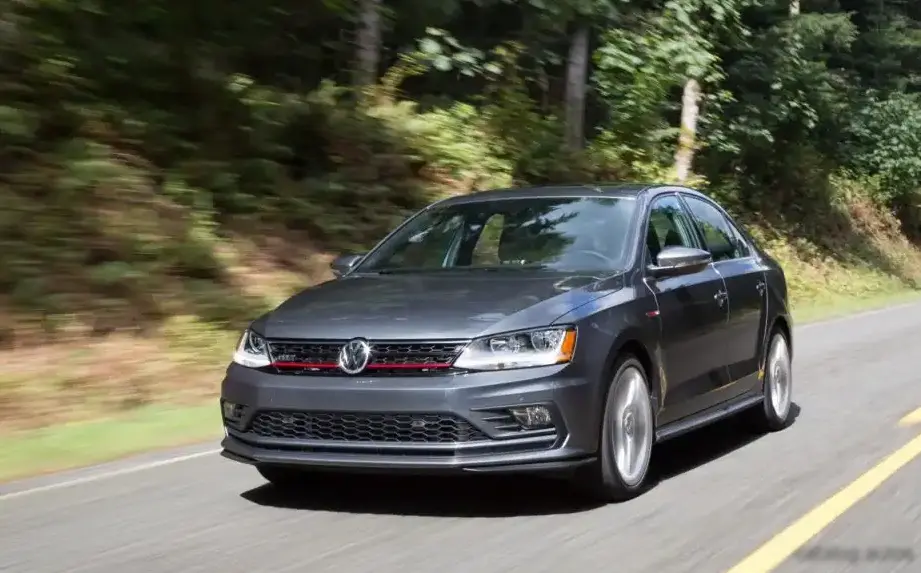
The Volkswagen Jetta VI GLI 2.0 TSI (210 hp) represents a performance-oriented variant of the sixth-generation Jetta, produced from 2014 to 2018 following the facelift. Positioned as the sportiest trim level within the Jetta lineup, the GLI aimed to deliver a more engaging driving experience than the standard models. It built upon the Jetta’s reputation for practicality and affordability, adding a significant boost in power and handling capabilities. This model was primarily marketed in North America and Europe, catering to drivers seeking a balance between everyday usability and spirited performance.
Technical Specifications
| Brand | Volkswagen |
| Model | Jetta |
| Generation | Jetta VI (facelift 2014) |
| Type (Engine) | GLI 2.0 TSI (210 Hp) |
| Start of production | 2014 |
| End of production | 2018 |
| Powertrain Architecture | Internal Combustion engine |
| Body type | Sedan |
| Seats | 5 |
| Doors | 4 |
| Fuel consumption (economy) – urban (EPA) | 10.2 l/100 km (23.1 US mpg, 27.7 UK mpg, 9.8 km/l) |
| Fuel consumption (economy) – extra urban (EPA) | 7.1 l/100 km (33.1 US mpg, 39.8 UK mpg, 14.1 km/l) |
| Fuel consumption (economy) – combined (EPA) | 8.7 l/100 km (27 US mpg, 32.5 UK mpg, 11.5 km/l) |
| Fuel Type | Petrol (Gasoline) |
| Weight-to-power ratio | 6.8 kg/Hp, 146.9 Hp/tonne |
| Weight-to-torque ratio | 5.1 kg/Nm, 195.8 Nm/tonne |
| Power | 210 Hp @ 5300 rpm |
| Power per litre | 105.8 Hp/l |
| Torque | 280 Nm @ 1700-5000 rpm (206.52 lb.-ft. @ 1700-5000 rpm) |
| Engine layout | Front, Transverse |
| Engine Model/Code | EA888 / CPLA, CPPA |
| Engine displacement | 1984 cm3 (121.07 cu. in.) |
| Number of cylinders | 4 |
| Engine configuration | Inline |
| Cylinder Bore | 82.5 mm (3.25 in.) |
| Piston Stroke | 92.8 mm (3.65 in.) |
| Compression ratio | 9.6:1 |
| Number of valves per cylinder | 4 |
| Fuel injection system | Direct injection |
| Engine aspiration | Turbocharger, Intercooler |
| Valvetrain | DOHC |
| Engine oil capacity | 5.5 l (5.81 US qt | 4.84 UK qt) |
| Coolant | 8 l (8.45 US qt | 7.04 UK qt) |
| Kerb Weight | 1430 kg (3152.61 lbs.) |
| Max. weight | 1970 kg (4343.11 lbs.) |
| Max load | 540 kg (1190.5 lbs.) |
| Trunk (boot) space – minimum | 445 l (15.72 cu. ft.) |
| Fuel tank capacity | 55 l (14.53 US gal | 12.1 UK gal) |
| Length | 4628 mm (182.2 in.) |
| Width | 1778 mm (70 in.) |
| Height | 1438 mm (56.61 in.) |
| Wheelbase | 2651 mm (104.37 in.) |
| Front track | 1527 mm (60.12 in.) |
| Rear (Back) track | 1533 mm (60.35 in.) |
| Ride height (ground clearance) | 124 mm (4.88 in.) |
| Drag coefficient (Cd) | 0.30 |
| Minimum turning circle (turning diameter) | 11.1 m (36.42 ft.) |
| Drivetrain Architecture | The Internal combustion engine (ICE) drives the front wheels of the vehicle. |
| Drive wheel | Front wheel drive |
| Number of gears and type of gearbox | 6 gears, manual transmission |
| Front suspension | Independent, type McPherson with coil spring and anti-roll bar |
| Rear suspension | Independent multi-link spring suspension with stabilizer |
| Front brakes | Ventilated discs, 312×25 mm |
| Rear brakes | Disc, 254×10 mm |
| Assisting systems | ABS (Anti-lock braking system) |
| Steering type | Steering rack and pinion |
| Power steering | Electric Steering |
| Tires size | 225/45 R17; 225/40 R18 |
| Wheel rims size | 7J x 17; 7.5J x 18 |
Powertrain & Engine Architecture
The heart of the Jetta GLI is the EA888 2.0-liter turbocharged four-cylinder engine. Specifically, the CPLA and CPPA engine codes were commonly found in this generation. This engine utilizes direct fuel injection (FSI) and a sophisticated turbocharging system to deliver a substantial 210 horsepower and 280 Nm (206.52 lb-ft) of torque. The engine’s design incorporates a cast iron block with an aluminum cylinder head, contributing to both durability and weight reduction. The dual overhead camshafts (DOHC) and four valves per cylinder enhance volumetric efficiency and contribute to the engine’s responsive nature. The turbocharger, often equipped with an intercooler, minimizes intake air temperature, further boosting performance. The six-speed manual transmission was standard, providing drivers with precise control over the engine’s power delivery.
Driving Characteristics
The Jetta GLI 2.0 TSI offered a noticeably more engaging driving experience compared to the base Jetta models. The 210 hp engine provided brisk acceleration, making highway merging and overtaking maneuvers effortless. The manual transmission, with its well-defined shift gates, allowed for spirited driving. While not a dedicated sports car, the GLI’s suspension tuning – featuring a sport-tuned setup with stiffer springs and dampers – minimized body roll and provided a more connected feel to the road. The steering, while electrically assisted, offered reasonable feedback. Compared to the standard 1.8L Jetta, the GLI’s power delivery was significantly stronger across the rev range, and the overall driving experience was more dynamic.
Equipment & Trim Levels
The GLI trim level came standard with a number of features designed to enhance both comfort and performance. These typically included sport seats upholstered in cloth or available leatherette, a leather-wrapped steering wheel, and aluminum pedal caps. Standard exterior features included a unique front fascia, rear spoiler, and alloy wheels. Infotainment systems varied depending on the year and optional packages, but generally included a touchscreen display, Bluetooth connectivity, and a premium sound system. Optional extras included a sunroof, navigation system, and upgraded audio options.
Chassis & Braking
The Jetta GLI utilized an independent suspension system at all four corners. The front suspension employed a McPherson strut design, while the rear featured a multi-link setup. This configuration provided a good balance between ride comfort and handling precision. The GLI also benefited from larger brakes compared to the standard Jetta, with ventilated discs at the front and solid discs at the rear. Anti-lock braking system (ABS) was standard, enhancing safety and control during emergency braking situations. The chassis was reinforced in key areas to handle the increased power and stresses associated with the GLI’s performance capabilities.
Market Reception & Comparison
The Jetta GLI 2.0 TSI was generally well-received by automotive critics. It was praised for its strong performance, engaging driving dynamics, and relatively affordable price point. Compared to other sporty compact sedans of the time, such as the Honda Civic Si and Mazda3, the Jetta GLI offered a compelling combination of power, practicality, and value. Fuel economy was respectable for a performance-oriented vehicle, although not as efficient as the base Jetta models. Reliability was generally good, although some owners reported minor issues with the turbocharger and fuel injection system.
Legacy
The Jetta GLI 2.0 TSI (2014-2018) remains a popular choice in the used car market. The EA888 engine, while requiring regular maintenance, is known for its durability and potential for modification. The GLI’s combination of performance, practicality, and affordability has made it a desirable option for enthusiasts seeking a sporty yet sensible compact sedan. Parts availability is generally good, and the Jetta’s relatively simple mechanical design makes it accessible for DIY repairs. As a result, well-maintained examples of the Jetta GLI 2.0 TSI continue to hold their value and provide a rewarding driving experience.