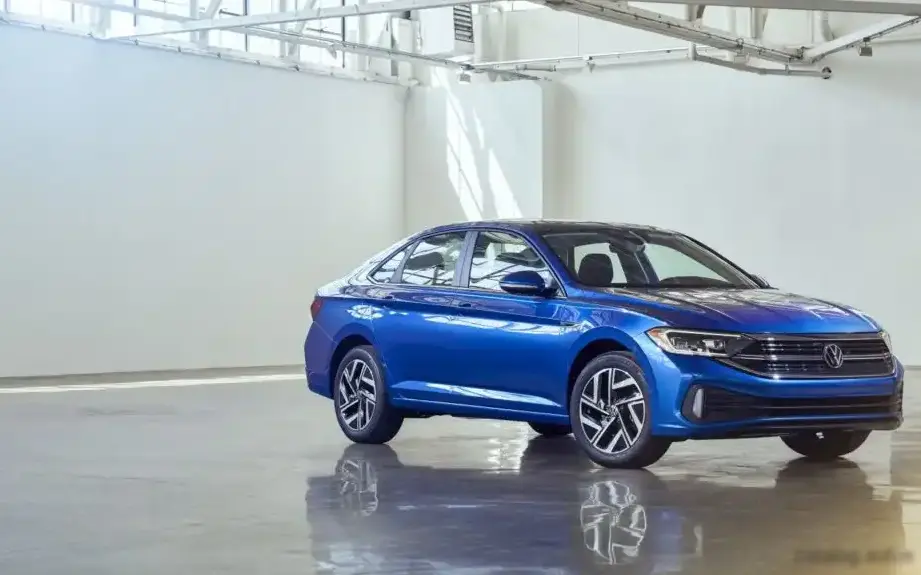
The Volkswagen Jetta VII facelift, specifically the 1.5 TSI variant producing 158 horsepower, represents a mid-cycle refresh of the seventh generation Jetta (introduced in 2018). Production of this specific configuration ran from August 2021 through September 2024. Positioned as a mainstream offering within the Jetta lineup, it aimed to balance fuel efficiency with adequate performance for the North American market, where the Jetta has traditionally been a popular compact sedan. This model year saw updates to the exterior styling, interior technology, and a continued refinement of the 1.5-liter turbocharged engine. It served as a key volume seller for Volkswagen, bridging the gap between more basic trims and the performance-oriented GLI.
Technical Specifications
| Brand | Volkswagen |
| Model | Jetta |
| Generation | Jetta VII (facelift 2021) |
| Type (Engine) | 1.5 TSI (158 Hp) |
| Start of production | August, 2021 |
| End of production | September, 2024 |
| Powertrain Architecture | Internal Combustion engine |
| Body type | Sedan |
| Seats | 5 |
| Doors | 4 |
| Fuel consumption (urban) | 8.1 l/100 km (29 US mpg, 34.9 UK mpg, 12.3 km/l) |
| Fuel consumption (extra urban) | 5.5 l/100 km (42.8 US mpg, 51.4 UK mpg, 18.2 km/l) |
| Fuel consumption (combined) | 6.9 l/100 km (34.1 US mpg, 40.9 UK mpg, 14.5 km/l) |
| Fuel Type | Petrol (Gasoline) |
| Weight-to-power ratio | 8.4 kg/Hp, 119.5 Hp/tonne |
| Weight-to-torque ratio | 5.3 kg/Nm, 189.1 Nm/tonne |
| Power | 158 Hp @ 5500 rpm |
| Power per litre | 105.5 Hp/l |
| Torque | 250 Nm @ 1750 rpm (184.39 lb.-ft. @ 1750 rpm) |
| Engine layout | Front, Transverse |
| Engine Model/Code | DNKA |
| Engine displacement | 1498 cm3 (91.41 cu. in.) |
| Number of cylinders | 4 |
| Engine configuration | Inline |
| Cylinder Bore | 74.5 mm (2.93 in.) |
| Piston Stroke | 85.9 mm (3.38 in.) |
| Compression ratio | 11.5:1 |
| Number of valves per cylinder | 4 |
| Fuel injection system | Direct injection |
| Engine aspiration | Turbocharger, Intercooler |
| Valvetrain | DOHC |
| Engine oil capacity | 4.3 l (4.54 US qt | 3.78 UK qt) |
| Coolant | 10 l (10.57 US qt | 8.8 UK qt) |
| Kerb Weight | 1322 kg (2914.51 lbs.) |
| Max. weight | 1850 kg (4078.55 lbs.) |
| Max load | 528 kg (1164.04 lbs.) |
| Fuel tank capacity | 50 l (13.21 US gal | 11 UK gal) |
| Length | 4738 mm (186.54 in.) |
| Width | 1799 mm (70.83 in.) |
| Height | 1465 mm (57.68 in.) |
| Wheelbase | 2686 mm (105.75 in.) |
| Front track | 1543 mm (60.75 in.) |
| Rear track | 1534 mm (60.39 in.) |
| Drag coefficient (Cd) | 0.28 |
| Minimum turning circle | 11.2 m (36.75 ft.) |
| Drivetrain Architecture | The Internal combustion engine (ICE) drives the front wheels of the vehicle. |
| Drive wheel | Front wheel drive |
| Number of gears | 6 gears, manual transmission |
| Front suspension | Independent, type McPherson with coil spring and anti-roll bar |
| Rear suspension | Coil spring, Torsion |
| Front brakes | Ventilated discs, 288×25 mm |
| Rear brakes | Disc, 272×10 mm |
| Assisting systems | ABS (Anti-lock braking system) |
| Steering type | Steering rack and pinion |
| Power steering | Electric Steering |
| Tires size | 205/60 R16 |
| Wheel rims size | 6.5J x 16 |
Introduction
The 2021-2024 Volkswagen Jetta VII facelift with the 1.5 TSI 158 hp engine represented a significant step forward in terms of efficiency and refinement for the Jetta model line. Built on the MQB platform (specifically the A3 variant), this iteration of the Jetta aimed to appeal to buyers seeking a practical, comfortable, and reasonably fuel-efficient compact sedan. The facelift brought revised front and rear styling, an updated infotainment system, and enhanced driver-assistance features. This particular engine and transmission combination was positioned as a mid-range offering, providing a balance between affordability and performance, slotting above the base engine and below the more powerful and sporty GLI model.
Powertrain & Engine Architecture
At the heart of this Jetta variant lies the Volkswagen EA211 family 1.5-liter turbocharged four-cylinder engine, designated as the DNKA engine code. This engine utilizes direct fuel injection (DFI) and a single turbocharger with an intercooler to deliver a respectable 158 horsepower at 5500 rpm and 250 Nm (184 lb-ft) of torque from as low as 1750 rpm. The engine features a dual overhead camshaft (DOHC) valvetrain with four valves per cylinder, contributing to its efficient operation. The 1.5 TSI engine is known for its Miller cycle technology, which improves thermal efficiency by delaying the closing of the intake valves. This, combined with variable valve timing, optimizes combustion for both power and fuel economy. The engine is paired with a 6-speed manual transmission as standard, offering precise gear changes and a more engaging driving experience.
Driving Characteristics
The 1.5 TSI 158 hp Jetta delivers a composed and comfortable driving experience. While not overtly sporty, the engine provides sufficient power for everyday driving situations, including highway merging and passing maneuvers. The turbocharger provides a noticeable boost in torque, making the car feel responsive. The 6-speed manual transmission allows for good control over the engine’s power band. Compared to the base engine, the 1.5 TSI offers a significant performance upgrade. However, it doesn’t match the acceleration of the GLI model, which boasts a more powerful engine and sport-tuned suspension. The gear ratios are tuned for a balance of fuel efficiency and usability, with a relatively tall sixth gear for relaxed highway cruising.
Equipment & Trim Levels
The 1.5 TSI Jetta typically came standard with features such as Volkswagen’s App-Connect infotainment system with Apple CarPlay and Android Auto compatibility, a rearview camera, LED headlights, and a suite of driver-assistance features including forward collision warning with autonomous emergency braking. Interior upholstery was typically cloth, with options for leatherette or full leather available on higher trims. Optional extras included a panoramic sunroof, premium audio system, and adaptive cruise control. Trim levels varied slightly depending on the model year and region, but generally included SE, Sport, and SEL variants, with the 1.5 TSI engine available on most of them.
Chassis & Braking
The Jetta VII utilizes a McPherson strut front suspension and a torsion beam rear suspension. This setup provides a good balance of ride comfort and handling. The torsion beam rear suspension is a cost-effective solution that minimizes weight and complexity. Braking duties are handled by ventilated discs at the front and solid discs at the rear. Anti-lock braking system (ABS) is standard, providing enhanced stopping power and stability. The steering is an electric power-assisted rack and pinion system, offering precise and responsive steering feel. The standard tire size is 205/60 R16, providing a comfortable ride and adequate grip.
Market Reception & Comparison
The 1.5 TSI Jetta was generally well-received by automotive critics. It was praised for its fuel efficiency, comfortable ride, and well-equipped interior. However, some reviewers noted that the engine could feel slightly strained when pushed hard. Compared to other compact sedans in its class, such as the Honda Civic and Toyota Corolla, the Jetta offered a more European driving experience with a focus on comfort and refinement. In terms of fuel economy, the 1.5 TSI Jetta typically achieved around 34 mpg combined, which was competitive with other models in its segment. Reliability reports have been generally positive, with few major issues reported with the 1.5 TSI engine and transmission.
Legacy
The 1.5 TSI engine has proven to be a reliable and durable powertrain. While some early versions of the EA211 engine experienced issues with carbon buildup on the intake valves, these issues were largely addressed in later iterations. The Jetta VII facelift with the 1.5 TSI engine remains a popular choice in the used car market, offering a good balance of value, fuel efficiency, and reliability. Its continued presence on the road is a testament to its overall quality and durability. The engine’s technology, including direct injection and turbocharging, set a benchmark for efficiency in the compact sedan segment, influencing the design of future Volkswagen powertrains.