
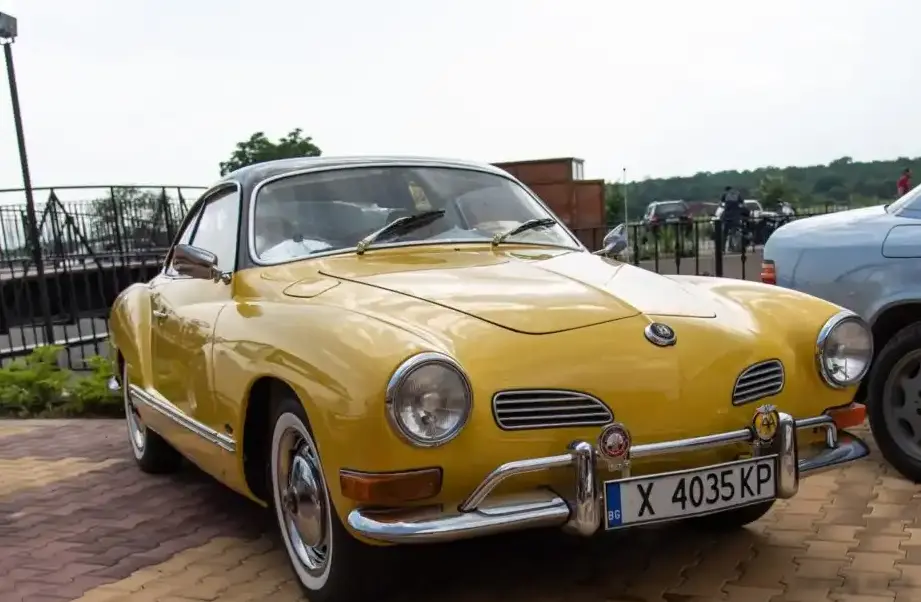
The Volkswagen Karmann Ghia Type 14, specifically the 1.3-liter (50 hp) variant, represents the entry point into the iconic coupe’s production run. Manufactured from 1963 through 1974, this model served as the foundation for the Karmann Ghia’s success, offering a stylish and relatively affordable alternative to more expensive sports cars of the era. It was positioned as a sophisticated, European-styled vehicle aimed at a broader market than the traditional Volkswagen Beetle. The Type 14 chassis underpinned the entire Karmann Ghia line, and the 1.3L engine was the initial powerplant offered, gradually being supplemented by larger, more powerful options as the model matured.
Technical Specifications
| Brand | Volkswagen |
| Model | Karmann Ghia |
| Generation | Karmann Ghia (Type 14) |
| Type (Engine) | 1.3 (50 Hp) |
| Start of production | 1963 |
| End of production | 1974 |
| Powertrain Architecture | Internal Combustion engine |
| Body type | Coupe |
| Seats | 4 |
| Doors | 2 |
| Fuel consumption (combined) | 8 l/100 km (29.4 US mpg, 35.3 UK mpg, 12.5 km/l) |
| Fuel Type | Petrol (Gasoline) |
| Maximum speed | 128 km/h (79.54 mph) |
| Weight-to-power ratio | 16.6 kg/Hp (60.2 Hp/tonne) |
| Power | 50 Hp @ 4600 rpm |
| Power per litre | 38.9 Hp/l |
| Engine displacement | 1285 cm3 (78.42 cu. in.) |
| Number of cylinders | 4 |
| Engine configuration | 180° flat V-engine |
| Cylinder Bore | 77 mm (3.03 in.) |
| Piston Stroke | 69 mm (2.72 in.) |
| Compression ratio | 7.3:1 |
| Number of valves per cylinder | 2 |
| Fuel injection system | Carburettor |
| Engine aspiration | Naturally aspirated engine |
| Valvetrain | OHV |
| Engine oil capacity | 2.5 l (2.64 US qt | 2.2 UK qt) |
| Kerb Weight | 830 kg (1829.84 lbs.) |
| Max. weight | 1160 kg (2557.36 lbs.) |
| Max load | 330 kg (727.53 lbs.) |
| Fuel tank capacity | 40 l (10.57 US gal | 8.8 UK gal) |
| Length | 4140 mm (162.99 in.) |
| Width | 1634 mm (64.33 in.) |
| Height | 1330 mm (52.36 in.) |
| Wheelbase | 2400 mm (94.49 in.) |
| Front track | 1305 mm (51.38 in.) |
| Rear (Back) track | 1300 mm (51.18 in.) |
| Minimum turning circle | 11.25 m (36.91 ft.) |
| Drivetrain Architecture | Rear wheel drive |
| Drive wheel | Rear wheel drive |
| Number of gears and type of gearbox | 4 gears, manual transmission |
| Front suspension | Transverse stabilizer, Torsion |
| Rear suspension | Torsion |
| Front brakes | Disc |
| Rear brakes | Drum |
| Steering type | Worm-reduction unit |
| Wheel rims size | 4J x 15 |
Powertrain & Engine Architecture
The heart of the early Karmann Ghia was the Volkswagen Type 113 air-cooled, 1.3-liter flat-four engine. This engine, derived from the Volkswagen Beetle’s powerplant, produced 50 horsepower at 4600 rpm. Its 180-degree flat configuration, while unusual, contributed to a relatively smooth operation for its time. The engine utilized a single Solex carburetor for fuel delivery, and an overhead valve (OHV) valvetrain. The engine was longitudinally mounted at the rear of the vehicle, driving the rear wheels. The standard transmission was a four-speed manual gearbox. This configuration, while mechanically simple, was known for its reliability, though it lacked the refinement of more modern powertrains.
Driving Characteristics
The 1.3-liter Karmann Ghia offered a leisurely driving experience. Acceleration was modest, and the car was best suited for cruising rather than spirited driving. The four-speed manual transmission provided adequate control, but the engine’s limited torque meant frequent downshifts were necessary, especially when tackling hills or overtaking. Compared to later, larger-engined Karmann Ghias (like those with the 1.5L or 1.6L engines), the 1.3L felt noticeably slower. However, the lighter weight of the base model did contribute to a more nimble feel in corners. The rear-engine layout provided a unique driving dynamic, requiring drivers to adapt to the car’s tendency to oversteer if pushed too hard.
Equipment & Trim Levels
The initial 1.3-liter Karmann Ghia was relatively sparsely equipped, reflecting its position as the entry-level model. Standard features included cloth upholstery, basic instrumentation (speedometer, fuel gauge, and temperature gauge), and a two-spoke steering wheel. Chrome trim adorned the exterior, enhancing its visual appeal. Optional extras included a radio, whitewall tires, and upgraded interior trim materials. The interior was characterized by its simple, functional design, prioritizing style over luxury. The dashboard layout was clean and straightforward, with all essential controls within easy reach of the driver.
Chassis & Braking
The Karmann Ghia Type 14 utilized a unibody construction, providing a relatively lightweight and rigid chassis. Suspension consisted of torsion bars at both the front and rear, offering a comfortable ride, though it wasn’t particularly sporty. The front brakes were disc brakes, providing adequate stopping power, while the rear brakes were drums. This combination was typical for cars of this era and weight class. A transverse stabilizer bar was included at the front to reduce body roll during cornering. The steering system employed a worm-reduction unit, which provided a relatively heavy but precise steering feel.
Market Reception & Comparison
The 1.3-liter Karmann Ghia was generally well-received by critics and the public. It was praised for its stylish design, comfortable ride, and relatively affordable price. However, some reviewers noted its lack of performance and the limitations of the engine. Compared to the later, more powerful Karmann Ghia variants, the 1.3L offered less excitement but better fuel economy. It was often seen as a good choice for drivers who prioritized style and comfort over outright performance. Its fuel consumption of around 29.4 US mpg was respectable for the time. The 1.3L model appealed to a different demographic than the higher-spec versions, attracting buyers who wanted a distinctive-looking car without breaking the bank.
Legacy
The 1.3-liter Karmann Ghia, while often overshadowed by its more powerful siblings, played a crucial role in establishing the model’s reputation. Its simple, reliable powertrain and relatively low maintenance costs made it a popular choice among enthusiasts and everyday drivers alike. Today, these early Karmann Ghias are sought after by collectors and restorers. The engine, while not particularly powerful by modern standards, is known for its durability and ease of maintenance. Finding original parts can sometimes be a challenge, but a thriving aftermarket supports the Karmann Ghia community. The 1.3L variant represents a charming and affordable entry point into the world of classic Volkswagen ownership, offering a unique blend of style, simplicity, and reliability.
