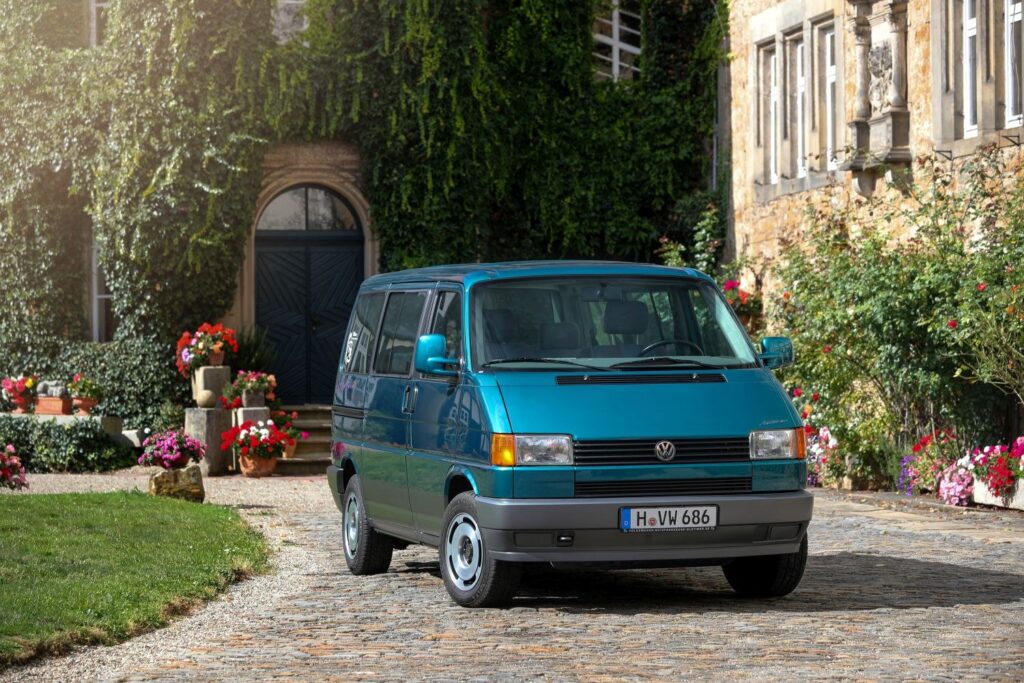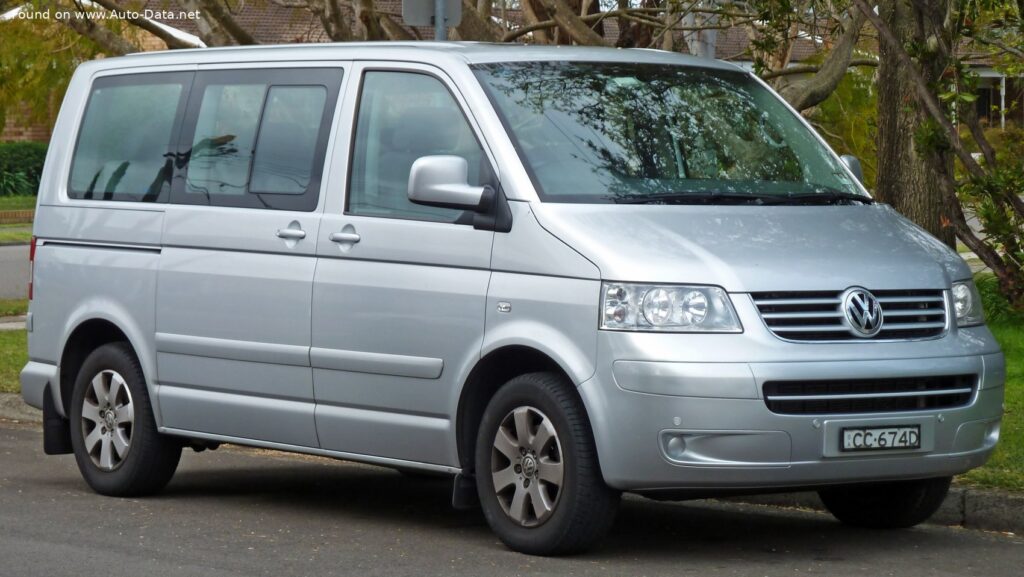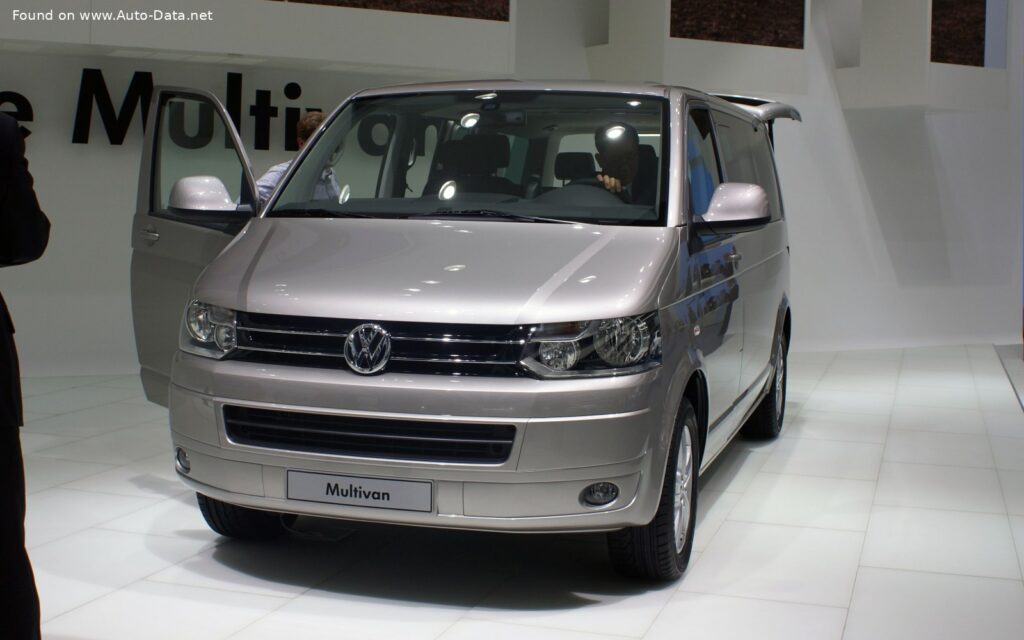
Introduction to the Volkswagen Multivan (T5, facelift 2009) Long 2.0 TDI (140 Hp) 4MOTION
The Volkswagen Multivan, a cornerstone of the European multi-purpose vehicle (MPV) segment, represents the passenger-oriented variant of Volkswagen’s highly successful Transporter commercial van line. The T5 generation, introduced in 2003, received a significant facelift in 2009, bringing a host of aesthetic, technological, and powertrain improvements. This updated model, particularly the long-wheelbase version equipped with the 2.0 TDI engine producing 140 horsepower and the sophisticated 4MOTION all-wheel-drive system, solidified its reputation as a highly versatile, comfortable, and capable people mover.
While the Multivan was never officially sold in the United States under its original designation, its lineage (the Type 2 Microbus) holds iconic status in American automotive history. In its primary European and Asian markets, the T5 Multivan served as a premium alternative to conventional minivans, offering superior space, robust build quality, and a driving experience closer to a passenger car, especially after the 2009 facelift. The specific configuration of the Volkswagen Multivan (T5, facelift 2009) Long 2.0 TDI (140 Hp) 4MOTION underscored its blend of efficiency, power, and enhanced traction, making it an ideal choice for large families, executive transport, or adventurous lifestyles requiring extensive cargo capacity and all-weather capability.
Engineering and Performance: The Volkswagen Multivan (T5, facelift 2009) Long 2.0 TDI (140 Hp) 4MOTION Powertrain
At the heart of this particular Multivan variant is a modern and efficient 2.0-liter TDI (Turbocharged Direct Injection) diesel engine, designated with the internal code CCHA. This inline four-cylinder unit, displacing 1968 cubic centimeters (approximately 120.09 cubic inches), was a key part of Volkswagen’s strategy to introduce more refined and fuel-efficient common-rail diesel technology across its range. The engine generates a robust 140 horsepower at a relatively low 3500 rpm, demonstrating its strong low-end and mid-range torque delivery crucial for a vehicle of this size and purpose.
Peak torque is an impressive 340 Newton-meters (250.77 lb.-ft.) available from just 2500 rpm. This ample torque, combined with a smooth-shifting 6-speed manual transmission, provides confident acceleration and effortless cruising, even when the vehicle is fully loaded with passengers and luggage. Power is delivered to all four wheels via Volkswagen’s renowned 4MOTION all-wheel-drive system. This intelligent system, often employing a Haldex clutch, automatically distributes power between the front and rear axles as needed, significantly enhancing traction and stability in adverse weather conditions, on challenging terrain, or during spirited driving.
Despite its substantial dimensions and all-wheel-drive system, the Multivan 2.0 TDI achieves commendable fuel economy for its class. The combined fuel consumption is rated at 8.3 liters per 100 kilometers, translating to approximately 28.3 US miles per gallon. Urban driving sees figures around 22.6 US mpg, while extra-urban cruising can reach up to 33.1 US mpg. These figures highlight the inherent efficiency of the TDI engine and Volkswagen’s optimization efforts. While performance is not its primary focus, the Multivan 2.0 TDI (140 Hp) 4MOTION can accelerate from 0 to 60 mph in a respectable 14.5 seconds, reaching a maximum speed of 105.63 mph (170 km/h). The vehicle also meets the Euro 4 emission standard, reflecting its environmental considerations for the era.
Design and Features
The T5 generation Multivan, particularly in its long-wheelbase form, is characterized by its utilitarian yet sophisticated design. The 2009 facelift brought updated styling cues, including revised headlights, a new grille, and subtly reprofiled bumpers, aligning its aesthetic more closely with Volkswagen’s contemporary passenger car lineup. The body type is a classic minivan, offering five doors and seating for seven occupants, configured for maximum flexibility.
Measuring an imposing 208.35 inches (5292 mm) in length, 74.96 inches (1904 mm) in width, and 78.35 inches (1990 mm) in height, the long-wheelbase Multivan provides cavernous interior space. The generous 133.86-inch (3400 mm) wheelbase contributes significantly to both ride comfort and interior volume. A substantial ground clearance of 7.91 inches (201 mm) further enhances its versatility, especially when combined with the 4MOTION system, allowing it to tackle unpaved roads or snowy conditions with greater confidence than many two-wheel-drive competitors.
Inside, the Multivan truly shines with its adaptable seating system. The rear seats can often slide on floor rails, swivel, or be removed entirely, allowing owners to configure the interior for various combinations of passengers and cargo. This modularity makes it suitable for anything from a family road trip to transporting sports equipment or even acting as a mobile office. Standard features for safety and driving dynamics include an Anti-lock Braking System (ABS), disc brakes on all four wheels, and a responsive rack-and-pinion steering system. The independent McPherson strut front suspension and double-wishbone rear suspension provide a comfortable and controlled ride, even when fully loaded. The vehicle rides on 235/55 R17 tires mounted on 7J x 17-inch wheel rims, a practical size offering a good balance of comfort, grip, and durability.
Technical Specifications
| General Information | |
| Brand | Volkswagen |
| Model | Multivan |
| Generation | Multivan (T5, facelift 2009) Long |
| Type (Engine) | 2.0 TDI (140 Hp) 4MOTION |
| Start of Production | 2009 year |
| End of Production | 2015 year |
| Powertrain Architecture | Internal Combustion engine |
| Body Type | Minivan |
| Seats | 7 |
| Doors | 5 |
| Performance Specs | |
| Fuel Consumption (Urban) | 10.4 l/100 km (22.6 US mpg) |
| Fuel Consumption (Extra Urban) | 7.1 l/100 km (33.1 US mpg) |
| Fuel Consumption (Combined) | 8.3 l/100 km (28.3 US mpg) |
| CO2 Emissions | 219 g/km |
| Fuel Type | Diesel |
| Acceleration 0 – 60 mph | 14.5 sec |
| Maximum Speed | 105.63 mph (170 km/h) |
| Emission Standard | Euro 4 |
| Weight-to-Power Ratio | 16.6 kg/Hp (60.1 Hp/tonne) |
| Weight-to-Torque Ratio | 6.8 kg/Nm (146 Nm/tonne) |
| Engine Specs | |
| Power | 140 Hp @ 3500 rpm |
| Power per Liter | 71.1 Hp/l |
| Torque | 340 Nm @ 2500 rpm (250.77 lb.-ft. @ 2500 rpm) |
| Engine Layout | Front, Transverse |
| Engine Model/Code | CCHA |
| Engine Displacement | 1968 cm3 (120.09 cu. in.) |
| Number of Cylinders | 4 |
| Engine Configuration | Inline |
| Number of Valves per Cylinder | 4 |
| Fuel Injection System | Diesel Commonrail |
| Engine Aspiration | Turbocharger, Intercooler |
| Engine Oil Capacity | 7 l (7.4 US qt) |
| Space, Volume and Weights | |
| Kerb Weight | 2328 kg (5132.36 lbs) |
| Max. Weight | 3080 kg (6790.24 lbs) |
| Max Load | 752 kg (1657.88 lbs) |
| Fuel Tank Capacity | 80 l (21.13 US gal) |
| Dimensions | |
| Length | 5292 mm (208.35 in.) |
| Width | 1904 mm (74.96 in.) |
| Height | 1990 mm (78.35 in.) |
| Wheelbase | 3400 mm (133.86 in.) |
| Front Track | 1628 mm (64.09 in.) |
| Rear (Back) Track | 1628 mm (64.09 in.) |
| Ride Height (Ground Clearance) | 201 mm (7.91 in.) |
| Drivetrain, Brakes and Suspension Specs | |
| Drive Wheel | All wheel drive (4×4) |
| Number of Gears and Type of Gearbox | 6 gears, manual transmission |
| Front Suspension | Independent type McPherson |
| Rear Suspension | Double wishbone |
| Front Brakes | Disc |
| Rear Brakes | Disc |
| Assisting Systems | ABS (Anti-lock braking system) |
| Steering Type | Steering rack and pinion |
| Tires Size | 235/55 R17 |
| Wheel Rims Size | 7J x 17 |
Legacy and Market Impact
The Volkswagen Multivan (T5, facelift 2009) Long 2.0 TDI (140 Hp) 4MOTION holds a significant place in the European and international automotive landscape, largely due to its unwavering reputation for robustness, versatility, and enduring quality. It transcended the typical minivan segment by offering a more premium, car-like driving experience combined with unparalleled interior flexibility, making it a favorite for large families, outdoor enthusiasts, and businesses requiring reliable executive or group transport.
In its primary markets, the Multivan competed with rivals such as the Mercedes-Benz V-Class (and its commercial counterpart, the Vito), the Ford Transit Custom (and its passenger variant, the Tourneo Custom), and various offerings from Stellantis (like the Opel Vivaro/Renault Trafic platforms) and Asian manufacturers like Hyundai with its H-1/Starex. The Multivan consistently stood out by offering a more refined interior, superior material quality, and a higher perceived value, often reflected in its strong residual values. The addition of the 4MOTION all-wheel-drive system was a particular differentiator, setting it apart from many two-wheel-drive competitors and significantly broadening its appeal to customers in regions with challenging climates or those needing light off-road capability.
The T5 generation, and especially its facelifted iteration, continued the legendary legacy of the Volkswagen Transporter series, which traces its roots back to the iconic Type 2 Microbus. While the Multivan itself was not offered in the United States—where Volkswagen briefly marketed the Routan (a rebadged Chrysler Town & Country) and later shifted its focus to SUVs—its fundamental design principles and utility resonate with the spirit of practical, spacious vehicles. The 2.0 TDI engine, a workhorse for Volkswagen, further cemented its reputation for fuel efficiency and durability, making the Multivan a pragmatic choice for long-term ownership.
Its impact extends beyond mere sales figures; the Multivan became a cultural icon in many parts of Europe, synonymous with freedom, adventure, and family travel. The long-wheelbase variant, in particular, maximized its utility, offering expansive cargo capacity even with all seven seats in use, or transforming into a spacious hauler when seats were removed. The 2009 facelift ensured the T5 remained competitive and visually appealing until the introduction of the T6 generation in 2015, leaving a lasting legacy as one of the most capable and desirable large MPVs ever produced by Volkswagen.