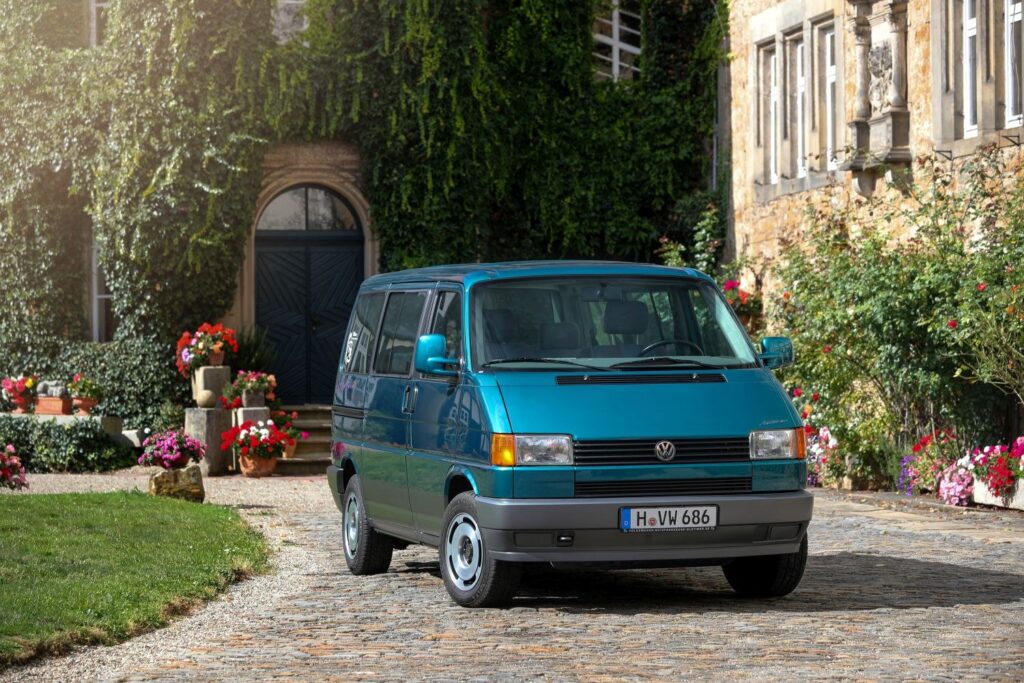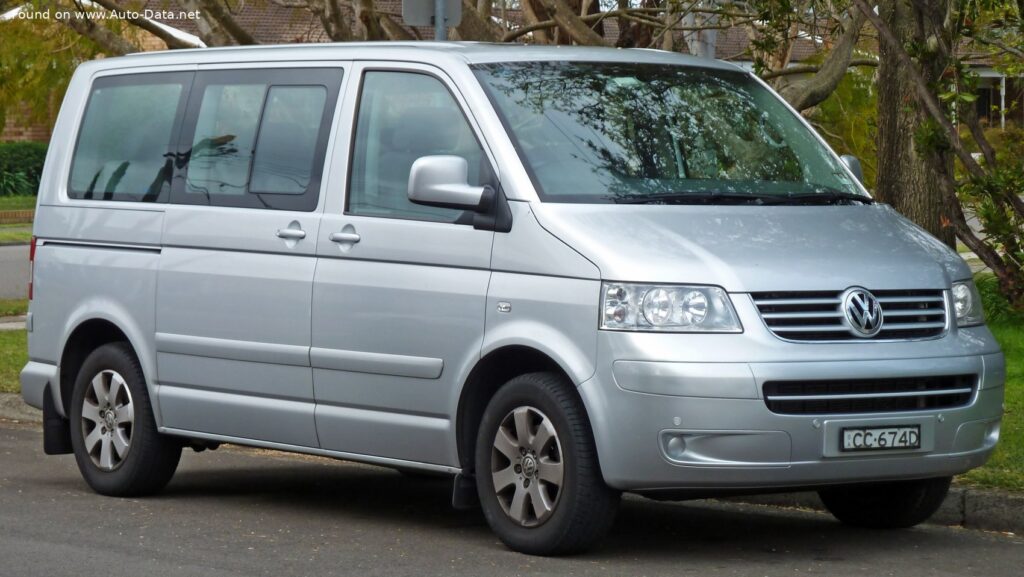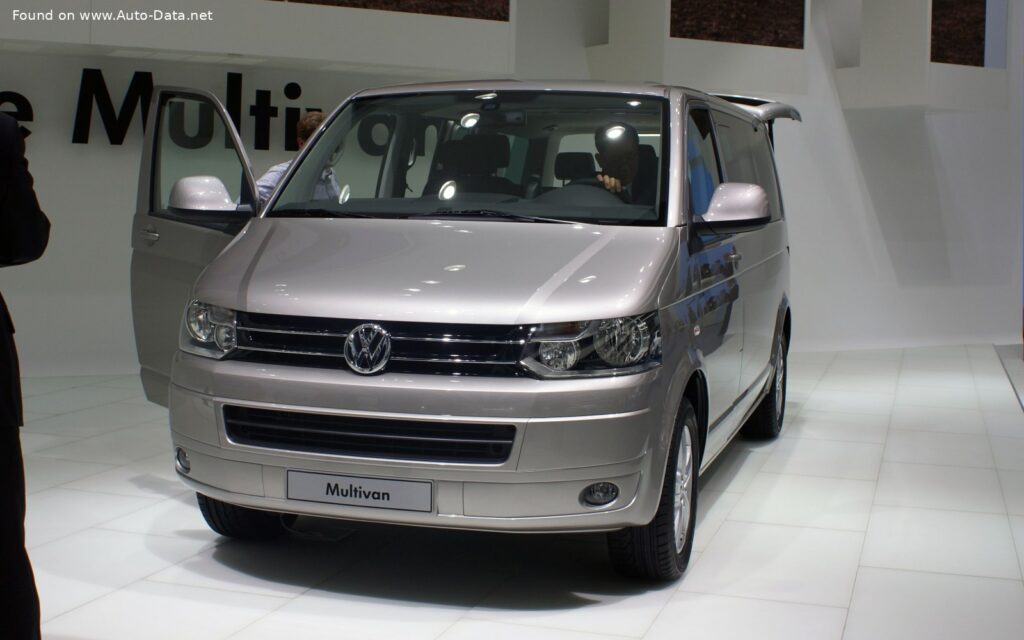
The Volkswagen Multivan (T5, facelift 2009) Long 2.0 TDI (180 Hp): A European People Mover Icon
The Volkswagen Multivan (T5, facelift 2009) Long 2.0 TDI (180 Hp) represents a significant evolution in Volkswagen’s storied lineage of versatile passenger vans, a heritage stretching back to the iconic Type 2 “Bus.” Introduced as part of the T5 generation’s mid-cycle refresh in 2009, this particular variant, with its extended wheelbase and potent diesel engine, solidified its position as a premium multi-purpose vehicle (MPV) in markets outside of North America, particularly across Europe and Asia. While never officially sold in the United States, the Multivan is a testament to Volkswagen’s engineering prowess in creating highly adaptable and efficient family and business transport solutions. This facelifted T5 model combined enhanced aesthetics, improved interior ergonomics, and a new generation of more efficient engines, including the powerful 2.0-liter BiTurbo TDI diesel, making it a compelling choice for those requiring ample space, comfort, and robust performance.
Engine and Performance: Powering the Volkswagen Multivan (T5, facelift 2009) Long
At the heart of the 2009 facelifted Volkswagen Multivan Long was the advanced 2.0 TDI engine, specifically the 180 horsepower variant (engine code CFCA). This powertrain marked a significant departure from the previous generation’s larger displacement engines, showcasing Volkswagen’s commitment to downsizing and turbocharging for improved efficiency and performance. This inline four-cylinder diesel engine, displacing 1968 cubic centimeters (120.09 cu. in.), utilized a sophisticated common rail fuel injection system, ensuring precise fuel delivery and cleaner combustion.
A key characteristic of this engine was its BiTurbo setup, featuring two turbochargers working in sequence to provide a broad and linear power band. This allowed the engine to produce a robust 180 horsepower at 4000 rpm, translating to confident acceleration and effortless cruising, even when fully loaded. More impressively, the engine delivered a substantial 400 Newton meters (295.02 lb.-ft.) of torque at a low 2000 rpm. This ample torque was crucial for a vehicle of the Multivan’s size and intended use, providing strong pulling power and reducing the need for frequent gear changes.
Paired with a slick-shifting 6-speed manual transmission, the front-wheel-drive Multivan Long 2.0 TDI achieved respectable performance figures for its class. It could accelerate from 0 to 60 mph in a calculated 10.8 seconds (0-100 km/h in 11.4 seconds) and reach a maximum speed of 118.68 mph (191 km/h). Despite its size and capabilities, the Multivan was also engineered for efficiency. The combined fuel economy was rated at 7.8 liters per 100 kilometers, equating to an impressive 30.2 US miles per gallon. This efficiency, combined with an 80-liter (21.13 US gallon) fuel tank, offered a considerable driving range, a major advantage for long-distance travel. The vehicle met the Euro 4 emission standard, reflecting its compliance with contemporary European environmental regulations.
Design and Features: Practicality Meets Premium Comfort
The Volkswagen Multivan (T5, facelift 2009) Long maintained the functional yet refined aesthetic of the T5 generation, with the facelift introducing subtle but impactful changes. The exterior received a refreshed front fascia, including new headlights, grille, and bumper designs that aligned it more closely with Volkswagen’s contemporary passenger car lineup. The Long variant, with its extended length of 208.35 inches (5292 mm) and a generous wheelbase of 133.86 inches (3400 mm), maximized interior volume, making it an ideal platform for its 7-seat configuration.
Inside, the Multivan truly shined as a paragon of versatility. The seating system was highly modular, allowing for various configurations, including swiveling second-row seats and a movable, folding third-row bench that could transform into a bed. This adaptability made it perfect for both large families and those needing a mobile office or recreational vehicle. The facelift also brought updated interior materials, improved infotainment options, and enhanced ergonomics, elevating the cabin’s premium feel. Features like multiple storage compartments, integrated tables, and robust climate control systems underscored its focus on passenger comfort and convenience.
From a structural and chassis perspective, the Multivan was built on a robust platform designed for both passenger comfort and commercial vehicle durability. It featured an independent McPherson strut front suspension and a double wishbone rear suspension, providing a car-like ride quality while still being capable of handling heavy loads. The steering system utilized a rack and pinion setup, offering precise control for a vehicle of its size. Braking performance was handled by disc brakes on both the front and rear axles, complemented by an Anti-lock Braking System (ABS) for enhanced safety during emergency stops. The vehicle rode on 235/55 R17 tires mounted on 7J x 17-inch wheel rims, providing a good balance of grip, comfort, and load-carrying capacity. With a ground clearance of 7.91 inches (201 mm), it was well-suited for varied road conditions.
Technical Specifications
| Specification | Value |
|---|---|
| General Information | |
| Brand | Volkswagen |
| Model | Multivan |
| Generation | Multivan (T5, facelift 2009) Long |
| Type (Engine) | 2.0 TDI (180 Hp) |
| Start of production | 2009 year |
| End of production | 2015 year |
| Powertrain Architecture | Internal Combustion engine |
| Body type | Minivan |
| Seats | 7 |
| Doors | 5 |
| Performance Specs | |
| Fuel consumption (economy) – urban | 9.8 l/100 km (24 US mpg) |
| Fuel consumption (economy) – extra urban | 6.7 l/100 km (35.1 US mpg) |
| Fuel consumption (economy) – combined | 7.8 l/100 km (30.2 US mpg) |
| CO2 emissions | 205 g/km |
| Fuel Type | Diesel |
| Acceleration 0 – 60 mph | 10.8 sec |
| Acceleration 0 – 100 km/h | 11.4 sec |
| Maximum speed | 191 km/h (118.68 mph) |
| Emission standard | Euro 4 |
| Weight-to-power ratio | 12.3 kg/Hp, 81.1 Hp/tonne |
| Weight-to-torque ratio | 5.5 kg/Nm, 180.3 Nm/tonne |
| Engine Specs | |
| Power | 180 Hp @ 4000 rpm. |
| Power per liter | 91.5 Hp/l |
| Torque | 400 Nm (295.02 lb.-ft.) @ 2000 rpm. |
| Engine layout | Front, Transverse |
| Engine Model/Code | CFCA |
| Engine displacement | 1968 cm3 (120.09 cu. in.) |
| Number of cylinders | 4 |
| Engine configuration | Inline |
| Number of valves per cylinder | 4 |
| Fuel injection system | Diesel Commonrail |
| Engine aspiration | BiTurbo, Intercooler |
| Engine oil capacity | 7 l (7.4 US qt) |
| Space, Volume and Weights | |
| Kerb Weight | 2219 kg (4892.06 lbs.) |
| Max. weight | 3080 kg (6790.24 lbs.) |
| Max load | 861 kg (1898.18 lbs.) |
| Fuel tank capacity | 80 l (21.13 US gal) |
| Dimensions | |
| Length | 5292 mm (208.35 in.) |
| Width | 1904 mm (74.96 in.) |
| Height | 1990 mm (78.35 in.) |
| Wheelbase | 3400 mm (133.86 in.) |
| Front track | 1628 mm (64.09 in.) |
| Rear (Back) track | 1628 mm (64.09 in.) |
| Ride height (ground clearance) | 201 mm (7.91 in.) |
| Drivetrain, Brakes and Suspension Specs | |
| Drivetrain Architecture | Front wheel drive (ICE drives front wheels) |
| Drive wheel | Front wheel drive |
| Number of gears and type of gearbox | 6 gears, manual transmission |
| Front suspension | Independent type McPherson |
| Rear suspension | Double wishbone |
| Front brakes | Disc |
| Rear brakes | Disc |
| Assisting systems | ABS (Anti-lock braking system) |
| Steering type | Steering rack and pinion |
| Tires size | 235/55 R17 |
| Wheel rims size | 7J x 17 |
Legacy and Market Impact
The Volkswagen Multivan (T5, facelift 2009) Long 2.0 TDI (180 Hp) carved out a formidable reputation in its primary markets, particularly in Europe. It was a premium offering in the large MPV segment, often chosen by discerning families, shuttle services, and businesses that demanded superior space, flexibility, and a more refined driving experience than typical commercial vans. Its comprehensive range of seating configurations, including swiveling captain’s chairs and a multi-functional rear bench, made it incredibly adaptable for various uses, from executive transport to family camping trips.
Competitors in this segment included vehicles like the Mercedes-Benz V-Class (formerly Viano), Ford Transit Custom (Tourneo Custom), and Renault Trafic (SpaceClass). The Multivan consistently stood out for its robust build quality, strong resale values, and the prestige associated with the Volkswagen badge. The 2.0 TDI engine, especially the 180 Hp BiTurbo variant, was highly regarded for its blend of power, efficiency, and durability, perfectly suited for long-distance travel across continents.
The T5 generation, and specifically the Multivan derivative, continued the proud legacy of the Volkswagen Transporter family, which originated with the Type 2. While the Transporter line has always been a workhorse, the Multivan elevated it to a more luxurious and passenger-focused vehicle. Its absence from the North American market was largely due to a combination of factors, including the “Chicken Tax” (a tariff on imported light trucks), differing consumer preferences favoring larger, often American-made, SUVs and traditional minivans like the Chrysler Pacifica or Honda Odyssey, and Volkswagen’s strategic decision to focus its US lineup on other segments.
Despite its limited global availability, the Multivan (T5, facelift 2009) Long 2.0 TDI (180 Hp) remains a highly sought-after vehicle in its intended markets. It is celebrated for its blend of practicality, performance, and premium features, embodying Volkswagen’s engineering philosophy of creating vehicles that are both highly functional and enjoyable to drive. Its impact lies in its successful bridging of the gap between a commercial van and a sophisticated passenger car, offering unparalleled versatility and comfort for those who truly need and appreciate a large, capable, and efficient people mover.