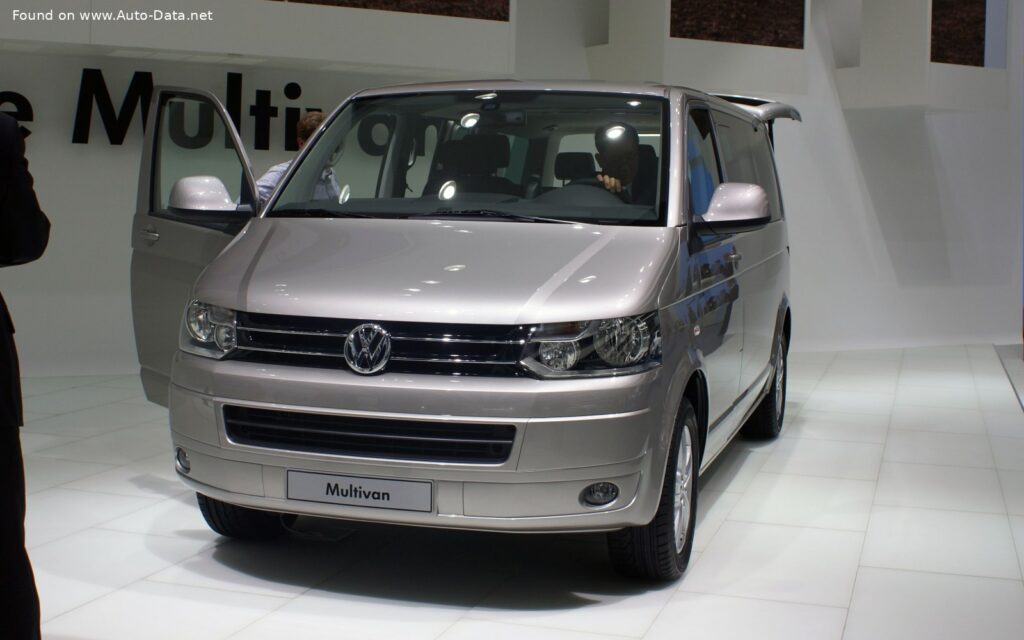
The Volkswagen Multivan (T5, facelift 2009) Long 2.0 TSI (204 Hp) 4MOTION DSG: A European Icon of Versatility
The Volkswagen Multivan (T5, facelift 2009) Long 2.0 TSI (204 Hp) 4MOTION DSG represents a significant iteration of a vehicle lineage deeply embedded in European automotive culture. Produced from 2009 to 2015, this particular model belongs to the facelifted T5 generation of Volkswagen’s venerable Transporter series, a line that has evolved from humble commercial vehicles into sophisticated people movers. While not widely marketed in the United States, the Multivan is a premium minivan or multi-purpose vehicle (MPV) that has garnered immense popularity across Europe and other international markets for its blend of passenger comfort, cargo flexibility, and robust engineering. This “Long” wheelbase variant, equipped with the potent 2.0 TSI engine, advanced 4MOTION all-wheel drive, and a smooth DSG automatic transmission, stood out as a highly capable and luxurious option for families and businesses alike, offering a compelling alternative to traditional SUVs or larger vans.
Engine and Performance of the Volkswagen Multivan (T5, facelift 2009) Long 2.0 TSI (204 Hp) 4MOTION DSG
At the heart of this formidable minivan lies Volkswagen’s acclaimed 2.0-liter TSI (Turbocharged Stratified Injection) inline-four engine, an powerplant renowned for its efficiency and spirited performance. With an engine displacement of 1984 cm³ (121.07 cu. in.), this unit, bearing the CJKA engine code, delivers a robust 204 horsepower at 6000 rpm. Its power per liter rating of 102.8 Hp/l underscores its modern design and forced induction capabilities. The engine’s direct injection system, combined with a turbocharger and intercooler, ensures a broad and flat torque curve, peaking at an impressive 258.15 lb.-ft. (350 Nm) at 4000 rpm. This ample torque is crucial for a vehicle of the Multivan’s size and intended use, providing strong acceleration and effortless cruising, even when fully loaded.
Power is channeled through a sophisticated 7-speed DSG (Direct Shift Gearbox) automatic transmission. Volkswagen’s DSG technology is celebrated for its rapid, seamless gear changes, offering both the convenience of an automatic and the efficiency and responsiveness often associated with manual gearboxes. This combination allows the large Multivan to achieve a respectable 0-60 mph acceleration in an estimated 9.4 seconds (0-100 km/h in 9.9 seconds) and a top speed of 122.41 mph (197 km/h), figures that are quite impressive for a vehicle of its class and dimensions.
Further enhancing its capabilities, especially in diverse European climates, is the 4MOTION all-wheel-drive system. This intelligent system automatically distributes power to all four wheels, optimizing traction and stability in challenging conditions such as snow, ice, or unpaved roads. This feature significantly broadens the Multivan’s appeal, offering enhanced safety and confidence compared to purely front-wheel-drive competitors. Despite its performance and all-wheel-drive system, the Multivan aims for reasonable efficiency for its segment. The combined fuel economy is rated at 22.4 US mpg (10.5 l/100 km), with urban consumption at 16.8 US mpg (14 l/100 km) and extra-urban at 27.7 US mpg (8.5 l/100 km). CO2 emissions stand at 245 g/km, adhering to Euro 4 emission standards.
Design and Features
The Volkswagen Multivan (T5, facelift 2009) Long features a classic minivan body type, characterized by its boxy yet purposeful design, optimized for maximizing interior volume and passenger comfort. This particular “Long” wheelbase variant stretches to an impressive 208.35 inches (5292 mm) in length, with a substantial 133.86-inch (3400 mm) wheelbase. This extended length translates directly into superior interior space, allowing for a comfortable 7-seat configuration across five doors, typically featuring flexible seating arrangements that are a hallmark of the Multivan series. These configurations often include swiveling captain’s chairs and a multi-position rear bench, allowing for various passenger and cargo setups, making it exceptionally versatile for family trips, executive transport, or even mobile office applications.
Visually, the facelifted T5 Multivan adopted Volkswagen’s updated design language of the era, featuring refreshed headlights, grille, and bumper designs that gave it a more modern and cohesive look aligned with other VW passenger cars. Despite its utilitarian roots, the Multivan aimed for a more upscale aesthetic and feel, particularly in its higher trim levels, offering a comfortable and well-appointed cabin. The vehicle stands 78.35 inches (1990 mm) tall and 74.96 inches (1904 mm) wide, providing ample headroom and shoulder room for all occupants. Its ground clearance of 7.91 inches (201 mm) is also noteworthy for a minivan, offering a slight advantage for navigating uneven terrain or deep snow.
From a functional standpoint, the Multivan is equipped with practical features. The standard tire size is 235/55 R17 on 7J x 17 wheel rims, providing a good balance of ride comfort and handling. Safety is addressed with a robust braking system featuring disc brakes on both the front and rear axles, complemented by an Anti-lock Braking System (ABS) as a standard assisting system. The steering is a rack and pinion type, offering precise control for a vehicle of its size. The suspension setup, with an independent McPherson type in the front and a double wishbone at the rear, is designed to provide a comfortable and stable ride, crucial for long journeys with multiple passengers. The kerb weight of 5143.38 lbs (2333 kg) and a maximum permissible weight of 6790.24 lbs (3080 kg), allowing for a maximum load of 1646.85 lbs (747 kg), underscore its robust build quality and load-carrying capability.
Technical Specifications
| Attribute | Value |
|---|---|
| Brand | Volkswagen |
| Model | Multivan |
| Generation | Multivan (T5, facelift 2009) Long |
| Type (Engine) | 2.0 TSI (204 Hp) 4MOTION DSG |
| Start of Production | 2009 year |
| End of Production | 2015 year |
| Powertrain Architecture | Internal Combustion engine |
| Body Type | Minivan |
| Seats | 7 |
| Doors | 5 |
| Performance Specs | |
| Fuel consumption (economy) – urban | 14 l/100 km (16.8 US mpg) |
| Fuel consumption (economy) – extra urban | 8.5 l/100 km (27.7 US mpg) |
| Fuel consumption (economy) – combined | 10.5 l/100 km (22.4 US mpg) |
| CO2 emissions | 245 g/km |
| Fuel Type | Petrol (Gasoline) |
| Acceleration 0 – 60 mph | 9.4 sec |
| Acceleration 0 – 100 km/h | 9.9 sec |
| Maximum Speed | 197 km/h (122.41 mph) |
| Emission Standard | Euro 4 |
| Weight-to-power ratio | 11.4 kg/Hp, 87.4 Hp/tonne |
| Weight-to-torque ratio | 6.7 kg/Nm, 150 Nm/tonne |
| Engine Specs | |
| Power | 204 Hp @ 6000 rpm |
| Power per liter | 102.8 Hp/l |
| Torque | 350 Nm @ 4000 rpm (258.15 lb.-ft. @ 4000 rpm) |
| Engine Layout | Front, Transverse |
| Engine Model/Code | CJKA |
| Engine Displacement | 1984 cm³ (121.07 cu. in.) |
| Number of Cylinders | 4 |
| Engine Configuration | Inline |
| Number of Valves per Cylinder | 4 |
| Fuel Injection System | Direct injection |
| Engine Aspiration | Turbocharger, Intercooler |
| Engine Oil Capacity | 5.7 l (6.02 US qt) |
| Space, Volume, and Weights | |
| Kerb Weight | 2333 kg (5143.38 lbs) |
| Max. Weight | 3080 kg (6790.24 lbs) |
| Max Load | 747 kg (1646.85 lbs) |
| Fuel Tank Capacity | 80 l (21.13 US gal) |
| Dimensions | |
| Length | 5292 mm (208.35 in) |
| Width | 1904 mm (74.96 in) |
| Height | 1990 mm (78.35 in) |
| Wheelbase | 3400 mm (133.86 in) |
| Front Track | 1628 mm (64.09 in) |
| Rear (Back) Track | 1628 mm (64.09 in) |
| Ride Height (Ground Clearance) | 201 mm (7.91 in) |
| Drivetrain, Brakes, and Suspension Specs | |
| Drive Wheel | All-wheel drive (4×4) |
| Number of Gears and Type of Gearbox | 7 gears, automatic transmission DSG |
| Front Suspension | Independent type McPherson |
| Rear Suspension | Double wishbone |
| Front Brakes | Disc |
| Rear Brakes | Disc |
| Assisting Systems | ABS (Anti-lock braking system) |
| Steering Type | Steering rack and pinion |
| Tires Size | 235/55 R17 |
| Wheel Rims Size | 7J x 17 |
Legacy and Market Impact
The Volkswagen Multivan, particularly the T5 generation and its facelifted variant, holds a unique and respected position in the European automotive landscape. Unlike the more basic commercial versions of the Transporter van, the Multivan was positioned as a premium, family-oriented or executive shuttle vehicle, offering car-like comfort and features within a highly adaptable minivan platform. Its primary market impact was in providing a versatile, high-quality alternative to larger sedans or SUVs for those prioritizing passenger and cargo flexibility, especially for long-distance travel or adventurous lifestyles.
In its segment, the Volkswagen Multivan (T5, facelift 2009) Long 2.0 TSI (204 Hp) 4MOTION DSG faced competition from other European premium people movers, such as the Mercedes-Benz V-Class (and its predecessor, the Vito/Viano), and high-end variants of the Ford Transit Custom (Tourneo Custom). What set the Multivan apart, especially in this configuration, was its potent TSI engine, the efficient and engaging DSG transmission, and the confidence-inspiring 4MOTION all-wheel drive. This combination made it particularly appealing in regions with varied weather conditions or for customers who frequently ventured off paved roads.
The Multivan’s reputation was built on its exceptional build quality, robust mechanicals, and legendary reliability, traits inherited from its commercial vehicle roots. The T5 facelift refined these characteristics, bringing more modern technology and interior enhancements. Its flexible seating, often including a rail system that allowed seats to slide, swivel, or be removed entirely, contributed significantly to its enduring popularity. This adaptability made it suitable for a wide range of uses, from a spacious family hauler to a comfortable long-distance tourer or even a compact camper.
Historically, the Multivan continues the rich legacy of the Volkswagen Type 2 (Bus/Transporter), evolving from a simple utility vehicle into a sophisticated, multi-faceted transport solution. The T5 generation, and specifically the powerful and all-wheel-drive enabled facelifted models, solidified its status as a benchmark for premium minivans in markets where they are highly valued. Its impact lies in proving that a van could be both immensely practical and genuinely desirable, offering a blend of performance, luxury, and utility that few competitors could match. While it may remain an exotic sight on American roads, its influence on global automotive design and its role as a versatile workhorse and family vehicle across continents are undeniable.