The Volkswagen Multivan (T6.1, facelift 2019): A European Icon of Versatility
The Volkswagen Multivan (T6.1, facelift 2019) represents the latest evolution of a vehicle lineage synonymous with versatility, practicality, and enduring appeal. While not officially sold in the United States under the Multivan nameplate, this model is a cornerstone of Volkswagen’s commercial and passenger vehicle offerings in Europe and other international markets, serving as a premium minivan or passenger van. A direct descendant of the legendary Volkswagen Type 2 “Bus,” the Multivan has evolved through generations to become a sophisticated, multi-purpose vehicle catering to families, businesses, and adventurers alike. The T6.1 facelift, introduced in 2019, brought significant technological updates, enhanced safety features, and refined aesthetics to the already successful T6 platform, solidifying its position in the competitive European large minivan segment. This particular variant, powered by the 2.0 TDI (150 Hp) engine, strikes an excellent balance between performance, fuel efficiency, and robust capability, making it a popular choice for a wide array of users.
Engine and Performance: The Efficient 2.0 TDI in the Volkswagen Multivan (T6.1, facelift 2019)
Under the hood of the Volkswagen Multivan (T6.1, facelift 2019) 2.0 TDI (150 Hp) lies a highly regarded diesel engine, a staple of Volkswagen’s powertrain lineup. This 2.0-liter (1968 cm³) inline four-cylinder unit, identified by engine codes CXFA or CXHA, is meticulously engineered for both power delivery and impressive fuel economy, crucial attributes for a vehicle of its size and intended use. The engine features a Double Overhead Camshaft (DOHC) valvetrain with four valves per cylinder, ensuring efficient air intake and exhaust. Fuel is delivered via a sophisticated Diesel Commonrail injection system, which, combined with a turbocharger and intercooler, optimizes combustion and maximizes power output across a broad RPM range.
The engine produces a healthy 150 horsepower (Hp) at 3250-3750 revolutions per minute (rpm), providing ample thrust for highway cruising and city driving. More significantly for a vehicle designed to carry passengers and cargo, it generates a substantial 250.77 pound-feet (340 Nm) of torque, available from a low 1500 rpm and sustained up to 3000 rpm. This wide torque band ensures strong pulling power and makes the Multivan feel responsive even when fully loaded or towing. The powertrain architecture is front, transverse, driving the front wheels through a precise 6-speed manual transmission, offering a direct and engaging driving experience.
In terms of acceleration, the Multivan 2.0 TDI (150 Hp) can reach 60 miles per hour (96.5 km/h) from a standstill in an estimated 12.3 seconds, with 0-100 km/h taking 12.9 seconds. Its maximum speed is approximately 113.71 miles per hour (183 km/h), which is more than adequate for typical road conditions. Fuel efficiency is a key strength of this diesel powertrain. The combined fuel consumption is rated at 6.2 liters per 100 kilometers, translating to an impressive 37.9 US miles per gallon. Urban driving yields about 30.9 US mpg (7.6 l/100 km), while extra-urban figures are even better at 43.6-44.4 US mpg (5.3-5.4 l/100 km). With CO2 emissions ranging from 162-163 g/km and compliance with the Euro 6d-ISC-FCM emission standard, this Multivan reflects Volkswagen’s commitment to environmental responsibility. Features like a Start & Stop System and a Particulate filter further enhance its efficiency and reduce emissions.
Design and Features: Practicality Meets Modernity
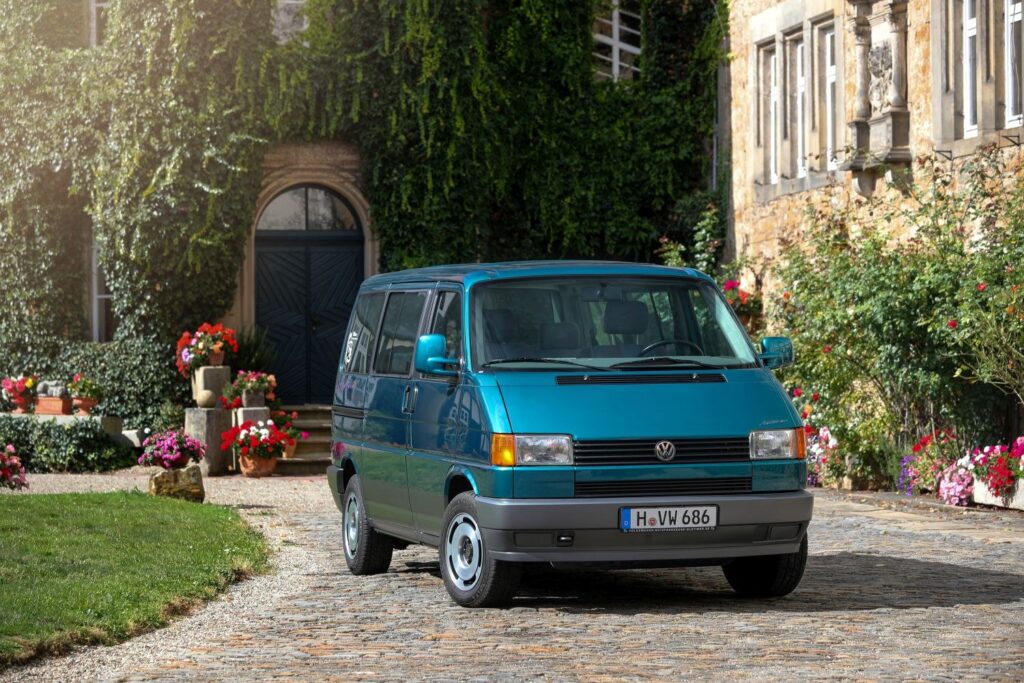
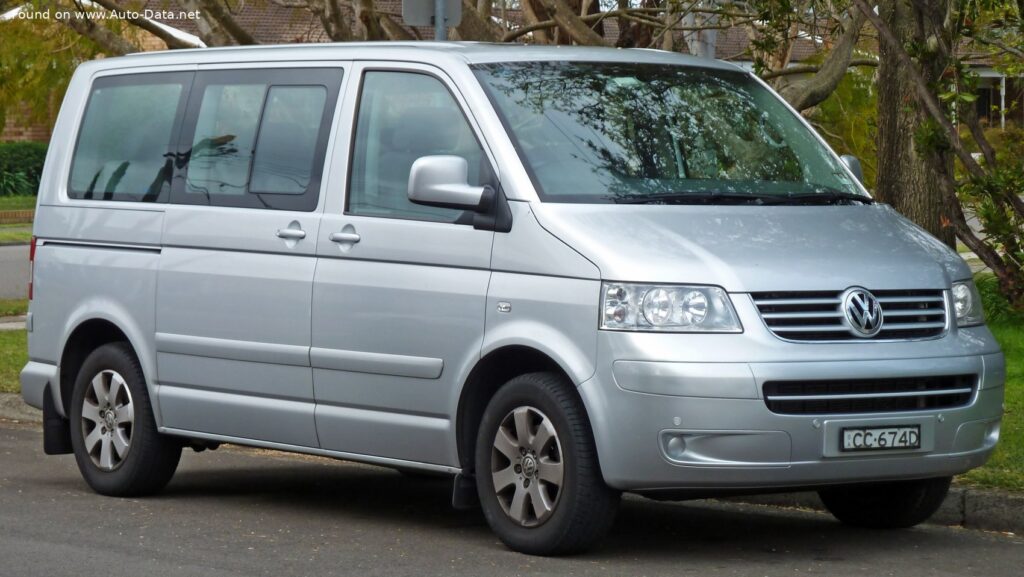
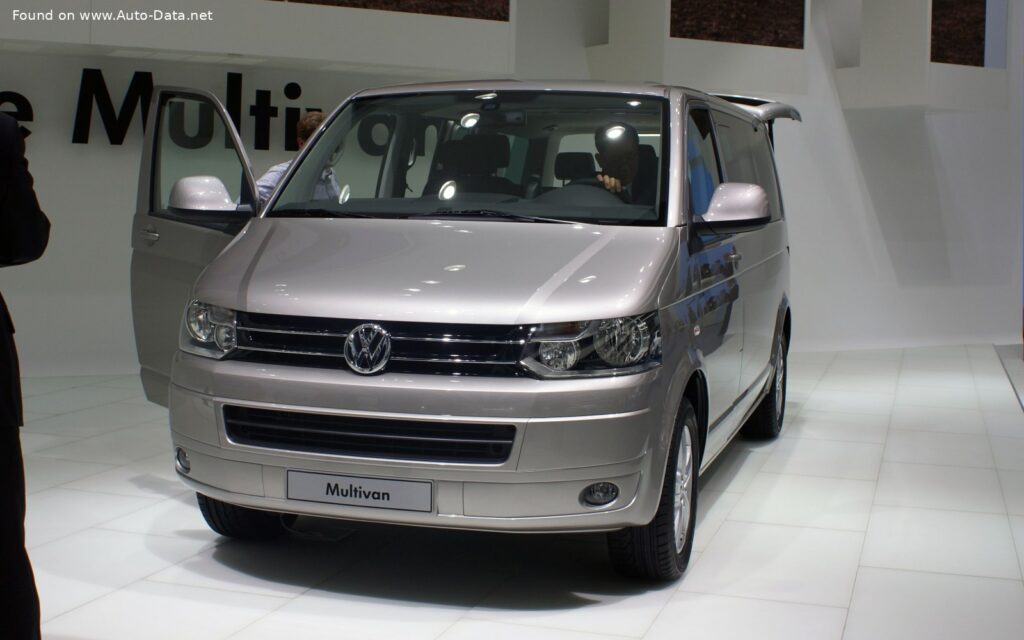
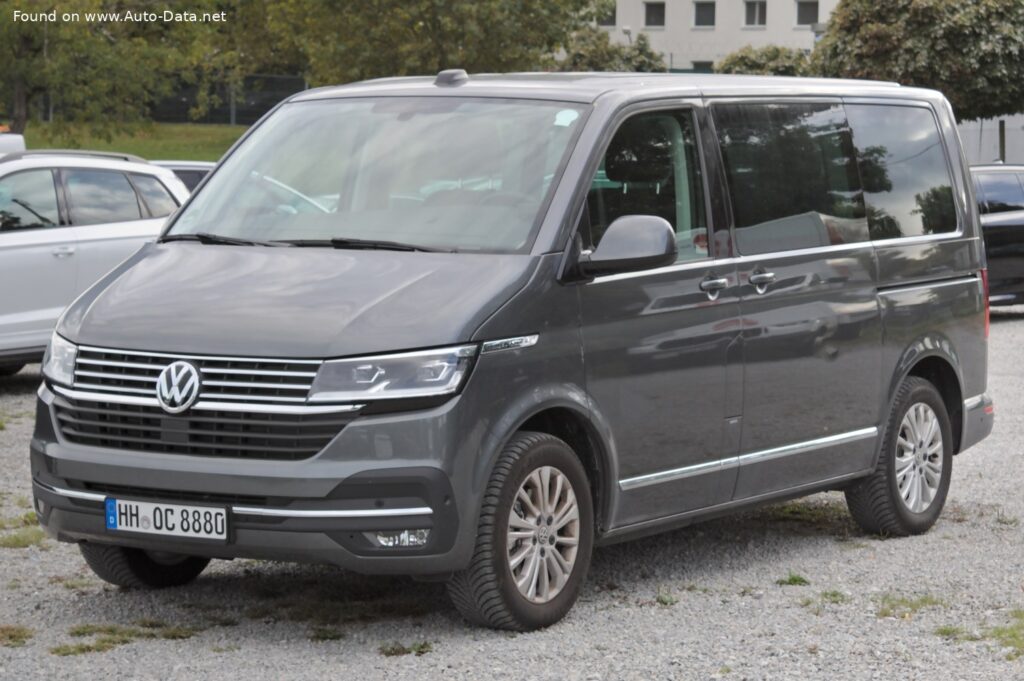
The Volkswagen Multivan (T6.1, facelift 2019) retains its iconic minivan body type, characterized by a spacious, boxy silhouette optimized for interior volume and passenger comfort. Measuring 193.07 inches (4904 mm) in length, 74.96 inches (1904 mm) in width (90.43 inches or 2297 mm including mirrors), and standing between 77.56 and 78.35 inches (1970-1990 mm) tall, it commands a significant road presence. The generous 118.11-inch (3000 mm) wheelbase contributes to a stable ride and expansive interior space.
The Multivan is designed with exceptional flexibility, offering seating configurations for 5 to 7 occupants. Its rear interior space is truly remarkable, boasting a maximum trunk (boot) volume of 151.85 cubic feet (4300 liters), allowing for vast cargo capacity when rear seats are removed or folded. This adaptability makes it suitable for diverse applications, from family road trips to shuttle services. Access to the cabin and cargo area is facilitated by five doors, typically including large sliding side doors for easy entry and exit in tight spaces.
The T6.1 facelift brought a refreshed front fascia, including a redesigned grille and updated lighting, giving it a more contemporary look. Inside, the cabin received significant upgrades, including a new infotainment system with improved connectivity and a digital cockpit option, enhancing the driver’s experience. Practical features abound, such as numerous storage compartments, durable materials designed for heavy use, and adjustable seating to create various interior layouts.
Safety features are comprehensive for a modern vehicle, including an Anti-lock Braking System (ABS) as standard. The vehicle is equipped with ventilated disc brakes at the front and disc brakes at the rear, ensuring strong stopping power. The suspension system, featuring an independent McPherson type with coil springs and an anti-roll bar at the front and a wishbone with a transverse stabilizer at the rear, provides a comfortable yet controlled ride. Electric power steering makes maneuvering this large vehicle surprisingly effortless, aided by a minimum turning circle of 39.04 feet (11.9 meters). The Multivan’s robust construction also allows for a substantial permitted trailer load of 5511.56 lbs (2500 kg) with brakes, underscoring its utility.
Technical Specifications: Volkswagen Multivan (T6.1, facelift 2019) 2.0 TDI (150 Hp)
| Category | Specification |
|---|---|
| Brand | Volkswagen |
| Model | Multivan |
| Generation | Multivan (T6.1, facelift 2019) |
| Engine Type | 2.0 TDI (150 Hp) |
| Production Start | 2019 year |
| Production End | 2021 year |
| Powertrain Architecture | Internal Combustion engine |
| Body type | Minivan |
| Seats | 5-7 |
| Doors | 5 |
| Fuel Consumption (Urban) | 7.6 l/100 km (30.9 US mpg) |
| Fuel Consumption (Extra Urban) | 5.3-5.4 l/100 km (43.6 – 44.4 US mpg) |
| Fuel Consumption (Combined) | 6.2 l/100 km (37.9 US mpg) |
| CO2 Emissions | 162-163 g/km |
| Fuel Type | Diesel |
| Acceleration 0-60 mph | 12.3 sec |
| Acceleration 0-100 km/h | 12.9 sec |
| Maximum Speed | 113.71 mph (183 km/h) |
| Emission Standard | Euro 6d-ISC-FCM |
| Weight-to-Power Ratio | 14.6 kg/Hp, 68.4 Hp/tonne |
| Weight-to-Torque Ratio | 6.5 kg/Nm, 155 Nm/tonne |
| Power | 150 Hp @ 3250-3750 rpm |
| Power per liter | 76.2 Hp/l |
| Torque | 340 Nm (250.77 lb.-ft.) @ 1500-3000 rpm |
| Engine Layout | Front, Transverse |
| Engine Model/Code | CXFA, CXHA |
| Engine Displacement | 1968 cm³ (2.0 liters / 120.09 cu. in.) |
| Number of Cylinders | 4, Inline |
| Number of Valves per Cylinder | 4 |
| Fuel Injection System | Diesel Commonrail |
| Engine Aspiration | Turbocharger, Intercooler |
| Valvetrain | DOHC |
| Engine Oil Capacity | 7.4 l (7.82 US qt) |
| Engine Systems | Start & Stop System, Particulate filter |
| Kerb Weight | 2194-2304 kg (4836.94 – 5079.45 lbs) |
| Max. Weight (GVWR) | 3080 kg (6790.24 lbs) |
| Max Load | 776-886 kg (1710.79 – 1953.3 lbs) |
| Trunk (boot) space – maximum | 4300 l (151.85 cu. ft.) |
| Fuel Tank Capacity | 70 l (18.49 US gal) |
| AdBlue Tank | 22 l (5.81 US gal) |
| Max. Roof Load | 100 kg (220.46 lbs) |
| Permitted Trailer Load with Brakes (12%) | 2500 kg (5511.56 lbs) |
| Permitted Trailer Load without Brakes | 750 kg (1653.47 lbs) |
| Permitted Towbar Download | 100 kg (220.46 lbs) |
| Length | 4904 mm (193.07 in.) |
| Width | 1904 mm (74.96 in.) |
| Width including mirrors | 2297 mm (90.43 in.) |
| Height | 1970-1990 mm (77.56 – 78.35 in.) |
| Wheelbase | 3000 mm (118.11 in.) |
| Front Overhang | 906 mm (35.67 in.) |
| Rear Overhang | 998 mm (39.29 in.) |
| Ride Height (Ground Clearance) | 193-209 mm (7.6 – 8.23 in.) |
| Minimum Turning Circle | 11.9 m (39.04 ft.) |
| Approach Angle | 21.7-21.8° |
| Departure Angle | 16.7° |
| Ramp-over (Brakeover) Angle | 12.7-14.3° |
| Drivetrain Architecture | Front-wheel drive, Internal Combustion engine |
| Drive Wheel | Front wheel drive |
| Number of Gears & Gearbox Type | 6 gears, manual transmission |
| Front Suspension | Independent, McPherson with coil spring and anti-roll bar |
| Rear Suspension | Wishbone, Transverse stabilizer |
| Front Brakes | Ventilated discs |
| Rear Brakes | Disc |
| Assisting Systems | ABS (Anti-lock braking system) |
| Steering Type | Steering rack and pinion |
| Power Steering | Electric Steering |
| Tire Sizes | 205/65 R16; 215/60 R16; 215/65 R16; 215/60 R17; 235/55 R17; 255/45 R18 |
| Wheel Rim Sizes | 6.5J x 16; 7J x 17; 8J x 18 |
Legacy and Market Impact of the Volkswagen Multivan (T6.1, facelift 2019)
The Volkswagen Multivan (T6.1, facelift 2019) holds a unique and revered position in the automotive landscape, particularly in Europe. It is part of the iconic Volkswagen Transporter family, a lineage that began with the Type 2 in the 1950s and has since become one of the best-selling vans globally. The Multivan variant specifically targets the premium end of the minivan segment, offering a more car-like driving experience and a higher level of comfort and features compared to its more utilitarian Transporter Kombi or Panel Van siblings.
Its reputation is built on reliability, robust build quality, and unparalleled versatility. For decades, the Multivan has been the vehicle of choice for large families, outdoor enthusiasts, and businesses requiring flexible passenger and cargo transport. Its ability to transform from a comfortable people mover into a spacious cargo hauler, or even a rudimentary camper (with variants like the California), makes it incredibly appealing. This adaptability contributes significantly to its strong resale value and enduring popularity.
In its primary European market, the Volkswagen Multivan competes against formidable rivals such as the Mercedes-Benz V-Class, Ford Transit Custom Tourneo, and to some extent, the Peugeot Traveller/Citroën Spacetourer/Toyota Proace Verso trio. While some competitors might offer slightly more luxurious interiors or different driving dynamics, the Multivan consistently stands out for its blend of practical design, robust engineering, and the emotional connection many consumers have with the Volkswagen “Bus” heritage. The T6.1 facelift ensured the Multivan remained competitive by integrating modern technologies, improved connectivity, and advanced driver-assistance systems, addressing the evolving demands of the market without sacrificing its core strengths.
The 2.0 TDI (150 Hp) variant, in particular, has been a critical component of the Multivan’s success. Its combination of adequate power for all situations, impressive fuel efficiency for a vehicle of its size, and compliance with stringent European emission standards cemented its status as a workhorse that is also pleasant to drive. The Multivan’s legacy is one of continuous evolution, adapting to modern needs while retaining the spirit of freedom and utility that has defined the Volkswagen van for over half a century. It continues to be a benchmark for what a premium, versatile minivan should be.