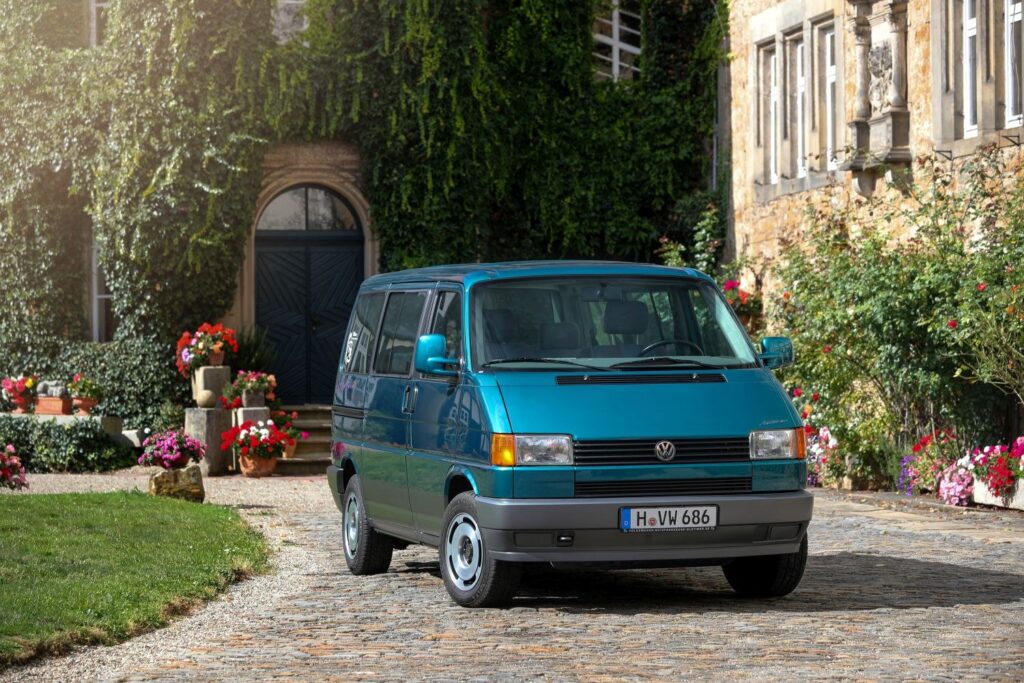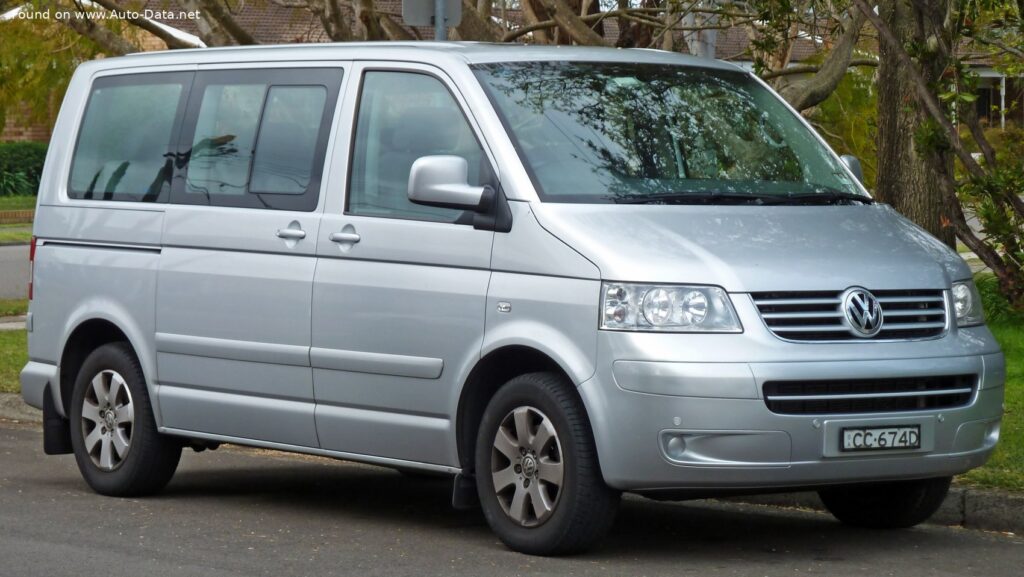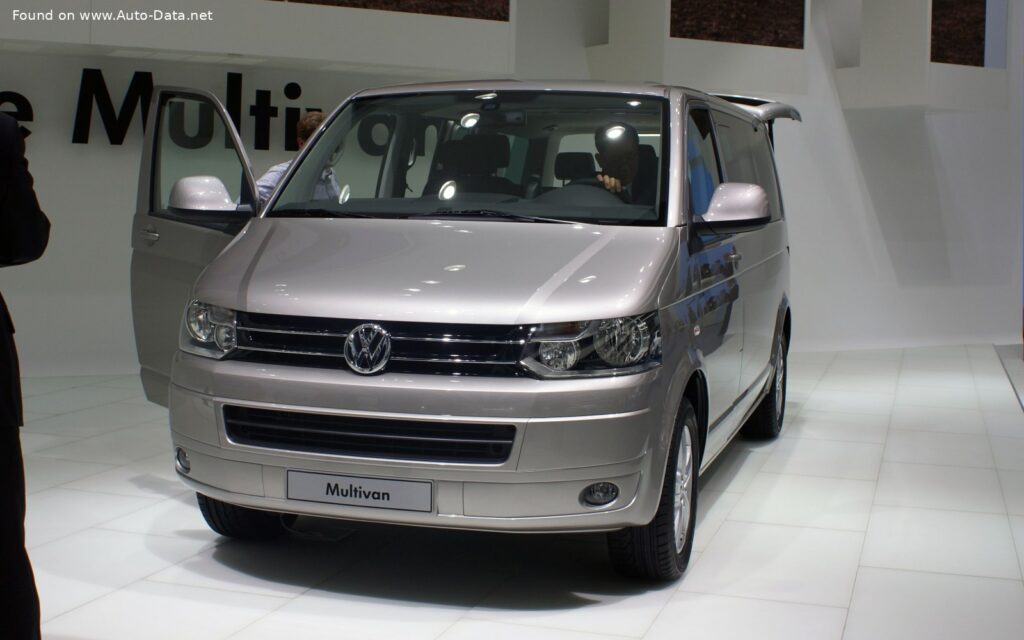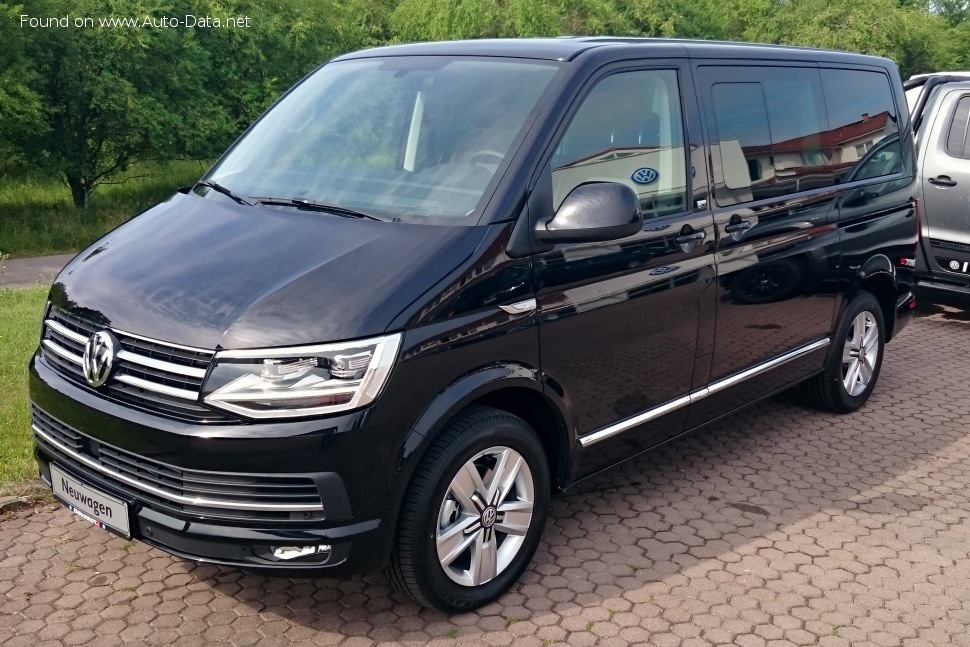
The Volkswagen Multivan (T6) 2.0 TDI (150 Hp) DSG: A European Icon of Versatility
The Volkswagen Multivan (T6) 2.0 TDI (150 Hp) DSG represents a pivotal chapter in the storied history of Volkswagen’s Transporter line, a lineage that has defined the multi-purpose vehicle segment for generations. Produced from 2015 to 2018, the T6 generation of the Multivan continued the tradition of combining robust utility with passenger car comfort and refinement. While largely a European market phenomenon, where it served as a premium people mover, family hauler, and executive shuttle, its engineering and design principles resonate with automotive enthusiasts globally. This particular variant, equipped with the potent yet efficient 2.0-liter TDI diesel engine and Volkswagen’s renowned DSG automatic transmission, offered a compelling blend of performance, economy, and passenger capacity in a sophisticated minivan package.
The Multivan (T6) was not merely a facelift of its T5 predecessor; it featured significant updates in design, technology, and powertrain options, reinforcing its position as a benchmark in the segment. It catered to a diverse clientele, from large families requiring flexible seating and ample cargo space to businesses needing a comfortable and presentable vehicle for passenger transport. Its reputation for durability and adaptability made it a cornerstone of Volkswagen’s commercial and passenger vehicle offerings outside of the North American market, where its segment is largely dominated by SUVs and full-size vans.
Engine & Performance: The Heart of the Volkswagen Multivan (T6) 2.0 TDI (150 Hp) DSG
At the core of this particular Multivan (T6) model was Volkswagen’s highly regarded 2.0-liter TDI (Turbocharged Direct Injection) diesel engine. This inline four-cylinder unit, identified by engine codes CXFA or CXHA, was a testament to modern diesel engineering, balancing power with impressive fuel efficiency and adherence to stringent emission standards. With a displacement of 1,968 cubic centimeters (120.09 cu. in.), the engine delivered a robust 150 horsepower, achieved between 3,250 and 3,750 revolutions per minute (rpm). More crucially for a vehicle designed to carry passengers and cargo, it produced a substantial 250.77 lb.-ft. of torque, available across a wide and accessible band from 1,500 to 3,000 rpm. This broad torque curve ensured strong pulling power from low engine speeds, making it ideal for urban driving, highway cruising, and hauling.
The engine’s advanced architecture included a common rail fuel injection system, ensuring precise fuel delivery for optimal combustion, and a turbocharger with an intercooler, which boosted air intake for enhanced performance and efficiency. A particulate filter was also standard, contributing to its Euro 6 emission compliance, a critical factor for European markets.
Power was seamlessly transmitted to the front wheels via a sophisticated 7-speed DSG (Direct Shift Gearbox) automatic transmission. This dual-clutch system was celebrated for its rapid, smooth shifts, contributing significantly to both driving comfort and fuel economy. The combination of the TDI engine and DSG gearbox allowed the Multivan (T6) to accelerate from 0 to 60 mph in a respectable 12.4 seconds, reaching a maximum speed of 112.47 mph. These figures underscored its capability as a comfortable and competent long-distance cruiser, rather than a performance-oriented machine.
Fuel economy was a key selling point for the diesel-powered Multivan. The combined cycle consumption was rated between 38.6 and 39.2 US mpg, with extra-urban figures reaching an impressive 42.0 to 42.8 US mpg. Urban driving saw consumption between 34.6 and 35.1 US mpg. These efficiency numbers, coupled with an 80-liter (21.13 US gallon) fuel tank, provided an excellent cruising range, making it a practical choice for extensive travel. CO2 emissions were kept low at 156-158 g/km, further solidifying its environmentally conscious credentials for its era.
Design & Features: Practicality Meets Premium
The Volkswagen Multivan (T6) retained the iconic, boxy yet refined silhouette that has characterized the Transporter family for decades, optimizing interior space and functionality. As a minivan with five doors, it offered exceptional accessibility, with large sliding doors on both sides (typically) for easy entry and exit to the rear passenger compartment. Depending on the configuration, it could comfortably seat between 5 and 7 passengers, with a highly flexible seating arrangement that allowed seats to slide, swivel, or be removed entirely to accommodate various passenger and cargo needs.
Measuring 193.07 inches in length, 74.96 inches in width (90.43 inches including mirrors), and 77.56 inches in height, the Multivan (T6) commanded a presence on the road while remaining maneuverable for its size. A substantial wheelbase of 118.11 inches contributed to a stable ride and maximized interior volume. The turning circle of 39.04 feet was commendable for a vehicle of its dimensions, aiding in urban navigation.
Inside, the T6 Multivan showcased a commitment to quality materials and ergonomic design, elevating it beyond a mere utility vehicle. Features typical for the segment included climate control, various infotainment options, and a comprehensive suite of storage compartments. Safety was paramount, with standard features like ABS (Anti-lock Braking System) and a robust body structure. The suspension system featured an independent McPherson strut setup at the front and a double wishbone arrangement at the rear, providing a comfortable and composed ride, even when fully loaded. Braking performance was handled by ventilated discs at the front and disc brakes at the rear, ensuring confident stopping power.
The Multivan’s practicality extended to its cargo capabilities. Even with multiple rows of seating, it offered an astounding minimum trunk space of 5,800 liters (204.83 cu. ft.) when configured for maximum cargo, thanks to its tall and adaptable interior. Its kerb weight stood at 4,512.86 lbs., with a maximum permissible weight of 6,613.87 lbs., allowing for a substantial maximum payload of 2,101.01 lbs. Furthermore, the T6 Multivan was a capable hauler, with a permitted trailer load of 5,511.56 lbs. with brakes and 1,653.47 lbs. without, making it suitable for towing boats, caravans, or utility trailers.
Technical Specifications
| Category | Specification |
|---|---|
| Brand | Volkswagen |
| Model | Multivan |
| Generation | Multivan (T6) |
| Type (Engine) | 2.0 TDI (150 Hp) DSG |
| Start of production | 2015 year |
| End of production | 2018 year |
| Powertrain Architecture | Internal Combustion engine |
| Body type | Minivan |
| Seats | 5-7 |
| Doors | 5 |
| Performance Specs | |
| Fuel consumption (economy) – urban | 6.7-6.8 l/100 km (34.6 – 35.1 US mpg) |
| Fuel consumption (economy) – extra urban | 5.5-5.6 l/100 km (42.0 – 42.8 US mpg) |
| Fuel consumption (economy) – combined | 6.0-6.1 l/100 km (38.6 – 39.2 US mpg) |
| CO2 emissions | 156-158 g/km |
| Fuel Type | Diesel |
| Acceleration 0 – 60 mph | 12.4 sec |
| Maximum speed | 181 km/h (112.47 mph) |
| Emission standard | Euro 6 |
| Weight-to-power ratio | 13.6 kg/Hp (73.3 Hp/tonne) |
| Weight-to-torque ratio | 6 kg/Nm (166.1 Nm/tonne) |
| Engine Specs | |
| Power | 150 Hp @ 3250-3750 rpm |
| Power per liter | 76.2 Hp/l |
| Torque | 340 Nm (250.77 lb.-ft.) @ 1500-3000 rpm |
| Engine layout | Front, Transverse |
| Engine Model/Code | CXFA, CXHA |
| Engine displacement | 1968 cm3 (120.09 cu. in.) |
| Number of cylinders | 4 |
| Engine configuration | Inline |
| Number of valves per cylinder | 4 |
| Fuel injection system | Diesel Commonrail |
| Engine aspiration | Turbocharger, Intercooler |
| Engine oil capacity | 7.4 l (7.82 US qt) |
| Engine systems | Particulate filter |
| Space, Volume and Weights | |
| Kerb Weight | 2047 kg (4512.86 lbs.) |
| Max. weight | 3000 kg (6613.87 lbs.) |
| Max load | 953 kg (2101.01 lbs.) |
| Trunk (boot) space – minimum | 5800 l (204.83 cu. ft.) |
| Fuel tank capacity | 80 l (21.13 US gal) |
| Max. roof load | 100 kg (220.46 lbs.) |
| Permitted trailer load with brakes (12%) | 2500 kg (5511.56 lbs.) |
| Permitted trailer load without brakes | 750 kg (1653.47 lbs.) |
| Permitted towbar download | 100 kg (220.46 lbs.) |
| Dimensions | |
| Length | 4904 mm (193.07 in.) |
| Width | 1904 mm (74.96 in.) |
| Width including mirrors | 2297 mm (90.43 in.) |
| Height | 1970 mm (77.56 in.) |
| Wheelbase | 3000 mm (118.11 in.) |
| Ride height (ground clearance) | 193 mm (7.6 in.) |
| Minimum turning circle (turning diameter) | 11.9 m (39.04 ft.) |
| Approach angle | 21.8° |
| Departure angle | 16.7° |
| Ramp-over (brakeover) angle | 14.3° |
| Drivetrain, Brakes and Suspension Specs | |
| Drivetrain Architecture | Front wheel drive. Internal Combustion engine. |
| Drive wheel | Front wheel drive |
| Number of gears and type of gearbox | 7 gears, automatic transmission DSG |
| Front suspension | Independent type McPherson |
| Rear suspension | Double wishbone |
| Front brakes | Ventilated discs |
| Rear brakes | Disc |
| Assisting systems | ABS (Anti-lock braking system) |
| Steering type | Steering rack and pinion |
| Power steering | Electric Steering |
| Tires size | 215/65 R16; 215/60 R17; 235/55 R17; 255/45 R18 |
| Wheel rims size | 16; 17; 18 |
Legacy & Market Impact of the Volkswagen Multivan (T6)
The Volkswagen Multivan (T6) 2.0 TDI (150 Hp) DSG stands as a testament to Volkswagen’s enduring leadership in the European minivan and light commercial vehicle segments. It inherited a legacy stretching back to the original Type 2 “Bus,” evolving through generations to become a sophisticated, refined, and versatile vehicle. In markets where it was sold, primarily Europe and parts of Asia, the Multivan (T6) was highly regarded for its premium feel, robust build quality, and exceptional interior flexibility. It successfully bridged the gap between a utilitarian van and a comfortable passenger car, offering a compelling alternative to traditional SUVs for families and a more upscale option for businesses compared to standard panel vans.
Competitors in its primary European market included vehicles like the Mercedes-Benz V-Class, which offered a similar blend of luxury and utility, and the Ford Transit Custom, which focused more on commercial versatility. The Multivan (T6) differentiated itself with its iconic design, strong residual values, and a reputation for reliability. Its ability to serve as a daily driver, a long-distance tourer, a mobile office, or even a base for camper conversions (in its California variant) cemented its status as a highly adaptable vehicle.
Crucially, the Multivan (T6), like its predecessors, was never officially imported to the United States market by Volkswagen. This absence is often attributed to several factors: the waning popularity of minivans in the US in favor of SUVs and crossovers, and the “chicken tax” – a 25% tariff on imported light trucks and vans – which would have made it uncompetitively priced. Instead, Volkswagen focused its US passenger vehicle strategy on SUVs like the Atlas and Tiguan, along with sedans, leaving the large van segment to its commercial division with vehicles like the Crafter, which bears no relation to the Transporter line.
Despite its limited global reach, the Volkswagen Multivan (T6) 2.0 TDI (150 Hp) DSG holds significant historical importance as a continuation of a beloved automotive lineage. It embodied Volkswagen’s commitment to engineering excellence and practical design, providing a comfortable, efficient, and highly adaptable mode of transport for millions outside of North America. Its influence is seen in the continued demand for premium, versatile people movers, and it remains a highly sought-after used vehicle in its native markets, celebrated for its blend of heritage and modern capability.