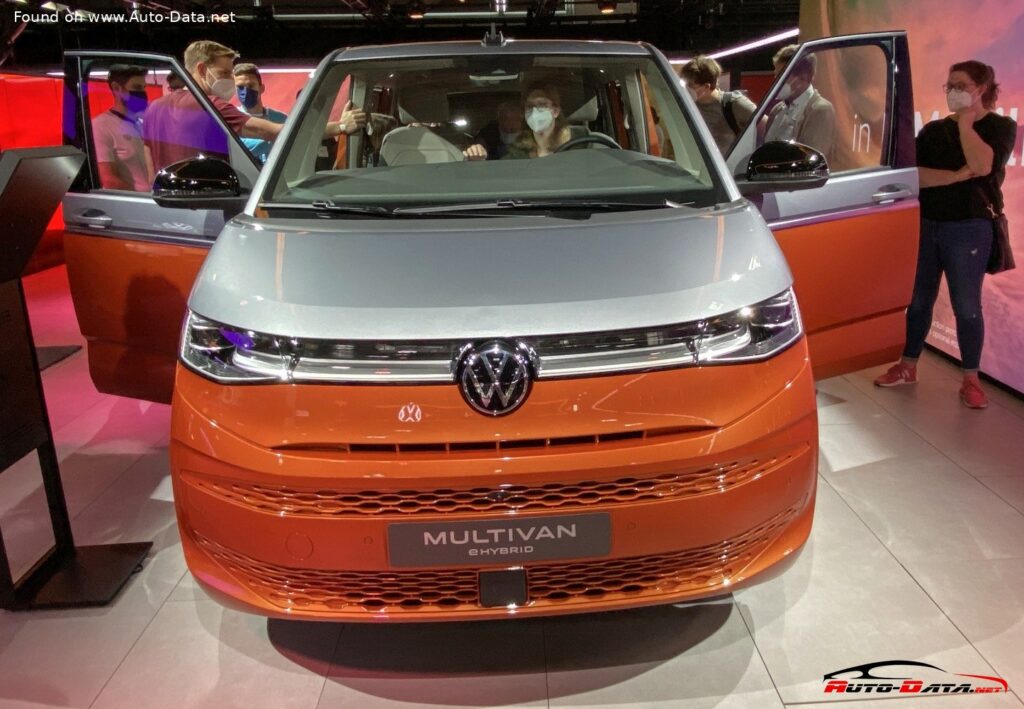
Volkswagen Multivan (T7) 1.5 TSI (245 Hp) eHybrid 4MOTION DSG
The Volkswagen Multivan (T7) represents the latest evolution of Volkswagen’s iconic people carrier, a vehicle deeply embedded in the European automotive landscape for its versatility, comfort, and robust engineering. The specific variant under review, the 1.5 TSI (245 Hp) eHybrid 4MOTION DSG, is a cutting-edge Plug-in Hybrid Electric Vehicle (PHEV) that commenced production in September 2024. Positioned firmly in the premium minivan segment, the T7 Multivan is not typically sold in the United States, where the minivan market has historically been dominated by domestic and Japanese brands. However, its sophisticated powertrain and advanced features make it a significant player in markets like Europe, where it serves a diverse clientele ranging from large families to executive transport services. This generation marks a substantial departure from its commercial vehicle roots, transitioning to Volkswagen’s MQB platform, shared with passenger cars, to enhance driving dynamics, comfort, and technological integration. The eHybrid variant, with its potent combination of gasoline engine and electric motor, paired with a sophisticated 4MOTION all-wheel-drive system and a DSG automatic transmission, showcases Volkswagen’s commitment to efficiency and performance in a family-oriented package.
Engine and Performance of the Volkswagen Multivan (T7) eHybrid
At the heart of the Volkswagen Multivan (T7) eHybrid lies a sophisticated powertrain architecture that seamlessly blends internal combustion with electric propulsion. This PHEV system comprises a 1.5-liter (1498 cm3 or 91.41 cu. in.) TSI gasoline engine, designated by the EA211 evo2 code, working in concert with a powerful electric motor. The internal combustion engine is a four-cylinder inline configuration, featuring a DOHC valvetrain, direct injection, a turbocharger, and an intercooler, producing a respectable 177 horsepower at 5500 rpm and 184.39 lb.-ft. of torque across a broad range from 1500 to 4000 rpm. This engine is also equipped with modern features like a Start & Stop System and a particulate filter to enhance efficiency and reduce emissions.
Complementing the gasoline engine is a robust electric motor, delivering 116 horsepower. This synchronous electric motor is strategically placed between the combustion engine and the transmission, allowing for seamless integration and optimal power delivery. The combined efforts of these two power sources result in an impressive total system output of 245 horsepower and a substantial 258.15 lb.-ft. of system torque. This enables the Multivan (T7) eHybrid to achieve a maximum speed of 124.27 mph (200 km/h), a noteworthy figure for a vehicle of its size and segment.
The power is managed by a 6-speed automatic DSG (Direct Shift Gearbox) transmission, known for its rapid and smooth gear changes. A standout feature of this particular Multivan variant is its 4MOTION all-wheel-drive system. The drivetrain architecture is advanced: both the internal combustion engine and the electric motor permanently drive the front wheels. However, the system is capable of running in full electric or mixed mode, and crucially, if necessary, the rear wheels can be driven through an electrically or mechanically controlled clutch. This intelligent 4MOTION system provides enhanced traction and stability, making the Multivan (T7) eHybrid suitable for various driving conditions, from urban commutes to challenging terrain.
One of the most compelling aspects of this eHybrid powertrain is its exceptional fuel efficiency and low emissions, particularly under the WLTP (Worldwide Harmonized Light Vehicles Test Procedure) cycle. The combined fuel consumption is rated at an astonishing 294 – 261.3 US mpg (0.8-0.9 l/100 km). It’s important to note that PHEV fuel economy figures can be exceptionally high due to the ability to complete a significant portion of the test cycle on electric power alone. Real-world fuel economy will vary based on charging frequency and driving patterns. The vehicle boasts a substantial all-electric range of 54.68 – 59.03 miles (88-95 km), powered by a 25.7 kWh gross (19.7 kWh net usable) Lithium nickel manganese cobalt oxides (Li-NMC) battery. Electricity consumption is rated at 96 – 92 MPGe (21.7-22.8 kWh/100 km), further underscoring its efficiency. CO2 emissions are remarkably low at 18-21 g/km, meeting the stringent Euro 6e emission standard.
Design and Features
The Volkswagen Multivan (T7) eHybrid maintains the classic minivan silhouette, optimized for maximum interior space and practicality. It features a five-door body type, offering easy access to its versatile cabin, which can be configured for 5 to 7 occupants. The exterior dimensions are substantial, with a length of 195.79 inches (4973 mm), a width of 76.42 inches (1941 mm), and a height of 75.16 inches (1909 mm). The generous wheelbase of 122.99 inches (3124 mm) contributes significantly to passenger comfort and interior volume, allowing for ample legroom and cargo capacity.
Inside, the Multivan (T7) is designed with flexibility and passenger comfort in mind. While specific interior features are not detailed in the provided data, Volkswagen’s Multivan series is renowned for its modular seating systems, high-quality materials, and advanced infotainment options. Given its modern platform and 2024 production start, it can be expected to feature a digital cockpit, extensive connectivity, and a suite of driver-assistance systems typical of contemporary Volkswagen passenger vehicles.
From a safety and handling perspective, the Multivan (T7) is well-equipped. It features ventilated disc brakes at both the front and rear, ensuring strong stopping power. An Anti-lock Braking System (ABS) is standard, providing critical control during emergency braking maneuvers. The steering system is a rack and pinion type, complemented by electric power steering, which offers a precise and effortless driving experience, particularly in urban environments or during parking. The vehicle’s minimum turning circle of 39.7 feet (12.1 meters) is commendable for a vehicle of its size, aiding maneuverability. The Multivan (T7) can be fitted with various tire sizes, including 235/55 R17, 235/50 R18, and 245/45 R19, mounted on corresponding wheel rims (6.5J x 17, 7.5J x 18, 8J x 19), allowing for a balance of ride comfort and handling characteristics.
The vehicle’s robust construction and thoughtful engineering are also evident in its weight specifications. The kerb weight ranges from 4892.06 to 5092.68 lbs. (2219-2310 kg), while the maximum permissible weight is 6503.64 lbs. (2950 kg). This allows for a significant maximum load capacity of 1410.96-1611.58 lbs. (640-731 kg). Furthermore, the Multivan (T7) eHybrid is capable of towing, with a permitted trailer load of 3527.4 lbs. (1600 kg) with brakes and 1653.47 lbs. (750 kg) without brakes, making it a highly practical option for those needing to transport additional cargo or recreational equipment.
Technical Specifications
| Category | Specification |
|---|---|
| General Information | |
| Brand | Volkswagen |
| Model | Multivan |
| Generation | Multivan (T7) |
| Type (Engine) | 1.5 TSI (245 Hp) eHybrid 4MOTION DSG |
| Start of Production | September, 2024 |
| Powertrain Architecture | PHEV (Plug-in Hybrid Electric Vehicle) |
| Body type | Minivan |
| Seats | 5-7 |
| Doors | 5 |
| Performance Specs | |
| Combined Fuel Consumption (WLTP) | 0.8-0.9 l/100 km (294 – 261.3 US mpg) |
| CO2 Emissions (WLTP) | 18-21 g/km |
| Fuel Type | Petrol / Electricity |
| Maximum Speed | 124.27 mph (200 km/h) |
| Emission Standard | Euro 6e |
| Weight-to-Power Ratio | 9.1 kg/Hp, 110.4 Hp/tonne |
| Weight-to-Torque Ratio | 6.3 kg/Nm, 157.7 Nm/tonne |
| Electric Cars and Hybrids Specs | |
| Gross Battery Capacity | 25.7 kWh |
| Net (Usable) Battery Capacity | 19.7 kWh |
| Battery Technology | Lithium nickel manganese cobalt oxides (Li-NMC) |
| All-Electric Range (WLTP) | 54.68 – 59.03 mi (88-95 km) |
| Average Energy Consumption (WLTP) | 96 – 92 MPGe (21.7-22.8 kWh/100 km) |
| Electric Motor Power | 116 Hp |
| Electric Motor Location | Between the combustion engine and the transmission |
| Electric Motor Type | Synchronous |
| System Power | 245 Hp |
| System Torque | 258.15 lb.-ft. (350 Nm) |
| Internal Combustion Engine Specs | |
| Power | 177 Hp @ 5500 rpm |
| Power per Liter | 118.2 Hp/l |
| Torque | 184.39 lb.-ft. @ 1500-4000 rpm (250 Nm) |
| Engine Layout | Front, Transverse |
| Engine Model/Code | EA211 evo2 |
| Engine Displacement | 1.5 L (1498 cm3 / 91.41 cu. in.) |
| Number of Cylinders | 4 |
| Engine Configuration | Inline |
| Cylinder Bore | 2.93 in. (74.5 mm) |
| Piston Stroke | 3.38 in. (85.9 mm) |
| Number of Valves per Cylinder | 4 |
| Fuel Injection System | Direct injection |
| Engine Aspiration | Turbocharger, Intercooler |
| Valvetrain | DOHC |
| Engine Systems | Start & Stop System, Particulate filter |
| Space, Volume and Weights | |
| Kerb Weight | 4892.06 – 5092.68 lbs. (2219-2310 kg) |
| Max. Weight (Gross) | 6503.64 lbs. (2950 kg) |
| Max Load | 1410.96 – 1611.58 lbs. (640-731 kg) |
| Permitted Trailer Load with Brakes (12%) | 3527.4 lbs. (1600 kg) |
| Permitted Trailer Load without Brakes | 1653.47 lbs. (750 kg) |
| Permitted Towbar Download | 176.37 lbs. (80 kg) |
| Dimensions | |
| Length | 195.79 in. (4973 mm) |
| Width | 76.42 in. (1941 mm) |
| Height | 75.16 in. (1909 mm) |
| Wheelbase | 122.99 in. (3124 mm) |
| Front Overhang | 37.48 in. (952 mm) |
| Rear Overhang | 35.31 in. (897 mm) |
| Minimum Turning Circle (Turning Diameter) | 39.7 ft. (12.1 m) |
| Drivetrain, Brakes and Suspension Specs | |
| Drivetrain Architecture | ICE and electric motor permanently drive front wheels; rear wheels driven via clutch if necessary. |
| Drive Wheel | All-wheel drive (4×4) |
| Number of Gears and Type of Gearbox | 6 gears, automatic transmission DSG |
| Front Brakes | Ventilated discs |
| Rear Brakes | Ventilated discs |
| Assisting Systems | ABS (Anti-lock braking system) |
| Steering Type | Steering rack and pinion |
| Power Steering | Electric Steering |
| Tires Size | 235/55 R17; 235/50 R18; 245/45 R19 |
| Wheel Rims Size | 6.5J x 17; 7.5J x 18; 8J x 19 |
Legacy and Market Impact of the Volkswagen Multivan (T7)
The Volkswagen Multivan lineage holds a storied place in automotive history, particularly in Europe, where it has evolved from the utilitarian Transporter van into a sophisticated and premium people mover. The T7 generation, and specifically the 1.5 TSI (245 Hp) eHybrid 4MOTION DSG variant, represents a significant leap forward, solidifying the Multivan’s reputation for versatility, quality, and now, cutting-edge efficiency. This model is a testament to Volkswagen’s commitment to adapting its beloved vehicles to the demands of modern mobility and environmental regulations.
In its primary European market, the Multivan (T7) eHybrid is a formidable competitor in the upscale minivan segment. Its blend of a powerful yet efficient plug-in hybrid powertrain, combined with the assurance of 4MOTION all-wheel drive, sets it apart. While direct rivals might include models like the Mercedes-Benz V-Class, which emphasizes luxury and comfort, or the Ford Tourneo Custom, which offers a robust and practical alternative, the Multivan’s unique heritage and its seamless integration of advanced technology provide a distinct advantage. The PHEV powertrain, in particular, appeals to buyers looking to reduce their environmental footprint and benefit from lower running costs, especially in regions with favorable incentives for electrified vehicles. Its impressive all-electric range allows for emission-free daily commutes for many users, while the gasoline engine provides the flexibility for longer journeys without range anxiety.
The historical significance of the Multivan is immense. Descending from the legendary Volkswagen Type 2, often affectionately known as the “Bus” or “Camper Van,” the Multivan has always embodied freedom, adventure, and practicality. The T7 continues this legacy, but on a thoroughly modern platform. Moving to the MQB platform, shared with many of Volkswagen’s passenger cars, has allowed for enhancements in driving dynamics, safety, and the integration of sophisticated driver-assistance systems and infotainment technologies that were previously unavailable in its more commercially-oriented predecessors. This strategic shift ensures that the Multivan remains relevant and competitive in a market increasingly dominated by SUVs, by offering unparalleled interior space and modularity.
The 1.5 TSI (245 Hp) eHybrid 4MOTION DSG variant, specifically, positions the Multivan (T7) as a forward-thinking choice. It caters to a demographic that values environmental responsibility without sacrificing performance or capability. The combination of strong system power, ample torque, and the confidence of all-wheel drive makes it suitable for a wide array of uses, from daily family duties to weekend excursions, even in challenging weather conditions. Its high fuel efficiency and low CO2 emissions are particularly attractive in markets with strict environmental policies and rising fuel prices. The Volkswagen Multivan (T7) eHybrid is not just a minivan; it is a statement of Volkswagen’s vision for the future of versatile, efficient, and technologically advanced family transport, continuing a beloved legacy into the electric era.