The Volkswagen Multivan (T7) Long 1.4 eHybrid (218 Hp) DSG: A Modern People Mover
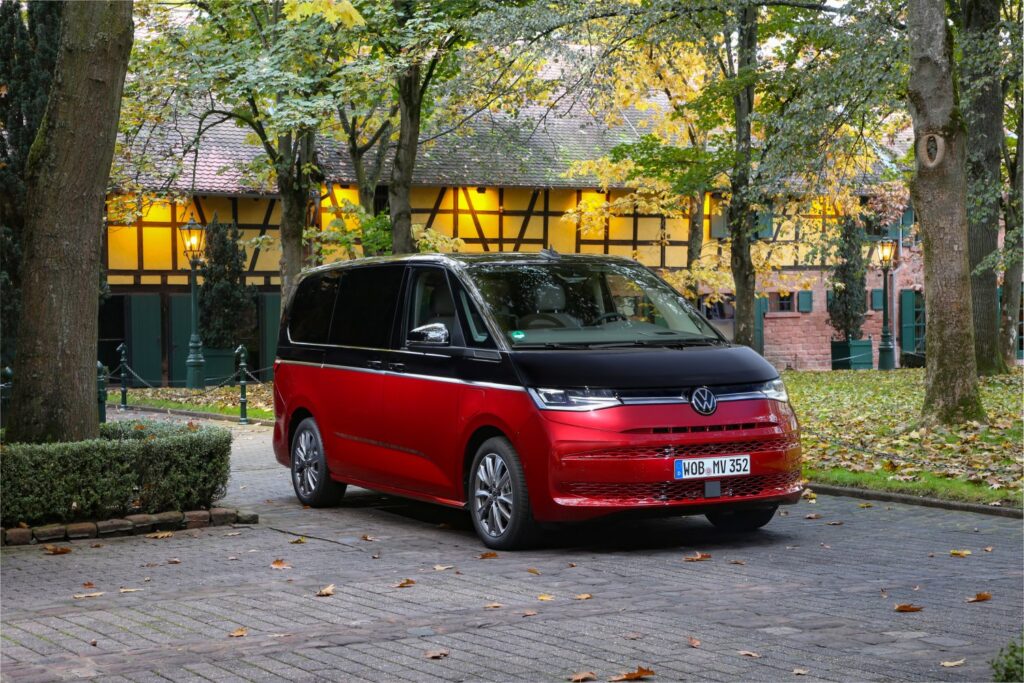
The Volkswagen Multivan (T7) Long 1.4 eHybrid (218 Hp) DSG, launched in November 2021, marks the seventh generation of Volkswagen Commercial Vehicles’ highly esteemed Multivan series. This particular variant, a long-wheelbase plug-in hybrid electric vehicle (PHEV), represents a significant leap forward in combining the iconic practicality and spaciousness of its predecessors with advanced powertrain technology aimed at efficiency and reduced environmental impact. Primarily designed for the European and Asian markets, where versatile people movers are highly valued, the T7 Multivan reimagines the segment with a focus on modern families and businesses seeking a flexible, comfortable, and environmentally conscious vehicle solution. Unlike its spiritual ancestor, the Type 2 “Bus,” which found a niche in the North American market decades ago, the modern Multivan is not directly offered in the U.S., but its engineering and market position offer a fascinating glimpse into global automotive trends.
The T7 generation departs from its commercial vehicle roots, transitioning to Volkswagen Group’s adaptable MQB platform, which underpins many of its passenger cars. This shift allows for enhanced driving dynamics, improved safety features, and a more refined interior, elevating the Multivan’s status from a utilitarian van to a premium family and executive shuttle. The “Long” designation indicates an extended wheelbase model, maximizing interior volume and passenger comfort, a critical attribute for its target demographic. The 1.4 eHybrid powertrain, with a combined system output of 218 horsepower and paired with a smooth DSG automatic transmission, underscores Volkswagen’s commitment to hybrid technology as a bridge to a fully electric future, offering impressive fuel economy and the flexibility of all-electric urban driving.
Engine & Performance of the Volkswagen Multivan (T7) Long 1.4 eHybrid (218 Hp) DSG
At the heart of the Volkswagen Multivan (T7) Long 1.4 eHybrid (218 Hp) DSG lies a sophisticated plug-in hybrid powertrain, meticulously engineered to deliver a compelling blend of performance and efficiency. This system combines a conventional gasoline engine with an electric motor, providing a robust total system output of 218 horsepower at 4900-6500 rpm and a formidable 258.15 lb.-ft. of torque from a low 1000 rpm, extending up to 4100 rpm. This broad torque band ensures responsive acceleration and confident overtaking capabilities, even when the vehicle is fully loaded.
The internal combustion engine is a 1.4-liter (1395 cm³ or 85.13 cu. in.) inline four-cylinder unit, designated EA211. It features direct injection, a turbocharger, and an intercooler, producing 150 horsepower at 5000-6000 rpm and 184.39 lb.-ft. of torque between 1550-3500 rpm. This engine is positioned transversely at the front of the vehicle and benefits from DOHC valvetrain, a Start & Stop system, and a particulate filter, all contributing to its efficiency and lower emissions profile.
Complementing the gasoline engine is a potent electric motor, strategically located between the combustion engine and the transmission. This motor contributes 116 horsepower at 2500-4500 rpm and a significant 243.4 lb.-ft. of torque from a standstill (0-2500 rpm), which is crucial for immediate acceleration and silent electric-only driving. Power is transmitted to the front wheels via a 7-speed DSG (Direct Shift Gearbox) automatic transmission, renowned for its smooth and rapid gear changes, optimizing both performance and fuel economy.
Performance figures for the Multivan (T7) Long 1.4 eHybrid are respectable for a vehicle of its size and purpose. It can accelerate from 0 to 60 mph in approximately 11 seconds (0-100 km/h in 11.6 seconds) and reach a top speed of 118.06 mph (190 km/h). However, the true highlight of this powertrain is its exceptional fuel efficiency and electric range. The combined fuel consumption (NEDC) is an astonishing 1.5 liters per 100 km, equivalent to 156.8 US mpg. CO2 emissions are remarkably low at just 34 g/km. The integrated lithium-ion battery, with a gross capacity of 13 kWh (10.4 kWh usable), allows for an all-electric range of 28.58 to 31.07 miles (WLTP) or 36.04 to 37.28 miles (NEDC), making daily commutes and urban driving entirely emission-free. The average energy consumption (NEDC) is rated at 14.6 kWh/100 km, or 143 MPGe, underscoring its impressive electrical efficiency.
Design & Features
The Volkswagen Multivan (T7) Long 1.4 eHybrid (218 Hp) DSG retains the distinctive silhouette of its predecessors while introducing a more modern and aerodynamic design language. As a minivan, its primary focus is on maximizing interior space, versatility, and passenger comfort. The “Long” variant boasts an extended length of 203.66 inches (5173 mm) and a generous wheelbase of 122.99 inches (3124 mm), providing ample room for up to seven occupants across three rows. The width stands at 76.42 inches (1941 mm), extending to 88.66 inches (2252 mm) including mirrors, ensuring a commanding presence on the road. Despite its substantial size, the height of 75.08 inches (1907 mm) allows for comfortable entry and exit and helps maintain a relatively low center of gravity.
Inside, the T7 Multivan offers a highly flexible seating arrangement, a hallmark of the Multivan lineage. The seats can be easily moved, folded, or removed entirely, allowing for a vast array of configurations to suit various passenger and cargo needs. The minimum trunk space is a considerable 67.1 cu. ft. (1900 liters), which expands to an enormous 123.6 cu. ft. (3500 liters) when the rear seats are removed, making it exceptionally practical for hauling large items or accommodating recreational equipment. The vehicle’s design prioritizes ease of access, likely featuring large sliding doors, though specific details are not provided in the technical data.
Safety and convenience features are paramount in a modern family vehicle like the Multivan. While the detailed list of specific features is not fully provided, the presence of ABS (Anti-lock Braking System) is confirmed, and a vehicle of this caliber would undoubtedly include a comprehensive suite of modern active and passive safety systems as standard in its primary markets. The steering system utilizes electric power steering with a rack and pinion setup, ensuring light and precise maneuverability, particularly useful for navigating urban environments and parking. Braking is handled by ventilated discs at the front and disc brakes at the rear, providing reliable stopping power. The vehicle rides on a choice of tire sizes, including 215/65 R16, 235/55 R17, or 235/50 R18, mounted on corresponding wheel rims, contributing to both ride comfort and handling stability. The battery’s location below the floor not only optimizes cabin space but also contributes to a lower center of gravity, enhancing driving dynamics.
Technical Specifications
| Category | Specification | Value |
|---|---|---|
General Information |
||
| Brand | Volkswagen | |
| Model | Multivan | |
| Generation | Multivan (T7) Long | |
| Type (Engine) | 1.4 eHybrid (218 Hp) DSG | |
| Start of Production | November, 2021 | |
| Powertrain Architecture | PHEV (Plug-in Hybrid Electric Vehicle) | |
| Body Type | Minivan | |
| Seats | 7 | |
| Doors | 5 | |
Performance Specifications |
||
| Fuel Consumption (Combined, NEDC) | 1.5 l/100 km (156.8 US mpg) | |
| CO2 Emissions (NEDC) | 34 g/km | |
| Fuel Type | Petrol / Electricity | |
| Acceleration 0 – 60 mph | 11 seconds | |
| Acceleration 0 – 100 km/h | 11.6 seconds | |
| Maximum Speed | 190 km/h (118.06 mph) | |
| Weight-to-Power Ratio | 9.8 kg/Hp (101.8 Hp/tonne) | |
| Weight-to-Torque Ratio | 6.1 kg/Nm (163.4 Nm/tonne) | |
Electric Cars and Hybrids Specifications |
||
| Gross Battery Capacity | 13 kWh | |
| Net (Usable) Battery Capacity | 10.4 kWh | |
| Battery Technology | Lithium-ion (Li-Ion) | |
| Battery Location | Below the floor | |
| All-Electric Range (WLTP) | 46-50 km (28.58 – 31.07 mi) | |
| All-Electric Range (NEDC) | 58-60 km (36.04 – 37.28 mi) | |
| Average Energy Consumption (NEDC) | 14.6 kWh/100 km (143 MPGe) | |
| Electric Motor Power | 116 Hp @ 2500-4500 rpm | |
| Electric Motor Torque | 330 Nm (243.4 lb.-ft.) @ 0-2500 rpm | |
| Electric Motor Location | Between the combustion engine and the transmission | |
| System Power | 218 Hp @ 4900-6500 rpm | |
| System Torque | 350 Nm (258.15 lb.-ft.) @ 1000-4100 rpm | |
Internal Combustion Engine Specifications |
||
| Power | 150 Hp @ 5000-6000 rpm | |
| Power per Liter | 107.5 Hp/l | |
| Torque | 250 Nm (184.39 lb.-ft.) @ 1550-3500 rpm | |
| Engine Layout | Front, Transverse | |
| Engine Model/Code | EA211 | |
| Engine Displacement | 1395 cm³ (1.4 liters / 85.13 cu. in.) | |
| Number of Cylinders | 4 | |
| Engine Configuration | Inline | |
| Cylinder Bore | 74.5 mm (2.93 in.) | |
| Piston Stroke | 80 mm (3.15 in.) | |
| Number of Valves per Cylinder | 4 | |
| Fuel Injection System | Direct injection | |
| Engine Aspiration | Turbocharger, Intercooler | |
| Valvetrain | DOHC | |
| Engine Systems | Start & Stop System, Particulate filter | |
Space, Volume and Weights |
||
| Kerb Weight | 2142-2279 kg (4722.3 – 5024.33 lbs.) | |
| Max. Weight | 2750 kg (6062.71 lbs.) | |
| Max Load | 471-608 kg (1038.38 – 1340.41 lbs.) | |
| Trunk (Boot) Space – Minimum | 1900 l (67.1 cu. ft.) | |
| Trunk (Boot) Space – Maximum | 3500 l (123.6 cu. ft.) | |
| Fuel Tank Capacity | 45 l (11.89 US gal) | |
| Max. Roof Load | 100 kg (220.46 lbs.) | |
| Permitted Trailer Load with Brakes (12%) | 1600 kg (3527.4 lbs.) | |
| Permitted Trailer Load without Brakes | 750 kg (1653.47 lbs.) | |
| Permitted Towbar Download | 80 kg (176.37 lbs.) | |
Dimensions |
||
| Length | 5173 mm (203.66 in.) | |
| Width | 1941 mm (76.42 in.) | |
| Width Including Mirrors | 2252 mm (88.66 in.) | |
| Height | 1907 mm (75.08 in.) | |
| Wheelbase | 3124 mm (122.99 in.) | |
| Front Overhang | 952 mm (37.48 in.) | |
| Rear Overhang | 1097 mm (43.19 in.) | |
| Minimum Turning Circle (Turning Diameter) | 12.1 m (39.7 ft.) | |
| Approach Angle | 18° | |
| Departure Angle | 13.2° | |
| Ramp-Over (Brakeover) Angle | 11.8° | |
Drivetrain, Brakes and Suspension Specifications |
||
| Drivetrain Architecture | The Internal combustion engine (ICE) drives the front wheels of the vehicle. | |
| Drive Wheel | Front wheel drive | |
| Number of Gears and Type of Gearbox | 7 gears, automatic transmission DSG | |
| Front Brakes | Ventilated discs | |
| Rear Brakes | Disc | |
| Assisting Systems | ABS (Anti-lock braking system) | |
| Steering Type | Steering rack and pinion | |
| Power Steering | Electric Steering | |
| Tires Size | 215/65 R16; 235/55 R17; 235/50 R18 | |
| Wheel Rims Size | 6.5J x 16; 6.5J x 17; 7.5J x 18 | |
Legacy & Market Impact
The Volkswagen Multivan (T7) Long 1.4 eHybrid (218 Hp) DSG carries a significant legacy, tracing its roots back to the original Volkswagen Type 2, affectionately known as the “Bus” or “Microbus.” While the T7 is a far cry from its utilitarian ancestors, it embodies the spirit of versatility, practicality, and efficient people-moving that has defined the lineage for decades. In its primary markets, particularly Europe, the Multivan occupies a unique space, serving as a premium alternative to traditional minivans and larger SUVs. It’s often chosen by large families, shuttle services, and businesses that require a vehicle capable of comfortably transporting multiple passengers and substantial cargo over long distances, with the added benefit of modern efficiency.
In the European market, the T7 Multivan faces competition from a diverse range of vehicles, including other established minivans like the Mercedes-Benz V-Class, Ford Tourneo Custom, and Renault Trafic Passenger, as well as more recently introduced electrified options from Stellantis brands (e.g., Opel Zafira-e Life, Peugeot e-Traveller). Its distinct advantage lies in the Volkswagen brand’s reputation for quality, reliability, and innovative engineering, combined with the MQB platform’s passenger-car refinement. The introduction of the plug-in hybrid powertrain is a strategic move, allowing the Multivan to meet stringent European emissions regulations while offering compelling running costs and the ability to operate in urban low-emission zones on electric power alone.
The T7 Multivan’s market impact is defined by its ability to modernize a beloved segment. By integrating a sophisticated PHEV system, it addresses growing consumer demand for greener transport solutions without sacrificing the space and utility that Multivan owners have come to expect. The long-wheelbase variant, in particular, caters to a segment that prioritizes maximum interior volume and comfort, reinforcing its position as a go-to choice for those needing extensive passenger and cargo flexibility. Its adoption of the MQB platform further solidifies its appeal, offering a driving experience that is more akin to a large SUV or sedan than a traditional van, thereby expanding its potential customer base.
While the Multivan (T7) Long 1.4 eHybrid may not traverse American highways, its design philosophy and technological advancements resonate globally. It demonstrates how traditional vehicle segments can evolve to meet contemporary challenges of efficiency, sustainability, and passenger comfort. For automotive experts, it stands as a testament to Volkswagen’s continuous innovation in adapting its core products to a rapidly changing automotive landscape, ensuring the enduring legacy of the “Bus” continues into the electrified era. Its blend of heritage, practicality, and cutting-edge hybrid technology makes it a significant player in the international people-mover segment.