The Volkswagen Multivan (T7) Long 1.5 TSI (245 Hp) eHybrid 4MOTION DSG: A Modern European People Mover
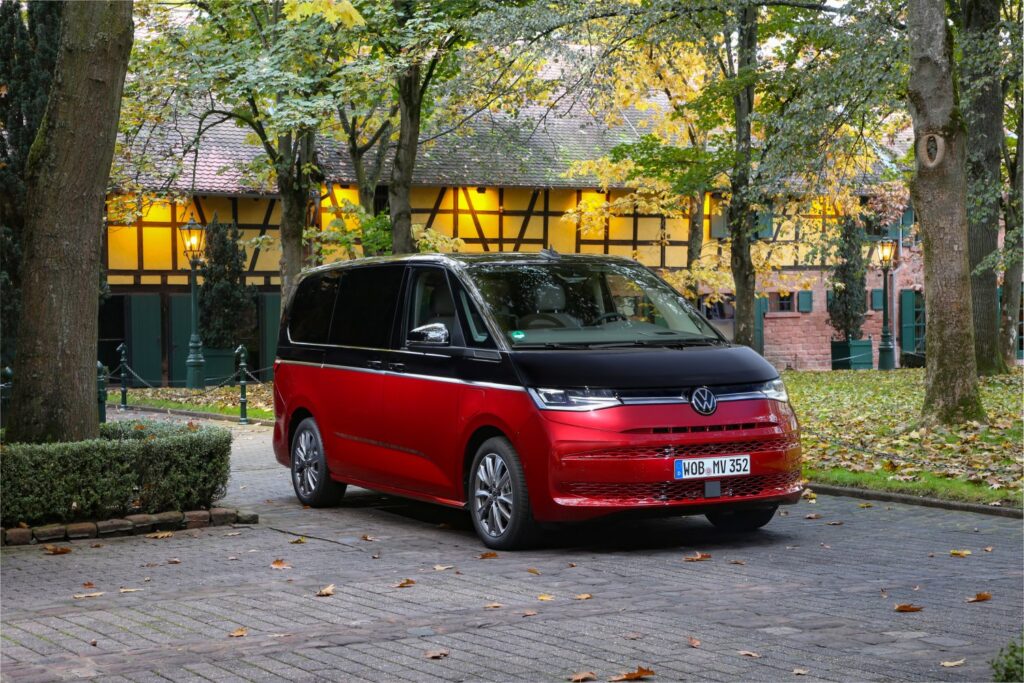
The Volkswagen Multivan (T7) Long, specifically the 1.5 TSI (245 Hp) eHybrid 4MOTION DSG variant, represents the seventh generation of Volkswagen Commercial Vehicles’ iconic people mover. Launched for production in September 2024, this iteration marks a significant evolution for the Multivan line, transitioning from its traditional commercial vehicle platform to Volkswagen’s highly versatile MQB passenger car architecture. While the Multivan nameplate has a long and storied history, particularly in Europe and other international markets, this particular T7 generation is not directly offered in the United States. Instead, it serves as a sophisticated, family-focused minivan (or MPV, Multi-Purpose Vehicle, as it’s often called in Europe) designed to offer car-like driving dynamics, advanced technology, and exceptional fuel efficiency, especially through its plug-in hybrid electric vehicle (PHEV) powertrain.
This long-wheelbase version of the T7 Multivan is engineered to provide maximum space and comfort for 5 to 7 passengers, combining the practicality of a minivan with the refined driving experience of a modern passenger car. Its introduction underscores Volkswagen’s commitment to electrification and sustainable mobility, offering a compelling blend of performance, luxury, and environmental responsibility in a segment traditionally dominated by diesel engines. The 4MOTION all-wheel-drive system, coupled with a smooth DSG automatic transmission, further enhances its appeal, providing confident handling and traction in diverse driving conditions.
Engine and Performance: The Heart of the Volkswagen Multivan (T7) Long eHybrid
At the core of the Volkswagen Multivan (T7) Long 1.5 TSI (245 Hp) eHybrid 4MOTION DSG is a sophisticated Plug-in Hybrid Electric Vehicle (PHEV) powertrain architecture. This system meticulously combines a potent gasoline engine with an electric motor to deliver both impressive performance and outstanding fuel economy. The internal combustion engine (ICE) is a 1.5-liter (1498 cm³) inline-four, designated as the EA211 evo2 model. This turbocharged and intercooled unit features direct injection and a DOHC valvetrain, producing a robust 177 horsepower at 5500 rpm and 184.39 lb.-ft. of torque between 1500-4000 rpm. Its advanced design incorporates a Start & Stop System and a particulate filter, ensuring compliance with stringent Euro 6e emission standards.
Complementing the gasoline engine is a synchronous electric motor, strategically positioned between the combustion engine and the transmission. This electric motor contributes 116 horsepower to the system. Together, the combined powertrain delivers a formidable system power of 245 horsepower and a system torque of 258.15 lb.-ft. This allows the Multivan to achieve a top speed of 124.27 mph (200 km/h), a highly respectable figure for a vehicle of its size and purpose.
The eHybrid system is powered by a Lithium nickel manganese cobalt oxides (Li-NMC) battery with a gross capacity of 25.7 kWh and a net usable capacity of 19.7 kWh. This substantial battery capacity enables an impressive all-electric range (WLTP) of 54.68 to 58.41 miles (88-94 km), making daily commutes and shorter trips entirely emissions-free. When operating in hybrid mode, the vehicle achieves remarkable combined fuel consumption figures (WLTP) of 0.8-0.9 liters per 100 km, translating to an astounding 261.3 to 294 US mpg. The average energy consumption (WLTP) is equally efficient, ranging from 21.8-22.9 kWh/100 km, or approximately 91-96 MPGe. This focus on efficiency and electrification positions the Multivan (T7) as a leader in its class for environmental performance.
Design and Features: Practicality Meets Modernity
The Volkswagen Multivan (T7) Long adopts a contemporary minivan body type, characterized by its five doors and flexible seating for 5 to 7 occupants. Its exterior dimensions are substantial, with a length of 203.66 inches (5173 mm), a width of 76.42 inches (1941 mm), and a height of 75.16 inches (1909 mm). A generous wheelbase of 122.99 inches (3124 mm) contributes significantly to interior space and ride comfort, while a minimum turning circle of 39.7 feet (12.1 m) ensures maneuverability despite its size.
Inside, the T7 Multivan is designed with versatility and passenger comfort in mind. While specific interior features beyond seating are not detailed in the provided data, the move to the MQB platform suggests a more car-like cabin with higher quality materials and advanced infotainment options compared to its commercial vehicle-based predecessors. The vehicle’s kerb weight ranges from 5119.13 to 5150 lbs (2322-2336 kg), with a maximum permissible weight of 6503.64 lbs (2950 kg), allowing for a substantial maximum load capacity of 1353.64 to 1384.5 lbs (614-628 kg). It also boasts impressive towing capabilities, with a permitted trailer load of 3527.4 lbs (1600 kg) with brakes.
The drivetrain architecture is a highlight of this particular Multivan variant. It features an advanced all-wheel-drive (4×4) system, where both the internal combustion engine and the electric motor permanently drive the front wheels. This setup allows for pure electric or mixed-mode driving. Crucially, an electrically or mechanically controlled clutch can engage the rear wheels when necessary, providing enhanced traction and stability, especially in adverse weather conditions or light off-road scenarios. Power is managed through a sophisticated 6-speed automatic DSG transmission, renowned for its quick and seamless gear changes.
Safety and handling are paramount, with the Multivan (T7) equipped with ventilated disc brakes at both the front and rear, supported by an Anti-lock Braking System (ABS). The steering system utilizes a rack and pinion setup with electric power steering, offering precise control and ease of maneuvering. The vehicle can be fitted with various tire and wheel sizes, including 235/55 R17, 235/50 R18, and 245/45 R19, mounted on corresponding wheel rims (6.5J x 17, 7.5J x 18, 8J x 19), allowing for customization in ride and aesthetic.
Technical Specifications: Volkswagen Multivan (T7) Long 1.5 TSI (245 Hp) eHybrid 4MOTION DSG
| Category | Specification | US Equivalent |
|---|---|---|
General Information |
||
| Brand | Volkswagen | Volkswagen |
| Model | Multivan | Multivan |
| Generation | Multivan (T7) Long | Multivan (T7) Long |
| Engine Type | 1.5 TSI (245 Hp) eHybrid 4MOTION DSG | 1.5 TSI (245 Hp) eHybrid 4MOTION DSG |
| Start of Production | September, 2024 | September, 2024 |
| Powertrain Architecture | PHEV (Plug-in Hybrid Electric Vehicle) | PHEV (Plug-in Hybrid Electric Vehicle) |
| Body Type | Minivan | Minivan |
| Seats | 5-7 | 5-7 |
| Doors | 5 | 5 |
Performance Specs |
||
| Combined Fuel Consumption (WLTP) | 0.8-0.9 l/100 km | 294 – 261.3 US mpg |
| CO2 Emissions (WLTP) | 18-21 g/km | 18-21 g/km |
| Fuel Type | Petrol / electricity | Gasoline / electricity |
| Maximum Speed | 200 km/h | 124.27 mph |
| Emission Standard | Euro 6e | Euro 6e |
| Weight-to-Power Ratio | 9.5 kg/Hp | 20.94 lbs/Hp |
| Weight-to-Torque Ratio | 6.6 kg/Nm | 14.55 lbs/Nm |
Electric Cars and Hybrids Specs |
||
| Gross Battery Capacity | 25.7 kWh | 25.7 kWh |
| Net (usable) Battery Capacity | 19.7 kWh | 19.7 kWh |
| Battery Technology | Lithium nickel manganese cobalt oxides (Li-NMC) | Lithium nickel manganese cobalt oxides (Li-NMC) |
| All-electric Range (WLTP) | 88-94 km | 54.68 – 58.41 miles |
| Average Energy Consumption (WLTP) | 21.8-22.9 kWh/100 km | 35.08 – 36.85 kWh/100 mi (91-96 MPGe) |
| Charging Ports | Information not provided (Login to see) | |
| Electric Motor Power | 116 Hp | 116 Hp |
| Electric Motor Location | Between the combustion engine and the transmission | Between the combustion engine and the transmission |
| Electric Motor Type | Synchronous | Synchronous |
| System Power | 245 Hp | 245 Hp |
| System Torque | 350 Nm | 258.15 lb.-ft. |
Internal Combustion Engine Specs |
||
| Power | 177 Hp @ 5500 rpm | 177 Hp @ 5500 rpm |
| Power per Liter | 118.2 Hp/l | 118.2 Hp/l |
| Torque | 250 Nm @ 1500-4000 rpm | 184.39 lb.-ft. @ 1500-4000 rpm |
| Engine Layout | Front, Transverse | Front, Transverse |
| Engine Model/Code | EA211 evo2 | EA211 evo2 |
| Engine Displacement | 1498 cm³ | 1.5 liters (91.41 cu. in.) |
| Number of Cylinders | 4 | 4 |
| Engine Configuration | Inline | Inline |
| Cylinder Bore | 74.5 mm | 2.93 in. |
| Piston Stroke | 85.9 mm | 3.38 in. |
| Number of Valves per Cylinder | 4 | 4 |
| Fuel Injection System | Direct injection | Direct injection |
| Engine Aspiration | Turbocharger, Intercooler | Turbocharger, Intercooler |
| Valvetrain | DOHC | DOHC |
| Engine Systems | Start & Stop System, Particulate filter | Start & Stop System, Particulate filter |
Space, Volume and Weights |
||
| Kerb Weight | 2322-2336 kg | 5119.13 – 5150 lbs |
| Max. Weight | 2950 kg | 6503.64 lbs |
| Max Load | 614-628 kg | 1353.64 – 1384.5 lbs |
| Permitted Trailer Load with Brakes (12%) | 1600 kg | 3527.4 lbs |
| Permitted Trailer Load without Brakes | 750 kg | 1653.47 lbs |
| Permitted Towbar Download | 80 kg | 176.37 lbs |
Dimensions |
||
| Length | 5173 mm | 203.66 in. |
| Width | 1941 mm | 76.42 in. |
| Height | 1909 mm | 75.16 in. |
| Wheelbase | 3124 mm | 122.99 in. |
| Front Overhang | 952 mm | 37.48 in. |
| Rear Overhang | 1097 mm | 43.19 in. |
| Minimum Turning Circle (Turning Diameter) | 12.1 m | 39.7 ft. |
Drivetrain, Brakes and Suspension Specs |
||
| Drivetrain Architecture | The Internal combustion engine (ICE) and the electric motor permanently drive the front wheels of the vehicle, capable of running in full electric or mixed mode, and if necessary through the electrically or mechanically controlled clutch, the rear wheels are driven. | |
| Drive Wheel | All-wheel drive (4×4) | All-wheel drive (4×4) |
| Number of Gears and Type of Gearbox | 6 gears, automatic transmission DSG | 6 gears, automatic transmission DSG |
| Front Brakes | Ventilated discs | Ventilated discs |
| Rear Brakes | Ventilated discs | Ventilated discs |
| Assisting Systems | ABS (Anti-lock braking system) | ABS (Anti-lock braking system) |
| Steering Type | Steering rack and pinion | Steering rack and pinion |
| Power Steering | Electric Steering | Electric Steering |
| Tire Sizes | 235/55 R17; 235/50 R18; 245/45 R19 | 235/55 R17; 235/50 R18; 245/45 R19 |
| Wheel Rim Sizes | 6.5J x 17; 7.5J x 18; 8J x 19 | 6.5J x 17; 7.5J x 18; 8J x 19 |
Legacy and Market Impact: The Volkswagen Multivan (T7) Long in its Element
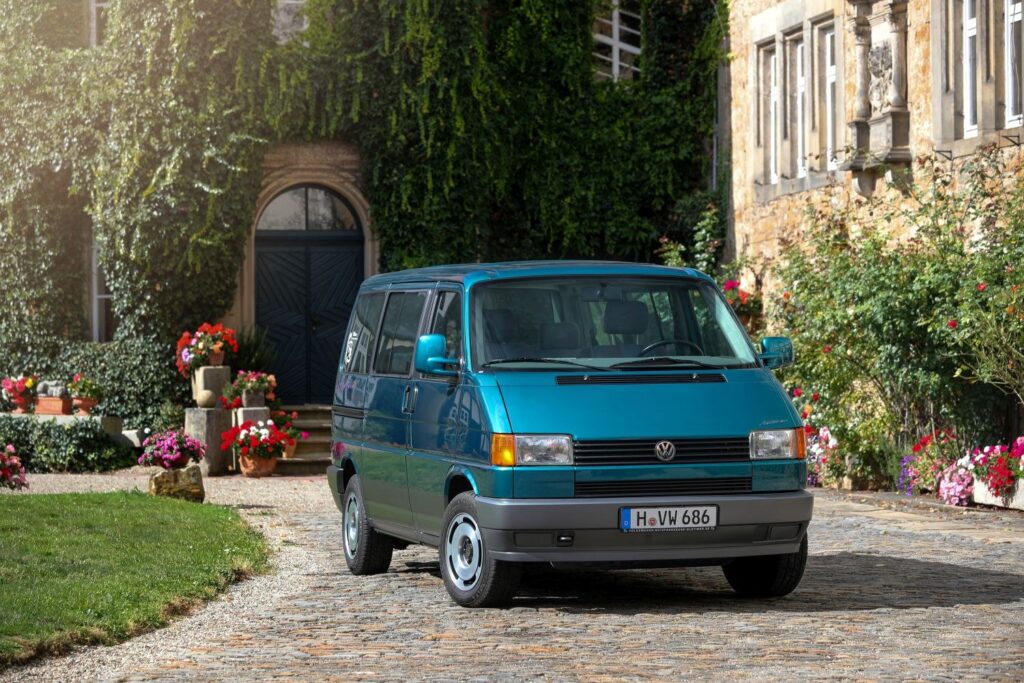
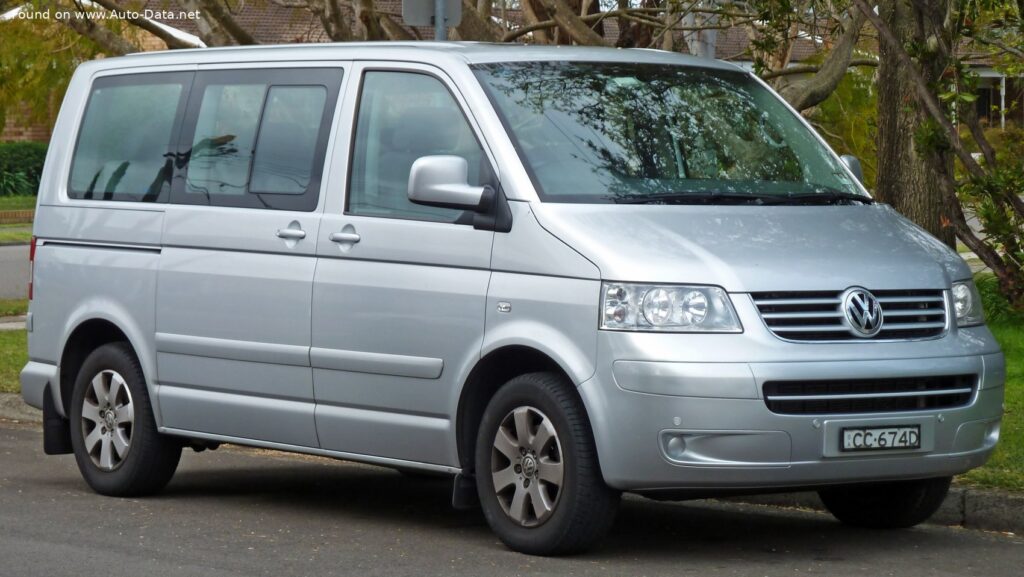
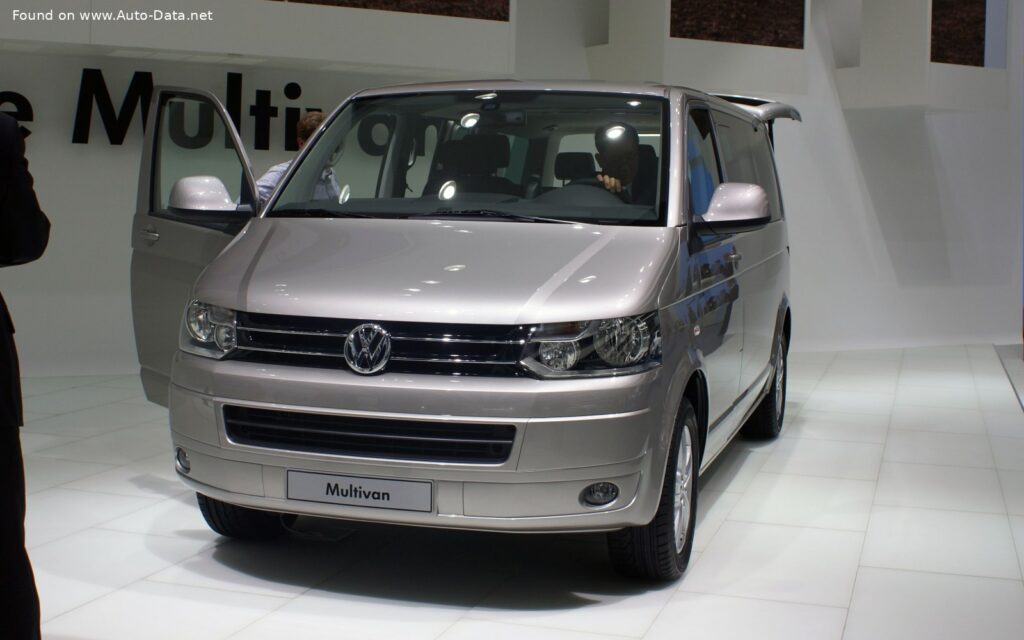
The Volkswagen Multivan (T7) Long 1.5 TSI (245 Hp) eHybrid 4MOTION DSG continues the rich legacy of Volkswagen’s Transporter-derived passenger vans, a lineage that dates back to the original Type 2 “Bus.” However, the T7 generation represents a significant paradigm shift. By moving to the MQB platform, shared with numerous Volkswagen Group passenger cars like the Golf and Tiguan, the Multivan sheds its commercial vehicle roots for a more car-like driving experience, improved comfort, and enhanced safety features, positioning it as a direct competitor to traditional minivans and large SUVs in the European market.
In Europe, where the Multivan is a staple for large families, executive shuttles, and outdoor enthusiasts, its competitors include models like the Mercedes-Benz V-Class, Ford Tourneo Custom (though still more commercially oriented), and more recently, hybrid offerings like the Toyota Sienna (though the Sienna is not as readily available in Europe and is a full hybrid, not PHEV). The T7’s PHEV powertrain is a crucial differentiator, offering unparalleled fuel economy and the ability to drive emissions-free in urban areas, which is increasingly important due to evolving city regulations and environmental consciousness across the continent. Its official combined fuel consumption figures, often exceeding 250 US mpg, are a testament to this technological advancement, making it an incredibly attractive proposition for those seeking to reduce their carbon footprint without sacrificing space or capability.
The 4MOTION all-wheel-drive system further broadens its appeal, providing superior traction and stability, which is particularly beneficial in regions with challenging winter conditions or for those who frequently venture into mountainous or rural areas. The smooth and efficient DSG transmission ensures a refined driving experience, a significant upgrade from the manual transmissions often found in earlier generations of such vehicles.
Historically, the Multivan has been celebrated for its versatility, robust build quality, and enduring design. The T7 Long eHybrid builds on this reputation by integrating cutting-edge hybrid technology and a more passenger-car-oriented design. Its market impact is profound, demonstrating that large family vehicles can be both luxurious and environmentally responsible. It sets a new benchmark for efficiency and technological integration within the minivan segment in its primary markets, solidifying Volkswagen’s position as an innovator in mobility solutions for diverse needs. The Multivan (T7) Long is not just a people mover; it’s a statement about the future of family transportation, blending heritage with advanced engineering to meet the demands of the modern world.