
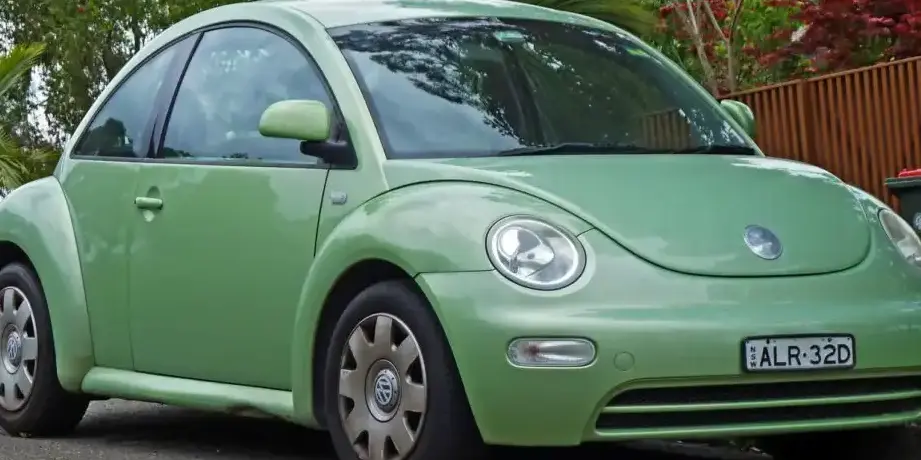
The Volkswagen New Beetle 1.6, produced between 2000 and 2005, represented the entry point into the “9C” generation of the iconic Beetle revival. Positioned as a stylish and accessible alternative to more performance-oriented trims, the 1.6-liter model aimed to capture the essence of the original Beetle’s affordability and charm while offering modern safety and convenience features. This variant was primarily marketed in Europe and other regions where smaller displacement engines were favored due to tax regulations and driving conditions. It served as a popular choice for first-time buyers, city dwellers, and those seeking a retro-inspired vehicle without the higher price tag of the more powerful options.
Technical Specifications
| Brand | Volkswagen |
| Model | Beetle |
| Generation | NEW Beetle (9C) |
| Type (Engine) | 1.6 (102 Hp) |
| Start of production | 2000 year |
| End of production | 2005 year |
| Powertrain Architecture | Internal Combustion engine |
| Body type | Hatchback |
| Seats | 4 |
| Doors | 3 |
| Fuel consumption (economy) – urban | 10.3 l/100 km (22.8 US mpg, 27.4 UK mpg, 9.7 km/l) |
| Fuel consumption (economy) – extra urban | 5.9 l/100 km (39.9 US mpg, 47.9 UK mpg, 16.9 km/l) |
| Fuel consumption (economy) – combined | 7.5 l/100 km (31.4 US mpg, 37.7 UK mpg, 13.3 km/l) |
| Fuel Type | Petrol (Gasoline) |
| Acceleration 0 – 100 km/h | 11.6 sec |
| Acceleration 0 – 62 mph | 11.6 sec |
| Acceleration 0 – 60 mph | 11 sec |
| Maximum speed | 179 km/h (111.23 mph) |
| Weight-to-power ratio | 11.8 kg/Hp, 84.6 Hp/tonne |
| Weight-to-torque ratio | 8.1 kg/Nm, 122.8 Nm/tonne |
| Power | 102 Hp @ 5600 rpm |
| Power per litre | 63.9 Hp/l |
| Torque | 148 Nm @ 3800 rpm (109.16 lb.-ft. @ 3800 rpm) |
| Engine layout | Front, Transverse |
| Engine Model/Code | AYD, BFS |
| Engine displacement | 1595 cm3 (97.33 cu. in.) |
| Number of cylinders | 4 |
| Engine configuration | Inline |
| Cylinder Bore | 81 mm (3.19 in.) |
| Piston Stroke | 77.4 mm (3.05 in.) |
| Compression ratio | 10.5:1 |
| Number of valves per cylinder | 2 |
| Fuel injection system | Multi-port manifold injection |
| Engine aspiration | Naturally aspirated engine |
| Valvetrain | OHC |
| Engine oil capacity | 4.5 l (4.76 US qt | 3.96 UK qt) |
| Coolant | 5 l (5.28 US qt | 4.4 UK qt) |
| Kerb Weight | 1205 kg (2656.57 lbs.) |
| Max. weight | 1620 kg (3571.49 lbs.) |
| Max load | 415 kg (914.92 lbs.) |
| Trunk (boot) space – minimum | 209 l (7.38 cu. ft.) |
| Trunk (boot) space – maximum | 769 l (27.16 cu. ft.) |
| Fuel tank capacity | 55 l (14.53 US gal | 12.1 UK gal) |
| Length | 4081 mm (160.67 in.) |
| Width | 1724 mm (67.87 in.) |
| Height | 1498 mm (58.98 in.) |
| Wheelbase | 2508 mm (98.74 in.) |
| Front track | 1508 mm (59.37 in.) |
| Rear (Back) track | 1494 mm (58.82 in.) |
| Minimum turning circle | 10.9 m (35.76 ft.) |
| Drivetrain Architecture | Front wheel drive |
| Drive wheel | Front wheel drive |
| Number of gears and type of gearbox | 5 gears, manual transmission |
| Front suspension | Coil spring |
| Rear suspension | Coil spring |
| Front brakes | Ventilated discs |
| Rear brakes | Disc |
| Assisting systems | ABS (Anti-lock braking system) |
| Steering type | Steering rack and pinion |
| Power steering | Hydraulic Steering |
| Tires size | 195/65 R15 |
| Wheel rims size | 15 |
INTRODUCTION
The Volkswagen New Beetle 1.6, launched in 2000 as part of the 9C series, was a deliberate attempt to recapture the spirit of the original air-cooled Beetle. Built on the Volkswagen Group’s A4 platform (shared with the Golf Mk4, Audi A3, and SEAT Leon), the New Beetle traded the rear-engine, rear-wheel-drive layout of its ancestor for a more conventional front-engine, front-wheel-drive configuration. The 1.6-liter engine variant was positioned as the entry-level model, offering a balance of affordability, fuel efficiency, and the New Beetle’s distinctive styling. Production of this specific engine configuration continued until 2005, after which it was superseded by other engine options.
Powertrain & Engine Architecture
The heart of the New Beetle 1.6 is the 1.6-liter inline-four cylinder engine, designated with engine codes AYD or BFS depending on the specific year of manufacture. This engine utilizes a multi-port fuel injection system, delivering fuel directly into the intake manifold. The engine features an overhead camshaft (OHC) valvetrain with two valves per cylinder. The 1.6-liter engine produces 102 horsepower at 5600 rpm and 148 Nm (109 lb-ft) of torque at 3800 rpm. The engine is transversely mounted, contributing to a more compact engine bay. The New Beetle 1.6 was typically paired with a five-speed manual transmission, although a four-speed automatic transmission was also available, albeit less common. The automatic transmission, while offering convenience, resulted in slightly reduced acceleration and fuel economy compared to the manual version.
Driving Characteristics
The New Beetle 1.6, with its 102 horsepower and relatively modest torque output, offered a relaxed and comfortable driving experience. Acceleration from 0 to 60 mph took approximately 11 seconds, making it suitable for urban commuting and leisurely drives. The five-speed manual transmission allowed drivers to make the most of the engine’s power band, while the optional four-speed automatic provided smooth, if somewhat less responsive, gear changes. The front-wheel-drive configuration provided predictable handling, although it lacked the dynamic capabilities of more powerful, rear-wheel-drive vehicles. Compared to the higher-performance 1.8 Turbo and 2.0-liter models, the 1.6 felt noticeably slower, particularly when fully loaded or tackling steep inclines. However, its lighter weight and lower power output contributed to better fuel economy.
Equipment & Trim Levels
The New Beetle 1.6 typically came equipped with a reasonable level of standard features, including power windows, central locking, and an audio system. Interior upholstery was typically cloth, with options for upgraded materials and colors. Trim levels varied depending on the market, but generally included base models and slightly more upscale versions with features like alloy wheels, air conditioning, and upgraded interior trim. Optional extras included a sunroof, leather upholstery, and a more sophisticated audio system. The dashboard featured a retro-inspired design with a prominent central speedometer and a smaller tachometer. Safety features included dual front airbags and ABS brakes.
Chassis & Braking
The New Beetle 1.6 utilized a MacPherson strut front suspension and a twist-beam rear suspension. This setup provided a comfortable ride quality, although it wasn’t particularly sporty. The braking system consisted of ventilated disc brakes at the front and solid disc brakes at the rear. ABS (Anti-lock Braking System) was standard, enhancing braking performance and stability. The steering was a hydraulic power-assisted rack and pinion system, providing light and precise steering feel. The 1.6-liter models typically rode on 15-inch wheels with 195/65 R15 tires.
Market Reception & Comparison
The New Beetle 1.6 was generally well-received by critics as an affordable and stylish entry point into the New Beetle range. It was praised for its retro design, comfortable ride, and fuel efficiency. However, some reviewers criticized its lack of performance compared to the more powerful models. Compared to the 1.8 Turbo, the 1.6 offered significantly less power and acceleration, but it also came with a lower price tag and better fuel economy. The 1.8 Turbo was favored by drivers seeking a more engaging driving experience, while the 1.6 appealed to those prioritizing affordability and practicality. The 1.6 also offered a more economical alternative to the diesel-powered models available in some markets.
Legacy
The Volkswagen New Beetle 1.6 remains a popular choice in the used car market, particularly among those seeking a stylish and affordable retro-inspired vehicle. The 1.6-liter engine is generally considered reliable, although regular maintenance is essential. Common issues include oil leaks and occasional problems with the fuel injection system. The availability of spare parts is good, and the New Beetle’s relatively simple mechanical design makes it relatively easy to maintain. While not a performance car, the New Beetle 1.6 offers a unique and enjoyable driving experience, and its distinctive styling continues to turn heads. Its enduring appeal is a testament to Volkswagen’s successful revival of a beloved automotive icon.
