
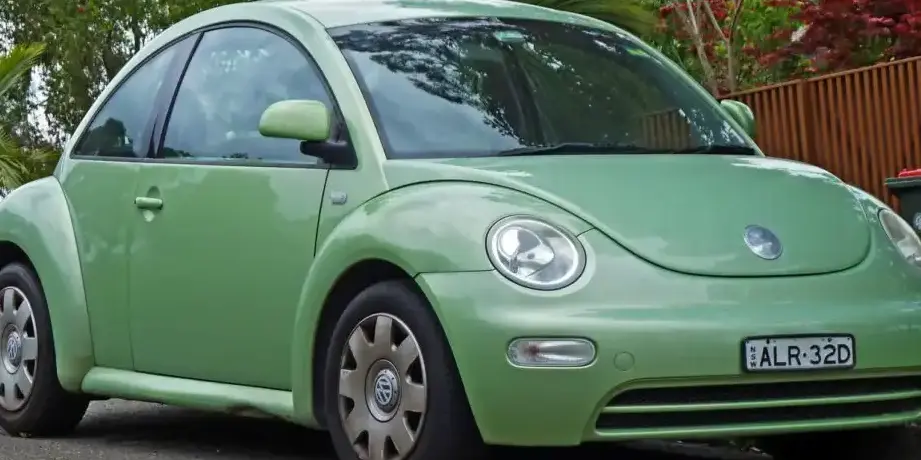
The Volkswagen New Beetle 1.8T, produced between 1999 and 2005, represented a significant step forward in the revival of the iconic Beetle. Built on the Volkswagen Group’s A4 platform (internally designated 1HX0/A3), this model aimed to capture the spirit of the original Beetle while offering modern safety, performance, and comfort. The 1.8T engine, available in various states of tune, became a mainstay of the New Beetle lineup, offering a balance between affordability and driving enjoyment. This specific variant, producing 150 horsepower, occupied a mid-range position within the New Beetle family, slotting above the base 1.6-liter models and below the more performance-oriented offerings.
Technical Specifications
| Brand | Volkswagen |
| Model | Beetle |
| Generation | NEW Beetle (9C) |
| Type (Engine) | 1.8 T (150 Hp) |
| Start of production | 1999 |
| End of production | 2005 |
| Powertrain Architecture | Internal Combustion engine |
| Body type | Hatchback |
| Seats | 4 |
| Doors | 3 |
| Fuel consumption (urban) | 11.1 l/100 km (21.2 US mpg) |
| Fuel consumption (extra urban) | 6.3 l/100 km (37.3 US mpg) |
| Fuel consumption (combined) | 8.3 l/100 km (28.3 US mpg) |
| Fuel Type | Petrol (Gasoline) |
| Acceleration 0 – 100 km/h | 9 sec |
| Acceleration 0 – 62 mph | 9 sec |
| Acceleration 0 – 60 mph | 8.6 sec |
| Maximum speed | 203 km/h (126.14 mph) |
| Weight-to-power ratio | 8.6 kg/Hp |
| Weight-to-torque ratio | 6.1 kg/Nm |
| Power | 150 Hp @ 5700 rpm |
| Torque | 210 Nm @ 1750 rpm (154.89 lb.-ft. @ 1750 rpm) |
| Engine layout | Front, Longitudinal |
| Engine Model/Code | AGU, AWU, AWV |
| Engine displacement | 1781 cm3 (108.68 cu. in.) |
| Number of cylinders | 4 |
| Engine configuration | Inline |
| Cylinder Bore | 81 mm (3.19 in.) |
| Piston Stroke | 86.4 mm (3.4 in.) |
| Compression ratio | 9.5:1 |
| Number of valves per cylinder | 5 |
| Fuel injection system | Multi-port manifold injection |
| Engine aspiration | Turbocharger |
| Valvetrain | DOHC |
| Engine oil capacity | 4.5 l (4.76 US qt | 3.96 UK qt) |
| Coolant capacity | 5 l (5.28 US qt | 4.4 UK qt) |
| Kerb Weight | 1290 kg (2843.96 lbs.) |
| Max. weight | 1680 kg (3703.77 lbs.) |
| Max load | 390 kg (859.8 lbs.) |
| Trunk (boot) space – minimum | 210 l (7.42 cu. ft.) |
| Trunk (boot) space – maximum | 770 l (27.19 cu. ft.) |
| Fuel tank capacity | 55 l (14.53 US gal | 12.1 UK gal) |
| Length | 4081 mm (160.67 in.) |
| Width | 1725 mm (67.91 in.) |
| Height | 1500 mm (59.06 in.) |
| Wheelbase | 2508 mm (98.74 in.) |
| Front track | 1508 mm (59.37 in.) |
| Rear track | 1494 mm (58.82 in.) |
| Minimum turning circle | 10.9 m (35.76 ft.) |
| Drivetrain Architecture | Front wheel drive |
| Number of gears | 5 |
| Gearbox type | Manual transmission |
Powertrain & Engine Architecture
The heart of the New Beetle 1.8T was the 1781cc, inline-four cylinder engine, typically identified by engine codes AGU, AWU, or AWV. This engine featured a single overhead camshaft (SOHC) design with five valves per cylinder (three intake, two exhaust). The key to its performance was a turbocharger with an intercooler, boosting power output to 150 horsepower and 155 lb-ft of torque. Fuel delivery was managed by a Bosch Motronic multi-port fuel injection system. The 5-speed manual transmission was the standard offering, providing a direct connection between the engine and the front wheels. The engine’s longitudinal mounting within the chassis contributed to a balanced weight distribution.
Driving Characteristics
The 1.8T New Beetle offered a noticeable step up in performance compared to the base 1.6-liter models. Acceleration from 0-60 mph took approximately 8.6 seconds, and the car felt responsive in everyday driving situations. While not a sports car, the turbocharger provided a useful surge of power for overtaking and highway merging. The 5-speed manual transmission allowed drivers to keep the engine in its optimal power band. Compared to the higher-output 1.8T variants (often found in the GTI), this 150 hp version prioritized fuel efficiency and a more relaxed driving experience. The gear ratios were tuned for everyday usability rather than outright performance.
Equipment & Trim Levels
The 1.8T New Beetle typically came equipped with features such as air conditioning, power windows and locks, and an upgraded audio system. Interior upholstery was usually cloth, with options for leather available. Trim levels varied depending on the market, but generally included options for alloy wheels, a sunroof, and upgraded interior trim. The 1.8T often served as a base for adding optional packages, allowing buyers to customize their vehicle to their preferences. Safety features included ABS brakes and front airbags.
Chassis & Braking
The New Beetle’s chassis featured independent suspension at all four wheels, utilizing coil springs and shock absorbers. Front suspension consisted of MacPherson struts, while the rear employed a multi-link setup. This configuration provided a comfortable ride while maintaining reasonable handling characteristics. Braking duties were handled by ventilated disc brakes at the front and solid disc brakes at the rear. The ABS system helped to maintain control during hard braking situations. Stabilizer bars were fitted to both the front and rear axles to reduce body roll.
Market Reception & Comparison
The New Beetle 1.8T was generally well-received by automotive critics. It was praised for its retro styling, comfortable interior, and improved performance over the base models. Fuel economy was considered reasonable for its class, averaging around 28 mpg in combined driving. Compared to the 1.6-liter New Beetle, the 1.8T offered a significant performance boost, making it a more enjoyable car to drive. However, it wasn’t as sporty as the higher-output 1.8T models or the VR6-powered versions. Reliability was generally good, although some owners reported issues with the turbocharger and fuel injection system.
Legacy
The Volkswagen New Beetle 1.8T has become a popular choice among used car buyers. Its distinctive styling and relatively affordable price make it an attractive option. The 1.8T engine, while not without its potential issues, is generally considered reliable when properly maintained. Parts availability is good, and the car’s relatively simple mechanical design makes it accessible to DIY mechanics. Today, the New Beetle 1.8T remains a recognizable and fondly remembered vehicle, representing a unique chapter in Volkswagen’s history.
