
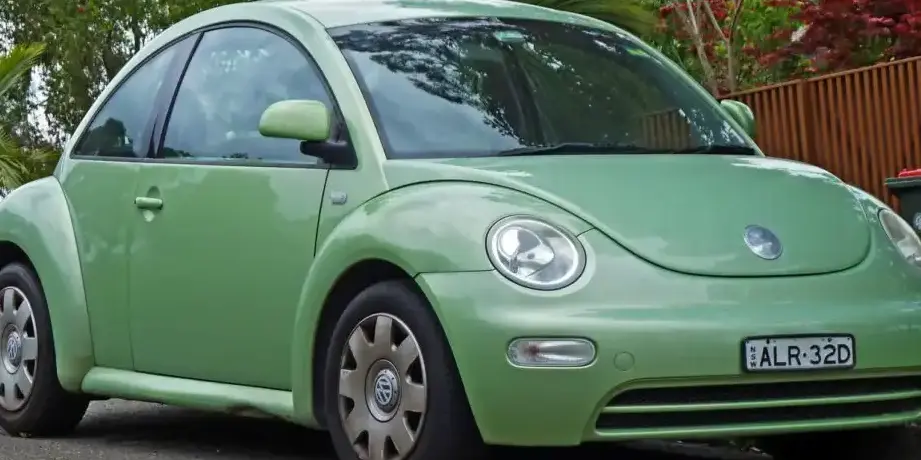
The Volkswagen New Beetle 1.9 TDI, produced between 2000 and 2005, represented a significant offering within the 9C New Beetle range. Positioned as a fuel-efficient alternative to the gasoline-powered variants, the 1.9 TDI aimed to broaden the New Beetle’s appeal, particularly in European markets where diesel engines held a strong preference. This model combined the iconic retro styling of the New Beetle with the practicality and economy of a turbocharged direct injection diesel engine. It was a key part of VW’s strategy to modernize the Beetle nameplate while retaining its distinctive character, fitting into the broader A4/A5 platform family.
Technical Specifications
| Brand | Volkswagen |
| Model | Beetle |
| Generation | NEW Beetle (9C) |
| Type (Engine) | 1.9 TDI (101 Hp) |
| Start of production | 2000 year |
| End of production | 2005 year |
| Powertrain Architecture | Internal Combustion engine |
| Body type | Hatchback |
| Seats | 4 |
| Doors | 3 |
| Fuel consumption (economy) – urban | 6.6 l/100 km (35.6 US mpg, 42.8 UK mpg, 15.2 km/l) |
| Fuel consumption (economy) – extra urban | 4.3 l/100 km (54.7 US mpg, 65.7 UK mpg, 23.3 km/l) |
| Fuel consumption (economy) – combined | 5.1 l/100 km (46.1 US mpg, 55.4 UK mpg, 19.6 km/l) |
| Fuel Type | Diesel |
| Acceleration 0 – 100 km/h | 12.4 sec |
| Acceleration 0 – 62 mph | 12.4 sec |
| Acceleration 0 – 60 mph | 11.8 sec |
| Maximum speed | 178 km/h (110.6 mph) |
| Weight-to-power ratio | 13 kg/Hp, 77.2 Hp/tonne |
| Weight-to-torque ratio | 5.5 kg/Nm, 183.3 Nm/tonne |
| Power | 101 Hp @ 4000 rpm |
| Power per litre | 53.3 Hp/l |
| Torque | 240 Nm @ 1800 rpm (177.01 lb.-ft. @ 1800 rpm) |
| Engine layout | Front, Longitudinal |
| Engine Model/Code | ATD, AXR |
| Engine displacement | 1896 cm3 (115.7 cu. in.) |
| Number of cylinders | 4 |
| Engine configuration | Inline |
| Cylinder Bore | 79.5 mm (3.13 in.) |
| Piston Stroke | 95.5 mm (3.76 in.) |
| Compression ratio | 19:1 |
| Number of valves per cylinder | 2 |
| Fuel injection system | Pump-nozzle (Unit Injector) |
| Engine aspiration | Turbocharger, Intercooler |
| Valvetrain | OHC |
| Engine oil capacity | 4.5 l (4.76 US qt | 3.96 UK qt) |
| Coolant | 6 l (6.34 US qt | 5.28 UK qt) |
| Kerb Weight | 1309 kg (2885.85 lbs.) |
| Max. weight | 1780 kg (3924.23 lbs.) |
| Max load | 471 kg (1038.38 lbs.) |
| Trunk (boot) space – minimum | 209 l (7.38 cu. ft.) |
| Trunk (boot) space – maximum | 769 l (27.16 cu. ft.) |
| Fuel tank capacity | 55 l (14.53 US gal | 12.1 UK gal) |
| Length | 4081 mm (160.67 in.) |
| Width | 1724 mm (67.87 in.) |
| Height | 1498 mm (58.98 in.) |
| Wheelbase | 2508 mm (98.74 in.) |
| Front track | 1508 mm (59.37 in.) |
| Rear (Back) track | 1494 mm (58.82 in.) |
| Minimum turning circle | 10.9 m (35.76 ft.) |
| Drivetrain Architecture | Front wheel drive |
| Number of gears and type of gearbox | 5 gears, manual transmission |
| Front suspension | Coil spring |
| Rear suspension | Coil spring |
| Front brakes | Ventilated discs |
| Rear brakes | Disc |
| Assisting systems | ABS (Anti-lock braking system) |
| Steering type | Steering rack and pinion |
| Power steering | Hydraulic Steering |
| Tires size | 205/55 R16 |
| Wheel rims size | 16 |
Powertrain & Engine Architecture
The heart of the New Beetle 1.9 TDI is the 1896 cc (115.7 cubic inches) inline-four cylinder diesel engine. Common engine codes for this variant include ATD and AXR, with minor variations depending on the specific year and market. This engine utilized a pump-nozzle (unit injector) fuel injection system, a technology favored by Volkswagen for its precise fuel delivery and efficiency. The turbocharger, coupled with an intercooler, significantly boosted power output and torque. The engine featured a single overhead camshaft (OHC) valvetrain with two valves per cylinder. A relatively high compression ratio of 19:1 was typical for diesel engines of this era, contributing to thermal efficiency. The engine was mounted longitudinally in the front of the vehicle, driving the front wheels.
Driving Characteristics
The 1.9 TDI New Beetle offered a distinctly different driving experience compared to the gasoline-powered models. While not a performance car, the 101 horsepower and 177 lb-ft of torque provided adequate power for everyday driving. Acceleration from 0-60 mph took around 11.8 seconds, and top speed was approximately 110 mph. The engine’s torque curve was relatively flat, providing good pulling power from low engine speeds. The five-speed manual transmission was the most common pairing, offering precise shifts. The gear ratios were tuned for fuel economy rather than outright acceleration. Compared to the more powerful gasoline engines, the TDI felt less responsive, but it excelled in fuel efficiency and offered a more relaxed driving experience.
Equipment & Trim Levels
The 1.9 TDI trim level typically sat in the mid-range of the New Beetle lineup. Standard equipment often included power windows, central locking, and an AM/FM radio. Interior upholstery was usually cloth, with options for upgraded materials. Dashboard configuration was consistent across most New Beetle models, featuring a retro-inspired design. Optional extras included air conditioning, alloy wheels, a sunroof, and upgraded audio systems. Specific trim packages could add features like leather upholstery and wood trim.
Chassis & Braking
The New Beetle 1.9 TDI utilized a relatively simple chassis design. Front suspension consisted of coil springs and independent suspension, while the rear featured a twist-beam axle with coil springs. Braking systems varied slightly depending on the year and market. Most models were equipped with ventilated disc brakes on the front wheels and solid disc brakes on the rear. Anti-lock Braking System (ABS) was standard. The steering system was a rack and pinion setup with hydraulic power assistance. Stabilizer bars were fitted to both the front and rear axles to reduce body roll.
Market Reception & Comparison
The New Beetle 1.9 TDI was generally well-received by automotive critics, particularly for its fuel economy and practicality. It offered a compelling alternative to the gasoline-powered models for drivers prioritizing efficiency. Compared to the higher-output gasoline engines, the TDI was slower but significantly more economical. The 1.9 TDI also offered better fuel economy than other diesel variants in the New Beetle range. Reliability was generally good, although the pump-nozzle injection system could be prone to issues if not properly maintained.
Legacy
The Volkswagen New Beetle 1.9 TDI has proven to be a relatively durable and reliable vehicle. The 1.9 TDI engine, while not without its potential maintenance needs, is known for its longevity when properly cared for. In the used car market, these models are often sought after by drivers looking for a fuel-efficient and stylish vehicle with a unique character. Parts availability is generally good, and the relatively simple mechanical design makes them accessible for DIY maintenance. The New Beetle 1.9 TDI remains a popular choice for those seeking a retro-inspired car with modern diesel technology.
