
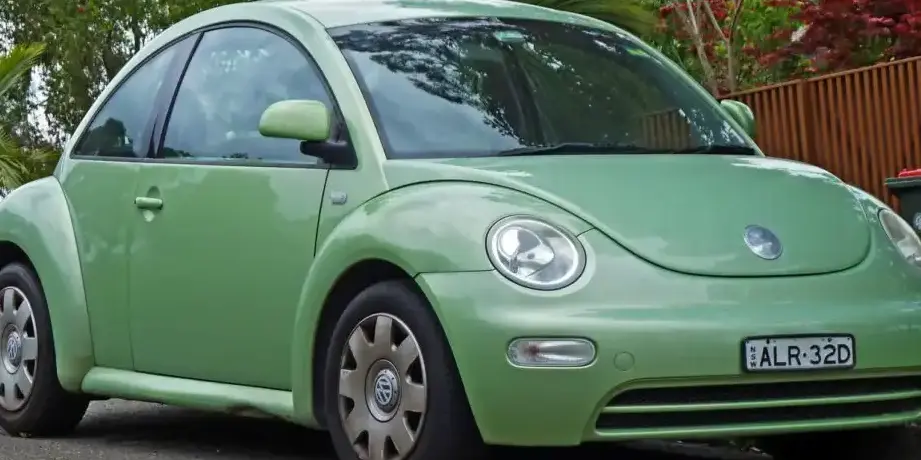
The Volkswagen New Beetle (9C) 1.9 TDI 90 hp Automatic, produced from January 1998 to June 2004, represented a fuel-efficient and practical entry point into the retro-styled New Beetle range. Positioned as a diesel alternative within the 9C platform – which also underpinned the Volkswagen Golf Mk4, Audi A3, and SEAT León – this variant aimed to broaden the Beetle’s appeal, particularly in European markets where diesel engines held significant popularity. It offered a blend of the New Beetle’s distinctive design with the economy and torque characteristics of a turbocharged diesel engine, paired with the convenience of an automatic transmission. This combination targeted buyers seeking a stylish, comfortable, and economical daily driver.
Technical Specifications
| Brand | Volkswagen |
| Model | Beetle |
| Generation | NEW Beetle (9C) |
| Type (Engine) | 1.9 TDI (90 Hp) Automatic |
| Start of production | January, 1998 |
| End of production | June, 2004 |
| Powertrain Architecture | Internal Combustion engine |
| Body type | Hatchback |
| Seats | 4 |
| Doors | 3 |
| Fuel consumption (urban) | 6.5 l/100 km (36.2 US mpg, 43.5 UK mpg, 15.4 km/l) |
| Fuel consumption (extra urban) | 5 l/100 km (47 US mpg, 56.5 UK mpg, 20 km/l) |
| Fuel Type | Diesel |
| Acceleration 0 – 100 km/h | 14.4 sec |
| Acceleration 0 – 62 mph | 14.4 sec |
| Acceleration 0 – 60 mph | 13.7 sec |
| Maximum speed | 168 km/h (104.39 mph) |
| Weight-to-power ratio | 13.9 kg/Hp, 72 Hp/tonne |
| Weight-to-torque ratio | 6 kg/Nm, 168 Nm/tonne |
| Power | 90 Hp @ 4000 rpm |
| Power per litre | 47.5 Hp/l |
| Torque | 210 Nm @ 1900 rpm (154.89 lb.-ft. @ 1900 rpm) |
| Engine layout | Front, Longitudinal |
| Engine Model/Code | ALH |
| Engine displacement | 1896 cm3 (115.7 cu. in.) |
| Number of cylinders | 4 |
| Engine configuration | Inline |
| Cylinder Bore | 79.5 mm (3.13 in.) |
| Piston Stroke | 95.5 mm (3.76 in.) |
| Compression ratio | 19.5:1 |
| Number of valves per cylinder | 2 |
| Fuel injection system | Direct injection |
| Engine aspiration | Turbocharger, Intercooler |
| Valvetrain | OHC |
| Engine oil capacity | 4.5 l (4.76 US qt | 3.96 UK qt) |
| Coolant | 6 l (6.34 US qt | 5.28 UK qt) |
| Kerb Weight | 1250 kg (2755.78 lbs.) |
| Max. weight | 1675 kg (3692.74 lbs.) |
| Max load | 425 kg (936.96 lbs.) |
| Trunk (boot) space – minimum | 209 l (7.38 cu. ft.) |
| Trunk (boot) space – maximum | 525 l (18.54 cu. ft.) |
| Fuel tank capacity | 55 l (14.53 US gal | 12.1 UK gal) |
| Length | 4081 mm (160.67 in.) |
| Width | 1725 mm (67.91 in.) |
| Height | 1500 mm (59.06 in.) |
| Wheelbase | 2508 mm (98.74 in.) |
| Front track | 1508 mm (59.37 in.) |
| Rear (Back) track | 1494 mm (58.82 in.) |
| Minimum turning circle | 10.9 m (35.76 ft.) |
| Drivetrain Architecture | Front wheel drive |
| Number of gears and type of gearbox | 4 gears, automatic transmission |
| Front suspension | Coil spring |
| Rear suspension | Coil spring |
| Front brakes | Disc |
| Rear brakes | Disc |
| Assisting systems | ABS (Anti-lock braking system) |
| Steering type | Steering rack and pinion |
| Power steering | Hydraulic Steering |
| Tires size | 205/55 R16 |
| Wheel rims size | 6.5J x 16 |
Powertrain & Engine Architecture
The heart of the New Beetle 1.9 TDI Automatic is the ALH engine, a 1.9-liter inline-four cylinder diesel. This engine, a mainstay of the Volkswagen Group throughout the late 1990s and early 2000s, is renowned for its durability and fuel efficiency. It utilizes a direct injection system, injecting fuel directly into the combustion chamber under extremely high pressure. This, combined with a turbocharger and intercooler, allows for increased power output and torque compared to naturally aspirated diesel engines. The ALH engine features an overhead camshaft (OHC) valvetrain with two valves per cylinder. The automatic transmission paired with this engine is typically a four-speed unit, designed for smooth operation and ease of use. While not offering the performance of a manual transmission, it catered to drivers prioritizing convenience.
Driving Characteristics
The 90 hp output and automatic transmission of this New Beetle variant resulted in a driving experience focused on practicality rather than performance. Acceleration was modest, with a 0-60 mph time around 13.7 seconds. The engine’s 210 Nm (155 lb-ft) of torque, available from a low 1900 rpm, provided adequate pulling power for everyday driving and overtaking maneuvers. The four-speed automatic transmission, while smooth, lacked the responsiveness of a manual gearbox and could sometimes feel sluggish during quick acceleration. Gear ratios were optimized for fuel economy, rather than outright speed. Compared to the more powerful 1.8L gasoline versions or the higher-output TDI variants, the 1.9 TDI Automatic offered a more relaxed and economical driving experience, sacrificing performance for efficiency.
Equipment & Trim Levels
The 1.9 TDI Automatic typically came equipped with a reasonable level of standard features. Interior upholstery was usually cloth, with options for upgraded materials available. Standard equipment often included power windows, central locking, and an AM/FM radio. Air conditioning was a common option. Trim levels varied by market, but generally, this variant occupied a mid-range position in the New Beetle lineup. Optional extras included alloy wheels, a sunroof, and upgraded audio systems. The interior dashboard configuration was consistent with other 9C models, featuring a retro-inspired design with a centrally mounted instrument cluster.
Chassis & Braking
The New Beetle 1.9 TDI Automatic utilized a coil spring suspension system at both the front and rear, providing a comfortable ride quality. The front suspension featured independent suspension, while the rear utilized a torsion beam setup. Braking was handled by disc brakes on all four wheels, supplemented by an Anti-lock Braking System (ABS) for enhanced safety. Stabilizer bars were fitted to both the front and rear axles to reduce body roll during cornering. The chassis was tuned to prioritize comfort and stability over sporty handling.
Market Reception & Comparison
The New Beetle 1.9 TDI Automatic was generally well-received by critics as a practical and economical option within the New Beetle range. Its fuel economy was a significant selling point, particularly in Europe where diesel fuel was often cheaper than gasoline. Compared to the 1.8L gasoline versions, the TDI offered superior fuel efficiency and torque, albeit with slightly slower acceleration. Reliability was generally good, with the ALH engine proving to be a durable and long-lasting unit. However, some critics noted the automatic transmission could feel somewhat dated compared to more modern units.
Legacy
The Volkswagen New Beetle 1.9 TDI Automatic has proven to be a relatively reliable and durable vehicle. The ALH engine is known for its longevity, and with proper maintenance, can accumulate high mileage. In the used car market today, these models are often sought after by buyers looking for a stylish, economical, and relatively affordable vehicle. Parts availability is generally good, thanks to the widespread use of the ALH engine in other Volkswagen Group vehicles. While not a performance icon, the 1.9 TDI Automatic represents a practical and appealing entry point into the New Beetle ownership experience.
