
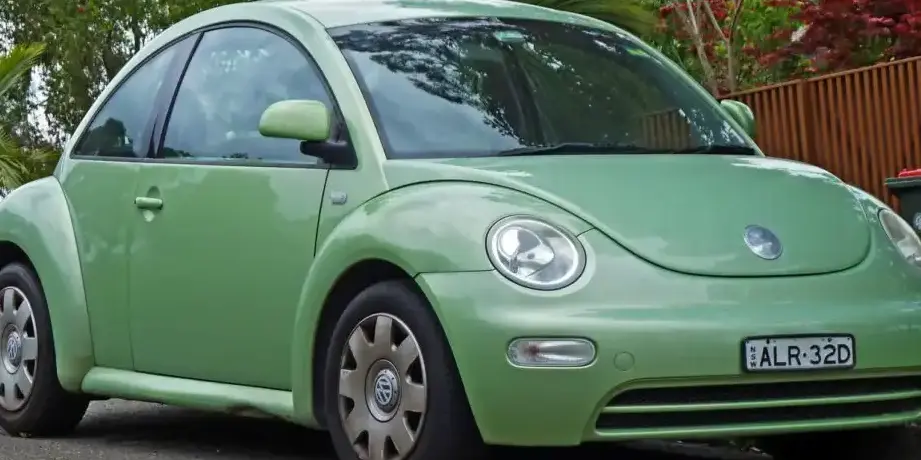
The Volkswagen New Beetle 2.0 (115 hp) Automatic, produced from 1997 to 2005, represents a significant iteration within the 9C generation of the iconic Beetle. Revived as a retro-inspired hatchback, the New Beetle aimed to capture the spirit of the original while offering modern comfort and safety features. This particular variant, equipped with the 2.0-liter gasoline engine and a four-speed automatic transmission, was positioned as a mid-range offering, appealing to buyers seeking a balance between affordability and convenience. It was built on the Volkswagen Group A4 (PQ34) platform, shared with models like the Golf Mk4, Bora, and Audi A3.
Technical Specifications
| Brand | Volkswagen |
| Model | Beetle |
| Generation | NEW Beetle (9C) |
| Type (Engine) | 2.0 (115 Hp) Automatic |
| Start of production | October, 1997 |
| End of production | 2005 |
| Powertrain Architecture | Internal Combustion engine |
| Body type | Hatchback |
| Seats | 4 |
| Doors | 3 |
| Fuel consumption (urban) | 11.8 l/100 km (19.9 US mpg, 23.9 UK mpg, 8.5 km/l) |
| Fuel consumption (extra urban) | 6.9 l/100 km (34.1 US mpg, 40.9 UK mpg, 14.5 km/l) |
| Fuel consumption (combined) | 8.7 l/100 km (27 US mpg, 32.5 UK mpg, 11.5 km/l) |
| Fuel Type | Petrol (Gasoline) |
| Acceleration 0 – 100 km/h | 10.9 sec |
| Acceleration 0 – 62 mph | 10.9 sec |
| Acceleration 0 – 60 mph | 10.4 sec |
| Maximum speed | 175 km/h (108.74 mph) |
| Weight-to-power ratio | 12.2 kg/Hp, 82 Hp/tonne |
| Weight-to-torque ratio | 8.2 kg/Nm, 121.3 Nm/tonne |
| Power | 115 Hp @ 5200 rpm |
| Power per litre | 58 Hp/l |
| Torque | 170 Nm @ 2400 rpm (125.39 lb.-ft. @ 2400 rpm) |
| Engine layout | Front, Transverse |
| Engine Model/Code | APK, AQY |
| Engine displacement | 1984 cm3 (121.07 cu. in.) |
| Number of cylinders | 4 |
| Engine configuration | Inline |
| Compression ratio | 10:1 |
| Number of valves per cylinder | 2 |
| Fuel injection system | Multi-port manifold injection |
| Engine aspiration | Naturally aspirated engine |
| Valvetrain | OHC |
| Engine oil capacity | 4 l (4.23 US qt | 3.52 UK qt) |
| Coolant capacity | 5 l (5.28 US qt | 4.4 UK qt) |
| Kerb Weight | 1402 kg (3090.88 lbs) |
| Max. weight | 1675 kg (3692.74 lbs) |
| Max load | 273 kg (601.86 lbs) |
| Trunk (boot) space – minimum | 209 l (7.38 cu. ft.) |
| Trunk (boot) space – maximum | 525 l (18.54 cu. ft.) |
| Fuel tank capacity | 55 l (14.53 US gal | 12.1 UK gal) |
| Length | 4081 mm (160.67 in) |
| Width | 1725 mm (67.91 in) |
| Height | 1500 mm (59.06 in) |
| Wheelbase | 2508 mm (98.74 in) |
| Front track | 1508 mm (59.37 in) |
| Rear track | 1494 mm (58.82 in) |
| Minimum turning circle | 10.9 m (35.76 ft) |
| Drivetrain Architecture | Front wheel drive |
| Number of gears | 4 |
| Gearbox type | Automatic transmission |
| Front suspension | Coil spring |
| Rear suspension | Coil spring |
| Front brakes | Disc |
| Rear brakes | Disc |
| Assisting systems | ABS (Anti-lock braking system) |
| Steering type | Steering rack and pinion |
| Power steering | Hydraulic Steering |
| Tires size | 205/55 R16 |
| Wheel rims size | 6.5J x 16 |
Powertrain & Engine Architecture
The heart of the New Beetle 2.0 Automatic is the 1.984-liter, inline four-cylinder gasoline engine, designated with engine codes APK or AQY depending on the specific market and year. This engine utilizes a multi-port fuel injection system, delivering fuel directly into the intake manifold. The engine features a single overhead camshaft (OHC) valvetrain with two valves per cylinder. The 115 horsepower output at 5200 rpm and 170 Nm (125 lb-ft) of torque at 2400 rpm were achieved through careful tuning of the engine management system. Paired with this engine is a four-speed automatic transmission, providing smooth, albeit not particularly sporty, gear changes. This transmission was chosen to appeal to drivers prioritizing ease of use over performance.
Driving Characteristics
The 2.0-liter automatic New Beetle offered a comfortable and predictable driving experience. Acceleration from 0 to 60 mph took around 10.4 seconds, and top speed was limited to 108.74 mph. Compared to the more powerful 1.8T turbo engine or the manual transmission versions of the 2.0, this variant felt noticeably slower. The automatic transmission, while convenient, contributed to a less engaging driving experience. Gear ratios were optimized for fuel efficiency and smooth cruising rather than spirited acceleration. The relatively high kerb weight of 1402 kg further impacted performance. However, for everyday commuting and urban driving, the 2.0 Automatic provided adequate power and responsiveness.
Equipment & Trim Levels
The New Beetle 2.0 Automatic typically came equipped with a reasonable level of standard features. These included power windows, central locking, power steering, and an ABS anti-lock braking system. Interior upholstery was usually cloth, with options for leather upgrades. Dashboard design echoed the retro theme, with a prominent central speedometer and a smaller tachometer. Optional extras included air conditioning, a sunroof, alloy wheels, and a premium sound system. Trim levels varied by market, but generally, the 2.0 Automatic sat in the middle of the range, offering a step up from the base models in terms of features and refinement.
Chassis & Braking
The New Beetle 2.0 Automatic featured a MacPherson strut front suspension and a twist-beam rear suspension. This setup provided a comfortable ride quality, although it wasn’t particularly sporty. Brakes consisted of disc brakes on all four wheels, providing adequate stopping power for the vehicle’s weight and performance. The hydraulic power steering offered light and easy steering, making it well-suited for city driving. Tire size was typically 205/55 R16, providing a good balance between grip and ride comfort.
Market Reception & Comparison
The New Beetle 2.0 Automatic received mixed reviews. Critics praised its retro styling and comfortable interior, but often criticized its lack of performance and the somewhat dated four-speed automatic transmission. Compared to the more powerful 1.8T models, the 2.0 Automatic offered significantly less horsepower and torque. However, it was generally more fuel-efficient and less expensive to maintain. The 1.9 TDI diesel version offered superior fuel economy and torque, but at the expense of refinement. The 2.0 Automatic appealed to buyers who prioritized style, comfort, and ease of use over outright performance.
Legacy
The Volkswagen New Beetle 2.0 Automatic has proven to be a relatively reliable vehicle, with the 2.0-liter engine and automatic transmission generally holding up well over time. Common issues include minor oil leaks and occasional problems with the automatic transmission’s shift quality. Today, the New Beetle 2.0 Automatic remains a popular choice in the used car market, particularly among those seeking a stylish and affordable retro-inspired vehicle. Its simple mechanicals and relatively low maintenance costs make it an attractive option for budget-conscious buyers. While not a performance icon, the New Beetle 2.0 Automatic represents a charming and distinctive chapter in Volkswagen’s history.
