
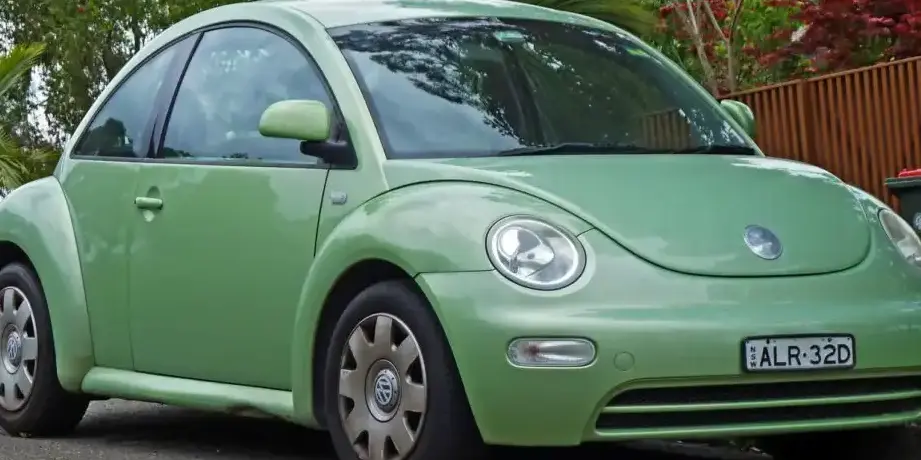
The Volkswagen New Beetle (9C) 2.3 VR5 20V, produced from October 2000 to July 2005, represented a significant step up in performance and refinement within the New Beetle lineup. Positioned as a mid-range offering, it bridged the gap between the more economical 1.8L four-cylinder models and the sportier, but less common, high-performance variants. This model aimed to deliver a more engaging driving experience while retaining the New Beetle’s distinctive retro styling and practical hatchback configuration. It was primarily marketed in Europe and North America, appealing to buyers seeking a unique and stylish vehicle with a touch of performance.
Technical Specifications
| Brand | Volkswagen |
| Model | Beetle |
| Generation | NEW Beetle (9C) |
| Type (Engine) | 2.3 VR5 20V (170 Hp) |
| Start of production | October, 2000 |
| End of production | July, 2005 |
| Powertrain Architecture | Internal Combustion engine |
| Body type | Hatchback |
| Seats | 4 |
| Doors | 3 |
| Fuel consumption (urban) | 12.4 l/100 km (19 US mpg, 22.8 UK mpg, 8.1 km/l) |
| Fuel consumption (extra urban) | 6.8 l/100 km (34.6 US mpg, 41.5 UK mpg, 14.7 km/l) |
| Fuel consumption (combined) | 8.9 l/100 km (26.4 US mpg, 31.7 UK mpg, 11.2 km/l) |
| Fuel Type | Petrol (Gasoline) |
| Acceleration 0 – 100 km/h | 8.7 sec |
| Acceleration 0 – 62 mph | 8.7 sec |
| Acceleration 0 – 60 mph | 8.3 sec |
| Maximum speed | 211 km/h (131.11 mph) |
| Weight-to-power ratio | 7.9 kg/Hp, 126.9 Hp/tonne |
| Weight-to-torque ratio | 6.1 kg/Nm, 164.2 Nm/tonne |
| Power | 170 Hp @ 6200 rpm |
| Power per litre | 73.1 Hp/l |
| Torque | 220 Nm @ 3300 rpm (162.26 lb.-ft. @ 3300 rpm) |
| Engine layout | Front, Transverse |
| Engine Model/Code | AQN |
| Engine displacement | 2324 cm3 (141.82 cu. in.) |
| Number of cylinders | 5 |
| Engine configuration | V-engine |
| Cylinder Bore | 81 mm (3.19 in.) |
| Piston Stroke | 90.2 mm (3.55 in.) |
| Compression ratio | 10.8:1 |
| Number of valves per cylinder | 4 |
| Fuel injection system | Multi-port manifold injection |
| Engine aspiration | Naturally aspirated engine |
| Valvetrain | DOHC |
| Engine oil capacity | 4.6 l (4.86 US qt | 4.05 UK qt) |
| Coolant | 8.5 l (8.98 US qt | 7.48 UK qt) |
| Kerb Weight | 1340 kg (2954.19 lbs.) |
| Max. weight | 1770 kg (3902.18 lbs.) |
| Max load | 430 kg (947.99 lbs.) |
| Trunk (boot) space – minimum | 209 l (7.38 cu. ft.) |
| Trunk (boot) space – maximum | 769 l (27.16 cu. ft.) |
| Fuel tank capacity | 55 l (14.53 US gal | 12.1 UK gal) |
| Length | 4081 mm (160.67 in.) |
| Width | 1724 mm (67.87 in.) |
| Height | 1498 mm (58.98 in.) |
| Wheelbase | 2508 mm (98.74 in.) |
| Front track | 1508 mm (59.37 in.) |
| Rear (Back) track | 1494 mm (58.82 in.) |
| Minimum turning circle | 10.9 m (35.76 ft.) |
| Drivetrain Architecture | Front wheel drive |
| Drive wheel | Front wheel drive |
| Number of gears | 5 gears, manual transmission |
| Front suspension | Coil spring |
| Rear suspension | Coil spring |
| Front brakes | Ventilated discs |
| Rear brakes | Disc |
| Assisting systems | ABS (Anti-lock braking system) |
| Steering type | Steering rack and pinion |
| Power steering | Hydraulic Steering |
| Tires size | 205/55 R16 |
| Wheel rims size | 16 |
Powertrain & Engine Architecture
The heart of the New Beetle 2.3 VR5 20V is the AQN engine code, a 2.3-liter naturally aspirated V5 engine. This engine is a unique design, featuring a narrow-angle V configuration with five cylinders arranged in a V-shape. This layout allowed for a relatively compact engine while providing a smoother power delivery compared to inline-five engines. The engine utilizes a multi-port fuel injection system, delivering fuel directly into the intake ports, and a double overhead camshaft (DOHC) valvetrain with four valves per cylinder, optimizing airflow for increased power and efficiency. The 20 valves (5 cylinders x 4 valves) contribute to the engine’s responsive nature. The engine’s 170 horsepower and 220 Nm (162 lb-ft) of torque were delivered to the front wheels through a five-speed manual transmission.
Driving Characteristics
The 2.3 VR5 20V New Beetle offered a noticeable improvement in performance over the base 1.8L models. Acceleration from 0 to 60 mph took approximately 8.3 seconds, and it could reach a top speed of 131 mph. The V5 engine provided a broader torque curve, making it more flexible in everyday driving situations. While not a sports car, the VR5 offered a more engaging driving experience than its four-cylinder counterparts, with a distinctive engine note. The five-speed manual transmission allowed for precise gear selection, enhancing driver control. Compared to the automatic transmission options available on other New Beetle trims, the manual version of the VR5 provided a more direct connection to the engine and improved fuel efficiency.
Equipment & Trim Levels
The 2.3 VR5 20V typically came with a generous level of standard equipment. This included features like air conditioning, power windows and locks, a CD stereo system, and alloy wheels. Interior upholstery was typically cloth, but leather options were available. Optional extras included a sunroof, upgraded audio systems, and heated front seats. The trim level often featured unique badging and interior accents to distinguish it from other New Beetle models. The interior dashboard configuration was consistent with other New Beetle trims, maintaining the retro-inspired circular design elements.
Chassis & Braking
The New Beetle 2.3 VR5 20V utilized a coil spring suspension system at both the front and rear, providing a comfortable ride quality. The front suspension featured independent control arms, while the rear suspension was a torsion beam setup. Braking duties were handled by ventilated discs at the front and solid discs at the rear. An Anti-lock Braking System (ABS) was standard, enhancing safety and control during hard braking. The steering system was a rack and pinion setup with hydraulic power assistance, providing precise and responsive steering feel.
Market Reception & Comparison
The New Beetle 2.3 VR5 20V was generally well-received by automotive critics. It was praised for its unique engine, improved performance, and stylish design. However, some critics noted that the V5 engine’s fuel economy was not as competitive as some of its four-cylinder rivals. Compared to the 1.8L Turbo models, the VR5 offered a different character – less peak power but a broader, more usable torque curve. The VR5 was also considered more reliable than some of the early turbocharged versions, as it had fewer potential failure points. Against the diesel options, the VR5 offered a more refined driving experience but at the cost of fuel efficiency.
Legacy
The Volkswagen New Beetle 2.3 VR5 20V has developed a loyal following among enthusiasts. The V5 engine is known for its durability and relatively straightforward maintenance. While not as common as the 1.8L models, the VR5 variants hold their value well in the used car market, particularly those in good condition with low mileage. The unique engine configuration and distinctive driving experience make it a desirable choice for collectors and drivers seeking a quirky and enjoyable classic. The engine, while not known for exceptional fuel economy, has proven to be a reliable powerplant when properly maintained, ensuring its continued presence on the roads today.
