
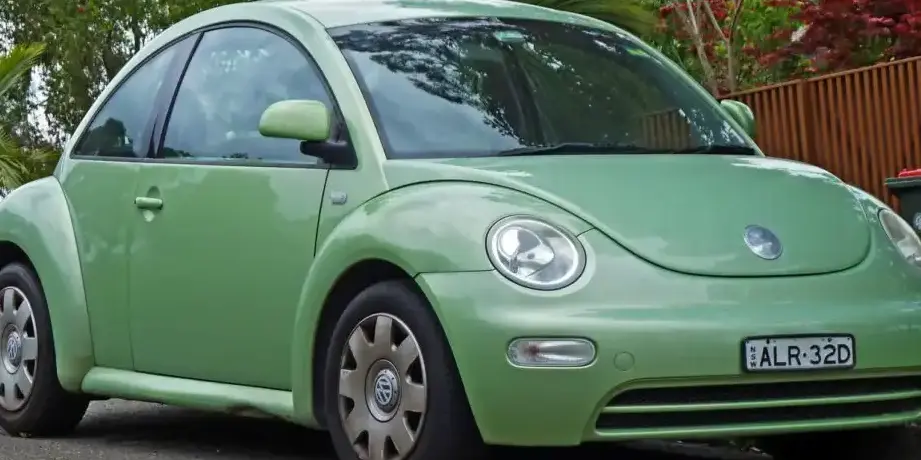
The Volkswagen New Beetle RSI 3.2, produced from October 2000 to May 2001, represents a high-performance variant of the 9C New Beetle generation. Positioned as the flagship model, the RSI (Road Sport Innovation) aimed to inject a dose of sporting credibility into the retro-styled New Beetle. It was a limited-production run, intended to appeal to enthusiasts seeking a more engaging driving experience than the standard New Beetle offered. The RSI was built on the A3 platform, shared with models like the Volkswagen Golf Mk4 and Audi TT, and distinguished itself with a significantly more powerful engine, all-wheel drive, and a host of visual and mechanical upgrades.
Technical Specifications
| Brand | Volkswagen |
| Model | Beetle |
| Generation | NEW Beetle (9C) |
| Type (Engine) | RSI 3.2 (224 Hp) |
| Start of production | October, 2000 |
| End of production | May, 2001 |
| Powertrain Architecture | Internal Combustion engine |
| Body type | Hatchback |
| Seats | 4 |
| Doors | 3 |
| Fuel consumption (urban) | 16.7 l/100 km (14.1 US mpg, 16.9 UK mpg) |
| Fuel consumption (extra urban) | 9.2 l/100 km (25.6 US mpg, 30.7 UK mpg) |
| Fuel consumption (combined) | 12 l/100 km (19.6 US mpg, 23.5 UK mpg) |
| Fuel Type | Petrol (Gasoline) |
| Acceleration 0 – 100 km/h | 6.7 sec |
| Acceleration 0 – 62 mph | 6.7 sec |
| Acceleration 0 – 60 mph | 6.4 sec |
| Maximum speed | 225 km/h (139.81 mph) |
| Weight-to-power ratio | 6.8 kg/Hp |
| Weight-to-torque ratio | 4.7 kg/Nm |
| Power | 224 Hp @ 6200 rpm |
| Torque | 320 Nm @ 3000 rpm (236.02 lb.-ft. @ 3000 rpm) |
| Engine layout | Front, Transverse |
| Engine Model/Code | AXJ |
| Engine displacement | 3189 cm3 (194.6 cu. in.) |
| Number of cylinders | 6 |
| Engine configuration | Inline |
| Cylinder Bore | 84 mm (3.31 in.) |
| Piston Stroke | 95.9 mm (3.78 in.) |
| Compression ratio | 10.8:1 |
| Number of valves per cylinder | 4 |
| Fuel injection system | Multi-port manifold injection |
| Engine aspiration | Naturally aspirated engine |
| Valvetrain | DOHC |
| Engine oil capacity | 5.5 l (5.81 US qt | 4.84 UK qt) |
| Kerb Weight | 1515 kg (3340 lbs.) |
| Max. weight | 1815 kg (4001.39 lbs.) |
| Max load | 300 kg (661.39 lbs.) |
| Trunk (boot) space – minimum | 135 l (4.77 cu. ft.) |
| Fuel tank capacity | 63 l (16.64 US gal | 13.86 UK gal) |
| Length | 4100 mm (161.42 in.) |
| Width | 1810 mm (71.26 in.) |
| Height | 1470 mm (57.87 in.) |
| Wheelbase | 2515 mm (99.02 in.) |
| Front track | 1555 mm (61.22 in.) |
| Rear (Back) track | 1555 mm (61.22 in.) |
| Minimum turning circle | 10.9 m (35.76 ft.) |
| Drive wheel | All wheel drive (4×4) |
| Number of gears | 6 gears, manual transmission |
| Front suspension | Coil spring |
| Rear suspension | Coil spring |
| Front brakes | Ventilated discs |
| Rear brakes | Disc |
| Assisting systems | ABS (Anti-lock braking system) |
| Steering type | Steering rack and pinion |
| Power steering | Hydraulic Steering |
| Tires size | 235/40 R18 |
| Wheel rims size | 8J x 18 |
Powertrain & Engine Architecture
The heart of the RSI is the 3.2-liter inline-six cylinder engine, designated AXJ. This engine was derived from the narrow-angle VR6 found in other Volkswagen Group vehicles, but modified for increased performance. It featured multi-port fuel injection and a dual overhead camshaft (DOHC) valvetrain. The 3.2-liter displacement, combined with a higher compression ratio of 10.8:1, allowed for a substantial power output of 224 horsepower at 6200 rpm and 236 lb-ft of torque at 3000 rpm. The engine was paired exclusively with a six-speed manual transmission, delivering power to all four wheels via Volkswagen’s 4Motion all-wheel-drive system. This drivetrain configuration was a significant departure from the front-wheel-drive layout of most New Beetle models.
Driving Characteristics
The RSI’s driving experience was markedly different from other New Beetle variants. The combination of the powerful 3.2-liter engine, all-wheel drive, and six-speed gearbox resulted in significantly improved acceleration and handling. Zero to 60 mph was achievable in approximately 6.4 seconds, and the top speed was electronically limited to 139.81 mph. The 4Motion system provided excellent traction, particularly in adverse weather conditions. The six-speed transmission offered precise shifts and allowed the driver to keep the engine in its optimal power band. Compared to the standard 1.8L New Beetle, the RSI felt considerably more responsive and capable, offering a genuinely sporty driving experience. The gear ratios were tuned for acceleration, rather than outright fuel economy.
Equipment & Trim Levels
As the range-topping model, the RSI came generously equipped. Standard features included sport seats upholstered in unique plaid fabric, leather-wrapped steering wheel, automatic climate control, and a premium audio system. Exterior features included unique front and rear bumpers, side skirts, a rear spoiler, and 18-inch alloy wheels. The interior also featured aluminum trim accents. Optional extras were limited, reflecting the RSI’s already high level of specification. A sunroof was a common option, as was metallic paint.
Chassis & Braking
The RSI benefited from several chassis upgrades to handle the increased power and performance. The suspension was stiffened and lowered, providing improved handling and reduced body roll. Larger ventilated disc brakes were fitted to the front wheels, while the rear brakes were upgraded to discs as well, a significant improvement over the drum brakes found on many standard New Beetles. The steering was also quicker and more responsive. The overall effect was a more planted and confident feel on the road.
Market Reception & Comparison
The New Beetle RSI received generally positive reviews from automotive critics. It was praised for its unique styling, powerful engine, and engaging driving dynamics. However, some critics noted that the retro interior design felt somewhat dated compared to more modern competitors. Compared to the standard New Beetle 1.8L, the RSI offered a substantial performance upgrade, but at a significantly higher price point. The 1.8L models were more focused on affordability and fuel economy, while the RSI catered to a niche market of enthusiasts. The RSI also differed significantly from the New Beetle TDI models, which prioritized fuel efficiency and torque over outright power.
Legacy
The Volkswagen New Beetle RSI 3.2 remains a sought-after model among New Beetle enthusiasts and collectors. Its limited production run and unique specifications have contributed to its increasing value in the used car market. The 3.2-liter VR6 engine is generally considered to be reliable, although regular maintenance is essential. The all-wheel-drive system is also robust, but can be expensive to repair if issues arise. Today, the RSI represents a unique and engaging driving experience, offering a blend of retro styling and modern performance. It stands as a testament to Volkswagen’s willingness to experiment and create distinctive vehicles.
