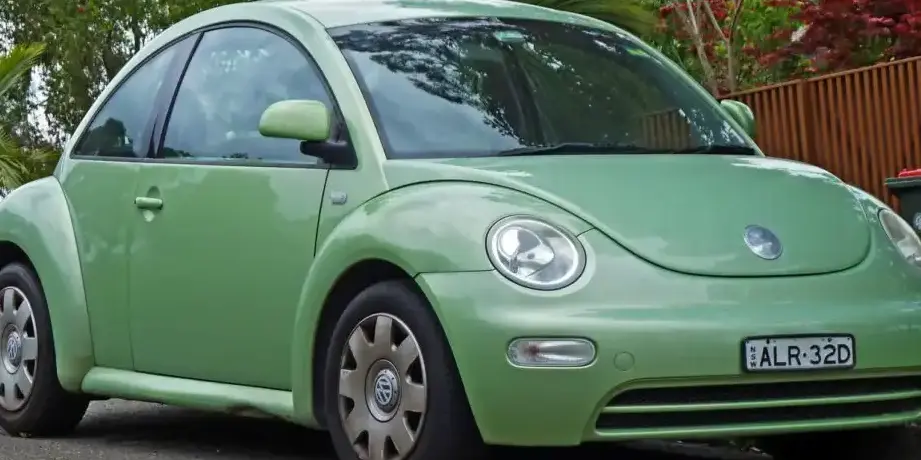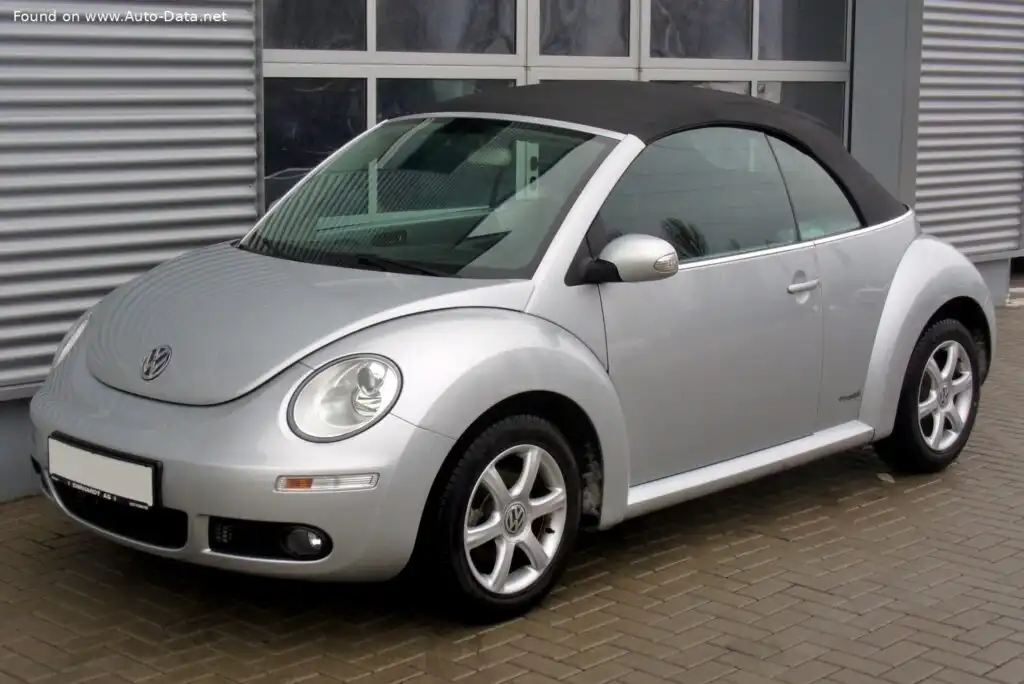
The Volkswagen New Beetle Convertible (facelift, 2005) 1.6, producing 102 horsepower, represented an entry point into the New Beetle Cabriolet range. Introduced as part of the facelifted New Beetle line, which ran from 2005 to 2009, this variant aimed to offer open-top motoring with a focus on affordability and reasonable fuel economy. It was positioned below the more powerful 1.8T and 2.0 models, targeting buyers who prioritized style and the convertible experience over outright performance. The 2005 facelift brought subtle styling changes, including revised bumpers, headlights, and taillights, along with interior refinements.
Technical Specifications
| Brand | Volkswagen |
| Model | Beetle |
| Generation | NEW Beetle Convertible (facelift 2005) |
| Type (Engine) | 1.6 (102 Hp) |
| Start of production | 2005 |
| End of production | 2009 |
| Powertrain Architecture | Internal Combustion engine |
| Body type | Cabriolet |
| Seats | 4 |
| Doors | 2 |
| Fuel consumption (urban) | 10.5 l/100 km (22.4 US mpg, 26.9 UK mpg, 9.5 km/l) |
| Fuel consumption (extra urban) | 6 l/100 km (39.2 US mpg, 47.1 UK mpg, 16.7 km/l) |
| Fuel consumption (combined) | 7.7 l/100 km (30.5 US mpg, 36.7 UK mpg, 13 km/l) |
| CO2 emissions | 185 g/km |
| Fuel Type | Petrol (Gasoline) |
| Acceleration 0 – 100 km/h | 12.3 sec |
| Acceleration 0 – 62 mph | 12.3 sec |
| Acceleration 0 – 60 mph | 11.7 sec |
| Maximum speed | 178 km/h (110.6 mph) |
| Emission standard | Euro 4 |
| Weight-to-power ratio | 12.7 kg/Hp, 78.5 Hp/tonne |
| Weight-to-torque ratio | 8.8 kg/Nm, 113.8 Nm/tonne |
| Power | 102 Hp @ 5600 rpm |
| Power per litre | 63.9 Hp/l |
| Torque | 148 Nm @ 3800 rpm (109.16 lb.-ft. @ 3800 rpm) |
| Engine layout | Front, Transverse |
| Engine Model/Code | BFS |
| Engine displacement | 1595 cm3 (97.33 cu. in.) |
| Number of cylinders | 4 |
| Engine configuration | Inline |
| Cylinder Bore | 81 mm (3.19 in.) |
| Piston Stroke | 77.4 mm (3.05 in.) |
| Compression ratio | 10.5:1 |
| Number of valves per cylinder | 4 |
| Fuel injection system | Multi-port manifold injection |
| Engine aspiration | Naturally aspirated engine |
| Valvetrain | SOHC |
| Engine oil capacity | 4.5 l (4.76 US qt | 3.96 UK qt) |
| Coolant | 5 l (5.28 US qt | 4.4 UK qt) |
| Kerb Weight | 1300 kg (2866.01 lbs.) |
| Max. weight | 1770 kg (3902.18 lbs.) |
| Max load | 470 kg (1036.17 lbs.) |
| Trunk (boot) space – minimum | 201 l (7.1 cu. ft.) |
| Fuel tank capacity | 55 l (14.53 US gal | 12.1 UK gal) |
| Permitted trailer load with brakes (12%) | 1000 kg (2204.62 lbs.) |
| Permitted trailer load without brakes | 600 kg (1322.77 lbs.) |
| Permitted towbar download | 75 kg (165.35 lbs.) |
| Length | 4129 mm (162.56 in.) |
| Width | 1721 mm (67.76 in.) |
| Height | 1502 mm (59.13 in.) |
| Wheelbase | 2516 mm (99.06 in.) |
| Front track | 1507 mm (59.33 in.) |
| Rear (Back) track | 1487 mm (58.54 in.) |
| Ride height (ground clearance) | 130 mm (5.12 in.) |
| Drag coefficient (Cd) | 0.38 |
| Drivetrain Architecture | The Internal combustion engine (ICE) drives the front wheels of the vehicle. |
| Drive wheel | Front wheel drive |
| Number of gears and type of gearbox | 5 gears, manual transmission |
| Front suspension | Independent type McPherson |
| Rear suspension | Semi-independent, coil spring |
| Front brakes | Ventilated discs |
| Rear brakes | Disc |
| Assisting systems | ABS (Anti-lock braking system) |
| Tires size | 195/65 R15 |
| Wheel rims size | 15 |
Powertrain & Engine Architecture
The 1.6-liter engine, designated BFS, is a naturally aspirated, inline-four cylinder unit. It utilizes a single overhead camshaft (SOHC) valvetrain operating four valves per cylinder. Fuel delivery is managed by a multi-port fuel injection system, a common setup for engines of this era. This engine produced 102 horsepower at 5600 rpm and 148 Nm (109 lb-ft) of torque at 3800 rpm. The engine’s relatively simple design contributed to its reliability, but also limited its performance potential. The 5-speed manual transmission was the standard offering, providing a fairly conventional gear ratio spread. The transmission was chosen for its durability and cost-effectiveness, rather than sporty performance.
Driving Characteristics
The 1.6-liter New Beetle Convertible, with its 102 hp, offered modest performance. Acceleration from 0-60 mph took around 11.7 seconds, and top speed was approximately 110 mph. The engine felt somewhat strained during brisk acceleration, requiring frequent downshifts to maintain momentum. Compared to the 1.8T and 2.0 models, the 1.6 felt noticeably slower, particularly when fully loaded or tackling inclines. However, the engine was smooth and relatively refined at cruising speeds. The manual transmission provided a direct connection to the engine, but the gear ratios were geared more towards fuel efficiency than spirited driving. The convertible top added weight, further impacting performance.
Equipment & Trim Levels
The 1.6-liter New Beetle Convertible typically came with a base level of equipment. Standard features included power windows, central locking, and a basic audio system. Interior upholstery was typically cloth, with options for upgraded materials available. Air conditioning was often an optional extra. The dashboard layout was consistent with other New Beetle models, featuring a prominent central speedometer and a retro-inspired design. Optional extras included alloy wheels, a sunroof (in addition to the convertible top), and upgraded audio systems.
Chassis & Braking
The New Beetle Convertible utilized an independent McPherson strut suspension at the front and a semi-independent coil spring suspension at the rear. This setup provided a comfortable ride, but handling was not particularly sharp. The front brakes were ventilated discs, while the rear brakes were solid discs. Anti-lock Braking System (ABS) was standard. The chassis was reinforced to compensate for the loss of structural rigidity associated with the convertible body style. However, the added weight of the convertible mechanism and reinforcement did impact handling compared to the coupe version.
Market Reception & Comparison
The 1.6-liter New Beetle Convertible was generally well-received as an affordable entry point into the New Beetle range. Critics praised its styling and comfortable ride, but noted its lack of performance. Compared to the 1.8T and 2.0 models, the 1.6 offered significantly lower performance but also better fuel economy. The 1.8T provided a noticeable performance boost, while the 2.0 offered even more power and a sportier driving experience. The 1.6 was often seen as a good choice for buyers who prioritized style and affordability over performance.
Legacy
The 1.6-liter engine in the New Beetle Convertible is generally considered reliable, although regular maintenance is essential. Common issues include oil leaks and occasional sensor failures. The manual transmission is also known for its durability. Today, the 1.6-liter New Beetle Convertible remains a popular choice in the used car market, particularly among buyers looking for a stylish and affordable convertible. Its relatively simple mechanicals make it easier and less expensive to maintain compared to more complex modern vehicles. While not a performance car, it offers a unique driving experience and a distinctive retro aesthetic.