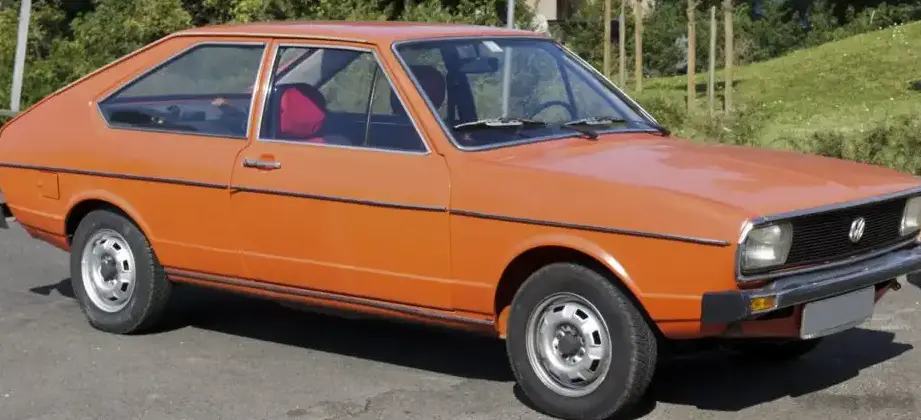
The Volkswagen Passat B1 1.3, produced between 1973 and 1978, represents the entry point into the first generation of the Passat, a vehicle designed to replace the aging Type 4. This variant, powered by a modest 55 horsepower 1.3-liter engine, served as the foundational model for a car that would become a mainstay in Volkswagen’s lineup. Positioned as the most affordable Passat, it aimed to provide practical, reliable transportation for a broad customer base, particularly in Europe where fuel efficiency and affordability were paramount. The B1 Passat, built on the A1 platform, was a significant departure for Volkswagen, moving away from rear-engine, air-cooled designs to a more conventional front-engine, water-cooled layout.
Technical Specifications
| Brand | Volkswagen |
| Model | Passat |
| Generation | Passat (B1) |
| Type (Engine) | 1.3 (55 Hp) |
| Start of production | 1973 |
| End of production | 1978 |
| Powertrain Architecture | Internal Combustion engine |
| Body type | Sedan |
| Seats | 5 |
| Doors | 2-4 |
| Fuel Type | Petrol (Gasoline) |
| Power | 55 Hp |
| Engine Model/Code | ZA |
| Engine aspiration | Naturally aspirated engine |
| Engine oil capacity | 3.5 l (3.7 US qt | 3.08 UK qt) |
| Coolant capacity | 6.5 l (6.87 US qt | 5.72 UK qt) |
Powertrain & Engine Architecture
The heart of the Passat 1.3 is the ZA engine, a 1,297 cc inline-four cylinder gasoline engine. This engine is a naturally aspirated, overhead valve (OHV) design. It utilizes a single carburetor for fuel delivery, a common setup for vehicles of this era aiming for simplicity and cost-effectiveness. The ZA engine features a relatively low compression ratio, contributing to its ability to run on lower octane fuels readily available in many markets. The engine’s modest output of 55 horsepower at approximately 5,800 rpm and 73 lb-ft of torque at 3,000 rpm was sufficient for comfortable cruising and everyday driving, but didn’t offer significant performance. The engine was paired with a four-speed manual transmission as standard, though a three-speed automatic transmission was offered as an option. The automatic transmission, while providing convenience, further reduced the car’s acceleration capabilities.
Driving Characteristics
The Passat 1.3’s driving experience was characterized by its practicality and ease of use rather than sporty performance. Acceleration was leisurely, and overtaking required careful planning. The four-speed manual transmission allowed drivers to make the most of the engine’s limited power band, while the optional automatic transmission prioritized comfort over responsiveness. The gear ratios were geared towards fuel economy, making it a suitable choice for long highway journeys. The suspension, consisting of independent front suspension with MacPherson struts and a torsion beam rear axle, provided a comfortable ride, absorbing bumps and imperfections in the road reasonably well. However, the car’s relatively light weight and modest power meant that handling was not particularly sharp or engaging. Compared to the later, more powerful Passat variants like the 1.6 or the GL models, the 1.3 felt noticeably slower and less refined.
Equipment & Trim Levels
The Passat 1.3 was typically offered with a fairly basic level of equipment, reflecting its position as the entry-level model. Standard features generally included cloth upholstery, vinyl floor covering, and basic instrumentation consisting of a speedometer, fuel gauge, and temperature gauge. The steering wheel was typically made of plastic, and the interior trim was functional but spartan. Optional extras included a radio, upgraded upholstery, and a sunroof. The exterior trim was also relatively simple, with basic chrome bumpers and steel wheels with hubcaps. Later models saw the introduction of minor cosmetic upgrades, such as improved interior fabrics and slightly more refined exterior detailing, but the overall focus remained on affordability and practicality.
Chassis & Braking
The Passat B1 utilized a monocoque chassis construction, providing a good balance of strength and weight. The front suspension featured MacPherson struts, coil springs, and an anti-roll bar, while the rear suspension employed a torsion beam axle with trailing arms. Braking systems varied depending on the year and market. Early models typically featured drum brakes on all four wheels, while later models often upgraded to front disc brakes and rear drum brakes. The braking performance was adequate for the car’s weight and power, but lacked the stopping power of more modern vehicles. Steering was of the recirculating ball type, providing a relatively direct feel but lacking the precision of rack-and-pinion steering.
Market Reception & Comparison
The Passat 1.3 was generally well-received as a practical and affordable family car. Critics praised its comfortable ride, spacious interior, and fuel efficiency. However, the engine’s lack of power was a common criticism, particularly when compared to competitors offering larger displacement engines. Compared to other Passat variants, such as the 1.6-liter models, the 1.3 offered significantly lower performance but at a lower purchase price. The 1.6 offered a noticeable improvement in acceleration and overall drivability, making it a popular choice for those willing to spend a bit more. In terms of reliability, the 1.3 engine proved to be relatively robust, although regular maintenance was essential to prevent issues such as carburetor problems and oil leaks. Fuel economy was a strong point, averaging around 30-35 mpg in typical driving conditions.
Legacy
The Volkswagen Passat B1 1.3, while not the most powerful or exciting variant of the first-generation Passat, played a crucial role in establishing the model as a successful and versatile family car. Its affordability and reliability made it a popular choice for budget-conscious buyers, and it helped to pave the way for the Passat’s continued success in the European market. Today, the Passat B1 1.3 is considered a classic car, and well-maintained examples are sought after by enthusiasts. The ZA engine, while simple in design, is relatively easy to maintain and repair, making it a viable option for those interested in classic car ownership. However, finding parts can be challenging, and rust is a common issue with these older vehicles. The 1.3 variant remains a testament to Volkswagen’s commitment to providing practical and reliable transportation to the masses.