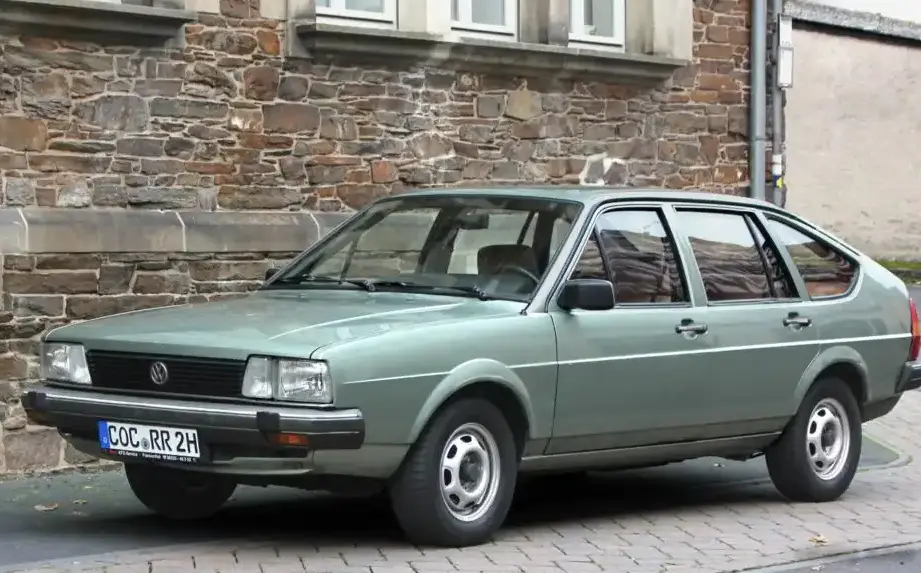
The Volkswagen Passat B2 1.3, produced between 1980 and 1983, represented the entry point into the second-generation Passat lineup. Positioned as an affordable and practical family car, this variant was primarily aimed at budget-conscious buyers in Europe, where the Passat competed with rivals like the Ford Taunus, Opel Ascona, and Fiat Croma. The B2 generation marked a significant departure from the first-generation Passat, offering a more modern design, improved interior space, and a wider range of engine options. The 1.3-liter model, while not the most powerful in the range, provided a reliable and economical means of transportation for many European families.
Technical Specifications
| Brand | Volkswagen |
| Model | Passat |
| Generation | Passat (B2) |
| Type (Engine) | 1.3 (55 Hp) |
| Start of production | 1980 |
| End of production | 1983 |
| Powertrain Architecture | Internal Combustion engine |
| Body type | Hatchback |
| Seats | 5 |
| Doors | 5 |
| Fuel Type | Petrol (Gasoline) |
| Acceleration 0 – 100 km/h | 18 sec |
| Acceleration 0 – 62 mph | 18 sec |
| Acceleration 0 – 60 mph | 17.1 sec |
| Maximum speed | 144 km/h (89.48 mph) |
| Weight-to-power ratio | 17.4 kg/Hp, 57.6 Hp/tonne |
| Weight-to-torque ratio | 9.4 kg/Nm, 106.8 Nm/tonne |
| Power | 55 Hp @ 5800 rpm |
| Power per litre | 43.2 Hp/l |
| Torque | 102 Nm @ 2000 rpm (75.23 lb.-ft. @ 2000 rpm) |
| Engine layout | Front, Longitudinal |
| Engine Model/Code | FY |
| Engine displacement | 1272 cm3 (77.62 cu. in.) |
| Number of cylinders | 4 |
| Engine configuration | Inline |
| Compression ratio | 8.2:1 |
| Number of valves per cylinder | 2 |
| Fuel injection system | Carburettor |
| Engine aspiration | Naturally aspirated engine |
| Valvetrain | OHC |
| Engine oil capacity | 3 l (3.17 US qt | 2.64 UK qt) |
| Coolant | 4 l (4.23 US qt | 3.52 UK qt) |
| Kerb Weight | 955 kg (2105.41 lbs) |
| Max. weight | 1435 kg (3163.63 lbs) |
| Max load | 480 kg (1058.22 lbs) |
| Trunk (boot) space – minimum | 480 l (16.95 cu. ft.) |
| Trunk (boot) space – maximum | 1542 l (54.46 cu. ft.) |
| Fuel tank capacity | 70 l (18.49 US gal | 15.4 UK gal) |
| Length | 4435 mm (174.61 in.) |
| Width | 1685 mm (66.34 in.) |
| Height | 1385 mm (54.53 in.) |
| Wheelbase | 2550 mm (100.39 in.) |
| Front track | 1400 mm (55.12 in.) |
| Rear (Back) track | 1408 mm (55.43 in.) |
| Drivetrain Architecture | The Internal combustion engine (ICE) drives the front wheels of the vehicle. |
| Drive wheel | Front wheel drive |
| Number of gears and type of gearbox | 4 gears, manual transmission |
| Front suspension | Independent type McPherson |
| Rear suspension | Coil spring |
| Front brakes | Disc |
| Rear brakes | Drum |
| Steering type | Steering rack and pinion |
| Tires size | 175/70 R13 |
| Wheel rims size | 13 |
Powertrain & Engine Architecture
The heart of the Passat B2 1.3 was the FY engine, a 1.3-liter inline four-cylinder petrol engine. This engine featured a relatively simple overhead camshaft (OHC) valvetrain with two valves per cylinder. Fuel delivery was handled by a carburetor, a common feature for engines of this era, prioritizing simplicity and cost-effectiveness over the more advanced fuel injection systems. The engine produced 55 horsepower at 5800 rpm and 75.23 lb-ft of torque at 2000 rpm. The engine was mounted longitudinally in the front of the vehicle, driving the front wheels. The four-speed manual transmission was the standard offering, providing a straightforward driving experience. The engine’s design emphasized durability and ease of maintenance, making it a popular choice for those seeking a reliable and affordable vehicle.
Driving Characteristics
The Passat 1.3’s driving experience was characterized by its modest performance. Acceleration was leisurely, taking approximately 18 seconds to reach 62 mph (100 km/h). The carburetor and relatively low compression ratio (8.2:1) contributed to a somewhat flat power delivery, requiring drivers to utilize the engine’s rev range to achieve optimal performance. Compared to the more powerful Passat variants, such as those equipped with the 1.6-liter or 1.8-liter engines, the 1.3 felt noticeably slower. However, the 1.3’s lighter weight and simpler mechanicals did offer a degree of agility in city driving. The four-speed manual transmission provided adequate control, but lacked the refinement of the five-speed gearboxes found in higher-spec models. The gear ratios were spaced to prioritize fuel economy over outright acceleration.
Equipment & Trim Levels
The Passat B2 1.3 was typically offered with a basic level of equipment, reflecting its position as the entry-level model. Standard features generally included cloth upholstery, a basic instrument cluster, and manually operated windows and door locks. The interior was functional and durable, prioritizing practicality over luxury. Optional extras, such as a sunroof, upgraded stereo system, and more comfortable seats, were available, but added to the vehicle’s overall cost. Trim levels were relatively limited, with most 1.3 models sharing a similar specification. The focus was on providing a no-frills, affordable family car.
Chassis & Braking
The Passat B2 featured an independent McPherson strut suspension at the front, providing a reasonable level of ride comfort and handling. The rear suspension utilized a coil spring setup. Braking was accomplished via disc brakes at the front and drum brakes at the rear. The braking system was adequate for the vehicle’s weight and performance, but lacked the stopping power of more advanced systems found in higher-spec models. The steering was a rack and pinion system, offering precise and responsive control. The 175/70 R13 tires provided adequate grip in most driving conditions.
Market Reception & Comparison
The Passat B2 1.3 was generally well-received as an affordable and practical family car. Critics praised its spacious interior, comfortable ride, and reliable engine. However, the 1.3’s modest performance was often cited as a drawback. Compared to the 1.6-liter and 1.8-liter variants, the 1.3 offered lower running costs but sacrificed performance. The 1.6-liter engine provided a noticeable improvement in acceleration and overall drivability, while the 1.8-liter models offered even more power. The 1.3’s fuel economy was a key selling point, making it an attractive option for budget-conscious buyers. Reliability was generally good, with the FY engine proving to be durable and relatively easy to maintain.
Legacy
The Volkswagen Passat B2 1.3 remains a popular choice among classic car enthusiasts and collectors. Its simple mechanicals and readily available parts make it relatively easy to maintain and repair. The FY engine is known for its durability, and many examples are still on the road today. While not the most desirable Passat variant, the 1.3 offers a unique glimpse into the automotive landscape of the early 1980s. In the used car market, well-maintained examples of the Passat B2 1.3 can command reasonable prices, particularly those with low mileage and a complete service history. The car represents a significant chapter in Volkswagen’s history, showcasing the company’s commitment to producing affordable and reliable family cars.