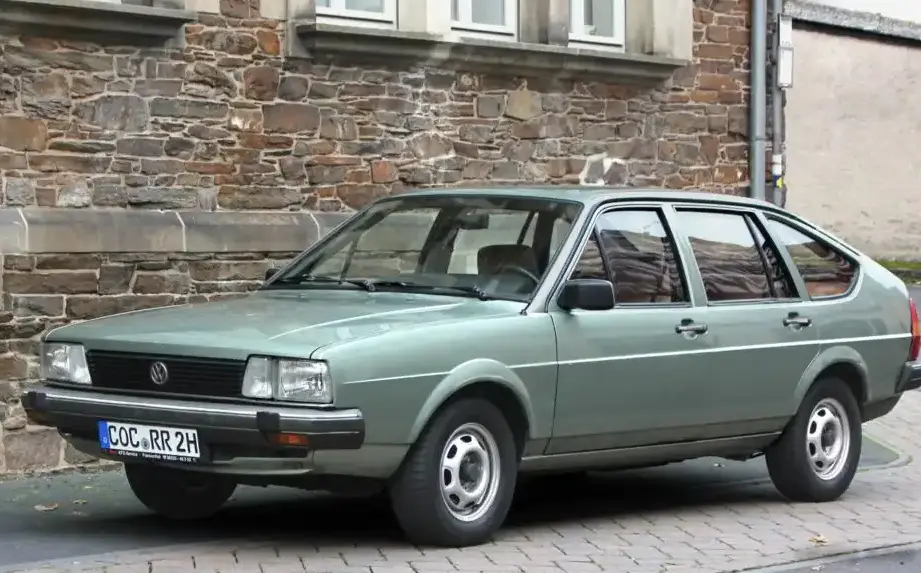
The Volkswagen Passat B2, produced from 1980 to 1988, represented a significant evolution in Volkswagen’s mid-size offerings. The 1.6-liter (72 hp) variant, manufactured between 1986 and 1988, occupied a crucial position in the lineup, serving as the entry-level engine option for buyers prioritizing affordability and fuel economy. This model, typically a five-door hatchback, was aimed at families and individuals seeking practical transportation without the expense of larger engines or higher trim levels. It was a common sight on European roads during its production run, offering a balance between Volkswagen’s reputation for reliability and a relatively accessible price point.
Technical Specifications
| Brand | Volkswagen |
| Model | Passat |
| Generation | Passat (B2) |
| Type (Engine) | 1.6 (72 Hp) |
| Start of production | 1986 |
| End of production | 1988 |
| Powertrain Architecture | Internal Combustion engine |
| Body type | Hatchback |
| Seats | 5 |
| Doors | 5 |
| Fuel Type | Petrol (Gasoline) |
| Power | 72 Hp |
| Engine Model/Code | RL |
| Engine aspiration | Naturally aspirated engine |
| Engine oil capacity | 3 l (3.17 US qt | 2.64 UK qt) |
| Trunk (boot) space – minimum | 480 l (16.95 cu. ft.) |
| Trunk (boot) space – maximum | 1542 l (54.46 cu. ft.) |
| Fuel tank capacity | 70 l (18.49 US gal | 15.4 UK gal) |
| Length | 4435 mm (174.61 in.) |
| Width | 1685 mm (66.34 in.) |
| Height | 1385 mm (54.53 in.) |
| Wheelbase | 2550 mm (100.39 in.) |
Powertrain & Engine Architecture
The 1.6-liter RL engine powering this Passat B2 was a naturally aspirated, inline-four cylinder unit. It featured a single overhead camshaft (SOHC) valvetrain, operating two valves per cylinder. Fuel delivery was managed by a Bosch mechanical fuel injection system, a relatively simple but reliable setup for the time. This system, while not as sophisticated as later electronic fuel injection, provided adequate fuel atomization and control for the engine’s modest power output. The engine’s bore and stroke were 84 mm x 80 mm, resulting in a displacement of 1588 cc. The compression ratio was typically around 8.5:1. The engine was paired with a three-speed automatic transmission, a common choice for buyers prioritizing ease of use over performance. This transmission was known for its durability, but its limited number of gears meant that the engine often operated at higher RPMs during highway cruising, impacting fuel economy and noise levels.
Driving Characteristics
The 1.6-liter automatic Passat B2 offered a comfortable, if uninspiring, driving experience. With 72 horsepower and approximately 98 lb-ft of torque, acceleration was leisurely. The three-speed automatic transmission contributed to this, with relatively wide gear ratios. The first gear provided adequate launch, but subsequent shifts were noticeable, and the engine could feel strained when attempting quick overtaking maneuvers. Compared to the more powerful 1.8-liter and 2.0-liter versions of the Passat B2, or even the diesel options, the 1.6 felt noticeably slower. However, the automatic transmission made it exceptionally easy to drive in city traffic, and the engine was generally smooth and quiet at lower speeds. The suspension, a MacPherson strut front and semi-trailing arm rear setup, provided a reasonably comfortable ride, absorbing bumps and imperfections in the road surface effectively. Steering was light and easy, making maneuvering in tight spaces straightforward.
Equipment & Trim Levels
The 1.6-liter Passat B2 typically represented the base trim level. Standard equipment generally included cloth upholstery, basic instrumentation (speedometer, fuel gauge, temperature gauge), and manual windows and door locks. Air conditioning was often an optional extra, as were power windows and a more advanced radio system. Interior plastics were durable but relatively basic in appearance. The dashboard layout was functional and straightforward, prioritizing usability over aesthetics. Exterior features typically included steel wheels with hubcaps, black plastic trim, and relatively simple headlights and taillights. Optional extras could include alloy wheels, a sunroof, and upgraded interior trim.
Chassis & Braking
The Passat B2’s chassis was a monocoque construction, providing a good balance of strength and weight. The front suspension utilized MacPherson struts, while the rear employed a semi-trailing arm setup. The 1.6-liter models typically featured drum brakes on the rear wheels and disc brakes on the front, providing adequate stopping power for the vehicle’s weight and performance. Stabilizer bars were often omitted on the base models to keep costs down, which could result in slightly more body roll during cornering. The steering system was a recirculating ball type, offering a relatively direct feel but lacking the precision of more modern rack-and-pinion systems.
Market Reception & Comparison
The 1.6-liter Passat B2 was generally well-received as an affordable and practical family car. Critics acknowledged its fuel efficiency and reliability, but often noted its lack of performance compared to higher-spec models. Compared to the 1.8-liter version, the 1.6 offered lower running costs but significantly less power. The diesel models, while more expensive initially, provided superior fuel economy and torque. The 1.6 automatic was particularly popular with drivers who prioritized ease of use and comfort over sporty handling. Its fuel economy was respectable for the time, typically achieving around 28-32 mpg on the highway.
Legacy
The 1.6-liter Passat B2, while not the most powerful or technologically advanced version of the model, remains a popular choice among classic Volkswagen enthusiasts. The RL engine is known for its durability and relative simplicity, making it relatively easy to maintain and repair. Parts availability is generally good, and the car’s robust construction means that many examples are still on the road today. In the used car market, these models are typically affordable, making them an attractive option for those seeking a classic Volkswagen experience without a significant financial investment. However, potential buyers should be aware of common issues such as rust, particularly in areas with harsh winters, and the potential for wear and tear on the automatic transmission.