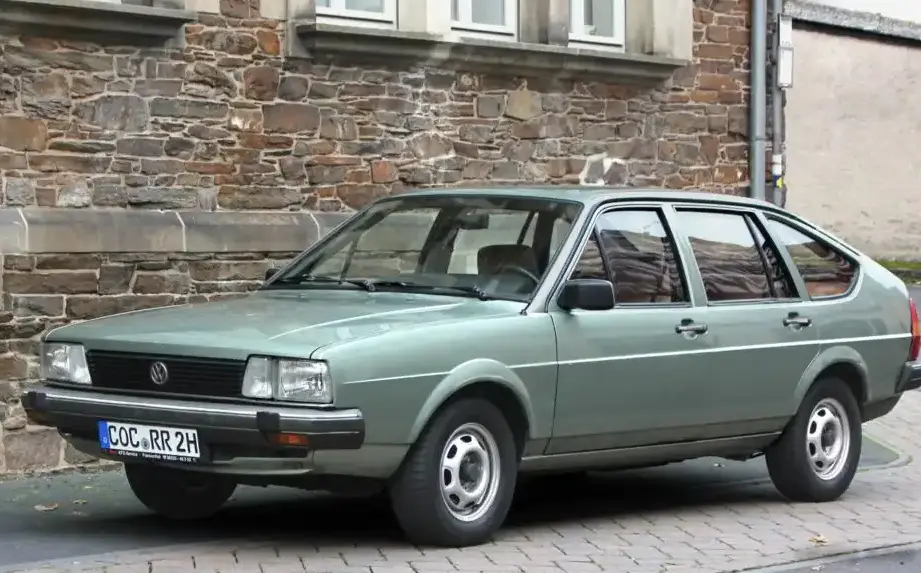
The Volkswagen Passat B2, produced between 1980 and 1988, represented a significant evolution in Volkswagen’s mid-size offerings. Introduced as a replacement for the aging Passat B1 (Dasher in North America), the B2 offered a more modern design, improved aerodynamics, and a wider range of engine options. The 2.0-liter, 115 horsepower variant, available from 1983 to 1985, occupied a middle ground in the Passat B2 lineup, offering a balance between performance and affordability. It was positioned above the base 1.6-liter models and below the more powerful GTI and later 16V variants. This model was primarily sold in Europe and other international markets, with the North American market receiving different engine configurations.
Technical Specifications
| Brand | Volkswagen |
| Model | Passat |
| Generation | Passat (B2) |
| Type (Engine) | 2.0 (115 Hp) |
| Start of production | 1983 |
| End of production | 1985 |
| Powertrain Architecture | Internal Combustion engine |
| Body type | Hatchback |
| Seats | 5 |
| Doors | 5 |
| Fuel Type | Petrol (Gasoline) |
| Acceleration 0 – 100 km/h | 11.1 sec |
| Acceleration 0 – 62 mph | 11.1 sec |
| Acceleration 0 – 60 mph | 10.5 sec |
| Maximum speed | 182 km/h (113.09 mph) |
| Weight-to-power ratio | 7.9 kg/Hp, 126.4 Hp/tonne |
| Weight-to-torque ratio | 5.5 kg/Nm, 180.2 Nm/tonne |
| Power | 115 Hp @ 5500 rpm |
| Power per litre | 57.7 Hp/l |
| Torque | 164 Nm @ 3200 rpm (120.96 lb.-ft. @ 3200 rpm) |
| Engine layout | Front, Longitudinal |
| Engine Model/Code | JS |
| Engine displacement | 1994 cm3 (121.68 cu. in.) |
| Number of cylinders | 5 |
| Engine configuration | Inline |
| Engine aspiration | Naturally aspirated |
| Engine oil capacity | 3.5 l (3.7 US qt | 3.08 UK qt) |
| Coolant capacity | 8 l (8.45 US qt | 7.04 UK qt) |
| Kerb Weight | 910 kg (2006.21 lbs) |
| Max. weight | 1350 kg (2976.24 lbs) |
| Max load | 440 kg (970.03 lbs) |
| Trunk (boot) space – minimum | 480 l (16.95 cu. ft.) |
| Trunk (boot) space – maximum | 1542 l (54.46 cu. ft.) |
| Fuel tank capacity | 70 l (18.49 US gal | 15.4 UK gal) |
| Length | 4435 mm (174.61 in) |
| Width | 1685 mm (66.34 in) |
| Height | 1385 mm (54.53 in) |
| Wheelbase | 2550 mm (100.39 in) |
| Front track | 1400 mm (55.12 in) |
| Rear (Back) track | 1408 mm (55.43 in) |
| Drivetrain Architecture | The Internal combustion engine (ICE) drives the front wheels of the vehicle. |
| Drive wheel | Front wheel drive |
| Number of gears and type of gearbox | 5 gears, manual transmission |
| Front suspension | Independent type McPherson |
| Rear suspension | Coil spring |
| Front brakes | Ventilated discs |
| Rear brakes | Drum |
| Steering type | Steering rack and pinion |
| Power steering | Hydraulic Steering |
| Tires size | 175/70 R13 |
| Wheel rims size | 13 |
Powertrain & Engine Architecture
The heart of the Passat B2 2.0 was the Volkswagen JS engine, a 1.994-liter inline five-cylinder gasoline engine. This engine was a development of the earlier four-cylinder designs, offering increased displacement and power. The JS engine featured a single overhead camshaft (OHC) valvetrain, operating two valves per cylinder. Fuel delivery was managed by Bosch mechanical fuel injection, a system common for the era, providing a balance between efficiency and performance. The engine’s longitudinal front-engine layout was typical for European vehicles of the time, contributing to a balanced weight distribution. The five-speed manual transmission was the standard offering for this variant, providing drivers with good control over the engine’s power band.
Driving Characteristics
The 2.0-liter, 115 hp Passat B2 offered a respectable, if not exhilarating, driving experience. Acceleration from 0-60 mph took around 10.5 seconds, making it competitive with other vehicles in its class. The engine delivered its peak power at 5500 rpm, and its 164 Nm (121 lb-ft) of torque at 3200 rpm provided adequate pulling power for everyday driving and highway cruising. Compared to the more powerful GTI models, the 2.0-liter felt less responsive, but it offered a smoother and more relaxed driving experience. The five-speed manual transmission allowed drivers to keep the engine in its optimal power range, while the relatively light weight of the vehicle (around 910 kg or 2006 lbs) helped to maintain good handling characteristics.
Equipment & Trim Levels
The Passat B2 2.0 typically came with a fairly standard level of equipment for a mid-size European car of the early 1980s. Standard features included cloth upholstery, a basic instrument cluster, and manual windows and door locks. Optional extras included a sunroof, upgraded stereo systems, and power windows. Trim levels varied depending on the market, but generally, the 2.0-liter model was positioned as a mid-range offering, bridging the gap between the more basic models and the higher-specification GT and GTI variants. Interior materials were durable and functional, reflecting the car’s focus on practicality and reliability.
Chassis & Braking
The Passat B2 featured an independent McPherson strut front suspension and a coil spring rear suspension. This setup provided a comfortable ride and decent handling characteristics. The front brakes were ventilated discs, offering good stopping power, while the rear brakes were drums. This combination was typical for vehicles in this price range at the time. Steering was via a rack and pinion system with hydraulic power assistance, providing precise and responsive steering feel. The car rode on 13-inch wheels with 175/70 R13 tires, offering a good balance between ride comfort and handling.
Market Reception & Comparison
The Passat B2 2.0 was generally well-received by automotive critics. It was praised for its comfortable ride, spacious interior, and practical hatchback design. However, some critics noted that the engine lacked the punch of the GTI models and that the fuel injection system could be prone to occasional issues. Compared to other vehicles in its class, such as the Ford Sierra and Opel Ascona, the Passat B2 offered a compelling combination of features and value. Fuel economy was reasonable for the time, averaging around 30-35 mpg in mixed driving conditions. The 2.0-liter engine proved to be relatively reliable, although regular maintenance was essential to prevent issues with the fuel injection system.
Legacy
The Volkswagen Passat B2 2.0 remains a popular choice among classic car enthusiasts today. The JS engine, while not the most powerful, is known for its durability and relative simplicity. Parts availability is generally good, making it relatively easy to maintain and repair. The B2 Passat’s spacious interior and practical hatchback design continue to appeal to those seeking a classic European car with everyday usability. While not as highly sought after as the GTI models, the 2.0-liter variant offers a more affordable entry point into Passat B2 ownership, providing a comfortable and reliable driving experience for those who appreciate the charm of 1980s automotive engineering.