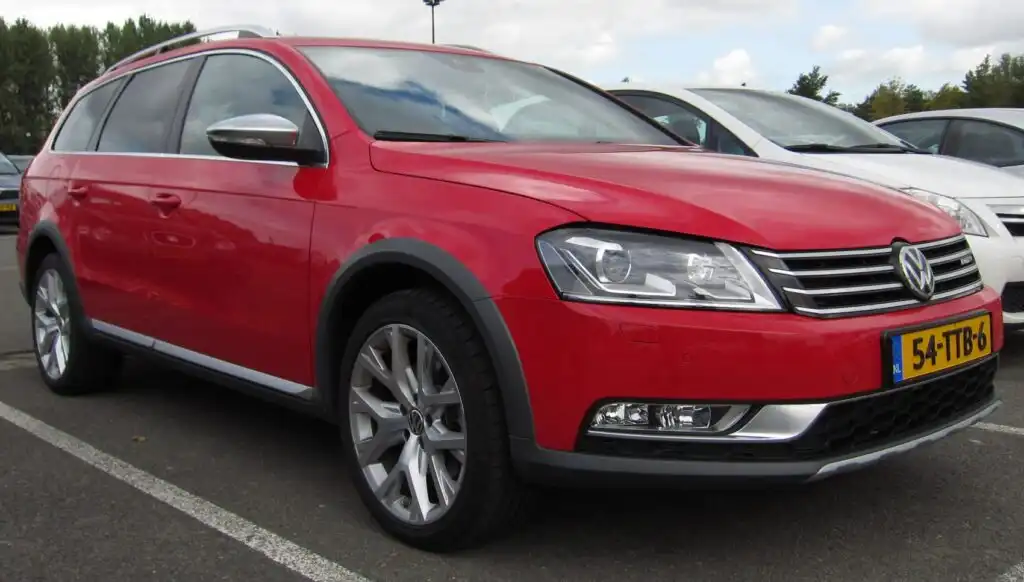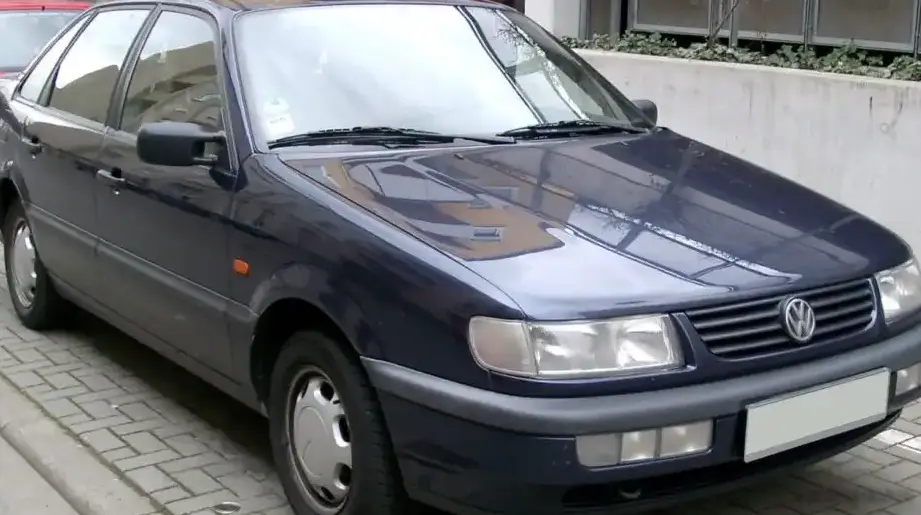
The Volkswagen Passat B4 1.8 (90 hp) Automatic, produced between 1993 and 1996, represented an entry-level offering within the fourth generation (B4) Passat lineup. Positioned as a comfortable and affordable family sedan, it served as a key model for Volkswagen in European markets, and saw limited import into the United States as a grey market vehicle. The B4 Passat, built on the 1HX0/A3 platform, aimed to provide a more refined and spacious alternative to smaller Volkswagens like the Golf and Jetta, while remaining accessible to a broader customer base. This particular variant, with its 1.8-liter engine and automatic transmission, was geared towards drivers prioritizing ease of use and fuel efficiency over outright performance.
Technical Specifications
| Brand | Volkswagen |
| Model | Passat |
| Generation | Passat (B4) |
| Type (Engine) | 1.8 (90 Hp) Automatic |
| Start of production | 1993 |
| End of production | 1996 |
| Powertrain Architecture | Internal Combustion engine |
| Body type | Sedan |
| Seats | 5 |
| Doors | 4 |
| Fuel consumption (urban) | 11.1 l/100 km (21.2 US mpg) |
| Fuel consumption (extra urban) | 6.6 l/100 km (35.6 US mpg) |
| Fuel Type | Petrol (Gasoline) |
| Acceleration 0 – 100 km/h | 16.6 sec |
| Acceleration 0 – 62 mph | 16.6 sec |
| Acceleration 0 – 60 mph | 15.8 sec |
| Maximum speed | 175 km/h (108.74 mph) |
| Emission standard | Euro 2 |
| Weight-to-power ratio | 13.7 kg/Hp |
| Weight-to-torque ratio | 8.5 kg/Nm |
| Power | 90 Hp @ 5500 rpm |
| Torque | 145 Nm @ 2500 rpm (106.95 lb.-ft. @ 2500 rpm) |
| Engine layout | Front, Transverse |
| Engine Model/Code | ABS, ADZ |
| Engine displacement | 1781 cm3 (108.68 cu. in.) |
| Number of cylinders | 4 |
| Engine configuration | Inline |
| Cylinder Bore | 81 mm (3.19 in.) |
| Piston Stroke | 86.4 mm (3.4 in.) |
| Compression ratio | 10:1 |
| Number of valves per cylinder | 2 |
| Fuel injection system | Single-point injection |
| Engine aspiration | Naturally aspirated engine |
| Valvetrain | SOHC |
| Engine oil capacity | 3.8 l (4.02 US qt | 3.34 UK qt) |
| Coolant capacity | 5 l (5.28 US qt | 4.4 UK qt) |
| Kerb Weight | 1229 kg (2709.48 lbs.) |
| Max. weight | 1750 kg (3858.09 lbs.) |
| Max load | 521 kg (1148.61 lbs.) |
| Trunk (boot) space – minimum | 578 l (20.41 cu. ft.) |
| Trunk (boot) space – maximum | 990 l (34.96 cu. ft.) |
| Fuel tank capacity | 70 l (18.49 US gal | 15.4 UK gal) |
| Max. roof load | 75 kg (165.35 lbs.) |
| Permitted trailer load with brakes (12%) | 1200 kg (2645.55 lbs.) |
| Permitted trailer load without brakes | 600 kg (1322.77 lbs.) |
| Length | 4605 mm (181.3 in.) |
| Width | 1720 mm (67.72 in.) |
| Height | 1430 mm (56.3 in.) |
| Wheelbase | 2625 mm (103.35 in.) |
| Front track | 1479 mm (58.23 in.) |
| Rear (Back) track | 1422 mm (55.98 in.) |
| Minimum turning circle | 10.7 m (35.1 ft.) |
| Drivetrain Architecture | Front wheel drive |
| Number of gears and type of gearbox | 4 gears, automatic transmission |
| Front suspension | Coil spring, Wishbone, Transverse stabilizer |
| Rear suspension | Wishbone, Transverse stabilizer, Coil spring |
| Front brakes | Disc |
| Rear brakes | Drum |
| Steering type | Steering rack and pinion |
| Power steering | Hydraulic Steering |
| Tires size | 185/65 R14 |
| Wheel rims size | 6J x 14 |
Powertrain & Engine Architecture
The heart of the Passat B4 1.8 Automatic is the Volkswagen ABS or ADZ engine code, a 1.8-liter inline-four cylinder gasoline engine. This engine utilized a single-point fuel injection system (also known as mono-point injection), where a single injector delivered fuel into the intake manifold. While simpler and less expensive than multi-point injection, it offered reasonable fuel efficiency and reliability. The engine featured a single overhead camshaft (SOHC) valvetrain, operating two valves per cylinder. The automatic transmission was typically a four-speed unit, designed for smooth operation and ease of driving. This transmission was not known for its sportiness, prioritizing comfort and fuel economy over rapid acceleration. The engine’s relatively low compression ratio of 10:1 contributed to its ability to run on lower octane fuels, common in many markets.
Driving Characteristics
The 90 hp output and four-speed automatic transmission resulted in a driving experience focused on practicality rather than performance. Acceleration was leisurely, with a 0-60 mph time around 15.8 seconds. The automatic transmission’s gear ratios were optimized for fuel efficiency, meaning the engine often felt strained during overtaking maneuvers or when climbing hills. Compared to the more powerful 1.9 TDI diesel or the sportier VR6 variants, the 1.8 Automatic offered a significantly less engaging driving experience. However, its smooth operation and ease of use made it a popular choice for drivers who prioritized comfort and convenience.
Equipment & Trim Levels
The 1.8 Automatic trim typically included basic features such as power steering, central locking, and cloth upholstery. Air conditioning was often an optional extra, as were power windows and upgraded audio systems. Interior trim was generally functional and durable, reflecting the car’s position as an affordable family sedan. Higher trim levels, available with the 1.8 engine, might have included features like alloy wheels, a sunroof, and more luxurious interior appointments. However, the base 1.8 Automatic was generally equipped with the essentials for comfortable daily transportation.
Chassis & Braking
The Passat B4 1.8 Automatic featured a MacPherson strut front suspension and a semi-independent wishbone rear suspension. Front brakes were disc brakes, providing adequate stopping power, while rear brakes were typically drum brakes to keep costs down. A transverse stabilizer bar was fitted to both the front and rear axles to reduce body roll during cornering. The suspension was tuned for comfort, providing a relatively smooth ride over uneven surfaces. The relatively light curb weight of around 1229 kg (2709.48 lbs) helped to mitigate the effects of the engine’s modest power output.
Market Reception & Comparison
The Passat B4 1.8 Automatic was generally well-received as a practical and affordable family car. Critics praised its spacious interior, comfortable ride, and reasonable fuel economy. However, its lack of performance was often noted, particularly when compared to the more powerful engine options available in the Passat lineup. The 1.9 TDI diesel offered significantly better fuel economy and more torque, making it a popular choice for long-distance drivers. The VR6 variant provided a much more engaging driving experience, but at a higher price point. The 1.8 Automatic occupied a middle ground, appealing to drivers who prioritized comfort and affordability over performance.
Legacy
The Volkswagen Passat B4 1.8 Automatic, while not a performance icon, remains a relatively reliable and affordable classic car. The ABS and ADZ engines are known for their durability, although regular maintenance is essential to prevent issues such as oil leaks and coolant system failures. The automatic transmission, while not particularly sophisticated, is generally robust if properly maintained. Today, these cars can be found in the used car market at very reasonable prices, making them an attractive option for budget-conscious buyers looking for a comfortable and spacious sedan. Parts availability is generally good, although some components may be becoming increasingly difficult to find. The B4 Passat 1.8 Automatic represents a solid, if unspectacular, example of 1990s German engineering.